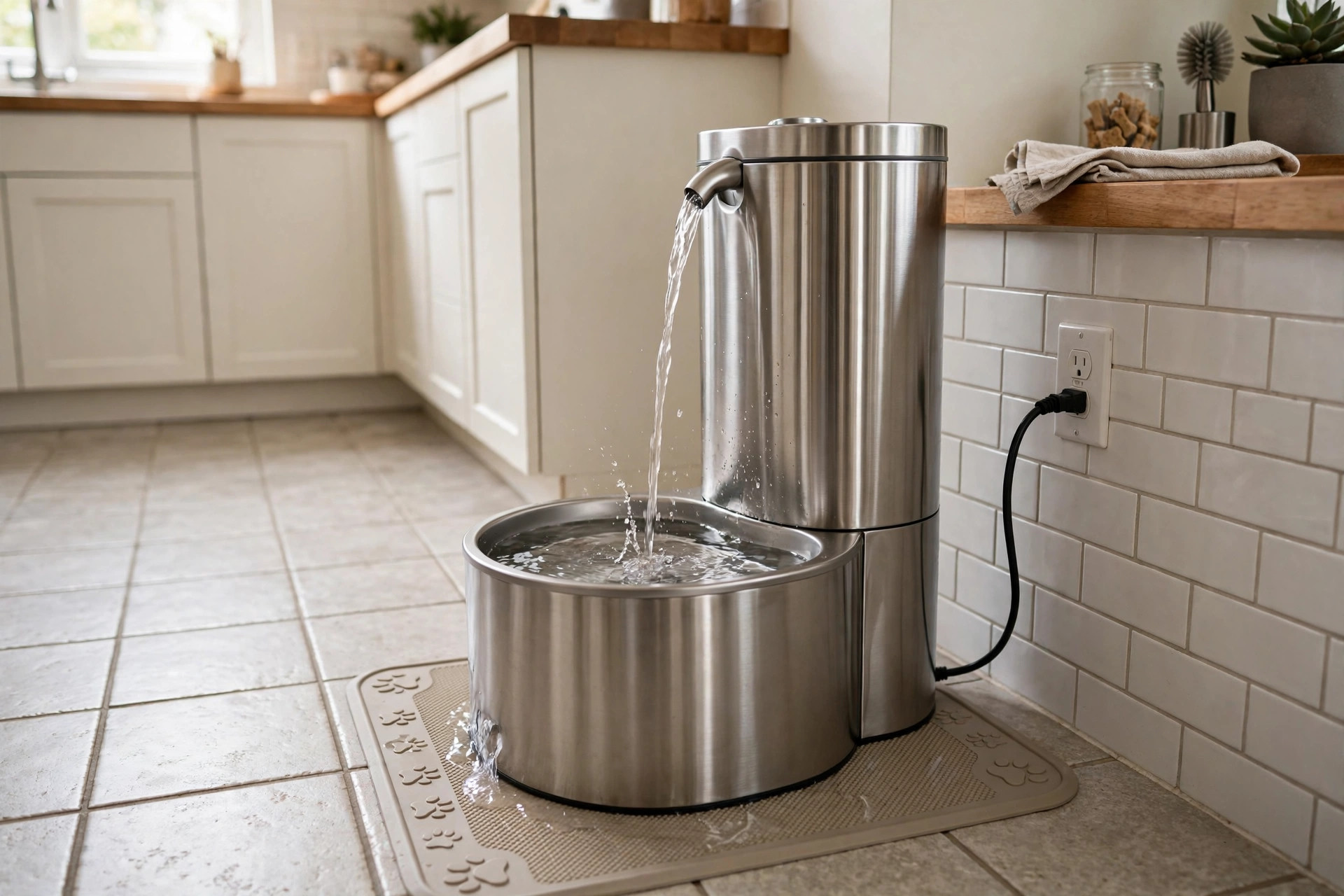

A dog that drinks enough water stays healthier, eats better, and keeps more energy through the day. The best pet water fountain for dogs large capacity models make this job easier for busy owners. Instead of a plain bowl that goes stale and dry by noon, a large fountain holds a full gallon or more of water and keeps it moving through a filter. The water stays fresh, cool, and clean for days. This article explains why large capacity fountains matter, what to look for when you shop, which types suit different homes, what they cost, how to keep them clean, and how to use them safely. It also answers the questions buyers ask most often.
Why a Fountain Matters More Than a Plain Bowl
Dogs need fresh water at all times. A still bowl can turn warm, dusty, and stale within hours. Bits of food, hair, and dust settle in it. Many dogs then drink less, which can lead to low hydration. Low hydration is linked to tiredness, dry skin, and urinary problems. PetMD offers veterinary guidance that stresses steady access to clean water for dogs of every age.
A fountain solves the still-water problem. A small pump lifts water and lets it fall or bubble through a spout. Moving water draws more oxygen into the bowl. It also stays cooler because it does not sit in one warm pool. Many dogs prefer the taste of moving water, and they drink more of it. Owners notice the difference within the first week.
Large capacity matters most in homes with more than one dog, or with large breeds. A Labrador or a German Shepherd can drink a half gallon or more on a warm day. Two dogs can empty a small fountain before lunch. A large unit holds 128 ounces, 168 ounces, or even 2 gallons or more. That amount lasts through a full work day without a refill. It also helps when the owner travels for a day or two, though no fountain replaces a pet sitter.
There is a second benefit that gets less attention. A large fountain means less work. Filling a bowl twice a day takes time and is easy to forget. A large reservoir turns the job into one filling every few days. For older owners, for busy parents, and for anyone with a packed schedule, that ease of use is the real value.
What to Look for When You Choose One: Best Pet Water Fountain for Dogs Large Capacity
Shopping for a large pet water fountain can feel confusing. The boxes all make big claims. A few key points separate a good buy from a poor one.
Capacity and Size
Start with an honest count of your dogs and their size. Small dogs do well with 128 ounces, which is one gallon. Medium and large dogs need 168 ounces to 2 gallons. Homes with three or more dogs should look at the largest models, near 2.5 gallons. A good rule is to buy one size larger than you think you need. A fuller reservoir runs the pump better and stays fresh longer.
Filtration
Almost every fountain uses a filter. The most common type is a small carbon filter that sits in the water path. It removes odors, chlorine taste, and fine particles. Some fountains add a foam pre-filter that catches hair and large bits before they reach the pump. Replaceable filters are a running cost, so check the price of refills before you buy the fountain. A cheap fountain with costly filters can end up more expensive than a pricier one with cheap refills.
Material
Fountains come in plastic, stainless steel, and ceramic. Plastic is light and cheap, but it can hold scratches where germs grow. It may also bother dogs with sensitive chins. Stainless steel is the top pick for large dogs. It resists germs, cleans well in a dishwasher, and lasts for years. Ceramic looks fine in a kitchen and cleans well, but it is heavy and can break if dropped. For a large capacity dog water dispenser that will see heavy use, stainless steel wins on hygiene and life span.
Pump and Power
Most fountains use a small submersible pump with a low-voltage cord. Check the cord length so it reaches your outlet without a stretch across the floor. Some models offer battery backup, which keeps water moving during short power cuts. Look for a pump that can be taken apart. A pump that opens up is easy to clean and lasts much longer than one sealed shut.
Noise Level
A fountain should be quiet. The loudest sound should be a soft trickle of water, which many dogs and owners find pleasant. Cheap pumps hum or buzz. Hum gets louder as the water level drops. When you compare models, read owner notes about noise at night. Homes with light sleepers, or dogs that startle easily, should favor models known for near-silent pumps. Just as quiet pet hair dryer for dogs low noise grooming tools matter in a calm home, a silent pump matters for daily peace.
Types and Options
Large dog fountains fall into a few clear groups. Each suits a different home.
Pump-driven indoor fountains are the most common. They use the small electric pump described above. They come in the widest range of sizes, shapes, and prices. They suit most houses and apartments.
Gravity-fed dispensers are simpler. They hold water in a jug that slowly refills a bowl as the dog drinks. They need no power and make no noise. But they do not filter or move the water, so the water goes stale like a plain bowl. They are a step down from a true fountain.
Stainless steel fountains are the workhorse choice for large dogs. They hold up to heavy paws and rough licks. They clean fast. A stainless steel pet water fountain for dogs is the pick most trainers recommend for breeds over 50 pounds.
Ceramic fountains suit owners who care about looks. They come in glazes that match a kitchen. They cost more and need care to avoid chips.
Outdoor fountains are built for patios, yards, and kennels. They use tougher plastic, larger cords, and often larger reservoirs. If your dog spends most of the day outside, an outdoor dog water fountain for backyard play may serve better than an indoor model dragged outside. For more ideas on outfitting a yard for pets, The Spruce Pets covers outdoor gear in plain terms.
Some homes keep both cats and dogs. A large fountain serves both, since cats also prefer moving water. In a multi-pet home, keep pet zones tidy: many owners place the fountain near the feeding station, well away from cat areas like best litter box enclosure furniture for cats setups, so each pet keeps its own clean space.
Cost and Price
Large capacity dog fountains cost more than small ones, but the price range stays fair. Simple plastic models with basic filters sell for about twenty to forty dollars. Mid-range models with better pumps and quieter motors run forty to eighty dollars. Stainless steel models with large reservoirs and strong filtration cost eighty to one hundred fifty dollars. Outdoor-rated models sit at the top of the range.
Running costs matter too. Filters cost five to fifteen dollars per pack and last two to four weeks each. A fountain that uses a standard, widely sold filter is cheaper to run than one that needs a rare brand-only filter. Power use is tiny, a few dollars a year at most.
When you compare prices, look at the cost per year, not just the price on the box. A sixty-dollar fountain with five-dollar filters beats a thirty-dollar fountain with fifteen-dollar filters after a few months. Big pet retailers such as Chewy, PetSmart, and Petco list filter prices next to the fountain, which makes the math easy. For general home supplies that may house the fountain, The Home Depot also stocks pet care items.
Care and Upkeep
A fountain stays healthy only if it stays clean. The filter helps, but it does not replace washing. Set a simple routine and keep to it.
Daily. Top up the water to the fill line. Glance at the water for hair, food bits, or cloudiness. A quick look takes ten seconds and catches most problems early.
Weekly. Take the fountain apart. Wash the bowl or reservoir, the pump housing, and every small part in hot soapy water. Rinse well so no soap stays behind. This is the most important step. Slime, called biofilm, can grow in fountains that only get rinsed. Biofilm holds germs and gives water a bad taste that puts dogs off drinking.
Filter changes. Change carbon filters every two to four weeks. In homes with several dogs, change them closer to two weeks. Change foam pre-filters as soon as they look worn. Keep spare filters on hand so a late order never forces you to run the fountain without one.
Pump care. Once a month, open the pump and clean the impeller, the small spinning part. Hair wraps around it and slows the flow. A slow flow makes the pump work hard and shortens its life. A five-minute cleaning doubles pump life in many cases.
Placement. Put the fountain on a washable mat in a low-traffic corner. Keep the cord flat against the wall where paws and teeth cannot reach it. Keep the fountain away from direct sun, which warms the water and grows algae. These habits mirror the careful routines Whole Dog Journal recommends for dog health gear.
Dishwasher-safe models save real time. If your schedule is tight, favor a fountain whose main parts can go in the top rack. Also keep a spare bowl ready for the days the fountain is apart for cleaning, so your dog never goes without water.
Safety
A fountain is safe when used with care. A few points deserve attention.
Electricity and water mix in every pump fountain, so the cord must be intact and dry at the plug end. Replace a fountain with a cracked cord at once. Do not let a dog chew the cord; place it out of reach or use a cord cover.
Water must never run below the pump. A pump that runs dry burns out fast and can overheat. Large reservoirs lower this risk, but always keep the level above the minimum line, and more so in hot weather when water use rises.
Material safety matters. Choose fountains marked food-grade and free of BPA. Wash new parts before first use. If a plastic fountain gives water a chemical smell, return it and switch to stainless steel or ceramic.
Slippery floors cause falls for older dogs. Put a mat under the fountain and wipe spills right away. The ASPCA pet care resources cover home safety basics that pair well with fountain setup, and the American Kennel Club offers breed-specific care notes that help owners match fountain size to the dog.
Frequently Asked Questions
How much water should a large dog fountain hold? For one large dog, look for at least one gallon, about 128 ounces. For two large dogs, 168 ounces to 2 gallons is better. For three or more dogs, choose the largest models near 2.5 gallons. Bigger reservoirs stay fresh longer and protect the pump.
Do dogs really drink more from a fountain? Most do. Moving water tastes fresher and cooler than still bowl water. The sound of falling water also draws curious dogs to the bowl. Owners often report fuller drinking within days of the switch.
How often should I change the filter? Change carbon filters every two to four weeks. Homes with more dogs, or dogs that eat near the fountain, should change them every two weeks. A clogged filter slows flow and lets odors build.
Can I put the fountain outside? Only if it is rated for outdoor use. Indoor cords and pumps do not handle rain, sun, and dirt well. Buy an outdoor-rated model with a weather-tough cord and place it in shade.
Is stainless steel better than plastic for dog fountains? For large dogs, yes. Stainless steel resists germs, cleans in the dishwasher, and stands up to rough use. Plastic costs less but can scratch, hold odors, and wear faster under big paws.
What if my dog is scared of the fountain? Let the dog watch it run for a day before asking it to drink. Place a familiar bowl next to it. Smear a bit of peanut butter on the rim to invite a sniff. Most dogs come around within a week. Keep the old bowl full during the change so the dog never feels forced.
A Final Word
The best pet water fountain for dogs large capacity is the one that fits your dog count, your home, and your routine. Stainless steel models with large reservoirs, standard filters, and quiet pumps serve most large-dog homes well for years. Keep the water topped up, wash the parts weekly, and change filters on time. Your dog gets fresh water all day, and you get one less chore to think about. That is a fair trade for any busy home.
References
American Kennel Club. (n.d.). Dog care and training resources. https://www.akc.org ASPCA. (n.d.). Pet care and animal welfare resources. https://www.aspca.org Chewy. (n.d.). Pet supplies. https://www.chewy.com Petco. (n.d.). Pet supplies and services. https://www.petco.com PetMD. (n.d.). Pet health information. https://www.petmd.com PetSmart. (n.d.). Pet supplies and services. https://www.petsmart.com The Home Depot. (n.d.). Home improvement products. https://www.homedepot.com The Spruce Pets. (n.d.). Pet care guides and product reviews. https://www.thesprucepets.com Whole Dog Journal. (n.d.). Dog training and care magazine. https://www.whole-dog-journal.com
Was this guide helpful?

About Lisa Anderson
The My Garden US editorial team writes practical, in-depth home and garden guides for American homeowners — tested advice, no fluff.
You May Also Like

A Dog Car Seat for Small Dogs: The Console Booster Guide
January 21, 2026 0 views
Outdoor Guinea Pig Hutch for Summer Garden: A Complete Owner Guide
February 11, 2026 0 views
Dog Raincoat for Large Breeds: A Waterproof USA Buying Guide
June 10, 2026 0 views