
The best elevated feeder for large dogs bloat prevention is one that matches your dog’s size, keeps meals calm, and holds food at a comfortable height. Many owners of big breeds worry about bloat, and a good feeding station is one part of a safer meal routine. This guide explains what bloat is, what to look for in a raised feeder, the types on the market, typical costs, and the daily habits that matter most.
Why Feeding Setup Matters for Large Dogs
Large breeds eat from floor-level bowls by bending their necks far down. This posture can be hard on older dogs and on dogs with stiff necks or sore joints. A raised stand lifts the food to chest level. Many dogs then eat more slowly and with less strain. Calmer meals are good for the whole body.
Older large dogs benefit the most. Years of bending down to the floor can stiffen the neck and shoulders. A senior dog with arthritis may walk away from a floor bowl because eating hurts. A raised feeder removes that pain. The dog can eat a full meal and keep his weight up. Good nutrition matters even more in the later years, when the body needs steady fuel to keep muscle.
Feeder placement matters too. Put the stand in a quiet corner away from doors and heavy foot traffic. A dog that must guard his bowl from passing feet will eat fast and tense. A calm corner lets him relax. Keep the water bowl in the same stand so the dog does not need to move to a second spot to drink.
Bloat is the real fear behind this search. Bloat happens when a dog’s stomach fills with gas and twists. The medical name is gastric dilatation-volvulus. It is a true emergency. Deep-chested breeds like Great Danes, German Shepherds, and Boxers face the highest risk. Fast eating, big single meals, and hard exercise right after eating can add to the danger.
For many years people believed that raised bowls prevented bloat. The honest truth is more complex. Some studies link fast eating and large meals to bloat more strongly than bowl height. Vets today often say the raised feeder itself is less important than the habits around the meal. Still, an elevated feeder can help a large dog eat in a calmer, more upright posture. That is a sound reason to own one, as long as the rest of the routine is right. You can read more about canine digestive health on PetMD and general dog care guidance from the ASPCA.
What to Look for in an Elevated Feeder: Best Elevated Feeder for Large Dogs Bloat Prevention
Correct Height
Height is the first and most important feature. Measure your dog while he stands tall. Measure from the floor to the top of his front legs, near the chest. A good bowl height is usually six to eight inches below that mark. The dog should reach the food with a slight downward bend, not a deep stretch.
Many feeders come in fixed heights. For large breeds, stands that hold bowls 12 to 16 inches off the floor are common. Adjustable stands let you raise the height as a puppy grows into a full-size dog. An adjustable model is a wise buy if you bring home a young large-breed dog. Breed size guides from the American Kennel Club can help you estimate your dog’s adult height.
Bowl Material
Stainless steel bowls are the standard choice. They do not hold odors. They resist chips and cracks. They wash clean in hot soapy water or the dishwasher. Ceramic bowls are heavy and stable, but they can chip. Plastic bowls scratch over time, and scratches can hold bacteria. Most vets prefer stainless steel.
Stand Stability and Design
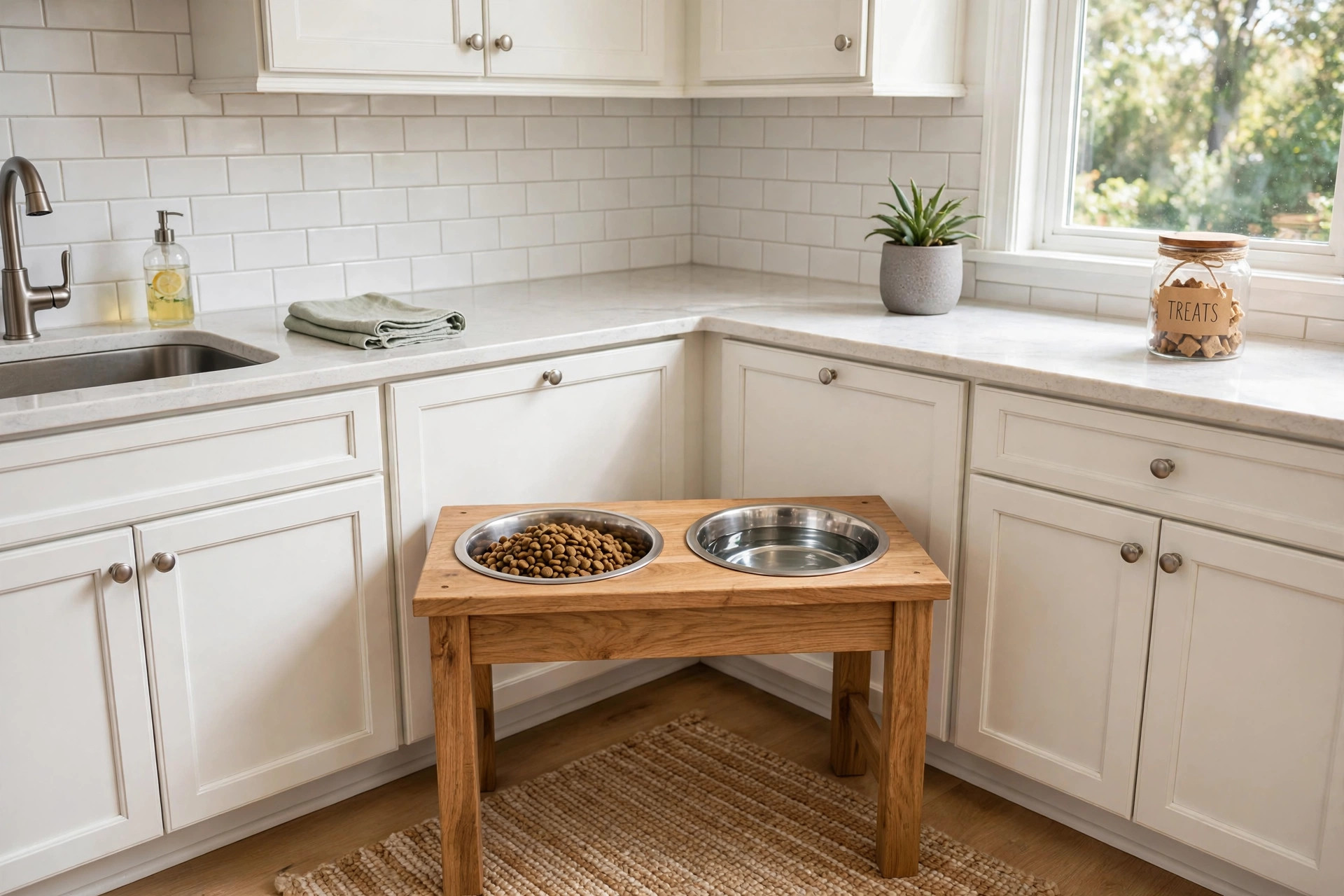
A large dog pushes and nudges his bowls. A light stand will slide across the floor. Look for a wide base, rubber feet, and some weight. Wood stands look warm and homelike. Metal stands are strong and easy to wipe. Some stands include a small storage drawer or shelf for bags of kibble, which pairs well with an airtight pet food storage container to keep food fresh.
Think about your floor surface as well. On tile or hardwood, a stand with strong rubber feet is a must, or the whole feeder will slide as the dog pushes it. On carpet, a wider base spreads the weight and keeps the stand from sinking. If the feeder will live outdoors on a patio, choose a stand rated for weather, since bare wood will swell and crack in the rain.
Types of Elevated Feeders
Single-bowl stands. These hold one bowl for food. They suit dogs that drink from a separate low dish or from a water fountain in another spot.
Double-bowl stands. These are the most popular. One side holds food and the other holds water. They keep both dishes in one tidy place.
Adjustable-height stands. These use legs or brackets that move up or down. They cost more, but they adapt to a growing puppy or to two dogs of different sizes.
Slow-feeder inserts. Some elevated feeders accept a slow-feeder bowl with raised ridges inside. These ridges force a fast eater to slow down. If your dog gulps his meals, slow feeder bowls for fast eaters are one of the best tools against bloat risk, since fast eating is a known risk factor.
Check the insert size before you buy. A slow-feeder bowl made for a small dog will hold too little kibble for a large breed. Look for inserts labeled for large or extra-large dogs. Make sure the insert fits snugly in the stand ring. A loose insert will spin when the dog pushes it, and the dog may flip it out onto the floor.
Decorative stands. Wooden farmhouse styles and wicker holders look nice in a kitchen. Check that the finish is sealed and safe. Avoid stands with sharp edges or loose parts a dog could chew off.
You can compare many styles and read owner reviews at large pet retailers such as Chewy and PetSmart, or browse feeding supplies at Home Depot.
Cost and Price Guide
Elevated feeders for large dogs span a wide price range. A simple metal double-bowl stand often costs between 25 and 50 dollars. Solid wood stands with a finished look usually run 40 to 90 dollars. Adjustable-height models with good hardware may cost 60 to 120 dollars. Slow-feeder inserts add about 10 to 20 dollars.
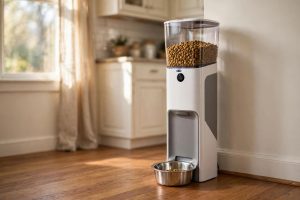
Prices rise with size, material, and brand name. A feeder is a long-term purchase. A sturdy stand that lasts ten years is cheaper in the end than a weak one that tips over and breaks in a year. Watch for sales at holiday weekends, when pet gear often drops in price. Check return policies before you order online, since some stands are larger than they look in photos. A feeder that will not fit in your kitchen is a poor bargain at any price. For owners who travel or work long hours, automatic pet feeders with cameras offer a different way to manage meal timing.
Care and Upkeep
Wash the food and water bowls every day. Old food residue breeds bacteria. A quick wash with hot water and dish soap is enough. Stainless steel bowls can go in the dishwasher.
Wipe the stand once a week. Wood stands need a dry wipe to protect the finish. Metal stands may need a check for rust spots near the feet. Replace rubber feet when they wear thin, or the stand will start to slide.
Change the water daily. A raised water bowl still grows slime if left for days. If your dog is a messy drinker, place a washable mat under the feeder to protect the floor.
Check the feeder each month for loose screws, wobbly legs, or chewed edges. A large dog can be rough on equipment. Tighten what is loose. Replace what is broken. A safe feeder is a stable feeder.
Safety Notes
No feeder can prevent bloat on its own. Treat it as one part of a safe feeding plan. Split the daily food into two or three smaller meals. Keep the dog calm for one hour before and after eating. Do not let the dog run, play hard, or roll on his back right after a meal.
Talk to your vet about your dog’s bloat risk. The vet may suggest a preventive stomach surgery for high-risk breeds. This procedure, called gastropexy, tacks the stomach in place so it cannot twist. It is common in Great Danes and other deep-chested dogs.
Watch for warning signs of bloat. A swollen hard belly, pacing, drooling, and attempts to vomit without result are red flags. These signs mean a rush to the emergency vet, not a wait-and-see approach. The AVMA offers trusted guidance on recognizing veterinary emergencies, and The Spruce Pets publishes clear overviews of common dog health issues.
Frequently Asked Questions
Do elevated feeders really prevent bloat?
They may help a large dog eat more calmly, but no study proves that raised bowls alone prevent bloat. Fast eating, large single meals, and exercise after meals matter more. Use the feeder together with slow feeding habits and smaller meals.
What height should an elevated feeder be for a large dog?
Measure your standing dog from the floor to the top of the front legs at the chest. Set the bowls about six to eight inches below that point. For most large breeds this means a bowl height of 12 to 16 inches off the floor.
Are stainless steel bowls better than plastic bowls?
Yes, in most cases. Stainless steel does not scratch as easily, does not hold odors, and cleans well in the dishwasher. Plastic bowls develop scratches that can trap bacteria. Ceramic is a fine second choice if it is chip-free.
Can a large-breed puppy use an elevated feeder?
Yes, but choose an adjustable stand. A puppy grows fast, and a fixed-height stand will be wrong within months. Raise the stand as the dog grows, and always feed a puppy three smaller meals a day.
My dog eats very fast. What else can I do?
Try a slow-feeder bowl with ridges, spread kibble on a flat tray, or use a puzzle feeder. Feed two or three smaller meals instead of one large meal. Keep the room quiet during meals so the dog does not feel rushed. Adoption and feeding guides at Petfinder and pet care services at Rover also stress calm, consistent feeding routines.
When should I call the vet about bloat?
Call at once if your dog has a swollen hard belly, paces, drools heavily, or tries to vomit with nothing coming up. Bloat can turn fatal in a few hours. Do not wait to see if it passes. Drive to the emergency clinic.
A Final Word
The best elevated feeder for large dogs bloat prevention is a sturdy, well-sized stand paired with smart feeding habits. Choose the right height, pick stainless steel bowls, and keep the stand stable and clean. Feed smaller meals, slow down fast eaters, and rest the dog after meals. No product can replace a vet’s advice, so ask your own vet what suits your dog. A calm meal, served well, is one of the simplest gifts you can give a big dog. Start with the right feeder, add the right habits, and your dog will eat in comfort for many years to come.
References
American Kennel Club. (n.d.). Dog care and training resources. https://www.akc.org American Veterinary Medical Association. (n.d.). Pet care resources. https://www.avma.org ASPCA. (n.d.). Pet care and animal welfare resources. https://www.aspca.org Chewy. (n.d.). Pet supplies. https://www.chewy.com Petfinder. (n.d.). Pet adoption resources. https://www.petfinder.com PetMD. (n.d.). Pet health information. https://www.petmd.com PetSmart. (n.d.). Pet supplies and services. https://www.petsmart.com Rover. (n.d.). Pet sitting and dog walking services. https://www.rover.com The Home Depot. (n.d.). Home improvement products. https://www.homedepot.com The Spruce Pets. (n.d.). Pet care guides and product reviews. https://www.thesprucepets.com
Was this guide helpful?

About Michael Thompson
The My Garden US editorial team writes practical, in-depth home and garden guides for American homeowners — tested advice, no fluff.
You May Also Like

Pet Stairs for High Bed Small Dogs Seniors: A Simple Guide to Safe Climbing
August 3, 2026 0 views
A Heated Outdoor Cat House for Multiple Cats: A Complete Guide
April 27, 2026 0 views
The Best Dog Door for Storm Door Installation
February 1, 2026 0 views