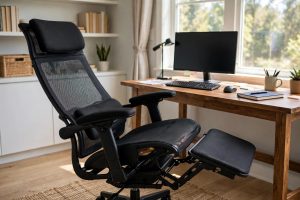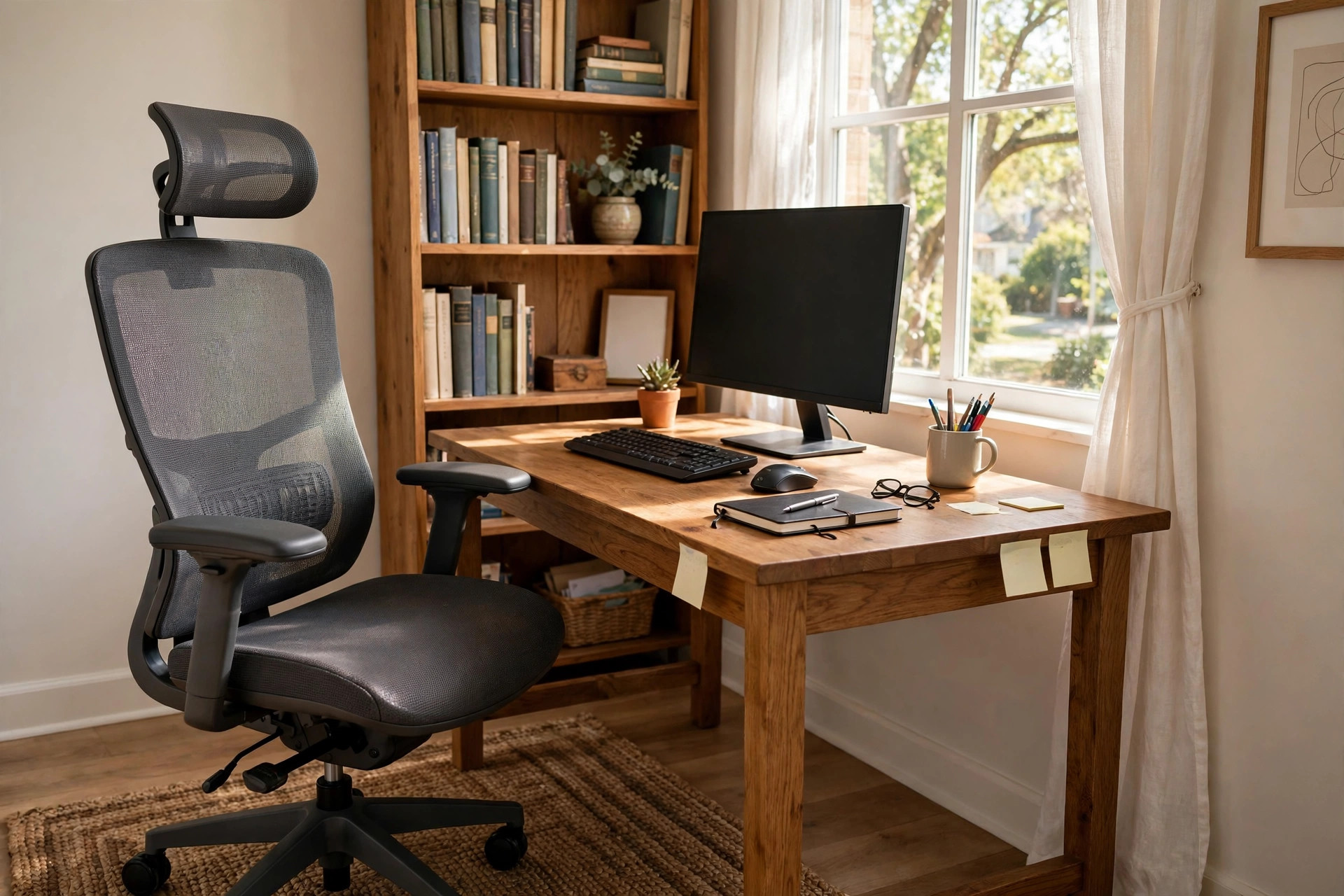

A tall man sits differently than the average worker. His shoulders rise above most chair backs. His neck finds no support where standard chairs end. By late afternoon, the head tips forward, the upper back rounds, and a dull ache sets in across the shoulders and neck. An ergonomic office chair with headrest for tall men is built to fix this exact problem. It has a taller back, an adjustable headrest, and a seat sized for longer legs. The right chair lets a tall man sit back, rest his head, and work for hours without pain.
Why Height Makes Chair Choice Harder
Most office chairs are designed for people between five feet four and six feet tall. A man who is six feet two or taller sits outside that range. His head clears the top of a standard backrest by several inches. When he leans back, his head floats in the air. Nothing holds it. The neck muscles do all the work.
Over weeks and months, this strain adds up. Tall men report three common problems. First, neck stiffness at the end of the day. Second, pain between the shoulder blades. Third, headaches that start at the base of the skull. These signs point to poor support, not weak muscles.
An ergonomic office chair with headrest for tall men gives the upper spine what it needs. The tall backrest reaches the shoulder blades of a big man. The headrest meets the back of the head. When the head rests, the neck muscles relax. The whole spine stacks better. Work feels easier and the day ends with less soreness.
What to Look for in a Chair for a Tall Man: Ergonomic Office Chair with Headrest for Tall Men
Shopping for the right chair is simpler when you know the numbers. Start with backrest height. For a man over six feet two, look for a backrest that measures at least twenty eight inches from the seat to the top. Many standard chairs stop at twenty four inches. That is too short.
Seat depth matters just as much. A tall man has long thighs. If the seat pan is shallow, the thighs hang off the front edge. This cuts blood flow and puts pressure behind the knees. Look for a seat depth of nineteen to twenty one inches, or a seat with an adjustable sliding pan. The rule is simple. Sit all the way back. You should fit two or three fingers between the seat edge and the back of your knee.
The headrest itself deserves close attention. The best headrests adjust both up and down and tilt forward and back. A tall man needs a headrest that rises high enough to meet his head. Fixed headrests often sit too low and push the chin forward. That defeats the purpose. Look for a headrest with at least four inches of height adjustment.
Lumbar support is the next must. The lower back curves inward. A good chair meets that curve with firm, adjustable support. Tall men often find that lumbar pads sit too low on standard chairs. Check that the lumbar support rises high enough or slides to match the lower back.
Armrests should adjust in height and width. A tall man has broad shoulders. Narrow armrests force the shoulders inward. Wide, height-adjustable armrests let the shoulders hang naturally. Pivoting arm pads are a bonus for keyboard and mouse work.
Types and Options Worth Considering
Chair makers offer several styles that suit tall men. A high back office chair for big and tall man frames is the most common choice. These chairs are rated for higher weight, often three hundred to five hundred pounds, and they come with taller backs and wider seats. They are built for large frames from the ground up.
Mesh back chairs are popular with tall men who run warm. The mesh lets air pass through and keeps the back cool. Mesh also flexes, which gives a lighter feel than foam. The trade off is that mesh offers less padding. Some tall men find mesh backrests too firm across the shoulders. Test one before you buy if you can.
Leather executive chairs look rich and feel soft. The thick padding suits tall men who want cushioning. The downside is heat. Leather holds warmth, and a tall man sits in contact with more of the chair. Bonded leather cracks after a few years. Genuine leather lasts longer but costs more.
Knee tilt mechanisms help tall men in a way many shoppers miss. A standard tilt pivots under the center of the seat. A knee tilt pivots near the front of the seat. When you recline, your feet stay on the floor. This matters for tall men because long legs lift off the floor on ordinary tilts. If you like to lean back during calls, a knee tilt keeps you grounded.
Makers like Herman Miller and Steelcase build chairs with tall frames and strong warranties. UPLiFT Desk and Autonomous offer ergonomic seating with standing desk pairings. Review sites such as Wirecutter and PCMag test office chairs and publish detailed results.
Cost and Price: What a Good Chair Costs
An ergonomic office chair with headrest for tall men is not the cheapest seat in the store. Prices follow build quality and size.
Budget chairs run from one hundred fifty to three hundred dollars. At this price you can find basic big and tall models with headrests. The frames are steel or plastic. The padding is thin foam. These chairs work for light use, three to four hours a day. Heavy daily use wears them out faster.
Mid range chairs cost three hundred to seven hundred dollars. This is the sweet spot for most home offices. You get adjustable headrests, sliding seats, and real lumbar support. Brands sold through IKEA, Wayfair, Office Depot, and Staples fill this range. Many tall men find everything they need here.
Premium chairs run seven hundred to one thousand five hundred dollars or more. At this level the frames are aluminum, the mechanisms are refined, and warranties stretch to ten or twelve years. A premium chair is an investment. Divide the price by ten years of daily use and the cost per day is small.
Watch for hidden costs. White glove delivery adds fifty to one hundred dollars. Extended warranties add more. Most chairs ship flat packed and need thirty to sixty minutes of assembly. If you choose the best office chair for long hours home office use, comfort per dollar matters more than brand name.
Care and Upkeep
A good chair lasts longer with simple care. Clean the upholstery once a month. For mesh backs, vacuum with a brush attachment to pull dust from the weave. Wipe spills at once so they do not stain. Fabric cleaners work on cloth seats. A damp cloth handles most marks on vinyl.
Check the bolts twice a year. Chairs loosen with daily use. A hex key tightens most armrest and back bolts in minutes. Loose bolts lead to wobble, and wobble leads to broken parts.
The gas cylinder controls seat height. If the seat sinks on its own, the cylinder is worn. Replacement cylinders cost twenty to forty dollars and swap in with basic tools. This is a common repair on chairs used by heavy tall men.
Casters pick up hair and thread. Flip the chair and clear the wheels twice a year. Clean wheels roll smooth and protect floors. Hard floor casters suit wood and tile. Soft casters suit carpet.
Keep the chair out of direct sun. Sunlight fades fabric and cracks leather. Keep it away from heaters for the same reason. A chair stored well can serve ten years.
Safety Notes
A chair for a tall man must be stable. Check the weight rating before you buy. Buy a chair rated well above your body weight. A three hundred pound man should buy a chair rated for at least three hundred fifty pounds. Ratings assume normal use. Tall men put more leverage on chair parts.
The five star base should be wide. Tall men sit high and lean back far. A narrow base tips more easily. Aluminum bases resist cracking better than nylon under heavy loads.
Recline locks matter. A chair that slips out of recline can dump a tall man backward. Test the lock in the store or in the first week at home. If it slips, return the chair.
Posture still counts. Even the best chair cannot fix a bad setup. Keep the monitor at eye level so the headrest does its job. Feet should rest flat. The desk height should let elbows bend near ninety degrees. Advice guides like The Spruce cover home office setup in plain terms.
Frequently Asked Questions
How tall should the backrest be for a man who is six feet four? Look for a backrest of at least twenty eight to thirty inches from the seat to the top. The top of the back should reach the middle of your shoulder blades or higher. The headrest then rises above that to meet your head.
Is a headrest really needed, or is a tall back enough? A tall back supports the shoulders but not the head. The head weighs about eleven pounds. Without a headrest, the neck holds that weight all day. A headrest takes the load off. For a tall man who leans back, it makes a clear difference.
What is the best seat depth for long legs? Nineteen to twenty one inches suits most men over six feet two. A sliding seat pan is even better because you can tune it. Leave two to three fingers of space between the seat edge and the back of the knee.
Can a tall man use a standard ergonomic chair without a headrest? He can, but he will miss upper support. An office chair for tall person with neck support prevents the forward head drift that causes pain. If you already own a chair, an aftermarket headrest that clamps to the backrest can help, though built in headrests adjust better.
How often should a tall man replace his office chair? Budget chairs last two to four years under heavy use. Mid range chairs last five to eight years. Premium chairs last ten to twelve years. Replace the chair when padding flattens, the cylinder sinks, or pain returns after a full day.
Are big and tall chairs worth the extra cost? Yes, for men above the size limits of standard chairs. Big and tall chairs use thicker steel, wider seats, and taller backs. They carry long warranties. A standard chair used by a very tall man breaks sooner and supports less.
A Short Final Word
The right chair changes how a workday feels. A tall man who once ended the day with a stiff neck can finish fresh. The formula is simple. Tall backrest. Adjustable headrest that reaches high. Deep seat. Firm lumbar support. Wide stable base. Measure yourself, compare the numbers, and buy the chair that fits your frame. If back pain is already a daily problem, also read our guide to the best ergonomic office desk chair for back pain. Shoppers on a budget can start with an ergonomic mesh office chair under 200 dollars. Comfort is not a luxury for tall men. It is the point of the chair.
References
Autonomous. (n.d.). Ergonomic work equipment. https://www.autonomous.ai Herman Miller. (n.d.). Office furniture and ergonomic seating. https://www.hermanmiller.com IKEA. (n.d.). Home furnishings. https://www.ikea.com Office Depot. (n.d.). Office supplies and furniture. https://www.officedepot.com PCMag. (n.d.). Technology product reviews. https://www.pcmag.com Staples. (n.d.). Office supplies and furniture. https://www.staples.com Steelcase. (n.d.). Office furniture and workplace research. https://www.steelcase.com The Spruce. (n.d.). Home and garden advice. https://www.thespruce.com UPLIFT Desk. (n.d.). Standing desks and ergonomic office furniture. https://www.uplift-desk.com Wayfair. (n.d.). Furniture and home goods. https://www.wayfair.com Wirecutter. (n.d.). Product reviews from The New York Times. https://www.nytimes.com/wirecutter
Was this guide helpful?

About David Wilson
The My Garden US editorial team writes practical, in-depth home and garden guides for American homeowners — tested advice, no fluff.
You May Also Like

Adjustable Desk Lamp with Dimmer for Eye Strain: A Plain Guide to Gentler Desk Light
February 20, 2026 0 views
Small Standing Desk for Laptop Only Use: A Practical Guide
March 17, 2026 0 views
Ergonomic Chair for Home Office with Arms: A Practical Buying Guide
April 27, 2026 0 views