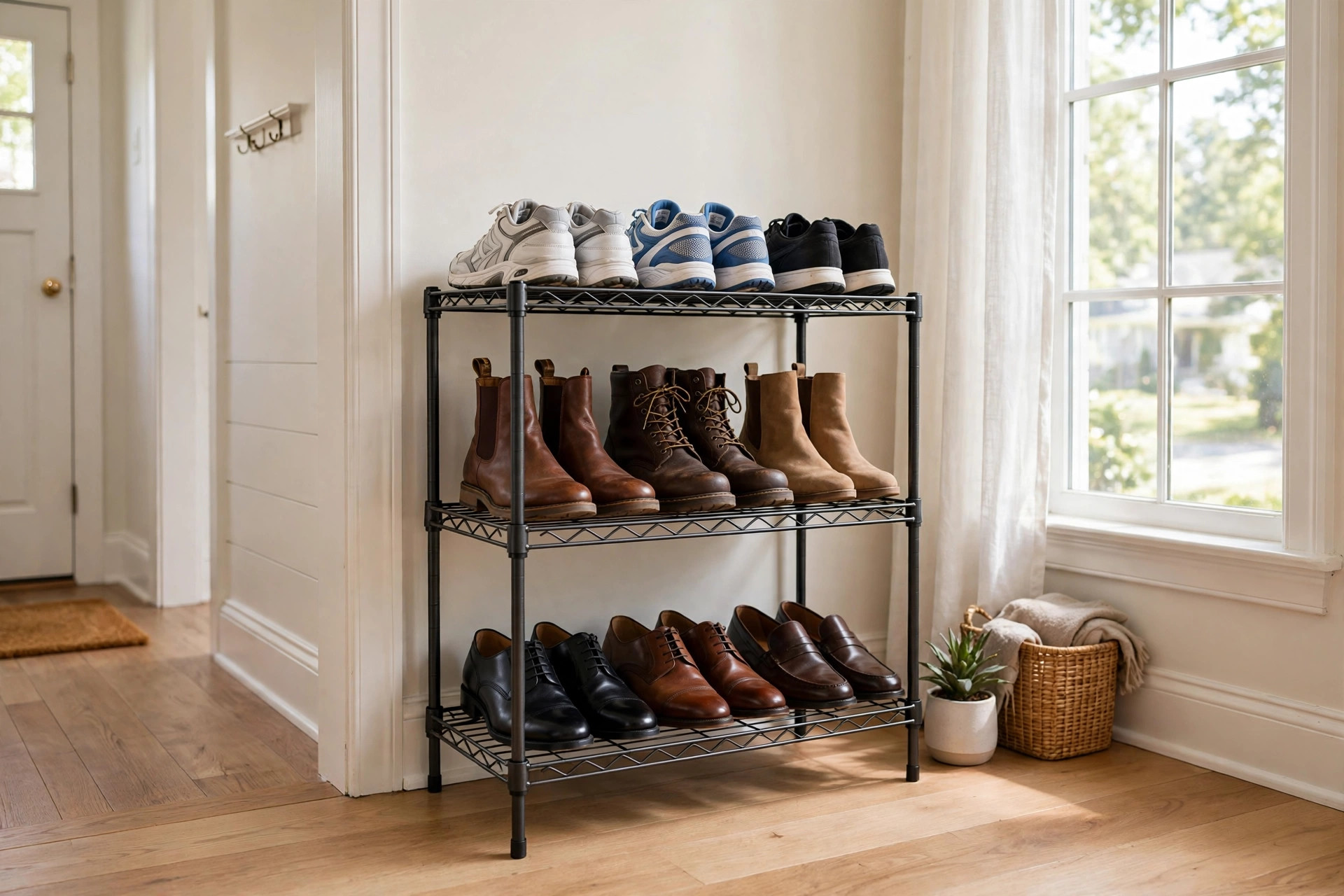

Shoes pile up fast in a busy home. A good rack keeps them neat and easy to find. A shoe storage racks price comparison usa guide helps you see what each type costs. Prices in the United States vary a great deal. A simple fabric rack may cost less than twenty dollars. A solid wood rack may cost more than two hundred dollars. This article compares prices, types, and features in plain terms. By the end, you will know what to expect at each price level and how to choose the right rack for your space and your budget.
Why a Shoe Rack Matters
A home without shoe storage looks messy in minutes. Shoes end up by the door, under the table, and at the foot of the bed. A rack solves this problem at low cost. It gives every pair a place. Guests see an orderly entry. You save time in the morning when you can find the pair you want.
A rack also protects your shoes. Shoes left in a heap lose their shape. Leather scuffs. Soles bend. A rack keeps pairs apart and holds their form. This care makes shoes last longer, which saves money over time.
For families, the gain is even larger. Children drop shoes where they stand. A low rack near the door teaches them where shoes belong. The habit forms fast when the rack is easy to reach.
Types of Shoe Storage Racks: Shoe Storage Racks Price Comparison Usa
Shoe racks come in many forms. The right type depends on your space, your shoe count, and your taste.
Fabric and Non-Woven Racks
These are the cheapest racks on the market. A metal frame holds shelves of fabric or non-woven cloth. Most stand on the floor and hold six to twelve pairs. They are light and easy to move. Many come with a fabric cover and a zip door, which keeps dust off the shoes.
Metal Tier Racks
Metal racks are a step up in strength. Chrome, steel, or coated wire frames hold two to five tiers. They resist rust and wipe clean. Some stack or expand. They suit damp entry halls because air moves freely around the shoes.
Wooden Racks
Wooden racks cost more but look warmer. Pine, bamboo, and rubberwood are common. A two-tier bamboo bench rack can double as a seat near the door. Solid wood holds heavy boots well. It also fits living rooms and bedrooms where looks matter.
Stackable Shoe Boxes and Cabinets
Clear luxury stackable shoe storage boxes for sale offer a neat way to store pairs out of sight. Tilt-out cabinets hide shoes behind wood doors. These cost more than open racks but keep a room looking tidy. They work well for collectors who own many pairs.
Over-the-Door and Wall-Mounted Racks
These racks hang on a door or screw to a wall. They use no floor space at all. They suit small flats and dorm rooms. Most hold ten to twenty pairs of light shoes. Heavy boots are not a good match for these.
Freestanding Tower Racks
Tall towers use vertical space. A narrow tower ten tiers high can hold twenty pairs in a corner. Some spin for easy access. These are a smart pick when floor space is tight but the shoe count is high.
Shoe Storage Racks Price Comparison USA: What Each Type Costs
Prices shift with store, brand, and season, but clear ranges appear across the country. The figures below reflect typical retail prices in the United States in 2026.
Fabric and non-woven racks are the budget choice. Small two-tier models sell for about eight to fifteen dollars at big discount stores. A common retailer for these low prices is Walmart. Covered ten-tier fabric towers run about twenty to forty dollars. Shoppers looking at the top rated shoe storage racks for sale will find that most budget picks sit in this range.
Metal tier racks occupy the middle ground. A simple two-tier chrome rack costs about twenty to thirty-five dollars. Three and four-tier models run thirty-five to sixty dollars. Heavy steel racks with reinforced frames reach seventy to one hundred twenty dollars. Amazon and Target carry wide ranges in these price bands.
Wooden racks start near forty dollars for small bamboo two-tier models. Mid-size rubberwood racks cost sixty to one hundred twenty dollars. Large solid wood benches with seating run one hundred fifty to three hundred dollars. IKEA is known for clean wooden designs at fair prices, while The Container Store stocks strong wood and metal units at the higher end.
Stackable boxes and tilt-out cabinets are the premium end. Single clear boxes cost five to twelve dollars each, so a set of twelve runs sixty to one hundred forty dollars. Tilt-out cabinets that hide thirty pairs cost one hundred fifty to four hundred dollars. High-end models from furniture makers go higher. Wayfair lists many cabinet styles across this whole range.
Over-the-door racks cost fifteen to forty dollars. Wall-mounted models cost twenty-five to seventy dollars depending on size and material. Home Depot carries both styles for entry halls and closets.
Freestanding tower racks cost thirty to ninety dollars. Ten-tier fabric towers sit at the low end. Steel tower racks with strong frames sit at the high end. Advice on building and fitting these units appears on Family Handyman.
Quick Price Summary
| Rack type | Typical USA price range | |—|—| | Fabric / non-woven | $8 – $40 | | Metal tier | $20 – $120 | | Wooden | $40 – $300 | | Stackable boxes / cabinets | $60 – $400 | | Over-the-door / wall-mounted | $15 – $70 | | Tower racks | $30 – $90 |
What to Look for When You Choose
Measure Your Space First
Measure the width, depth, and height of the spot where the rack will stand. Leave room for the door to open if the rack goes near an entry. Check that tall boots fit between tiers. A common mistake is to buy a rack that blocks a walkway.
Count Your Shoes
Count the pairs you own today. Add room for growth. A rack that holds exactly your current count will feel full in a month. Buy one tier more than you need. For a couple, a twenty-pair rack is often right. For a family of four, plan for thirty or more pairs.
Check the Material
Fabric shelves sag under heavy boots. Choose metal or wood for boots and work shoes. Fabric works fine for sneakers, flats, and sandals. In damp halls, pick coated metal or treated bamboo so the rack resists moisture.
Weight Limit
Read the weight limit per shelf. Cheap racks may hold only five pounds per tier. Boots and work shoes need ten pounds or more per shelf. A rack that bends under load will not last.
Assembly
Most racks need home assembly. Simple racks take ten minutes with no tools. Larger wooden racks may need an hour and a screwdriver. Read reviews to learn how hard the build is. Clear guides on The Spruce can help you plan a tidy entry.
Ventilation
Shoes smell when air cannot reach them. Open racks dry shoes faster than closed cabinets. If you choose a closed cabinet, open the doors often or add small vents. Cedar blocks in the cabinet also help with odor.
Cost and Price: How to Get the Best Value
The cheapest rack is not always the best deal. A twelve-dollar fabric rack that tears in six months costs more over time than a sixty-dollar steel rack that lasts ten years. Think in terms of cost per year. A sixty-dollar rack that lasts ten years costs six dollars a year.
Sales bring real savings. January and July clearance events cut storage prices. Holiday weekends at large chains also bring deals. Watch the weekly ads at the stores named in this guide.
Buying in sets can cut the unit price. A set of six stackable boxes often costs less per box than buying one at a time. Check the price per pair of shoes stored. This simple math makes comparison easy.
Shipping matters too. Large racks are bulky. Some stores charge high freight fees. Look for free shipping offers or buy in a local store. Apartment dwellers can find smart small-space ideas on Apartment Therapy before they order.
Do not forget the hidden costs. Wall-mounted racks need anchors and tools. Tall towers may need anti-tip straps for safety. Add these small costs to your comparison.
Care and Upkeep
A shoe rack needs little care, but small habits keep it strong for years.
Dust open racks once a week with a dry cloth. Wipe metal shelves with a damp cloth when they look dull. Dry them at once so no rust forms. Wood shelves benefit from a light oil treatment once a year.
Check screws and joints every few months. Racks loosen with daily use. Tighten what moves. Replace plastic feet that wear out so the frame stays level.
Do not overload shelves. Respect the weight limit. Put heavy boots on the lowest shelf where the frame is strongest. Keep wet shoes off wood until they dry.
For fabric racks, vacuum the shelves now and then. Spot clean stains with mild soap and water. Let the fabric dry fully before you restack shoes.
Safety Notes
Safety is easy to forget with simple furniture, but it matters.
Anchor tall racks to the wall. A ten-tier tower full of shoes is top-heavy. A child who climbs it can tip it over. Use the anti-tip strap or bracket that comes in the box. If none is included, buy one. They cost only a few dollars.
Keep racks clear of walkways and fire exits. A rack that juts into a hall is a trip hazard at night. Leave a clear path at least thirty inches wide.
Check for sharp edges on cheap metal racks. File down any rough spots. Cap exposed tube ends with the plastic feet from the kit.
Place racks away from heat vents. Hot dry air cracks wood and weakens glue joints. It also dries out leather shoes faster.
If you rent, ask your landlord before you drill for wall-mounted racks. Most landlords allow small anchors, but it is wise to ask first.
Frequently Asked Questions
How many pairs can a standard shoe rack hold?
A standard three-tier floor rack holds about nine to twelve pairs of adult shoes. Larger five-tier racks hold eighteen to twenty-four pairs. Always check the listed capacity, since shoe size changes the real count.
What is the best rack for a small entryway?
A narrow tower rack or an over-the-door rack works best in a small entry. Towers use vertical space. Over-the-door racks use no floor space at all. A slim two-tier bench also works and gives you a seat for putting shoes on.
Are expensive shoe racks worth the price?
They can be. Costly racks use solid wood or heavy steel and last many years. Cheap racks may bend or tear within a year. If you own many shoes or heavy boots, a stronger rack pays for itself. For light use, a budget rack is fine.
How do I stop shoes from smelling on the rack?
Air flow is the main fix. Choose an open rack design. Do not stack wet shoes. Sprinkle baking soda inside shoes overnight and shake it out in the morning. Cedar blocks and charcoal bags also absorb odor.
Can shoe racks hold boots?
Many can, but check the tier height and weight limit. Tall boots need twelve to sixteen inches of clearance between shelves. Some racks have adjustable tiers for this reason. Heavy work boots belong on the lowest shelf.
Where should I place a shoe rack in my home?
Near the main door is the most common spot. It catches shoes as people enter. A second small rack in the bedroom closet helps with dress shoes. If you compare full closet organizer systems price comparison usa options, you may find a rack that fits inside a closet system.
A Short Final Word
A shoe storage racks price comparison usa shoppers can use comes down to three steps. First, measure your space and count your shoes. Second, pick the type that fits your home and your habits. Third, compare prices across the stores in this guide and watch for sales. The right rack keeps your home tidy, protects your shoes, and lasts for years. Spend a little time on the choice now, and you will step out the door with ease every morning.
References
Amazon. (n.d.). Online shopping. https://www.amazon.com Apartment Therapy. (n.d.). Home design ideas and inspiration. https://www.apartmenttherapy.com Family Handyman. (n.d.). DIY home repair and maintenance. https://www.familyhandyman.com IKEA. (n.d.). Home furnishings. https://www.ikea.com Target. (n.d.). Retail store. https://www.target.com The Container Store. (n.d.). Storage and organization products. https://www.containerstore.com The Home Depot. (n.d.). Home improvement products. https://www.homedepot.com The Spruce. (n.d.). Home and garden advice. https://www.thespruce.com Walmart. (n.d.). Everyday low prices. https://www.walmart.com Wayfair. (n.d.). Furniture and home goods. https://www.wayfair.com
Was this guide helpful?

About Michael Thompson
The My Garden US editorial team writes practical, in-depth home and garden guides for American homeowners — tested advice, no fluff.
You May Also Like

Ottoman Storage Benches Reviews and Buying Guide
August 23, 2026 0 views
Mudroom Storage Benches: A Price Comparison Guide for American Homes
January 25, 2026 0 views
How to Buy Heavy Duty Wire Shelving Online in California
May 30, 2026 0 views