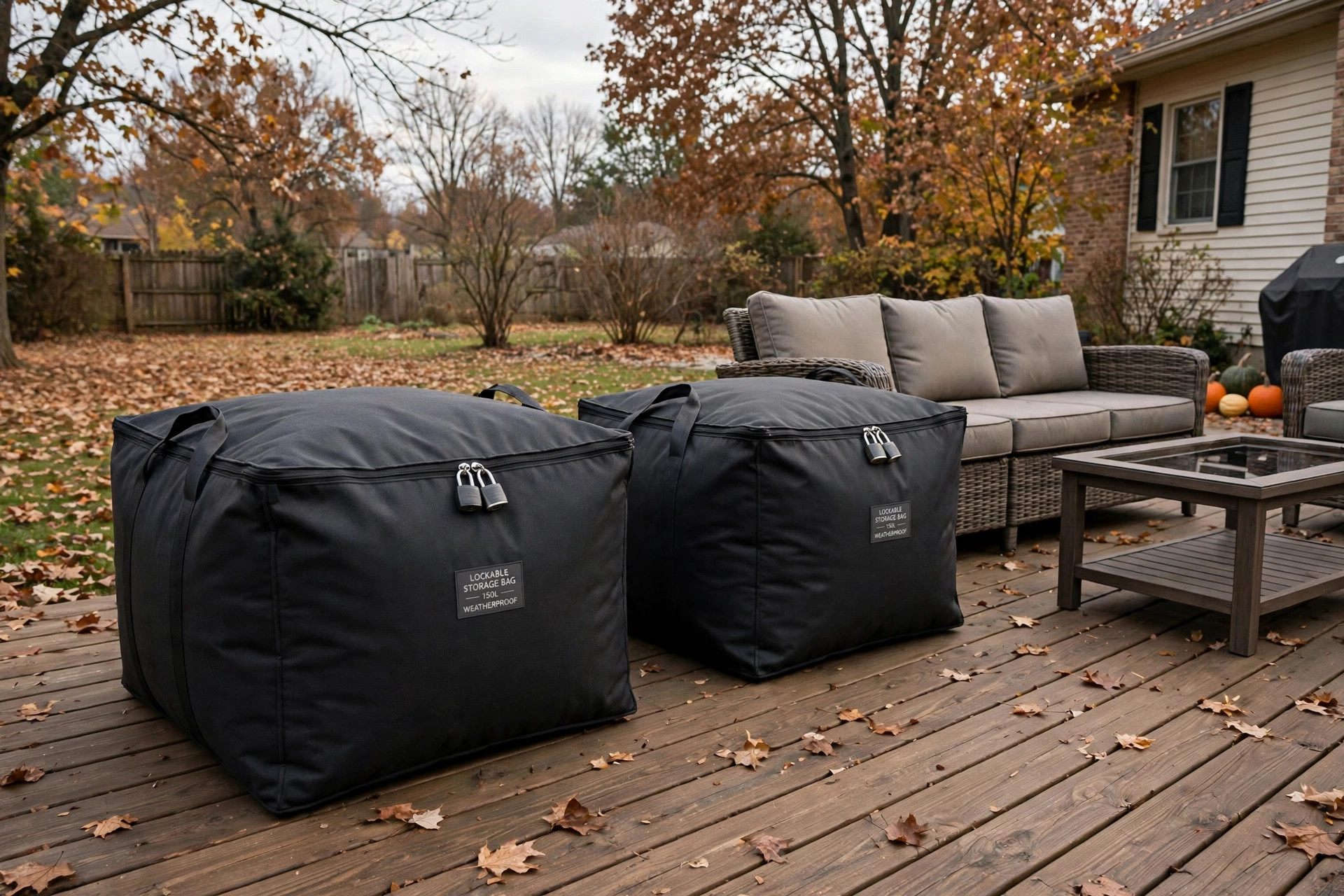
A patio set is a fair investment. In the Midwest, the weather can take that investment apart in one season. Snow, ice, wind, and spring rain all find their way into outdoor cushions. Lockable patio cushion storage bags for midwest homes give those cushions a dry, secure place to wait out the cold months. They are simple products, but a good one can add years to the life of patio furniture. Before you buy, it helps to compare bag sizes and features at large home stores such as The Home Depot and Lowe’s.
Why It Matters
Midwest winters are long and hard. Temperatures drop well below freezing. Snow piles up. Then comes the thaw, with standing water and damp air. Foam cushions soak up moisture like a sponge. Once water gets inside, it stays. The result is mold, mildew, and a sour smell that will not wash out.
Mold is more than an unpleasant smell. It can trigger allergies and breathing trouble. A family that sits on moldy cushions in May may not know why their eyes water. Clean, dry cushions matter for health as well as comfort.
Wind is another problem. Storms sweep across the plains with little to stop them. Loose bags can blow across a yard or into a fence. A lock on the bag keeps the cover shut and can tie the bag to a fixed post or rail.
Theft is less common, but it happens. Patio cushions are easy to carry off. A bag with a lock will not stop a determined thief, but it removes the easy target. That small step is enough in most neighborhoods.
The Midwest freeze-thaw cycle adds a special strain. Days warm just enough to melt snow, then nights freeze the melt water solid. This cycle works water into every seam and fiber. A cushion left outside through March and April takes this beating day after day. A dry bag stops the cycle before it starts. The bag also shields cushions from road salt and lawn chemicals that splash or drift during winter and early spring.
What to Look For When You Choose: Lockable Patio Cushion Storage Bags for Midwest Homes
Not every storage bag is made for Midwest weather. Some are made for mild climates. A buyer should check several points before paying.
Fabric. The bag should be made of a heavy woven material, such as thick polyester or PVC-coated canvas. Thin plastic tears in the first season. Look for a fabric weight of at least 600 denier. That number tells how strong the threads are.
Waterproof seams. A waterproof fabric means little if the seams leak. Good bags have heat-sealed or taped seams. Zipper flaps that fold over the zipper keep rain out of the weak point.
UV resistance. Winter sun is low but steady. Spring sun is strong. A bag that sits on a deck for months should resist fading and cracking. UV-treated fabric lasts longer.
Lock mechanism. The lock can be a small padlock through reinforced holes, or a built-in cable lock. The point is to keep the bag shut and to fasten it to something solid. Check that the lock holes have metal rings, not just punched cloth.
Size. Measure the cushions before you shop. Many shoppers buy bags that are too small. Stack the cushions and measure the full pile. Add a few inches on each side so the bag closes with ease.
Handles. Wide handles make the bag easy to carry to a garage or shed. Strap handles spread the weight. Some bags have wheels. Wheels help when the bag is full of heavy lounge cushions.
Warranty. A maker that trusts its bag offers at least a one-year warranty. Three years is better. Read the terms. A warranty that covers fabric tears but not seam leaks is weaker than it looks. Keep your receipt in the bag’s inside pocket, if it has one, or with your household files.
A lockable patio cushion storage bag for midwest homes should also fit where you plan to keep it. Some buyers tuck bags into a garage corner. Others slide them under a deck overhang or into a shed. If space is tight, two smaller bags may store more with ease than one giant bag. Think about doors and stair turns too. A bag that cannot fit through the garage door is no use in a storm.
Types and Options
Lockable bags come in a few common forms. Each suits a different home.
Soft duffel style. These look like large sports bags. They are easy to store in a corner when empty. Most have two zippered openings for easy loading.
Box style. These hold their shape with a firm frame. They stack well in a garage. They cost more but give better protection against crushing.
Bench style. A long bag that fits bench cushions and chair pads. It works well under a deck overhang.
Deck box with locking lid. This is not a bag, but many shoppers compare the two. A deck box holds more and locks solidly. It costs more and takes up floor space all year.
For a typical Midwest patio with four chairs and a love seat, two large soft bags or one box style plus one soft bag will do the job. A single lockable patio cushion storage bag can also serve renters with a small balcony, where a full deck box will not fit.
Cost and Price
Prices range from about thirty dollars to well over one hundred fifty dollars per bag. The low end buys thin fabric and a simple drawstring with a small lock tab. The high end buys heavy canvas, sealed seams, and a stout cable lock.
A fair middle price for a strong, lockable bag is sixty to ninety dollars. Two bags at that price protect a full patio set. Compare that to the cost of new cushions, which can run two hundred to five hundred dollars for a set. The bags pay for themselves if they save one set of cushions from ruin. Product ratings from Consumer Reports can help you judge which fabrics hold up best.
Watch for sales at the end of summer. Stores clear patio goods in August and September. Wayfair, Amazon, and IKEA often cut prices then as well. Buying early saves money and leaves time to test the fit before winter.
Care and Upkeep
A storage bag needs some care to last. Shake off dirt before loading it. Clean the cushions first. A cushion that goes in damp will grow mold inside a sealed bag.
Place the bag in a spot with good drainage. A deck that holds puddles will sit against the bag bottom. Raise the bag on wood blocks or a pallet if the spot floods.
Check the bag once a month during winter. Open it and let the cushions air out on a dry day. This takes little time and stops damp air from settling.
Clean the bag itself in spring. Wipe the outside with a damp cloth and mild soap. Let it dry in the sun before you put it away. Store it loose, not folded tight, so the coating does not crack. Seasonal upkeep guides from The Spruce and Family Handyman list these small chores alongside other spring patio tasks.
Oil a metal lock with a drop of household oil before winter. Locks freeze shut in cold snaps. A small cover over the lock helps too.
If you use a shed or garage, place the bags off the bare floor. Concrete sweats in spring. A wood pallet or a few bricks under the bag keeps the bottom dry. Do not stack heavy tools or paint cans on top of the bags. The weight crushes foam and can crack a zipper. A label on the outside of each bag saves time in spring. Write the contents on a tag so you do not open every bag to find the right set.
Safety
Storage bags are safe products, but a few points deserve care.
Keep bags away from grills, fire pits, and heaters. Most bag fabrics melt or burn when close to flame. Give any heat source a wide berth.
Do not store chemicals in a cushion bag. Pool chlorine, paint, and fuel give off fumes. They can stain cushions and harm lungs.
Make sure the bag cannot tip onto a walkway. A full bag is heavy. Place it against a wall or tie it down with the lock cable.
Children may see a large bag as a hiding spot. A bag with a lock should stay locked when not in use. A child inside a zipped bag could not get out with ease.
FAQ
How many cushions fit in one bag? It depends on the bag size. A large bag, about 50 inches long and 18 inches wide, holds four to six standard chair cushions. Deep lounge cushions take more room. Measure your stack first.
Will the bag keep out mice? A bag is not mouse proof. Mice can chew through fabric. Keep the bag in a clean area. Remove food crumbs from cushions. A hard deck box gives better rodent protection.
Can I leave the bag outside all winter? Yes, if the bag is made for outdoor use. Check the label for all-weather or outdoor rating. A cheap indoor storage bag will fail outdoors.
Do I need a lock, or is a zipper enough? A zipper keeps rain out. A lock keeps the zipper shut in wind and makes theft harder. For Midwest wind alone, the lock is worth the small extra cost.
What is the best way to dry cushions before storage? Stand them on edge in the sun for a full day. Turn them at midday. If the day is damp, move them to a garage with a fan. They should feel fully dry to the touch, with no cool damp spots.
How long will a good bag last? A well-made bag lasts five to eight years with basic care. Cheap bags often fail in one or two winters. Sun, freeze, and thaw break down thin fabric fast.
A Short Final Word
Lockable patio cushion storage bags for midwest homes are a small purchase that guards a large one. They keep cushions dry through snow and rain, hold fast in prairie wind, and add a layer of security. Choose heavy fabric, sealed seams, and a real lock. Measure before you buy. Care for the bag as you would the furniture itself. Come spring, the cushions will come out fresh, and the patio will be ready on the first warm day.
For more on keeping your home tidy through every season, see our guide to over the door organizers, our review of premium corner closet organizers, and our spice rack organizers buying guide. Broader storage and organization ideas from The Container Store and Apartment Therapy can help you plan the whole garage or shed around your patio gear.
References
Amazon. (n.d.). Online shopping. https://www.amazon.com Apartment Therapy. (n.d.). Home design ideas and inspiration. https://www.apartmenttherapy.com Consumer Reports. (n.d.). Product reviews and ratings. https://www.consumerreports.org Family Handyman. (n.d.). DIY home repair and maintenance. https://www.familyhandyman.com IKEA. (n.d.). Home furnishings. https://www.ikea.com Lowe’s. (n.d.). Home improvement products. https://www.lowes.com The Container Store. (n.d.). Storage and organization products. https://www.containerstore.com The Home Depot. (n.d.). Home improvement products. https://www.homedepot.com The Spruce. (n.d.). Home and garden advice. https://www.thespruce.com Wayfair. (n.d.). Furniture and home goods. https://www.wayfair.com
Was this guide helpful?

About Lisa Anderson
The My Garden US editorial team writes practical, in-depth home and garden guides for American homeowners — tested advice, no fluff.