
Introduction
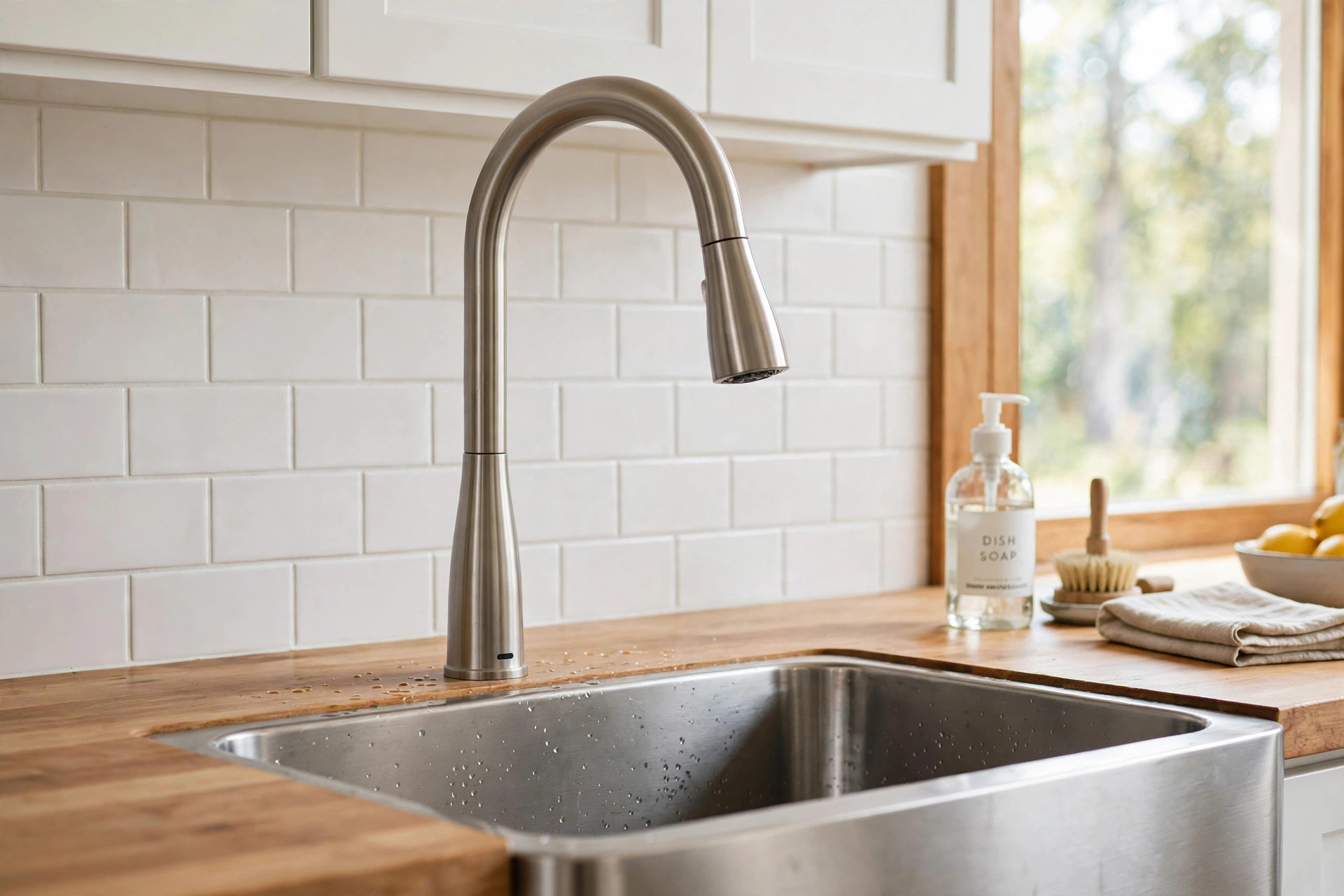
A touchless kitchen faucet lets you start and stop the flow of water with a wave of the hand. The best touchless kitchen faucet reviews USA guides often place these hands-free models at the top of wish lists for busy kitchens. You do not need to touch the handle when your hands are full of dough or raw chicken. The water starts when you want it and stops when you are done.
These faucets use a small motion sensor, much like the ones in public restrooms. The sensor sees your hand or a pot and opens the valve. Move away and the water shuts off. Most models also keep a normal handle, so you can mix hot and cold or run the faucet in the old way if the batteries die.
Shoppers in the United States now find touchless models from almost every large brand. Prices range from under two hundred dollars to well over one thousand. This guide walks through how they work, what to look for, how much they cost, and how to keep them in good shape for years.
Why a Touchless Faucet Matters: Best Touchless Kitchen Faucet Reviews Usa
The kitchen is the hardest working room in the house. The faucet may run dozens of times a day. Every time you touch the handle with dirty hands, germs move to the metal and wait for the next person. A hands-free faucet breaks that chain. Studies cited in the press have shown kitchen faucets among the most touched surfaces in the home, and any step that cuts down contact is a gain for household health.
A touchless faucet also saves water. You wave the water on, rinse the item, and wave it off. There is no idle stream running while you scrub a pan. Many models shut themselves off after a set time as a back-up. Over a year of daily use, that adds up to real savings on the water bill.
There is a comfort factor too. When you carry a heavy pot of pasta to the sink, you do not need to set it down to turn on the water. A quick wave of the forearm starts the flow. Home cooks who fill large pots, wash big sheet pans, or clean up after children tend to notice this small ease many times a day.
For homes with elderly or disabled users, the gain can be larger. Turning a stiff handle takes grip strength. Waving a hand takes almost none.
How Touchless Faucets Work
Under the sink, a touchless faucet has a control box. The box holds a battery pack or a plug-in power supply, an electronic valve, and the wires that run up to the sensor. The sensor sits at the base of the spout or just under it. When it sees motion in its zone, it signals the valve to open. When the motion stops, a timer closes the valve after a few seconds.
Most models need power. Common options are six AA batteries, which last one to three years with normal use, or an AC adapter that plugs into an outlet under the sink. Some high-end models let you use either. Check under your sink for an outlet before you buy. If you plan to use an adapter and there is no outlet, a plumber or electrician can add one, but that adds cost.
Temperature and flow are still set by a handle or a dial on the faucet body. The sensor only controls on and off. Many models let you adjust how far the sensor reaches, which helps in small sinks where steam might trip it.
You can learn the basics of safe home water systems at the EPA before you shop, and practical install tips appear in This Old House.
What to Look For When You Choose
Sensor Quality
Not all sensors are equal. Good ones react in a fraction of a second and ignore small movements. Weak ones turn on late or shut off while you are still rinsing. Read buyer notes on the big retail sites about false starts and delayed stops. A faucet that needs a second wave every time will annoy you fast.
Spout Height and Reach
Measure your sink. A tall arc spout gives room to fill a stock pot, but it can splash in a shallow sink. A spout that pulls down or pulls out adds reach for rinsing corners. For a deep single-bowl sink, a high arc with a pull-down head is a common and happy pairing.
Finish
Chrome is the classic choice. It wipes clean and resists spots. Brushed nickel hides fingerprints better. Matte black looks modern but shows water spots in hard-water areas. Oil-rubbed bronze and brushed gold are fashion finishes that cost more. Pick a finish that matches your cabinet hardware and will still please you in ten years.
Valve and Cartridge
The heart of any faucet is the valve. Ceramic disc cartridges last longest and turn smoothly. Cheap plastic cartridges wear out in a few years and may leak. Good brands name their cartridge type in the product sheet. If the sheet is silent on the cartridge, take that as a warning sign.
Battery or Plug Power
Battery models are easier to install and keep working in a power cut. Plug models never need battery changes. Some units mix both, with batteries as back-up. Count the cost and hassle of battery changes over the life of the faucet when you compare prices.
Warranty
Faucets are long-term goods. A limited lifetime warranty on the finish and function is standard from the large American brands. Read the fine print on electronic parts, which may carry a shorter term, often five years. Keep your receipt, as most makers ask for proof of purchase.
Retailers like Home Depot and Lowe’s list warranty terms on each product page, and brand pages such as Moen, Delta, and Kohler publish full warranty documents.
Types and Options
Single-sensor models. One sensor at the base of the spout. Wave to start, wave to stop. Simple and the most common type.
Dual-sensor models. A front sensor for quick tasks and a side sensor for a longer timed flow. Useful in big family kitchens.
Touch plus touchless models. These wake with a tap anywhere on the spout or handle as well as by wave. If your hands are truly full, the wave works. If they are merely messy, a tap with the wrist works too.
Pull-down touchless. The spout head pulls out on a hose for rinsing and spraying, and the sensor controls the main flow. This is the most popular style in American kitchens today.
Commercial-style touchless. A tall spring neck with an exposed hose, borrowed from restaurant kitchens. It looks bold and gives great reach. It needs more sink depth and a bigger budget.
Voice and app models. A few new models pair with home assistants or phone apps for measured fills, such as one cup or two liters. They cost more and add complexity. Most buyers do not need them.
For background on water-saving fixtures, the Aquasana site covers filtration add-ons, and Family Handyman has plain-language repair guides.
Cost and Price Ranges
Touchless kitchen faucets in the United States fall into three broad bands.
Budget, 150 to 300 dollars. Store brands and newer online brands. You get basic wave-on and wave-off, a pull-down sprayer, and battery power. Finishes are usually chrome or brushed nickel. Sensor quality varies, so read reviews with care.
Mid-range, 300 to 600 dollars. The heart of the market. Major brands sell strong models here with better sensors, ceramic disc cartridges, and longer warranties. This is where most buyers find the best value.
Premium, 600 to 1,200 dollars and up. Designer finishes, dual sensors, voice control, and heavy solid-brass bodies. You pay for looks and small extras as much as for function.
Installation adds to the total. A plumber typically charges 150 to 350 dollars to swap a faucet if the shut-off valves and supply lines are in good shape. If new supply lines, an outlet for plug power, or sink changes are needed, the bill can rise. Some handy owners do the swap themselves in an hour or two with basic tools.
Independent test results help weigh price against performance. See Consumer Reports for lab-based ratings of kitchen faucets.
Top Features Worth Paying For
– Adjustable sensor range. Lets you tune the faucet to your sink and habits. – Manual override. A normal handle that works even with dead batteries. – Auto shut-off timer. Stops the flow after a few minutes as a safety net. – Magnetic docking. Holds the pull-down head firmly in place. – Spot-resistant finish. Keeps the faucet looking clean between wipedowns. – Lead-free brass body. Meets federal safe drinking water rules.
Skip features you will not use. A built-in water filter adds upkeep cost and is better handled by a separate under-sink unit.
Installation: What to Know
Most touchless faucets fit a standard single-hole or three-hole sink. An escutcheon plate covers extra holes. You need clear space under the sink for the control box and battery pack. Measure before you order.
Shut off the water at the angle stops under the sink. If those valves are old and crusty, replace them while you are at it. A plumber can do the whole job in one visit. Connect the supply lines, mount the control box, plug in the sensor wire, and test the wave range before you put the cleaning supplies back.
One common mistake is mounting the sensor cable where it rubs against the pull-down hose. Give the cables room. Another is skipping the flush step. Run water through the lines before you connect the faucet to clear grit that could harm the new valve.
Care and Upkeep
Touchless faucets need little care, but small habits keep them working well.
Wipe the spout and sensor window with a soft damp cloth once a week. Do not use abrasive pads or harsh chemicals, which dull the finish and can cloud the sensor lens. Vinegar and water handles most mineral spots.
Change batteries once a year on a set date, even if they still work. A dead battery at dinner time is no fun. Keep a spare set under the sink.
Check the aerator twice a year. Unscrew it, rinse out grit, and screw it back. Low flow often comes from a clogged aerator, not a bad faucet.
In hard-water areas, wipe the base of the spout dry after heavy use. Mineral crust around the sensor can confuse it over time. A water softener or a whole-house filter can cut this chore, and background reading at Aquasana explains common home water options.
If the sensor starts acting up, the fix is often simple. Clean the lens, check the battery, and make sure no new item under the sink blocks the sensor zone. The manual that ships with the faucet lists the reset steps for its model.
Safety Notes
Electrical parts and water share the space under the sink. Use only the power supply that ships with the faucet. Keep the control box off the cabinet floor where a small leak could reach it. If you see water pooling near the box, shut off the water and dry the area before you touch any wires.
Teach children that the faucet is not a toy. The auto shut-off timer is a back-up, not a promise. An adult should stay near when small children use the sink.
If your home has very old plumbing, have a plumber check water pressure before you install. Most touchless faucets want 20 to 125 pounds per square inch. Very low pressure gives a weak stream. Very high pressure can wear seals fast and may need a pressure reducer.
How It Compares to Other Kitchen Faucet Styles
A touchless model is one choice among many. A commercial style kitchen faucet gives a bold pro look and a spring hose, but most lack sensors. A pull down kitchen faucet without touchless tech costs less and has fewer parts that can fail, which some buyers prefer.
Think about the whole sink area too. A workstation kitchen sink with ledges and accessories pairs well with a tall touchless spout, since the extra room lets you use the full height of the arc without splashing.
FAQ
Do touchless kitchen faucets waste batteries? No. Most run one to three years on a set of AA batteries with normal family use. The sensor sleeps between uses. Plug-in models use almost no power at all.
What happens during a power outage? Battery models keep working. Plug-only models stop until power returns, but most have a manual handle you can still use.
Can I install one myself? Many owners do. If you have working shut-off valves and basic tools, plan on one to two hours. Call a plumber if the valves are frozen or you need a new outlet under the sink.
Are touchless faucets good for hard water? They work fine, but mineral spots show on the finish and can cloud the sensor. Wipe the faucet dry after use and clean the sensor lens monthly in hard-water homes.
Do they work with a water filter? Yes, in most cases. The faucet sits downstream of an under-sink filter with no trouble. Check the filter’s flow rate, since a very slow filter can make the faucet feel weak.
How long should a touchless faucet last? A good one lasts 10 to 20 years. Electronic parts may need service sooner than the brass body.
Final Word
The best touchless kitchen faucet reviews USA buyers trust keep coming back to the same points. Buy a known brand. Favor sensor quality over extra gadgets. Match the spout to your sink. And set aside part of the budget for good installation. A mid-range model from a maker with a long warranty will serve a busy kitchen for years, save water every day, and make the small chores of cooking just a bit easier.
References
Aquasana. (n.d.). Water filtration systems. https://www.aquasana.com Consumer Reports. (n.d.). Product reviews and ratings. https://www.consumerreports.org Delta Faucet. (n.d.). Kitchen and bathroom faucets. https://www.deltafaucet.com Family Handyman. (n.d.). DIY home repair and maintenance. https://www.familyhandyman.com Kohler. (n.d.). Bathroom and kitchen fixtures. https://www.kohler.com Lowe’s. (n.d.). Home improvement products. https://www.lowes.com Moen. (n.d.). Faucets and plumbing fixtures. https://www.moen.com The Home Depot. (n.d.). Home improvement products. https://www.homedepot.com This Old House. (n.d.). Home renovation guidance. https://www.thisoldhouse.com U.S. Environmental Protection Agency. (n.d.). Protecting human health and the environment. https://www.epa.gov
Was this guide helpful?

About Lisa Anderson
The My Garden US editorial team writes practical, in-depth home and garden guides for American homeowners — tested advice, no fluff.
You May Also Like
Wall Hung Toilet Pros and Cons Reviews USA: Is a Floating Toilet Right for Your Bathroom
February 2, 2026 0 views
Best Water Leak Sensors for Basement USA
September 12, 2026 0 views
Polybutylene Pipe Replacement Cost USA: What Homeowners Should Know
April 14, 2026 0 views