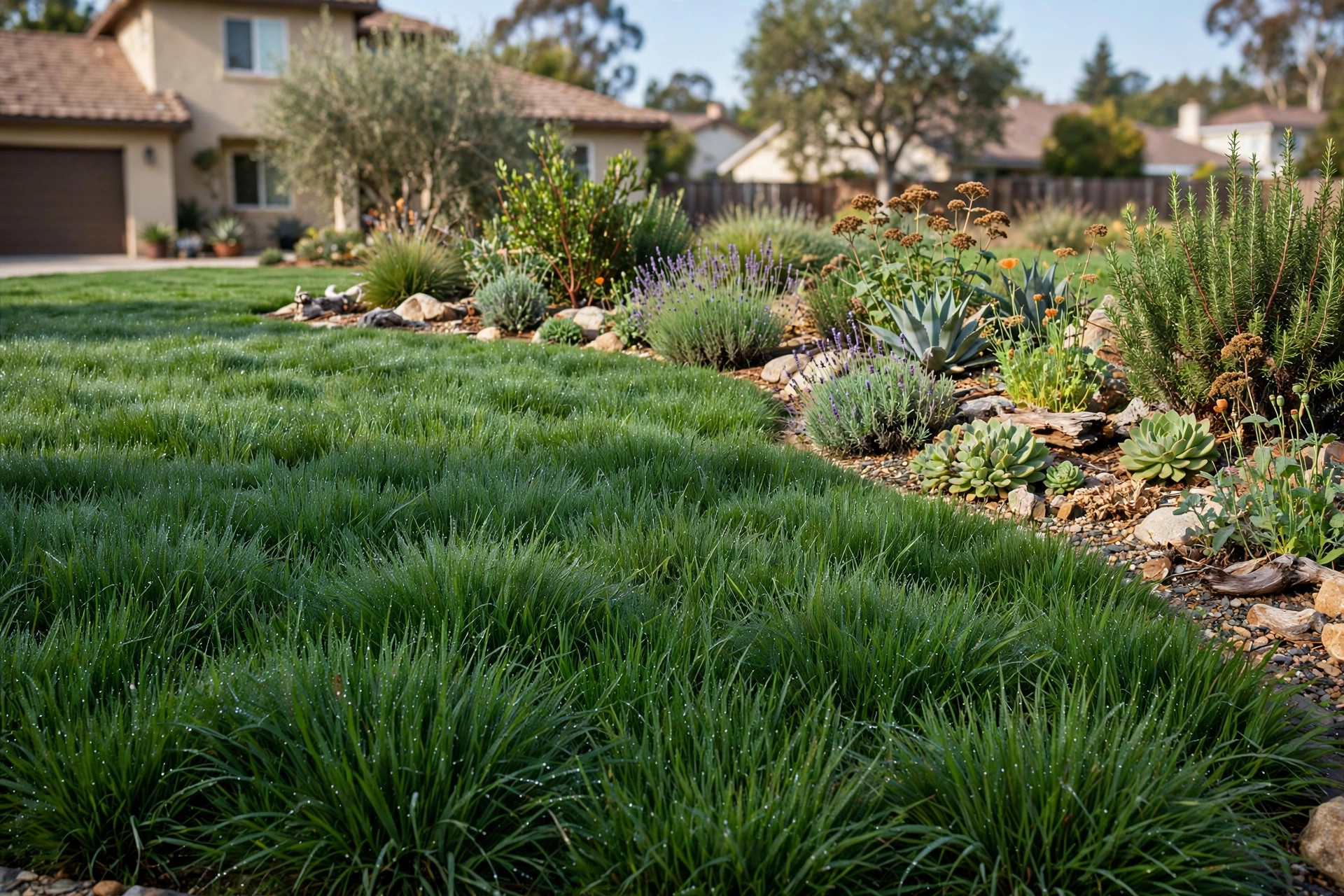

California keeps water rules strict in many years. A dry summer can turn a soft lawn brown in weeks. That is why so many home owners now search for the best drought tolerant grass seed California stores can offer. A good seed mix cuts the water bill. It keeps the yard green through heat. And it still feels soft under bare feet.
This guide walks you through the whole job. You will learn which grass types stand up to heat and low water. You will learn how to read a seed bag. You will learn when to plant, how much to spread, and how to care for the young lawn. No hard words. No sales talk. Just plain facts a home owner can use.
Why Drought Tolerant Seed Matters in California
California has two main weather facts that shape every lawn. First, much of the state gets little rain from May to October. Second, water rates rise fast when you use more than your fair share. A thirsty lawn fights both of these facts. A drought wise lawn works with them.
The best drought tolerant grass seed California growers recommend does not mean a lawn with no water. It means a lawn that needs far less. Some types grow roots six to ten inches deep. Deep roots pull water from soil that shallow roots never reach. That is the whole secret. The seed grows a plant built to hunt water on its own.
There is another reason to switch. Many cities give rebates for turf removal. A few offer help for lawn makeovers too. A new drought wise lawn can lower your bill by a third or more in the first year. When you read tips at Scotts or Pennington, you will see the same math again and again. Less water per week means real money saved.
What “Drought Tolerant” Really Means on a Seed Bag
Seed bags use the word freely. The law does not set a strict rule for it. So you must read past the front label. Look at the seed tag stapled to the back of the bag. It lists the exact grass species and their share by weight. A bag that says “drought blend” but holds mostly cheap annual rye is not what you want.
Real drought types for California include tall fescue, fine fescue, buffalo grass, and hybrid Bermuda. Each fits a different part of the state. We will walk through them below.
The Main Grass Types for Dry California Lawns: Best Drought Tolerant Grass Seed California
Tall Fescue: The Workhorse of the West
Tall fescue is the most common answer to the best drought tolerant grass seed California lawns question. New turf-type tall fescue grows deep roots. It stays green longer than older lawn grasses with the same water. It takes foot traffic well. It also keeps a dark green color that home owners like.
Tall fescue grows best from seed in the fall. It handles some shade, though full sun sites still do well with enough early water. If you have shady corners, you may also want to read tall fescue seed for shade reviews before you buy.
Fine Fescue: Soft, Low, and Thirsty for Nothing
Fine fescue is a group of narrow-leaf grasses. They form a soft carpet. They need the least water of the common seed-grown grasses. They also grow slowly, so mowing is easy.
The catch is wear. Fine fescue does not take heavy play well. It fits front lawns, side yards, and slopes more than back yards with dogs and kids. A mix of tall and fine fescue gives many yards the best of both worlds.
Buffalo Grass: A Native Built for Dry Heat
Buffalo grass comes from the plains. It loves heat. It needs little water once grown. It also needs almost no fertilizer. The look is different from a classic lawn. It grows low and has a blue-green tone.
Buffalo grass spreads by runners, but seed kinds exist too. It turns brown in winter cold. In mild California winters it may stay partly green. Know this before you plant, or the winter color may shock you.
Bermuda Grass: The Hot Climate Classic
Bermuda grass takes full sun and heat like no other seed-grown grass. In Southern California it thrives. New seeded kinds are far better than the old common Bermuda. They look finer and denser.
Bermuda also goes dormant in cool weather. It drinks more water than buffalo grass but far less than old bluegrass lawns. Think of it as the middle road for hot inland valleys.
How to Read a Seed Bag Like a Pro
The tag tells you everything. Here is what to check in order.
1. Species list. The Latin names come first. Festuca arundinacea is tall fescue. Festuca rubra is red fescue. Bouteloua dactyloides is buffalo grass. 2. Germination rate. Look for 85 percent or higher. Low germination wastes your money. 3. Weed seed. The tag lists weed seed by share. Zero is best. Anything under half a percent is fine. 4. Other crop seed. This is seed of other grasses mixed in by mistake. Under half a percent is the goal. 5. Test date. Seed gets old. A test date within the last twelve months is what you want.
Price per pound means little on its own. A cheap bag with low germination costs more per live seed than a good bag at a higher price. Do the math on the tag, not the price sticker.
When to Plant in California
Fall is the best season for seed in almost all of California. Mid September to late October gives warm soil and cool air. Seed sprouts fast. Weeds sprout slow. The young grass grows roots all winter.
Spring is second best. March to April works if you missed fall. But spring weeds fight the young grass hard. You must watch and pull weeds early.
Never seed in the dead of summer heat. Soil bakes dry. Seed dies before it roots. Guides at LawnStarter and The Spruce agree on this point every year.
Soil Prep Before a Single Seed Falls
Good seed on bad soil still fails. Spend one weekend on prep.
– Mow the old grass very short and rake up the waste. – Test the soil if you can. A simple kit from a garden center works. – Loosen the top two inches with a rake or rented slit seeder. – Spread a thin layer of compost, about a quarter inch. – Level low spots so water does not pool.
Do not till deep. Deep tilling wakes up weed seeds that slept for years. Shallow prep is enough.
How Much Seed to Spread
Each grass has its own rate. The bag gives a number in pounds per thousand square feet. Follow it. More seed does not mean a thicker lawn. It means crowding, weak stems, and disease.
Common rates:
– Tall fescue: 8 to 10 pounds per thousand square feet for new lawns. – Fine fescue mix: 5 to 7 pounds per thousand square feet. – Buffalo grass: 3 to 5 pounds per thousand square feet. – Bermuda seed: 2 to 3 pounds per thousand square feet.
Use a broadcast spreader for even coverage. Walk at a steady pace. Overlap each pass by half. When you finish, lightly rake the seed into the top quarter inch of soil. Then roll or press it down so seed touches soil.
Watering New Seed the Right Way
New seed must stay damp, not wet. Water light two or three times a day for the first two weeks. A fine mist is best. Puddles wash seed away.
When grass reaches two inches, cut back to once a day. Then move to deep watering twice a week. Deep and rare watering trains roots to grow down. That is how you build drought strength.
A smart timer can make this easy. If you live in California, check smart sprinkler timer rebates for california homes to see if your water district helps pay for one.
Cost and Price: What to Expect
Grass seed is one of the cheapest parts of a lawn project. A good 10 pound bag of tall fescue costs between 40 and 90 dollars at most stores. That covers about a thousand square feet.
Your real costs are soil prep and water. Renting an aerator or slit seeder runs 70 to 100 dollars a day. Compost costs 30 to 60 dollars per cubic yard delivered. The first month of watering adds to the water bill, but it is far less than sod.
Compare this with sod. Sod costs 50 cents to a dollar per square foot installed yourself, and more with labor. Seed wins on price by a wide margin. It also gives you more grass choices than sod farms grow.
Care and Upkeep Through the First Year
Mowing
Mow when the grass hits three and a half inches. Cut to three inches. Never take more than a third of the blade at once. Sharp blades matter. Dull blades tear tips and turn them brown.
Keep mower blades sharp with regular care. Tips from Greenworks Tools and Ryobi Tools show how simple blade upkeep extends mower life too.
Feeding
Drought wise grasses need less food. One feeding in fall is enough for most. Use a slow release fertilizer. Too much nitrogen makes soft growth that drinks more water.
Overseeding Each Fall
Even the best lawn thins with time. A light overseed each fall keeps it dense. Use half the new-lawn rate. For cool season mixes, read best overseed blend for cool season lawns to pick the right seed for the job.
Watering a Grown Drought Tolerant Lawn
Once grown, these grasses need far less than old lawns. A good rule is one inch of water per week in summer heat, less in spring and fall. Water before dawn so less burns off in sun.
Watch the grass, not the clock. Footprints that stay flat mean the lawn is thirsty. Blades that fold or turn gray-green mean the same. Water deeply when you see these signs. Skip watering when the soil still feels damp two inches down.
Many California districts set watering days by address. Follow them. Fines cost more than a brown patch.
Safety Notes for Families and Pets
Grass seed itself is not toxic. But keep kids and pets off new seed until it sprouts. Seed coats can carry starter fertilizer. Also, loose seed sticks to paws and gets tracked inside.
Store seed bags high and dry. Moist seed molds fast. Moldy seed can harm pets that chew the bag.
When you shop for lawn gear, large stores like Home Depot stock both seed and the safety gear you need, such as gloves and masks for dusty soil work. Reviews at Consumer Reports can help you compare spreaders and mowers before you buy.
Watch out for old stock. Some stores keep seed bags from last year. Check the test date as noted above. If you have doubts, buy from a farm supply store that turns stock fast.
Common Mistakes to Avoid
– Planting too deep. Seed buried more than half an inch may never sprout. – Watering at night. Wet leaves all night invite fungus. Water at dawn. – Feeding too much. Extra fertilizer makes thirsty grass, not tough grass. – Cutting too short. Scalped grass loses roots fast. Keep it near three inches. – Seeding in summer. Heat kills seed before it roots. Wait for fall.
Power tools make prep work faster but need care. Manuals at Echo USA and John Deere remind users to wear eye and ear protection around tillers and mowers.
FAQ
How long does drought tolerant grass seed take to sprout? Tall fescue sprouts in 7 to 14 days. Fine fescue takes 10 to 21 days. Buffalo grass can take 14 to 30 days. Bermuda sprouts in 7 to 14 days in warm soil. Cool soil slows every type.
Can I mix drought tolerant seed with my old lawn? Yes. Overseeding old lawns with tall fescue is a common fix. Mow short, aerate, then spread seed at the overseed rate. The new grass blends in over one or two seasons.
Does drought tolerant grass stay green all year in California? Tall fescue and fine fescue stay green year round in most of the state with some water. Buffalo grass and Bermuda go brown in winter cold. In mild coastal zones they may only fade, not fully brown.
How much water does it really save? A well grown tall fescue lawn can use 20 to 40 percent less water than an old bluegrass or ryegrass lawn. Fine fescue and buffalo grass save even more. Your exact savings depend on soil, shade, and how you water.
Is seed or sod better for a drought wise lawn? Seed costs far less and offers more grass choices. Sod gives instant cover but costs five to ten times more. For most home owners, seed wins unless erosion or a deadline forces sod.
What if my soil is clay or sand? Both can work. Clay holds water but packs hard. Add compost to loosen it. Sand drains fast. Add compost to hold water. Either way, the quarter inch compost layer at planting makes a big start.
A Short Final Word
The best drought tolerant grass seed California home owners can buy is not one magic bag. It is the right grass for your climate zone, planted in fall, on soil you prepped well. Tall fescue fits most yards. Fine fescue fits low water spots. Buffalo grass and Bermuda fit the hot south.
Take your time with the seed tag. Plant at the right rate. Water light at first, then deep and rare. Do these simple things and your lawn will stand up to dry years with far less water and far less worry.
References
Scotts. (n.d.). Lawn care products and guides. https://www.scotts.com Pennington. (n.d.). Grass seed and lawn products. https://www.pennington.com LawnStarter. (n.d.). Lawn care services and advice. https://www.lawnstarter.com The Spruce. (n.d.). Home and garden guides. https://www.thespruce.com Greenworks Tools. (n.d.). Lawn and garden tools. https://www.greenworkstools.com Ryobi Tools. (n.d.). Power tools and outdoor products. https://www.ryobitools.com Home Depot. (n.d.). Home improvement and garden supplies. https://www.homedepot.com Consumer Reports. (n.d.). Product ratings and reviews. https://www.consumerreports.org Echo USA. (n.d.). Outdoor power equipment. https://www.echo-usa.com John Deere. (n.d.). Lawn care equipment. https://www.deere.com
Was this guide helpful?

About Robert Taylor
The My Garden US editorial team writes practical, in-depth home and garden guides for American homeowners — tested advice, no fluff.
You May Also Like
The Complete Lawn Care Equipment Maintenance Checklist for Homeowners
September 23, 2026 0 views
Affordable Landscape Lighting Installation Near Me: A Plain Guide
July 8, 2026 0 views
Buffalo Grass Seed for Texas Lawns: A Practical Guide for Hot, Dry Summers
January 31, 2026 0 views