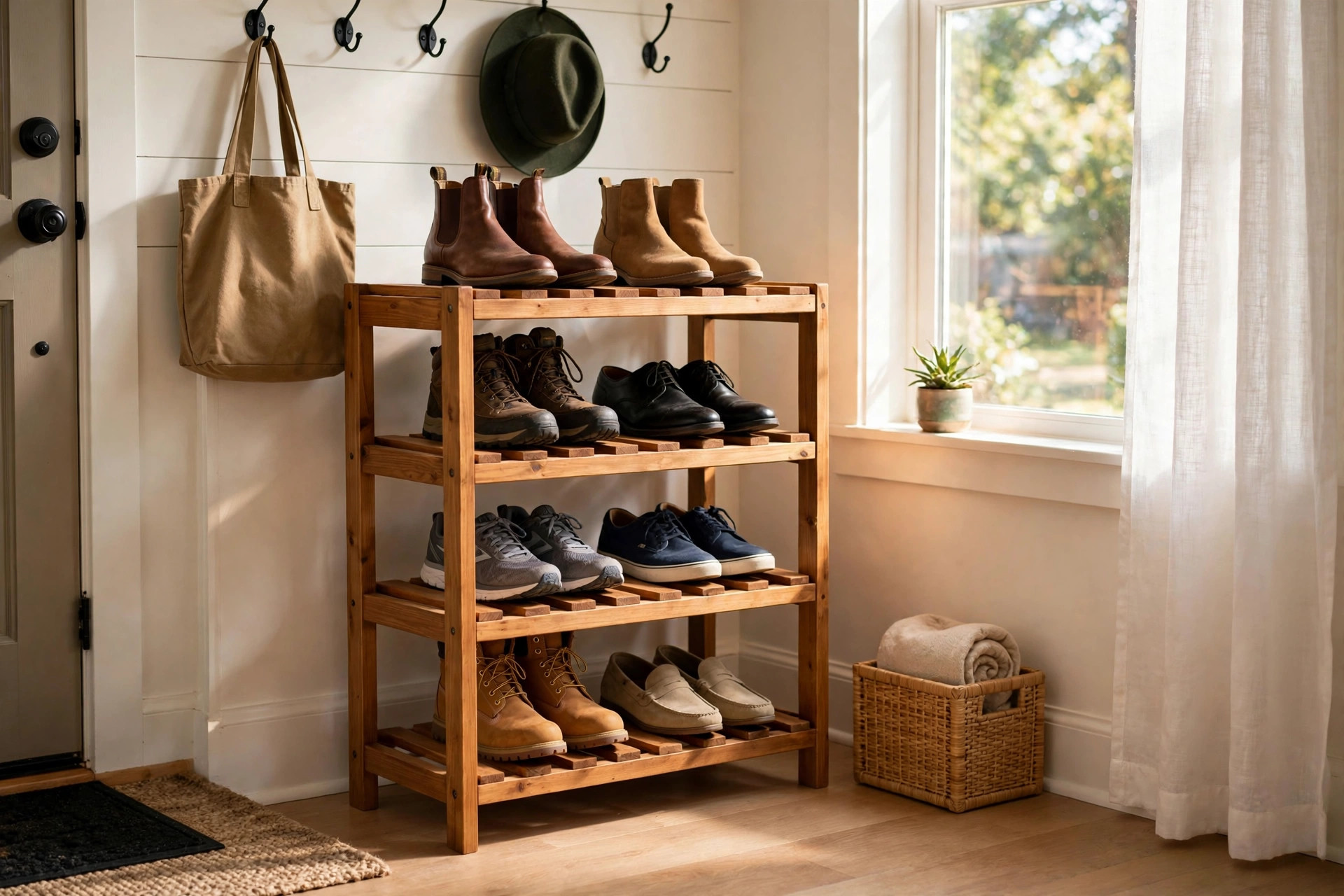

Shoes have a way of spreading through a house. One pair by the door, another by the stairs, a third hiding under the couch. The top rated shoe storage racks for sale today answer that slow clutter with simple design. They hold pairs in neat rows, keep floors clear, and make the morning rush a little calmer. This guide walks through why a rack matters, what to look for, the main types on sale, what they cost, and how to keep them in good shape.
Why Shoe Storage Matters
A house without shoe storage soon looks untidy. Pairs stack up by every door. Dust gathers around them. Small children trip over them. A rack gives every pair a home. That single habit changes the look of an entryway in one afternoon.
There is a practical side too. Shoes left in a heap bend out of shape. Leather creases where it should not. Soles pick up dirt that then spreads across floors. On a rack, each pair keeps its form and stays off the dirty floor. Many people search for the best shoe rack for small entryway spaces for this very reason: a small rack by the door ends the clutter at the source.
Air flow is another quiet benefit. Wet shoes dry faster on an open rack than in a closed pile. Less moisture means less smell and less harm to the shoe lining. Families with sports gear and work boots notice this first. When you shop for the top rated shoe storage racks for sale, think of the rack as care for the shoes, not just storage.
What to Look for Before You Buy: Top Rated Shoe Storage Racks for Sale
Not every rack suits every home. A few simple checks help narrow the field before money changes hands.
Size and Capacity
Count the pairs the rack must hold. Then add a few for guests. A single person may need room for ten pairs. A family of four may need forty or more. Measure the spot where the rack will stand, both width and height, before you shop. Many buyers skip this step and end up with a rack that blocks a door swing or sticks out into a walkway.
Think about shoe size too. Work boots, winter boots, and high heels take more height per shelf than flat shoes. Some racks offer adjustable shelves, which is a real plus for mixed collections.
Material and Build
Most racks are made from metal tubing, wood, bamboo, or plastic. Metal racks with canvas or plastic shelves are light and cheap, and they suit closets and garages well. Wood and bamboo racks look better in living areas and hold up under heavier shoes. Solid wood units cost more but last far longer.
Check the weight rating per shelf. Cheap racks can bow or tip under heavy boots. Look for wide feet, wall anchors if the unit is tall, and sturdy joints. Reading product notes on sites like The Container Store or IKEA can help you compare build quality across models.
Placement
Decide where the rack will live. Entryways call for slim, neat units. Closets can take wider, plainer racks. Garages suit heavy-duty metal frames. Mudrooms may need a bench-and-rack combo. Measure ceiling height for tall towers, and leave room for the door of a closet to close fully with the rack inside.
Types of Shoe Storage Racks
The market offers several broad styles. Each has its own strengths.
Open Tiered Racks
The classic form: two to five shelves on a simple frame, open on all sides. These are the most common of the top rated shoe storage racks for sale. They are cheap, easy to build, and let air move freely around every pair. They show the shoes, so they work best for people who keep pairs tidy. They come in widths from narrow single columns to wide double columns.
Stackable and Modular Units
Stackable cube units let you start small and add more over time. Each cube holds two to four pairs. You can stack them into a tall tower or spread them side by side. This style suits renters and growing families. Many modular systems are sold at Home Depot and Lowe’s, where you can compare sizes in person.
Tall Tower Racks
Tall, slim towers hold many pairs in a small footprint. Some spin on a base so every shelf is easy to reach. Towers fit closet corners and tight entryways. Because they are top-heavy when full, look for models with wall straps or a wide base.
Bench and Storage Combos
A bench with shoe storage under the seat serves two needs at once. You can sit to put shoes on, and the pairs tuck away below. These look good in entryways and mudrooms. They cost more than plain racks but often replace both a chair and a rack. Wayfair carries a wide range of these combo units in many finishes.
Over-the-Door Organizers
For very tight spaces, a rack that hangs over a door or inside a closet door holds many pairs without using floor space. These hold lighter shoes best. They are a fine stopgap, though heavy boots can strain the hooks. If floor space is your main problem, you may also want to read our over the door organizers price comparison usa for more ideas.
Affordable Shoe Organizer Options
Shoppers on a budget often look for an affordable shoe organizer first. Plastic and fabric units cost the least. They will not last as long as wood or steel, but they serve well in a dorm room, a garage, or a child’s room. Just check reviews for complaints about wobbly frames before you buy.
Cost and Price
Prices for the top rated shoe storage racks for sale span a wide range. Simple two-tier metal or plastic racks often sell for under 25 dollars. Mid-range wood and bamboo racks with four to six tiers run from about 30 to 80 dollars. Large hardwood towers, bench combos, and designer units can cost 100 to 300 dollars or more.
What drives the price? Material comes first. Solid wood costs more than particle board or plastic. Size comes next: more tiers and wider frames use more material. Brand name and finish add the rest. A basic rack does the job for most homes. Pay more when you want the rack to look like furniture in a main room.
Watch for hidden costs. Some racks need tools you do not own. Wall-mount units may need anchors bought apart. Shipping on large units can add to the total, so check whether stores like Target or Walmart offer free pickup at a nearby store.
Seasonal sales help. Late summer and early fall often bring storage sales as students head back to school. Clearance events after the holidays can cut prices on larger units. If your need is not urgent, waiting for a sale can save a good sum. Even a small markdown on a 150 dollar unit leaves money for a shoe care kit to go with it.
Care and Upkeep
A shoe rack needs little care, but a small routine keeps it sound for years.
Dust the shelves every few weeks. A damp cloth works for wood and metal; mild soap and water suit plastic shelves. Dry metal frames well after cleaning to stop rust. For wooden racks, check screws and joints once or twice a year and tighten what has worked loose.
Keep wet shoes on the lowest shelf or on a tray so water does not drip onto pairs below. If the rack sits in a garage or basement, watch for damp. Bamboo and wood can warp in steady moisture, so a dehumidifier or better air flow helps. Fabric shelves should be vacuumed now and then to lift dust and grit.
If a shelf sags, redistribute the load or add a center support. Do not overload past the stated weight limit. A rack that tips can break shoes and hurt a child or pet.
For broader closet ideas, see our premium pantry food storage containers buying guide and our top rated pantry shelving units for midwest homes for how similar shelving logic applies elsewhere in the home.
Safety
Tall racks can tip. This is the main safety risk, and it is easy to prevent. Anchor any rack taller than about four feet to a wall stud with a strap or bracket. This matters most in homes with small children who may climb.
Keep the heaviest shoes on the lowest shelves. Low weight at the base makes the whole unit steadier. Check that the rack stands on a flat, level floor. On carpet, wide feet or a firm board under the legs help.
Mind sharp edges on cheap metal frames, especially at child height. File down burrs or cover them with tape. Keep the area in front of the rack clear so nobody trips over shoes that miss the shelf.
Frequently Asked Questions
How many pairs can a typical shoe rack hold? A small two-tier rack holds about six to eight pairs. A mid-size four-tier rack holds twelve to twenty pairs, depending on shoe size. Tall towers and wide double units can hold thirty pairs or more. Always count your shoes before you buy and allow room for growth.
What is the best material for a shoe rack? For looks and life, solid wood or bamboo leads. For a garage or utility room, coated steel is strong and easy to clean. For the lowest price, plastic or fabric units work but wear out sooner. Match the material to the room and the weight of your shoes.
Do shoe racks work for boots? Yes, if the shelves are tall enough. Tall boots need at least 14 to 16 inches of clearance per shelf. Some racks have removable or adjustable shelves for this purpose. A dedicated boot tray under a rack also keeps melted snow and mud off the floor.
Can I keep a shoe rack in the garage? You can. Garages suit heavy-duty metal racks well. Keep in mind that heat, cold, and damp can age shoes faster, so bring delicate or costly pairs inside. Wipe metal frames dry now and then to fight rust.
How do I stop shoes from smelling on a rack? Air flow is your friend. Open racks dry shoes faster than closed cabinets. Let wet shoes dry fully before shelving them. Baking soda sachets, cedar inserts, or charcoal bags in a few pairs cut odor. Wash insoles now and then.
Where should I place a shoe rack in a small apartment? The entryway is first choice if space allows a slim unit. Inside a coat closet or on a closet door works next. A narrow tower in a bedroom corner is another option. Measure first, and pick the spot where shoes land when people walk in.
A Short Final Word
The search for the top rated shoe storage racks for sale comes down to three things: honest measurements, the right material for the room, and a design that fits daily life. Count your pairs, measure your space, and choose a rack built to hold the weight you own. A good rack costs little, lasts years, and ends the daily hunt for the missing shoe. Start with the type that matches your home, read a few reviews on trusted retail sites such as Consumer Reports for quality guidance, and buy once with care. Project guides at Family Handyman and home tours at Apartment Therapy can also spark ideas for fitting storage into tight rooms.
References
Apartment Therapy. (n.d.). Home design ideas and inspiration. https://www.apartmenttherapy.com Consumer Reports. (n.d.). Product reviews and ratings. https://www.consumerreports.org Family Handyman. (n.d.). DIY home repair and maintenance. https://www.familyhandyman.com IKEA. (n.d.). Home furnishings. https://www.ikea.com Lowe’s. (n.d.). Home improvement products. https://www.lowes.com Target. (n.d.). Retail store. https://www.target.com The Container Store. (n.d.). Storage and organization products. https://www.containerstore.com The Home Depot. (n.d.). Home improvement products. https://www.homedepot.com Walmart. (n.d.). Everyday low prices. https://www.walmart.com Wayfair. (n.d.). Furniture and home goods. https://www.wayfair.com
Was this guide helpful?

About James Carter
The My Garden US editorial team writes practical, in-depth home and garden guides for American homeowners — tested advice, no fluff.
You May Also Like
Affordable Under Bed Storage Containers Buying Guide
September 15, 2026 0 views
Stackable Shoe Storage Racks for Texas Homes: A Practical Guide
July 15, 2026 0 views
The Best Entryway Coat Racks for Southern States: A Plain Buyer’s Guide
February 12, 2026 0 views