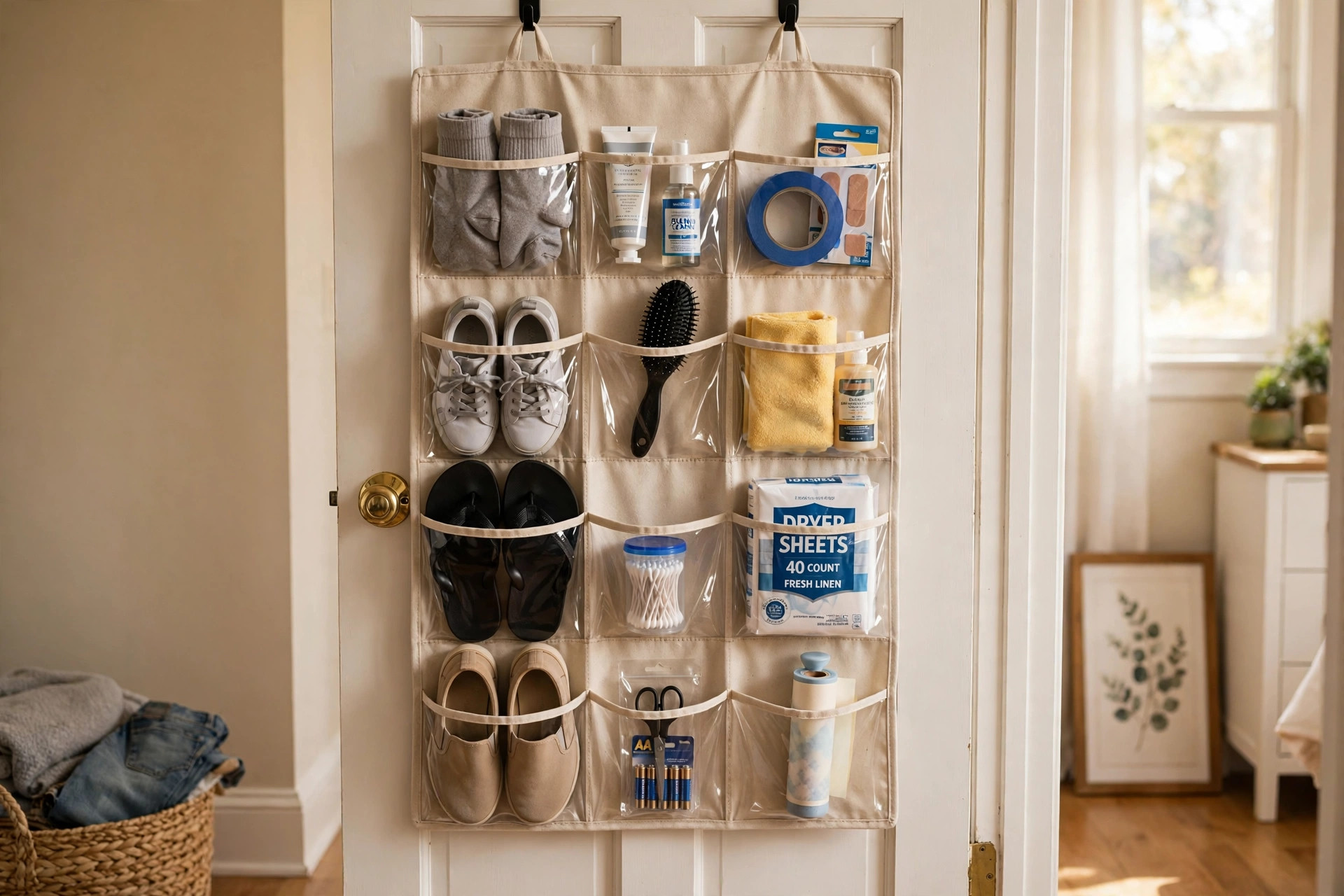

A fair over the door organizers price comparison usa survey starts with a simple fact. Most homes have wasted space on the back of every door. A good organizer turns that dead space into storage. A poor one dents the door and falls apart in six months. This guide walks through real price ranges, honest buying points, and simple care steps. It uses plain words and short sentences. It gives you the facts so you can buy with confidence.
Why Over the Door Organizers Matter
Closets are often full. Shelves run out of room. Drawers fill fast. The back of a door stays empty in most rooms. An over the door organizer uses that space at once. It hangs from the top of the door. It needs no screws and no tools. Renters like this because landlords allow it. Owners like it because it saves wall space.
These organizers serve many rooms. In the bedroom they hold shoes, scarves, and hats. In the bathroom they hold towels and bath supplies. In the pantry they hold spices and cans. In the laundry room they hold soap and clothespins. One low cost product can bring order to four rooms. That makes price comparison worth the time.
A second reason matters too. Home storage products have grown in number. Shelves in stores now hold dozens of brands. Prices run from a few dollars to over one hundred. A shopper who does not compare may pay double for the same item. A careful over the door organizers price comparison usa review stops that waste. It shows which brands charge for quality and which charge for a logo.
How to Compare Prices Across American Stores: Over the Door Organizers Price Comparison Usa
Price shopping is not hard. It takes a simple plan. Follow these steps before you buy.
First, measure your door. Standard interior doors in the United States run about 80 inches tall. Note the thickness too. Most doors are between 1 and 3/8 and 1 and 3/4 inches thick. Write both numbers down. You need them when you read product specs.
Second, decide what the organizer must hold. Shoes are heavy. Spices are light. Towels are bulky. The weight and bulk set the price tier you should shop. Heavy duty models cost more. They also last longer.
Third, check at least three stores. Large home retailers such as The Home Depot carry several brands side by side. Mass market stores such as Walmart and Target list deep discount models. Online marketplaces such as Amazon show hundreds of options with buyer reviews. Compare the same size and pocket count at each one.
Fourth, read the shipping terms. Some stores add shipping fees to low prices. A twelve dollar organizer can cost twenty dollars at the door. Stores with free store pickup can save that fee. Check the return policy as well. A weak product should go back without a fight.
Fifth, look at price per pocket. A 24 pocket organizer at 24 dollars costs one dollar per pocket. A 12 pocket model at 18 dollars costs one dollar fifty per pocket. This simple math shows true value. Sales and seasonal markdowns shift the numbers. Spring cleaning season and back to school season often bring lower prices.
What to Look for When You Shop
A low price means little if the product fails. These points separate good value from junk.
Hook Style and Door Fit
The hooks carry all the weight. Flat metal hooks spread the load across the door top. Thin wire hooks bend under heavy shoes. Padded hooks protect the paint and the door finish. Some hooks adjust to door thickness. Others fit only one size. Match the hook to your measured door before you pay.
Clearance is another point. The hook sits between the door and the frame. If it is too thick, the door will not close. If it scratches the frame, paint peels. Thin profile hooks cost a little more. They are worth the extra dollars.
Material and Build
Fabric organizers use canvas, oxford cloth, or non woven fabric. Heavy canvas lasts years. Thin non woven fabric tears at the seams. Metal racks use steel wire. Look for powder coated steel. It resists rust in bathrooms. Clear plastic pockets let you see contents at a glance. Plastic can crack in hot garages.
Stitching and welds tell the truth about quality. Check photos for double stitching at the top rail. Check reviews for weld failures. A product with a one year warranty signals maker confidence. No warranty signals the opposite.
Pocket Size and Count
Count is only half the story. Measure the pocket depth and width in the specs. Deep pockets hold shoes but swallow keys. Shallow pockets suit mail and pens. Mixed size pockets work best for general use. The Container Store product pages list pocket sizes in detail. That habit of clear specs helps comparison.
How to Choose for Each Room
Bedrooms want shoe pockets or clear pockets for small items. Bathrooms want rust proof metal or quick dry mesh. Pantries want deep solid pockets that hold cans. Kids rooms want low hanging pockets a child can reach. Home offices want narrow pockets for files and cords. Match the room to the build before you compare prices.
Common Types of Over the Door Organizers
Shoppers meet five main types. Each has its own price band.
Shoe organizers. These hold 12 to 36 pairs. Fabric versions with clear pockets run low. Heavy canvas versions with reinforced hooks run mid. They are the most common type sold in the United States.
Pantry and spice racks. These use deep bins or narrow shelves. Metal wire versions suit heavy cans. They cost more than fabric shoe models because steel costs more than cloth.
Bathroom organizers. These use mesh or rust proof wire. They hang in bathrooms and laundry rooms. Mesh dries fast and costs little. Wire holds more weight and costs more.
Hook racks. These are simple. One rail with three to eight hooks holds coats, robes, and towels. They are the cheapest type. They also scratch doors fastest if the hooks lack padding.
Mirrored and combo units. A few models add a mirror or a cork board to the storage side. They cost the most. They suit small apartments where every inch works twice.
Related storage ideas can help too. Shoppers who study linen closet organizers often find shelf ideas that pair well with door storage. Readers who like natural looks may pair door organizers with wicker storage baskets on nearby shelves.
Cost and Price Ranges in the USA
Prices vary by type, brand, and store. The bands below reflect common ranges across American retailers.
Budget fabric shoe organizers run from about 8 to 18 dollars. Mid range canvas models run from about 20 to 40 dollars. Heavy duty models with metal hooks run from about 40 to 75 dollars. Pantry racks in steel wire run from about 25 to 60 dollars. Bathroom mesh organizers run from about 10 to 25 dollars. Simple hook racks run from about 6 to 20 dollars. Mirrored combo units run from about 50 to 120 dollars.
Brand names push prices up. Private label store brands often match name brand quality at lower cost. IKEA door hooks sit near the budget end with simple design. Wayfair lists a wide spread from budget to premium in one search page. That spread makes side by side price checks easy.
Seasonal sales shift the bands. January clearance drops prices after the holidays. Late summer back to school sales cut dorm room organizers. Black Friday brings deep cuts across storage lines. Shoppers with time can save 20 to 40 percent by waiting for a sale.
Do not forget the hidden costs. Shipping can add five to ten dollars. Expedited shipping adds more. A damaged door costs far more to fix than any organizer. Padded hooks and correct weight limits protect the door. That protection is part of true value.
Small apartments gain the most from door storage. Shoppers in tight spaces also study space saving rolling storage carts to pair with door organizers for a full small room plan.
Care and Upkeep
Over the door organizers need little care. A few habits keep them strong for years.
Dust fabric pockets monthly with a damp cloth. Wash canvas models by hand with mild soap. Let them air dry fully before rehanging. Damp fabric grows mildew. Metal racks need a wipe with a dry cloth. Check for rust spots in bathrooms each season. Touch up chips with rust proof paint.
Check the hooks twice a year. Tighten loose screws on hook rails. Look for bent wire. A bent hook shifts weight to the door edge. That shift can crack paint or split wood. Move heavy items to lower pockets. Weight near the bottom keeps the unit stable.
Follow the stated weight limit. Makers test their products to a set load. Overload breaks seams and bends hooks. If you need more capacity, buy a second unit for another door. Two safe units beat one overloaded unit.
Storage guides such as The Spruce publish room by room upkeep tips that apply here. Home project sites like Family Handyman show how to protect door finishes from hook wear.
Safety Notes
Door organizers are safe when used with care. Three points deserve attention.
First, keep weight within limits. A falling organizer can hurt a child or pet. Heavy items belong in low pockets or on floor racks.
Second, check fire safety in rental units. Do not block smoke paths or fire exits with bulky units. Keep hall doors able to open fully.
Third, anchor nothing to hollow core doors with screws through the organizer straps. Hollow doors split under screw stress. The hook over design avoids this risk by design. Do not defeat it.
Families with small children should place sharp or heavy items out of reach. Locking pantry items away from toddlers matters more than tidy shelves. Style sites such as Apartment Therapy show child safe storage layouts worth a look.
Frequently Asked Questions
Do over the door organizers damage doors? They can if misused. Bare metal hooks scratch paint and frames. Padded hooks stop most damage. Overloading pulls the unit forward and marks the door face. Follow weight limits and use padded hooks. Then damage is rare.
What size fits a standard American door? Most units fit doors 78 to 82 inches tall and 1 and 3/8 to 1 and 3/4 inches thick. Measure your door before you order. Adjustable hooks cover odd sizes.
How much weight can one organizer hold? Fabric models often hold 20 to 40 pounds total. Steel wire pantry racks can hold 40 to 60 pounds. Check the maker spec. Distribute weight evenly across pockets.
Are expensive brands worth the price? Sometimes. Premium brands use thicker canvas and stronger hooks. Budget brands can match them on light duty jobs. For heavy shoes or cans, pay for build quality. For light items, budget models work fine.
Can I use one on a bathroom door? Yes, with the right material. Choose rust proof wire or quick dry mesh. Avoid plain steel and untreated fabric in wet rooms. Ventilate the room to stop mildew.
Where is the best place to buy in the USA? It depends on your priority. Big box stores win on instant pickup. Online stores win on range and reviews. Specialty storage stores win on expert help and clear specs. Compare all three before you buy.
A Short Final Word
A smart over the door organizers price comparison usa search ends with a product that fits the door, holds the load, and costs a fair price. Measure first. Compare three stores. Read the specs. Protect the door. Buy once and buy right. The space on the back of your door is free. Use it well.
References
Amazon. (n.d.). Online shopping. https://www.amazon.com Apartment Therapy. (n.d.). Home design ideas and inspiration. https://www.apartmenttherapy.com Family Handyman. (n.d.). DIY home repair and maintenance. https://www.familyhandyman.com IKEA. (n.d.). Home furnishings. https://www.ikea.com Target. (n.d.). Retail store. https://www.target.com The Container Store. (n.d.). Storage and organization products. https://www.containerstore.com The Home Depot. (n.d.). Home improvement products. https://www.homedepot.com The Spruce. (n.d.). Home and garden advice. https://www.thespruce.com Walmart. (n.d.). Everyday low prices. https://www.walmart.com Wayfair. (n.d.). Furniture and home goods. https://www.wayfair.com
Was this guide helpful?

About Sarah Mitchell
The My Garden US editorial team writes practical, in-depth home and garden guides for American homeowners — tested advice, no fluff.
You May Also Like

Toy Storage Bins Price Comparison in the USA: A Plain Guide for Parents
August 1, 2026 0 views
Best Linen Closet Organizers for Texas Homes
January 7, 2026 0 views
Buy Vertical File Cabinets Online in Texas: A Full Guide
August 24, 2026 0 views