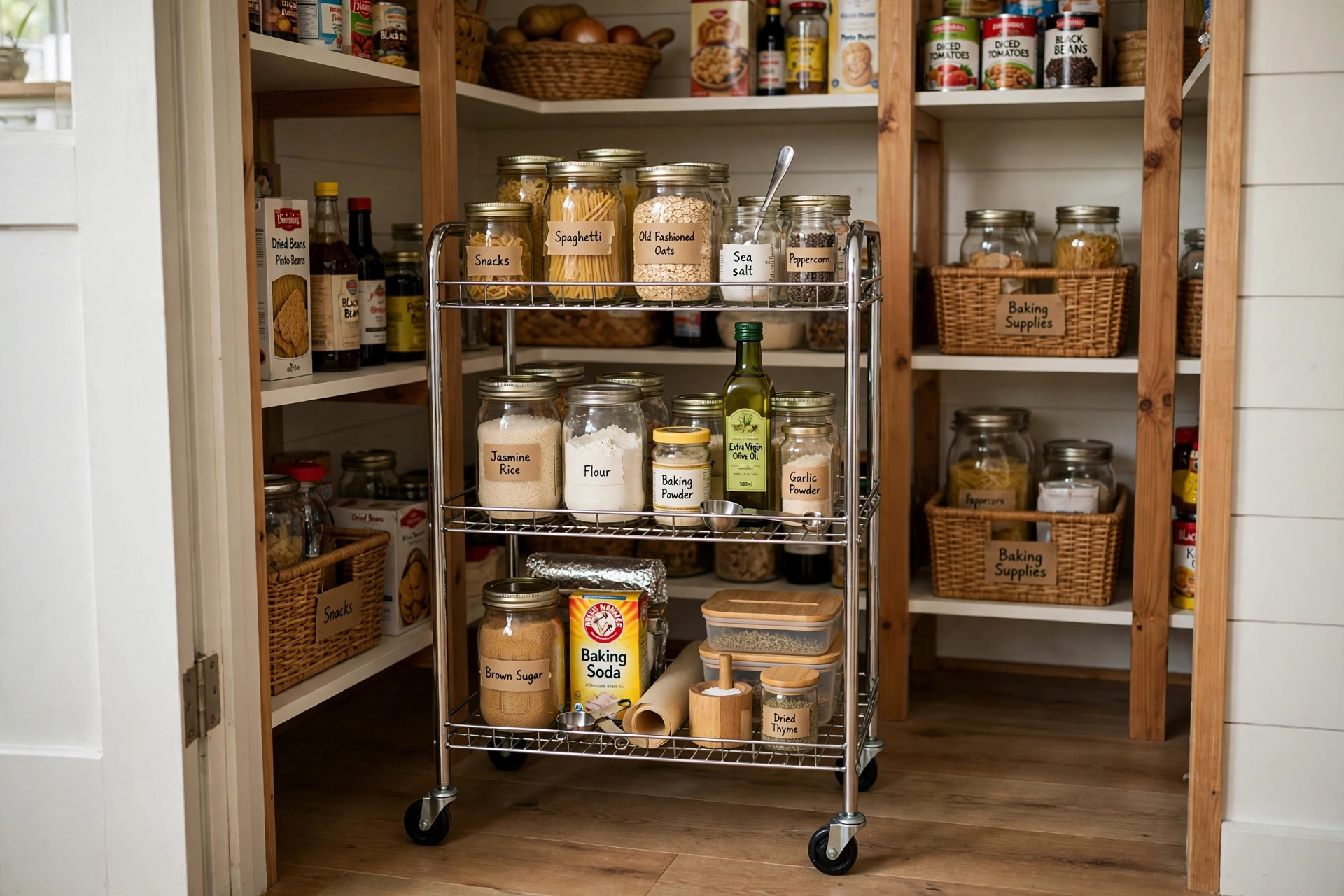

American homes rarely have enough storage. Kitchens fill up fast. Bathrooms have little room. Laundry areas collect clutter. This is where space saving rolling storage carts with free shipping can help. They add storage without taking permanent space. You roll the cart where you need it. You roll it back when the work is done. And with free shipping, the price you see is the price you pay.
The idea is simple. A tall, narrow cart on caster wheels slides into gaps between appliances or walls. It holds cans, bottles, towels, or craft supplies. It moves easily from room to room. Shoppers like these carts because they solve real problems in small kitchens, apartments, and dorm rooms. Free shipping matters too. A bulky cart can cost a lot to ship. When the store pays that cost, you keep more money in your pocket.
This guide covers what to look for, the main types, typical prices, care, and safety. It also answers common questions. Read it before you order so you get the right cart at a fair price.
Why These Carts Matter
Space is money. Every square foot of a home has value. A rolling cart uses space that would otherwise sit empty. The gap between a refrigerator and a counter is often six to ten inches wide. A slim rolling cart turns that dead space into a pantry shelf.
Mobility is the other reason. Fixed shelves stay in one place. A rolling cart goes where the work is. You can wheel it from the kitchen to the dining table during a party. You can move it from the bathroom to the laundry room on wash day. People who live in small apartments find rolling storage carts especially useful because one cart can serve three rooms.
Free shipping adds to the value. Delivery fees on furniture can run ten to thirty dollars. On a cart that costs forty dollars, that is a steep extra charge. Stores that offer free shipping absorb that cost. The deal looks better. It also makes comparison shopping honest. You compare the cart price alone, not the cart plus mystery fees.
Retailers like IKEA and The Container Store helped make rolling carts a standard home item. Their slim kitchen carts have sold in large numbers for years. Today you can find similar carts at Wayfair, Home Depot, Lowe’s, Target, and Amazon. Guides at The Spruce and Apartment Therapy often list them among the best small-space storage ideas.
What to Look for When You Shop: Space Saving Rolling Storage Carts with Free Shipping
Not all carts are equal. A cheap cart may wobble, rust, or tip. A good cart lasts for years. Study these points before you buy.
Size and Fit
Measure first. Take a tape measure to the gap where the cart will live. Write down the width, depth, and height. Many carts are about seven inches wide and thirty inches tall. Some are wider, at ten or twelve inches. Make sure the cart fits with a little room to spare on each side.
Also check the door clearance. The cart must roll in and out without scraping. Measure the swing of any nearby cabinet doors. A cart that looks slim online can still be too wide for your exact gap.
Wheel Quality
Casters make or break a rolling cart. Cheap plastic wheels crack and stick. Better wheels are rubber or polyurethane. They roll smooth and quiet on tile, wood, and vinyl.
Look for locking casters. Two of the four wheels should have a brake. The brake keeps the cart from rolling away on a sloped floor. Press the brake with your foot to lock it. Lift it to roll again.
Weight Capacity
Each shelf has a weight limit. Many carts hold ten to fifteen pounds per shelf. That is enough for cans and jars. Heavy items like large detergent bottles need stronger shelves. Check the total weight limit too. A cart rated for forty pounds total will sag if you load it with sixty.
Materials
Metal wire carts are common. They are strong and air flows through them, which suits kitchens and bathrooms. Plastic carts are lighter and will not rust. Wooden carts look warm and suit living rooms and offices. Some carts mix materials, such as a metal frame with wood-look shelves.
Finish matters in damp rooms. In a bathroom or laundry room, choose coated metal or plastic. Raw steel can rust near water. Reviews in rolling storage cart buying guides often flag rust as the top complaint with cheap carts.
Common Types and Options
Manufacturers make several styles. Each suits a different room and need.
Slim Gap Carts
These are the narrowest carts, usually six to eight inches wide. They slide between the fridge and the counter or beside a washer. They have three or four tiers. They are the classic space saver. If your keyword search brought you here, this is likely the type you want.
Three-Tier Utility Carts
These are wider, about eighteen inches across. They hold more but need more floor space. They work well as kitchen islands, craft stations, or bathroom towers. Many have a handle on one end for easy pushing. This style is popular with renters who cannot install shelves.
Corner and Rotating Carts
Some carts have a round or wedge shape for corners. Others have rotating tiers like a lazy susan. These suit pantries and under-sink cabinets. They turn wasted corner space into reachable storage.
Stackable and Folding Carts
A few carts stack or fold flat when empty. This helps if you need extra storage only at certain times, such as during holidays. Folding carts are less sturdy than fixed ones, so keep loads light.
Shoppers in Florida and other warm states often look for rolling carts that ship free to their region. State-level deals change often, so check current offers at checkout.
Cost and Price
Prices vary by size, material, and brand. Here is a rough map of the market.
Budget carts cost fifteen to thirty dollars. They are usually thin metal wire or plastic with basic wheels. They work fine for light loads like spices and towels. Expect some wobble at full height.
Mid-range carts cost thirty to sixty dollars. This is the sweet spot for most buyers. You get thicker frames, rubber wheels, and locking casters. Shelves hold more weight. The finish resists rust better.
Premium carts cost sixty to one hundred twenty dollars or more. They may have solid wood shelves, powder-coated steel frames, and heavy-duty casters rated for one hundred pounds or more. They suit kitchens where the cart doubles as a small island.
Free shipping changes the math. A forty-dollar cart with ten dollars of shipping costs fifty dollars in total. A forty-five-dollar cart with free shipping costs forty-five. The second deal is cheaper even though the sticker price is higher. Always compare the delivered price, not the shelf price.
Watch for threshold rules. Some stores give free shipping only on orders over a set amount, such as thirty-five or fifty dollars. A single cart may fall short. Adding a small item you need anyway can unlock the free shipping. Sales events in January and late summer often bring site-wide free shipping with no minimum.
Care and Upkeep
A rolling cart needs little care, but a few habits will extend its life.
Clean spills right away. Tomato sauce, soap, and cleaning chemicals can stain shelves. Wipe wire shelves with a damp cloth and dry them. For plastic shelves, warm water and dish soap do the job.
Check the wheels every few months. Hair and thread wrap around caster axles and stop them from turning. Pull the debris off with tweezers. A drop of light oil on the axle keeps the wheel spinning free.
Tighten screws twice a year. Carts loosen with daily rolling. A small screwdriver is usually all you need. Check shelf clips too. If a shelf sags, move heavy items to the lowest tier, where the load sits closest to the wheels.
In garages or damp basements, watch for rust. Touch up chips in the coating with a matching spray paint. Store the cart away from direct rain and standing water.
Repair advice from Family Handyman applies here too: most small storage items last twice as long with basic upkeep. Ten minutes of care twice a year is enough.
Safety Notes
Rolling carts are safe when used with sense. A few rules keep them that way.
Load heavy items low. A top-heavy cart can tip when it hits a rug edge or a door threshold. Put cans and bottles on the bottom shelf. Put light items like paper towels on top.
Lock the wheels when the cart is parked. This matters most in homes with children or pets. A rolling cart can pinch small fingers or roll into a wall.
Do not let children climb on the cart. The shelves are not steps. A cart can tip and fall on a child. Keep cleaning chemicals on high shelves out of reach, and latch any cabinet the cart sits near if toddlers are present.
Check floor surfaces. Carts roll best on hard floors. Thick carpet can stop the wheels and strain the frame. If you must cross carpet, lift the cart instead of forcing it.
Frequently Asked Questions
How narrow can a rolling storage cart be? The narrowest common carts are about five to six inches wide. They fit gaps that most people think are useless. Measure your gap before ordering. A cart one inch too wide will not fit.
Will free shipping apply to large or heavy carts? Usually yes, but check the terms. Some stores exclude oversized items from free shipping. Most rolling carts are small enough to qualify. Read the shipping policy at checkout so there are no surprises.
Can I use a rolling cart in the bathroom? Yes. Choose a cart made of coated metal or plastic. Avoid raw steel, which rusts in steam and splashes. Wipe the cart dry after heavy use. A cart with a towel bar on the end is handy in small bathrooms.
How much weight can a rolling cart hold? Most hold thirty to fifty pounds total. Premium models hold up to one hundred pounds. Check the product listing for per-shelf and total limits. Stay below those numbers for safe use.
Do the wheels scratch hardwood floors? Cheap hard-plastic wheels can scratch. Rubber or polyurethane wheels are gentler. If you have wood floors, choose rubber wheels and keep them clean. Grit stuck in a wheel acts like sandpaper.
Is assembly hard? Most carts take ten to twenty minutes to put together. You usually need only a small wrench or screwdriver, which is often included. Read the manual first. Snapping shelf clips into place is the trickiest step.
A Final Word
Space saving rolling storage carts with free shipping are a smart buy for small homes. They turn dead gaps into useful storage. They move where you need them. Free shipping keeps the total price fair.
Measure your space first. Choose rubber wheels and locking casters. Pick a material that suits the room. Load heavy items low and lock the wheels when parked. Do these things and a simple cart will serve you well for years.
Compare prices across a few stores before you order. The cheapest sticker price is not always the cheapest delivered price. With free shipping in the deal, the number on the page is the number you pay. That makes shopping simple, and simple is good.
References
Amazon. (n.d.). Online shopping. https://www.amazon.com Apartment Therapy. (n.d.). Home design ideas and inspiration. https://www.apartmenttherapy.com Family Handyman. (n.d.). DIY home repair and maintenance. https://www.familyhandyman.com IKEA. (n.d.). Home furnishings. https://www.ikea.com Lowe’s. (n.d.). Home improvement products. https://www.lowes.com Target. (n.d.). Retail store. https://www.target.com The Container Store. (n.d.). Storage and organization products. https://www.containerstore.com The Home Depot. (n.d.). Home improvement products. https://www.homedepot.com The Spruce. (n.d.). Home and garden advice. https://www.thespruce.com Wayfair. (n.d.). Furniture and home goods. https://www.wayfair.com
Was this guide helpful?

About Lisa Anderson
The My Garden US editorial team writes practical, in-depth home and garden guides for American homeowners — tested advice, no fluff.
You May Also Like

Closet Organizer Systems Reviews and Buying Guide
March 23, 2026 0 views
Hat and Handbag Storage Boxes Price Comparison USA: A Full Buying Guide
July 17, 2026 0 views
Lockable Sports Equipment Organizers for Sale: A Practical Buying Guide
April 1, 2026 0 views