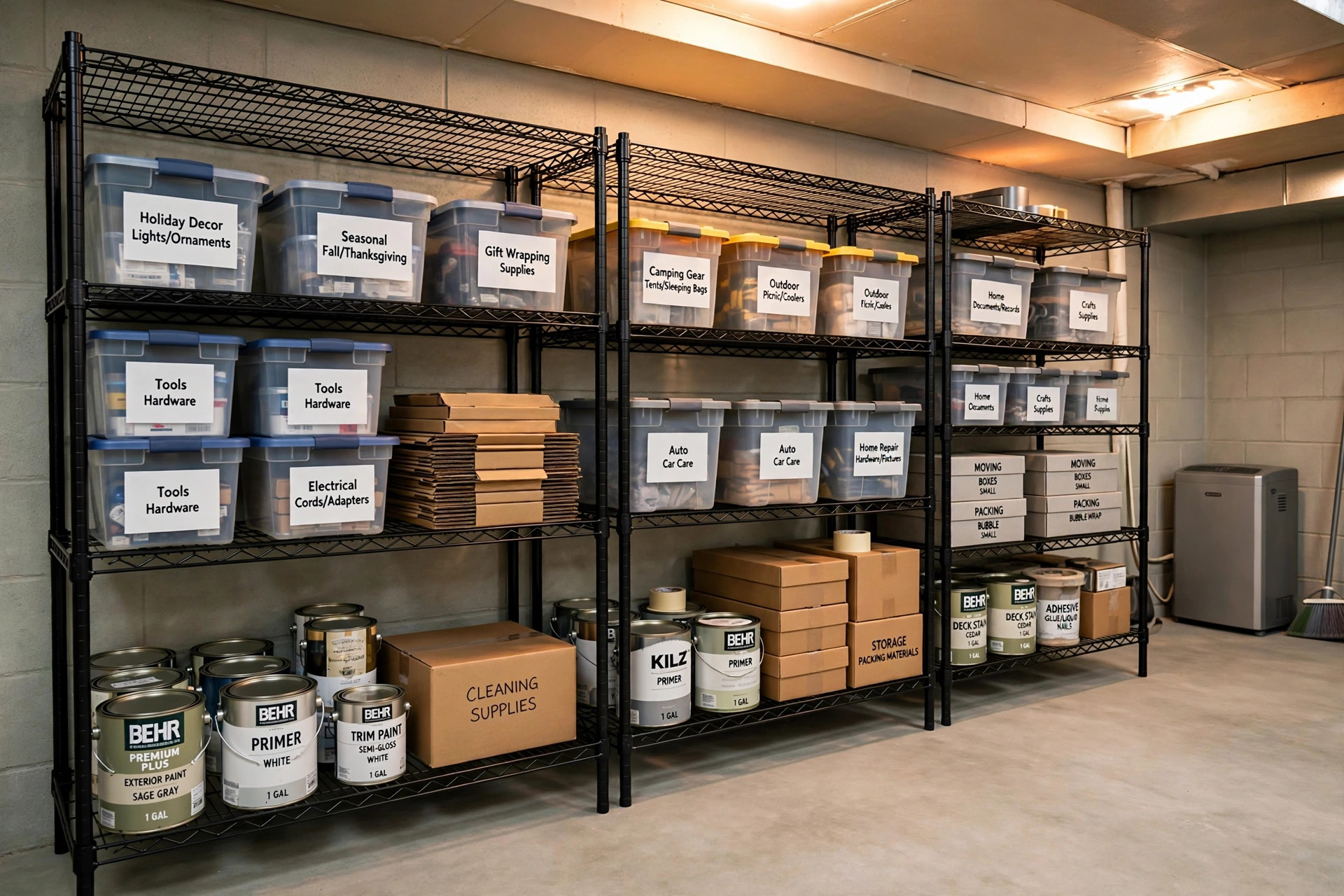

The basement is the hardest working room in many American homes. It holds holiday boxes, tools, paint cans, and old records. This basement shelving units reviews and buying guide will help you choose shelves that hold all of it safely. A good unit costs little and lasts for years. A bad one sags, rusts, or tips over. The pages below show you how to tell the difference before you spend a dollar.
Why Basement Shelves Matter
A basement without shelves is just a big pile. Boxes stack on boxes. Nothing is easy to find. Moisture creeps in from the floor. One damp spring can ruin cardboard and everything inside it.
Shelves lift your goods off the floor. Air moves around them. Things stay dry. You can see what you own. You can reach it without moving ten boxes first.
Good shelves also protect your back. A labeled bin at waist height beats a heavy box on the floor. Basements are often dim and cramped. Order makes them safer to walk through.
What to Look for in Basement Shelving: Basement Shelving Units Reviews and Buying Guide
Strength and Load Rating
Every shelf has a load rating. It tells you how much weight one shelf can hold. Cheap units hold 200 pounds per shelf. Heavy duty units hold 1,000 pounds or more.
Think about what you will store. Paint cans are heavy. Books are very heavy. Holiday decorations are light. Add up the worst case, then buy shelves rated above it.
Steel frames carry more than plastic. Bolt-free racks with thick posts are common and strong. Look for a rating printed on the box. Do not trust a unit with no rating at all.
Size and Fit
Measure your basement before you shop. Write down the width of the wall. Write down the ceiling height. Note any pipes, water heaters, or furnaces in the way.
Most units are 36 or 48 inches wide and 72 or 84 inches tall. Depth runs 12 to 24 inches. Deep shelves hold large bins. Shallow shelves waste less space in narrow rooms.
Leave room to walk. A three foot aisle between rows is a fair rule. Shelves you cannot reach are shelves you will not use.
Material and Finish
Basements are damp places. Water finds a way in. Choose materials that stand up to moisture.
Powder coated steel resists rust well. Wire shelves let air flow through. Plastic resin shelves never rust at all, but they hold less weight. Particle board shelves are the worst choice for a basement. They swell and crumble when wet.
Anchors matter too. A tall unit should bolt to the wall or to its neighbor. This stops it from tipping when a child climbs it or an earthquake shakes it.
Types of Basement Shelving Units
Bolt Free Steel Racks
These are the workhorses. Five or six steel shelves on four posts. You tap the parts together with a rubber mallet. No bolts. No tools. They hold 800 to 2,000 pounds per shelf in heavy duty models.
They cost between 60 and 200 dollars. They adjust in small steps. They come in black, silver, and gray. For most families, this type is the right answer.
Wire Shelving
Wire racks are light and airy. Cooks and canners like them because air moves around jars. They often come on wheels. You can roll a unit out to clean behind it.
They hold less than solid steel racks. Thin liners fix the problem of small items falling through. Chrome wire can rust in a damp basement. Look for epoxy coated wire instead.
Plastic Resin Shelves
Resin shelves snap together in minutes. They never rust. You can hose them off. They suit light loads: linens, holiday items, cleaning supplies.
Do not stack paint cans on them. They bend under heavy weight. Heat can warp them too. Keep them away from furnaces and water heaters.
Wall Mounted Systems
Wall mounted shelves free up the floor. This helps in basements that flood now and then. Brackets bolt into the wall studs or into concrete block.
They hold a fair load when mounted right. A bad mount pulls out of the wall. If your walls are crumbly block, stick with freestanding racks.
Heavy Duty Industrial Racks
Some basements double as workshops. Welders, engine parts, and tool chests need real strength. Industrial racks hold 2,000 pounds per shelf and more.
They are wide, deep, and tall. They cost 200 to 600 dollars. For a home, one such rack in the workshop corner is often enough. Pair it with lighter racks for household goods.
Readers looking at other rooms may also like our pantry shelving units reviews and buying guide for food storage ideas and our heavy duty laundry room shelving buying guide for damp-room picks.
Assembly and Layout Tips
Most basement racks go up in under an hour. Clear the floor first. Lay out the posts and shelves. Count the parts against the list in the box. Missing clips are the most common surprise.
Build the unit where it will stand. A tall rack is hard to move through a narrow stairwell. Bolt free racks tap together with a rubber mallet. Keep a level handy. Shim the feet if the concrete floor slopes toward a drain.
Plan your layout on paper before you lift anything. Put daily use items near the stairs. Put seasonal goods at the far end. Keep the water heater and furnace clear on all sides. Most local codes ask for three feet of clear space around furnaces and water heaters.
Think in zones. One rack for tools. One rack for holiday goods. One rack for paint and home repair items. Zones beat a random mix. You will find things faster.
Use the wall space too. Hooks and pegboards on the wall above a workbench hold hand tools. This frees shelf space for heavier goods. Just be sure the wall can take the load. Concrete block walls need the right anchors.
Cost and Price Ranges
Basement shelving is cheap compared to most home projects. Here is what to expect in 2026 prices.
Small plastic units run 30 to 70 dollars. They work for light goods in a dry basement.
Mid range steel racks run 70 to 150 dollars. This is the sweet spot. You get strong shelves, adjustable heights, and a real load rating.
Heavy duty and industrial racks run 150 to 600 dollars. Buyers who store tools, paint, or car parts should look here.
Wall mounted systems vary. Simple brackets and boards cost 20 to 60 dollars per section. Full track systems cost 100 to 300 dollars per wall.
Watch for sales in spring and fall. Home centers clear storage goods when seasons change. Buying two or four matching units at once often saves money.
Used racks are worth a look. Warehouses and offices sell off steel shelving at auction. Check the posts for bends and the coating for deep rust. A straight used rack at half price beats a new cheap one.
Care and Upkeep
Steel shelves need little care. Wipe them down once a year. Check for rust spots. A small spot of rust can be sanded and painted. A spreading patch means the coating has failed.
Keep cardboard off the floor. Even on shelves, set boxes on the lowest shelf in plastic bins. A flooded basement ruins cardboard in hours.
Leave air space behind the shelves. Do not push them tight against an outside wall. Condensation forms on cold walls. Air flow keeps things dry.
Tighten bolts once a year. Bolt free racks can loosen with time. A quick tap with a mallet seats the clips again.
Label everything. A strip of masking tape and a marker is enough. Labels save more time than any shelf ever will.
For overhead ideas, see our top rated attic storage solutions for cold climates, which covers many of the same sturdy rack types.
Safety Tips
Anchor tall units to the wall. A freestanding rack over four feet tall can tip. Kits cost a few dollars. Use them.
Put heavy items on the bottom shelves. This lowers the center of gravity. Light items go up top.
Do not climb the shelves. They are not ladders. A step stool is cheaper than a hospital bill.
Keep chemicals apart from food. Paint, solvents, and pesticides belong on their own rack. A spill over stored food jars is a real danger.
Watch for radon and damp air. Shelves do not fix bad air. If your basement smells musty, fix the moisture first. Then buy shelves.
Keep a clear path to the exit. Do not block stairs or windows with racks. Fire codes in many towns demand a clear escape route.
FAQ
How much weight can basement shelving hold? It depends on the unit. Light plastic shelves hold 50 to 150 pounds per shelf. Standard steel racks hold 350 to 800 pounds per shelf. Heavy duty racks hold 1,000 to 2,500 pounds per shelf. Always check the printed rating.
What is the best material for damp basements? Powder coated steel and plastic resin do best. Both resist moisture. Avoid bare particle board. It swells and breaks down when wet.
How deep should basement shelves be? Twelve inches suits cans and small bins. Eighteen inches is the most useful all round size. Twenty four inches holds large totes but needs a wide aisle. Match depth to your bins.
Do I need to anchor shelves to the wall? Yes for tall units. Any rack over four feet tall should be anchored. Short wide racks are stable on their own. Anchors cost little and prevent tip overs.
Can I put shelves on a basement floor that floods? Use plastic or coated steel units. Raise them on bricks or plastic feet. Store nothing valuable on the bottom shelf. Wall mounted shelves are the safest choice in flood prone rooms.
How do I stop shelves from rusting? Buy powder coated or epoxy coated steel. Keep the basement dry with a dehumidifier. Wipe up spills fast. Touch up scratches with rust proof paint.
Is it cheaper to build my own basement shelves from lumber? Sometimes. Lumber prices move up and down. A simple wood shelf costs 20 to 40 dollars in materials. Steel racks are often cheaper once you count your time. Wood also rots in damp basements. Steel wins for most buyers.
How far apart should basement shelves be? Twelve to sixteen inches suits most storage. Leave eighteen inches or more for large totes and paint cans. Adjustable racks let you set each shelf where you need it.
A Short Final Word
Good basement shelves are a quiet investment. They cost less than a family dinner out. They last a decade or more. They turn a dark jumble into a room you can use.
Start with your measurements. Pick steel for strength and resin for damp corners. Anchor what is tall. Label what you store. This basement shelving units reviews and buying guide has given you the rules. The rest is just shopping.
For broad storage ideas beyond the basement, the planning guides at The Container Store show room by room layouts. Hands on build advice appears at Family Handyman. Test results and safety notes are easy to find at Consumer Reports. Small space ideas from Apartment Therapy work well in tight basements. Flat pack shelf lines are listed at IKEA. Bulk buys and price checks are simple at Amazon. Wide shelf selections sit at Wayfair and The Home Depot. Room ideas and product roundups run at The Spruce. In store pickup across the country is covered by Lowe’s.
References
Amazon. (n.d.). Online shopping. https://www.amazon.com Apartment Therapy. (n.d.). Home design ideas and inspiration. https://www.apartmenttherapy.com Consumer Reports. (n.d.). Product reviews and ratings. https://www.consumerreports.org Family Handyman. (n.d.). DIY home repair and maintenance. https://www.familyhandyman.com IKEA. (n.d.). Home furnishings. https://www.ikea.com Lowe’s. (n.d.). Home improvement products. https://www.lowes.com The Container Store. (n.d.). Storage and organization products. https://www.containerstore.com The Home Depot. (n.d.). Home improvement products. https://www.homedepot.com The Spruce. (n.d.). Home and garden advice. https://www.thespruce.com Wayfair. (n.d.). Furniture and home goods. https://www.wayfair.com
Was this guide helpful?

About Jennifer Lee
The My Garden US editorial team writes practical, in-depth home and garden guides for American homeowners — tested advice, no fluff.
You May Also Like
Bathroom Vanity Organizers Reviews and Buying Guide
August 2, 2026 0 views
Waterproof Wall Mounted Storage Shelves for Sale: A Complete Buying Guide
April 28, 2026 0 views
Affordable Sports Equipment Organizers for Sale: A Buyer’s Guide
February 15, 2026 0 views