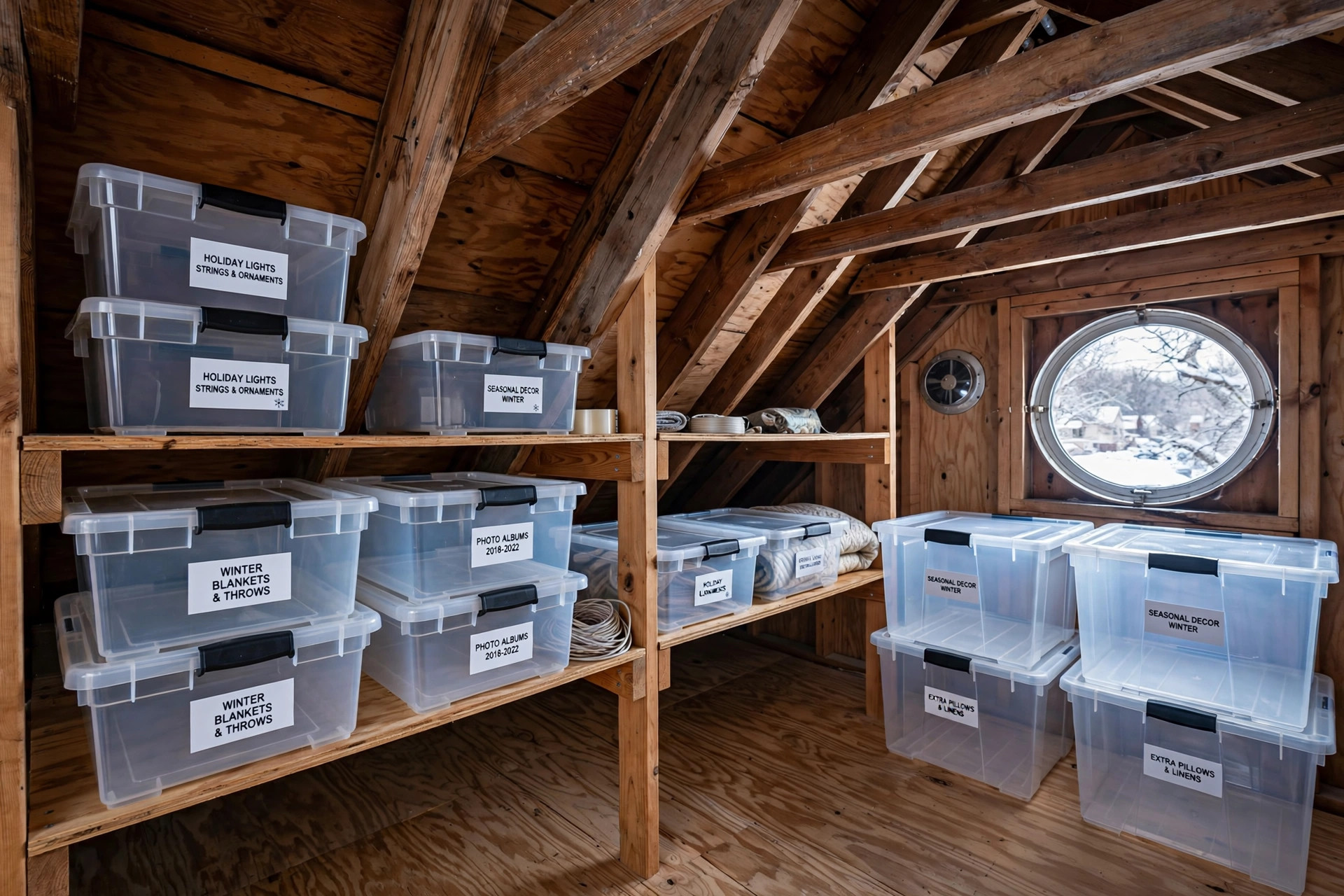
Many American homes have an attic that sits empty for most of the year. In the northern states, that empty space can be a gift. The top rated attic storage solutions for cold climates turn a drafty, freezing attic into a safe place for holiday boxes, extra blankets, and family keepsakes. Cold weather brings real problems. Frost forms on the roof. Moisture gathers where warm air meets cold wood. Mice look for warm shelter. The right storage products and the right habits solve these problems and keep your goods dry and safe until spring.
Why Attic Storage Matters in Cold Climates
Basements flood. Garages grow damp. In cold states, the attic is often the driest room of the house. Heat rises, so the attic stays a few degrees warmer than the air outside. That small lift in temperature makes a big difference when winter lasts five months.
Storage also matters for daily life. Winter gear takes up space. Boots, skis, and heavy coats pile up by the door. Off-season clothes fill the closets. When the attic holds the items you do not need each day, the rest of the house feels larger. A family in Minnesota or Maine can free up two closets by moving summer clothes and camping gear upstairs.
There is a cost angle too. Renting a storage unit costs money every month. A warm, dry unit in a cold state can cost eighty to two hundred dollars a month. Over a year, that bill runs past one thousand dollars. A set of good bins and some plywood decking costs far less and lasts for years. Homeowners who take attic storage seriously often find they can cancel the storage unit for good.
What to Look for When You Choose Attic Storage: Top Rated Attic Storage Solutions for Cold Climates
Not every product sold for storage survives a cold winter. The top rated attic storage solutions for cold climates share a few traits. Look for these points before you buy.
First, the seal must be tight. A lid that only rests on top lets in damp air. Bins with locking lids and foam gaskets keep out dust, damp, and insects. Rubber or silicone gaskets stay flexible in the cold, while cheap foam can stiffen and crack.
Second, the plastic must be strong in freezing weather. Thin plastic grows brittle when the temperature drops below zero. It cracks when you lift it or set it down hard. Thick polypropylene bins hold up far better. Some makers test their bins to minus forty degrees. That rating matters if you live in North Dakota or northern New England.
Third, the size must fit your attic. Attics have low roofs and small hatches. Measure the hatch opening before you buy anything large. A bin that cannot pass through the opening is no use. Many buyers choose flat, wide bins that slide under the eaves where the roof is lowest.
Fourth, think about stacking. Floors in attics are often bare joists with insulation between them. You should not set heavy bins on bare insulation. Products that stack neatly let you build stable towers on solid decking. Look for lids that lock under the bin above, so the tower does not shift.
Fifth, check the weight rating. Holiday lights are light. Books and tools are heavy. A bin filled with books can weigh sixty pounds. Make sure the handles, latches, and walls can carry that load without bowing.
Types of Attic Storage Solutions
Sealed Storage Bins
Sealed bins are the heart of cold-climate attic storage. The best bins have four latches, one on each side, and a gasket around the lid. Clear sides help you see what is inside without opening the box in January. Some bins come with wheels, but wheels help little on rough attic floors. A flat bottom stacks better.
Vacuum bags sit in a class of their own. They shrink blankets and winter coats to half their size. In a cold attic, though, vacuum bags have a limit. If the seal leaks, damp air enters and the bag slowly fills. Use vacuum bags inside a sealed bin for the best of both worlds. The bin gives a hard shell, and the bag cuts the bulk.
Attic Shelving Units
Shelving lifts bins off the floor. This matters because attics can sweat. Warm air from the house rises, hits the cold roof deck, and turns to drops of water. Bins that sit on the floor can rest in those drops. A shelf keeps them dry and makes items easy to reach.
Freestanding metal shelves are the top choice. Look for units rated to carry several hundred pounds per shelf. Assemble the shelf in the attic, since a full unit may not fit through the hatch. Anchor tall units to the rafters so they cannot tip. Wood shelves built from two-by-fours and plywood work just as well and can be cut to fit the low space under the eaves.
Avoid particleboard shelves. The glue in particleboard weakens in damp, cold air, and the boards sag under weight. Solid wood or steel is the right pick for this job.
Attic Floor Decking
You cannot store goods on bare insulation. Boxes crush the insulation and kill its power to hold heat. Worse, a foot can slip between joists and break through the ceiling below.
Attic decking panels solve this. They are cut boards, often two feet by four feet, that screw down across the joists. They make a flat, safe walkway and a firm base for bins and shelves. Some panels interlock, so no screws are needed. Others are plain plywood cut to size, which costs less.
Leave space for air flow. Do not cover every inch of insulation. The soffit vents at the edges of the roof need clear air paths. Decking should stop a foot or two short of the eaves so air can move freely. This one detail stops ice dams and keeps the roof healthy.
Hooks, Racks, and Hanging Storage
Small items get lost in bins. Wall hooks and hanging racks use the space on the gables and rafters. Hang bicycles, skis, and garden tools from heavy hooks set into the rafters. Use a stud finder, or drill a small test hole, to be sure the hook bites into solid wood.
Overhead racks hang from the rafters and hold light bins above head height. They work best in attics with tall peaks. Keep the load light, fifty pounds or less per rack, and spread the weight across several rafters.
Cost and Price
The top rated attic storage solutions for cold climates come at many price points. A set of four large gasket-sealed bins costs between forty and ninety dollars, depending on size and brand. Buy them in multi-packs to save money. Metal shelving units run from sixty to two hundred dollars. A tall five-shelf unit at the high end can hold more than a small closet.
Attic decking panels cost about five to ten dollars each. A walkway of twenty panels, enough to cross a typical attic, costs one hundred to two hundred dollars. Plywood sheets from a lumber yard cost less per square foot but need cutting and fasteners.
Vacuum storage bags are cheap, often under twenty dollars for a pack of eight. Hanging racks and hooks cost ten to forty dollars each.
A full attic setup, with decking, shelves, and twenty sealed bins, usually lands between four hundred and nine hundred dollars. Compare that to a single year of storage-unit rent, and the attic pays for itself fast. Check the latest guides on retailers such as The Home Depot and Lowes to compare current prices before you buy.
Care and Upkeep
Cold-climate attics need a yearly check. Go up in the fall, before the first snow, and walk the decking. Look at each bin. Open the latches and check the gasket. If a gasket is cracked, replace the bin or buy new gaskets where the maker sells them.
Smell the air. A musty smell means damp is getting in. Look for dark spots on the wood or on the insulation. Small dark spots may only be dust. Large patches of black or green mean mold, and you should call a professional before you store anything else up there.
Check the roof for leaks. Water stains on the rafters show where rain or meltwater enters. Fix the roof first, then store goods. No bin, however well sealed, should sit under an active drip for months.
Pests need a plan too. Mice enter through gaps as small as a pencil. Steel wool packed into gaps around pipes blocks them. Avoid storing food in the attic, even canned goods, because the smell draws animals. Cedar blocks and moth balls help with insects, but keep them away from clothes you will wear, since the smell clings.
Once a year, take everything down and clean. Sweep the decking. Wipe the bins with a damp cloth. This small job keeps the system working and lets you check every item you own.
Safety in Cold-Weather Attics
Attics in winter can be risky. Take safety as seriously as the storage itself. Never block the soffit vents or the ridge vent. These vents let damp air escape. A blocked vent traps moisture and rots the roof from the inside. Keep insulation and bins clear of all vents.
Mind the weight. Houses are built to carry a set load on the ceiling joists. Spread heavy bins across many joists, and keep the heaviest items near the center of the house where the structure is strongest. If the ceiling below starts to crack or bow, move goods out at once.
Light the space well. A dark attic hides trip hazards. A battery-powered LED light with a motion sensor costs little and turns on when you climb up. Keep a clear path from the hatch to every storage zone.
Watch the temperature swings. In late winter, a sunny day can warm the attic fast while nights stay bitter. These swings make metal sweat and plastic expand and contract. Leave small gaps between stacked bins so air can move. The U.S. Consumer Product Safety Commission offers free guides on safe home storage, and This Old House covers attic ventilation in plain detail.
If you plan electrical work, such as adding an outlet or a light, hire a licensed electrician. Attic wiring buried in insulation is a fire risk, and the job is not a place for guesswork.
Frequently Asked Questions
Can I store clothes in a cold attic? Yes, if you pack them right. Use sealed bins with tight latches, and place clothes in vacuum bags inside the bins. Clean everything before you pack it, since dirt and food stains attract insects. Add silica gel packets to fight damp. Avoid cardboard boxes, which soak up moisture and fall apart.
Will my photos and papers survive the winter? Photos and paper are the most fragile items. Cold alone hurts them less than damp and heat swings. Store papers in sealed bins, keep them off the floor, and place them near the center of the attic where the temperature is most stable. For true heirlooms, a climate-controlled spot inside the living space is still the safest choice.
Do I need to heat my attic for storage? No. Heating an attic wastes energy and can cause ice dams on the roof. The right bins and shelving protect your goods without heat. What matters is blocking damp, pests, and roof leaks, not raising the temperature.
How do I keep mice out of my attic storage? Seal entry points with steel wool and caulk. Use hard plastic bins with locking lids, never cardboard. Keep the attic clean and free of crumbs and nesting material. Set traps in the fall before mice move in for the winter. Check the traps monthly.
Can heavy bins damage my ceiling? They can if you pile them wrong. Spread the load across many joists, keep towers short and stable, and place the heaviest bins over load-bearing walls. If you are unsure about your home’s load limits, ask a contractor before you fill the attic.
What should never go in a cold attic? Keep out paint, which freezes and spoils. Keep out wine and fine instruments, which suffer from temperature swings. Keep out anything that must stay dry at all costs, like important legal papers with no backup copies. Electronics do better in the living space, since cold can crack screens and drain batteries.
A Short Final Word
The top rated attic storage solutions for cold climates are not fancy. They are sealed bins, strong shelves, solid decking, and simple habits. Buy the best bins you can afford, since the gasket is what stands between your goods and the winter. Take one fall afternoon each year to check, clean, and reseal. Do that, and your attic will carry your household through every cold season for years.
Homeowners who master the attic often go further. The same habits work in other tight spaces. Families pair attic bins with under bed storage containers for daily-use items, and stackable shoe boxes keep entryways clear through mud season. For closets that need a full rethink, see these closet organizer reviews. Guides from IKEA, The Container Store, and Wayfair show how the same bins fit the rest of the home, while The Spruce, Apartment Therapy, and Family Handyman cover upkeep and cold-weather care in depth. For product ratings, Consumer Reports tests storage bins for seal strength and cold-weather durability.
References
Apartment Therapy. (n.d.). Home design ideas and inspiration. https://www.apartmenttherapy.com Consumer Reports. (n.d.). Product reviews and ratings. https://www.consumerreports.org Family Handyman. (n.d.). DIY home repair and maintenance. https://www.familyhandyman.com IKEA. (n.d.). Home furnishings. https://www.ikea.com Lowe’s. (n.d.). Home improvement products. https://www.lowes.com The Container Store. (n.d.). Storage and organization products. https://www.containerstore.com The Home Depot. (n.d.). Home improvement products. https://www.homedepot.com The Spruce. (n.d.). Home and garden advice. https://www.thespruce.com This Old House. (n.d.). Home renovation guidance. https://www.thisoldhouse.com U.S. Consumer Product Safety Commission. (n.d.). Product safety information. https://www.cpsc.gov Wayfair. (n.d.). Furniture and home goods. https://www.wayfair.com
Was this guide helpful?

About Robert Taylor
The My Garden US editorial team writes practical, in-depth home and garden guides for American homeowners — tested advice, no fluff.