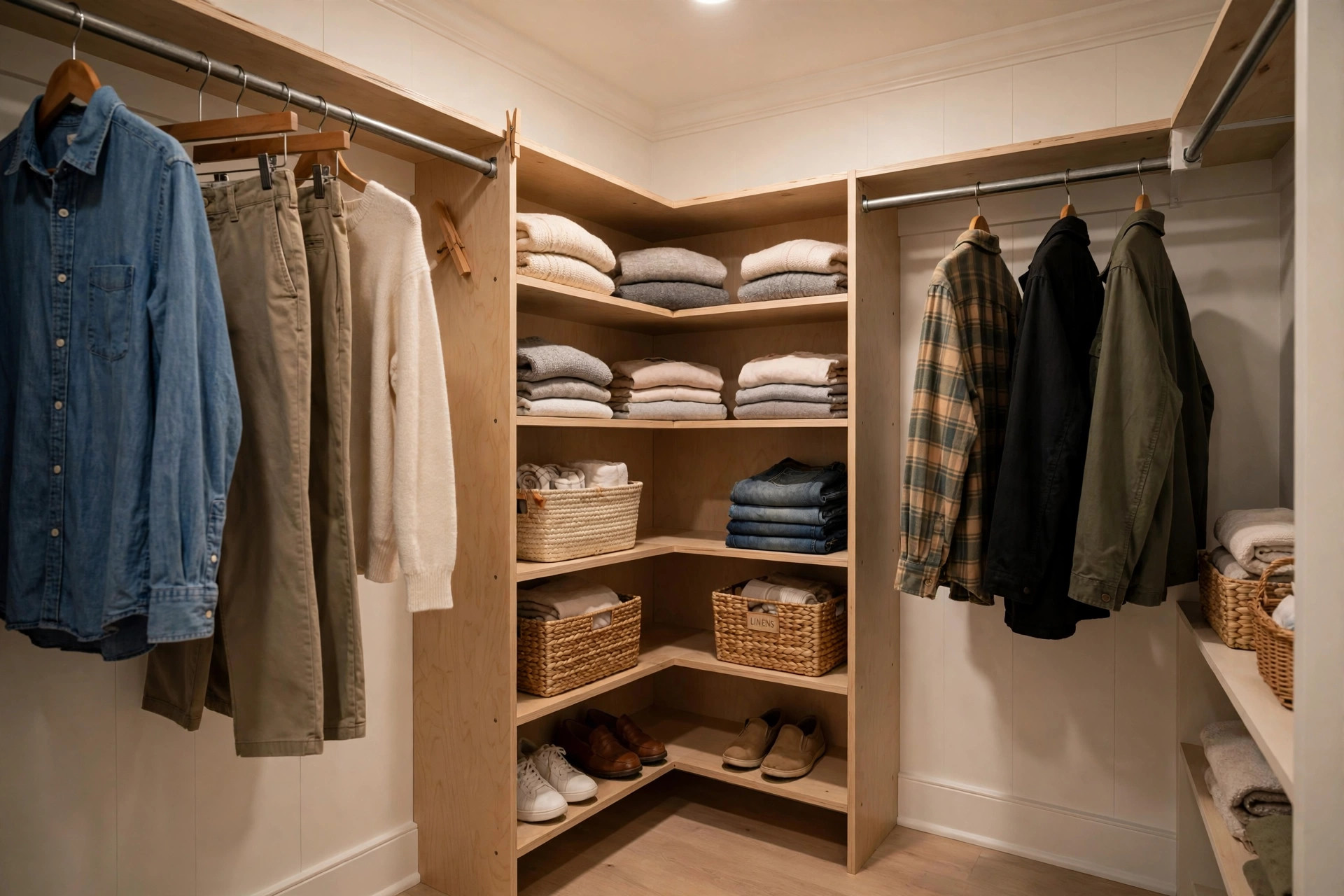

The corner of a closet is the hardest spot in the home to use. Boxes pile up there. Shoes disappear there. Clothes get pushed back and are forgotten. This corner closet organizers reviews and buying guide was written to fix that problem. It looks at the main types of corner organizers on the market. It explains what to check before you buy. It gives honest price ranges. It also covers care and safety. By the end, you will know which unit fits your closet, your budget, and your daily habits. No unit is perfect for every home. The right choice depends on the size of your corner, the weight of your goods, and how much work you want to do during assembly.
Why Corner Closet Organizers Matter
Most closets waste the corner. Standard rods and shelves run straight along the walls. The corner where two walls meet becomes a dark pocket. Things go in and do not come out. A corner closet organizer changes this. It gives the corner a shape and a job. Shoes get their own slots. Bags hang where you can see them. Folded clothes sit on shelves that turn toward you.
The change is not small. In many bedrooms, the corner holds a quarter of the total closet space. When that space is organized, the whole closet feels larger. You stop buying things you already own because you can see what you have. Morning routines get faster. Clothes stay in better shape because they are not crushed under piles.
Reviews from buyers tell the same story. People who add a corner unit report that their closets hold more and stay tidier. Shoppers on large sites like Amazon often mention that the corner was the weak point of their closet before the upgrade. Storage specialists such as The Container Store treat corners as prime space, not leftover space. That is the right way to think about it.
Types of Corner Closet Organizers: Corner Closet Organizers Reviews and Buying Guide
Corner organizers come in several forms. Each form suits a different closet and a different budget. Here are the main types you will see in reviews.
Rotating and Lazy Susan Units
These units sit in the corner and turn. You spin the shelves to bring the back items to the front. Nothing hides in the dark. They work well for shoes, bags, and folded sweaters. Many models have two or three round tiers. The turning base must be smooth and strong. Cheap plastic bases can wobble under weight. Metal or wood bases last longer.
L-Shaped Corner Shelves
These shelves are cut or built to fit into the corner at a right angle. They use both walls. They are simple and sturdy. You can stack folded clothes, boxes, and bins on them. Some sets come with rods so you can hang clothes on both sides of the corner. L-shaped units are a common pick in closet organizer systems price comparison articles because they give a lot of storage per dollar.
Freestanding Corner Towers
A corner tower is a tall, narrow unit that stands in the corner on its own. It does not need to be fixed to the wall in many cases, though fixing it is safer. Towers often mix shelves and drawers. They suit renters because they can move to a new home. They also suit small closets where drilling is not allowed. Look for a tower with adjustable shelves so you can change the layout later.
Hanging Corner Caddies
These hang from the closet rod or from a hook. They are made of fabric or canvas with pockets and shelves. They are light and cheap. They suit renters and students. They do not hold heavy items well. Shoes and jeans can stretch them out of shape. They are a good first step if you want to test whether a corner organizer helps before you spend more.
Wire Corner Racks
Wire racks are open frames of coated metal wire. Air moves through them, so they suit damp closets and linen storage. They are easy to wipe clean. The open design means small items can fall through. Line the shelves with shelf paper or mats if you store small goods. Wire racks are often sold in home improvement stores such as Home Depot and Walmart.
How to Choose the Right One
Reviews can only take you so far. The best unit on paper may not fit your corner. Work through these points before you order.
Measure the Corner First
Measure the width of each wall from the corner outward. Measure the depth from the front edge of the closet to the back wall. Measure the height from floor to ceiling, and note any baseboards, pipes, or light fixtures. Write the numbers down. Many buyers skip this step and end up with a unit that does not fit. The product page lists the unit size. Compare your numbers to those figures. Leave at least two inches of clearance so doors can open and air can move.
Pick the Right Material
Wood and engineered wood look warm and hold heavy loads. They cost more and can be heavy to move. Metal frames are strong and light. They suit garages and utility closets as well as bedrooms. Fabric units are the cheapest and lightest. They wear out faster. Plastic units resist moisture, which helps in laundry rooms and basements. Match the material to the room. A damp basement corner calls for plastic or coated wire, not raw wood.
Think About Depth and Access
A deep corner can swallow items. If your corner is deeper than 24 inches, pick a unit that brings goods to you. Rotating shelves or pull-out drawers work well here. Shallow corners do fine with fixed shelves. Ask yourself how you will reach the back. If you cannot reach it without a step stool, the back space will become a dead zone again.
Check Assembly and Mounting
Some units need only ten minutes and no tools. Others need a drill, a level, and a free afternoon. Read the assembly notes in reviews before you buy. If you rent your home, check your lease. Some landlords allow small wall anchors. Others do not. Freestanding units and hanging caddies need no holes. Wall-mounted units must be fixed into studs or with proper anchors, never into drywall alone. Guides from Family Handyman explain how to find studs and pick the right anchor for the job.
Cost and Price: What to Expect
Corner closet organizers cover a wide price range. Fabric hanging caddies start around 15 to 30 dollars. These are the true budget friendly corner closet organizers and they suit dorm rooms and first apartments. Wire corner racks and simple shelf sets run 30 to 80 dollars. They give more strength for the money.
Mid-range units cost 80 to 200 dollars. This group holds most of the best-reviewed products. You get engineered wood or sturdy metal, adjustable shelves, and smooth hardware. Rotating corner units often sit at the top of this range because of the turning mechanism.
High-end and custom-fit systems cost 200 to 600 dollars or more. These are built from solid wood or heavy steel. They may include drawers with soft-close slides and full corner rod systems. They suit walk-in closets and master bedrooms where the closet is part of the room design.
Watch for extra costs. Shipping can add 20 to 50 dollars for heavy wood units, though many stores now offer free shipping over a set amount. Wall anchors, extra shelves, and matching bins are often sold apart. Read the full price picture before you compare. Independent testing groups such as Consumer Reports remind buyers to judge value by build quality and lifespan, not by the sticker price alone.
Care and Upkeep
A corner organizer lasts longer with small, regular care. Dust the shelves once a month. A damp cloth is enough for wood, metal, and plastic. Fabric caddies can be vacuumed with a brush head. Check screws and brackets twice a year. Tighten anything that has worked loose. A unit that wobbles will wear out faster and can become unsafe.
Do not overload the shelves. Every product lists a weight limit per shelf. Respect it. Heavy items like winter coats and boot boxes belong on the lowest shelves. Light items like scarves and hats go up high. If you use wire racks, wipe them dry if the closet gets damp. Rust starts at small scratches in the coating. Touch up chips with a dab of matching paint or sealant.
Every few months, pull everything out and look at what you own. Donate what you do not wear. This keeps the corner from filling up again. An organizer works best when it holds only what you use.
Safety Notes
Safety matters with tall and wall-mounted units. Fix any unit taller than three feet to the wall with the included brackets. This stops it from tipping if a child climbs it or if weight shifts. Keep this rule even for freestanding towers. Furniture tip-over causes many home injuries each year.
Keep heavy goods low and light goods high. This lowers the center of gravity. Do not let children swing on rotating shelves or hang from rods. The hardware is built for stored goods, not for play.
If your home has lead paint or old wiring near the closet, take care when drilling. Older homes may need a check before you mount anything. For renters, ask the landlord before drilling into walls or ceilings.
Good lighting also helps. Corners are dark. A small battery light or motion-sensor strip inside the closet cuts the chance of trips and falls. Small-space living sites such as Apartment Therapy often suggest simple lighting upgrades alongside storage changes.
Frequently Asked Questions
Do corner closet organizers fit any closet? Most fit standard reach-in and walk-in closets, but not every unit fits every corner. Measure your corner and compare it to the product size. Watch for baseboards, door swings, and pipes. If your corner is oddly shaped, a custom or adjustable unit is the safer pick.
Are rotating corner units worth the extra cost? They are worth it for deep corners where the back is hard to reach. The turning action brings hidden items forward. For shallow corners, fixed shelves do the same job for less money. Read recent buyer reviews to see how smooth the turning base feels after months of use.
Can I install a corner organizer without drilling? Yes. Freestanding towers and hanging caddies need no drilling. Tension-rod corner shelves press between floor and ceiling. These options suit renters. Wall-mounted units are stronger, but only choose them if you can drill safely.
How much weight can a corner organizer hold? It depends on the model and the material. Fabric caddies may hold 5 to 10 pounds per shelf. Wood and metal units often hold 25 to 50 pounds per shelf. The product page lists the limits. Never stack beyond them, and spread heavy items across several shelves.
Where can I see real reviews before buying? Large retailers such as Wayfair and IKEA publish thousands of buyer reviews with photos. These photos show how the unit looks in real homes, not in studio shots. Filter for reviews with pictures and for reviews written after at least a month of use.
A Short Final Word
The corner of your closet can stay a dark, wasted pocket, or it can become the hardest-working spot in the room. Measure first. Pick a type that fits the depth of your corner. Spend what your budget allows, but never skip wall anchors on tall units. Homeowners in damp regions may also want to read our notes on top rated corner closet organizers for humid climates before they choose a material. With the right unit and a little upkeep, your closet will hold more, look better, and save you time every morning.
References
Amazon. (n.d.). Online shopping. https://www.amazon.com Apartment Therapy. (n.d.). Home design ideas and inspiration. https://www.apartmenttherapy.com Consumer Reports. (n.d.). Product reviews and ratings. https://www.consumerreports.org Family Handyman. (n.d.). DIY home repair and maintenance. https://www.familyhandyman.com IKEA. (n.d.). Home furnishings. https://www.ikea.com The Container Store. (n.d.). Storage and organization products. https://www.containerstore.com The Home Depot. (n.d.). Home improvement products. https://www.homedepot.com Walmart. (n.d.). Everyday low prices. https://www.walmart.com Wayfair. (n.d.). Furniture and home goods. https://www.wayfair.com
Was this guide helpful?

About Robert Taylor
The My Garden US editorial team writes practical, in-depth home and garden guides for American homeowners — tested advice, no fluff.
You May Also Like
Over the Door Organizers Price Comparison USA: A Plain Guide for Smart Shoppers
September 2, 2026 0 views
Best Kitchen Cabinet Organizers for American Homes
September 18, 2026 0 views
Waterproof Entryway Coat Racks With Free Shipping: A Practical Guide
September 1, 2026 0 views