Every year the average American home throws away a large amount of food. Much of it can become rich soil. A compost bin for kitchen scraps makes the task simple. The bin sits on the counter or under the sink. It holds coffee grounds, peels, and eggshells until they move to the pile. Many shoppers read compost bin for kitchen scraps reviews before they buy. This guide gives the facts. It covers why the bins matter, the types on the market, how to choose one, what they cost, and how to keep them clean. It also answers the most common questions from readers.
Why a Compost Bin for Kitchen Scraps Matters
Food waste is a large share of what fills landfills. When food rots in a landfill, it makes methane. Methane is a strong gas that warms the planet. When the same scraps rot in a compost pile, they make carbon dioxide instead. That is a far smaller harm. A kitchen bin is the first step in that better path.
The bin also gives the garden free food. Finished compost is dark and crumbly. It smells like forest soil. It feeds plants with slow, steady nutrition. It helps sandy soil hold water. It helps clay soil drain. A household that composts its scraps buys less bagged fertilizer. Many gardeners say their plants look better after two or three seasons of compost use.
There is a money case too. Towns now charge more for trash pickup. Some cities fine homes that put food in the trash. A kitchen bin cuts the weight of the weekly bag. The bags smell less. The kitchen stays cleaner. For all these reasons, interest in kitchen composting keeps growing, and a good composting guide from a garden supplier can help a beginner take the first step with confidence.
What to Look for When You Choose a Bin: Compost Bin for Kitchen Scraps Reviews
Not every bin suits every home. A single person in a small flat has different needs than a large family with a big yard. The points below will help you match the bin to your life.
Size and Shape
Most countertop bins hold between one half and one and a half gallons. A one gallon pail is the most common size. It fills in two or three days for a family of four. A smaller bin fills faster, which is good, because scraps stay fresh and do not start to smell. A larger bin means fewer trips outside, but the scraps sit longer. Pick a shape that fits your space. Round pails fit under the sink. Square bins sit flush against a wall.
Material
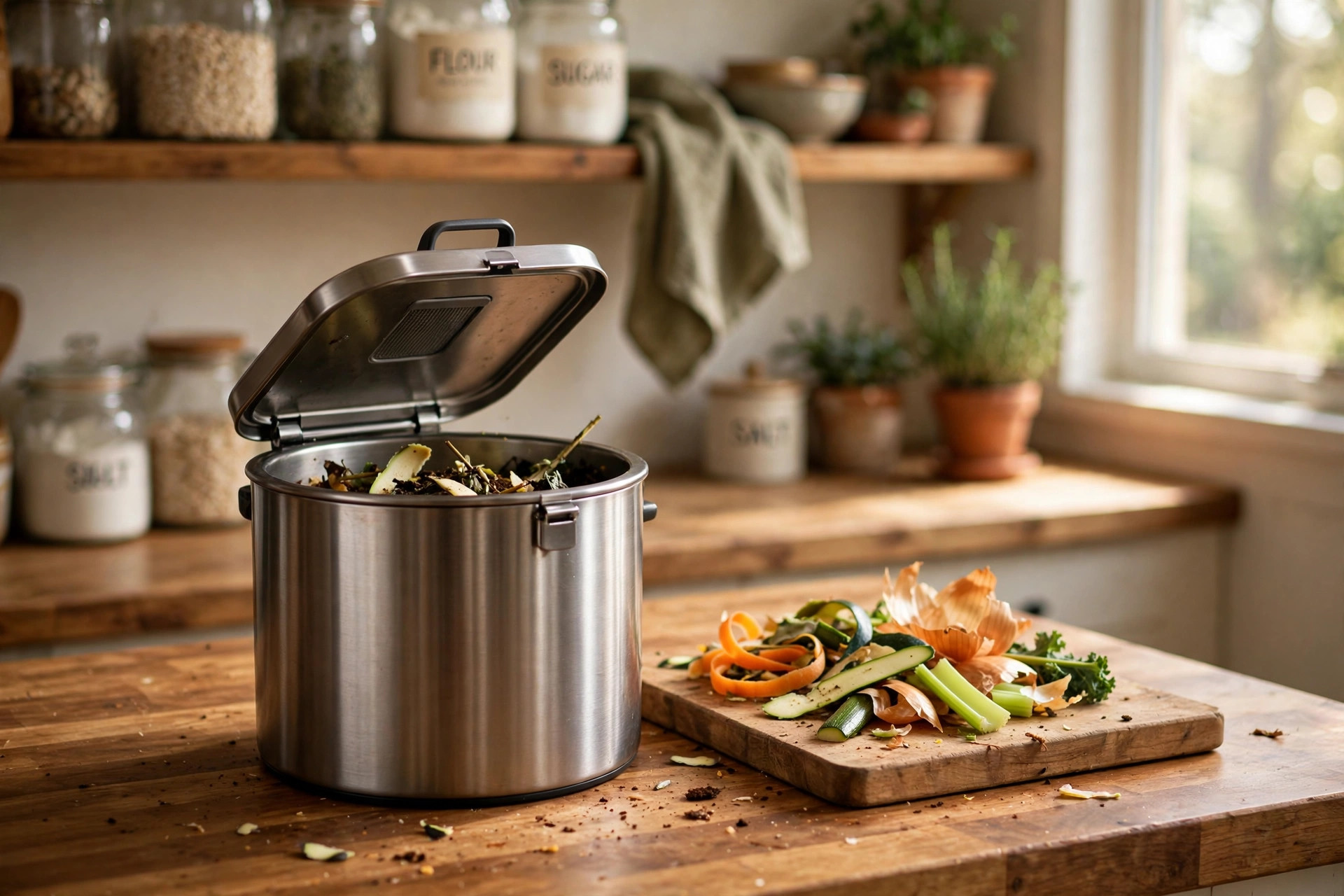
Stainless steel is the most popular material. It does not stain. It does not hold odors. It wipes clean with a damp cloth. Ceramic bins look fine on a counter, but they chip if they drop. Plastic bins cost less, yet some keep smells over time. A few models use bamboo fiber or recycled plastic. These are light and easy to carry. Testers at Consumer Reports note that steel and ceramic tend to score well for ease of cleaning.
Airflow
Compost needs air. Most kitchen bins have a charcoal filter in the lid. The filter traps odors while letting a small amount of air pass. Check that the filter is replaceable. Filters last two to three months. Some bins have side vents instead. Vents work, but they can let fruit flies in if they are not screened. A tight lid with a good filter is the safest choice for indoor use.
Seal and Lid
The lid should close with a firm snap or a good press fit. A loose lid lets odors escape and invites pests. Some lids swing open with a foot pedal. These are handy when your hands are full of peels. Others use a simple lift-off lid. Both types work well if the seal is snug. Avoid bins with gaps around the rim.
Ease of Cleaning
You will rinse the bin often. Look for a smooth interior with no deep corners. Removable inner buckets make cleaning easy. You can lift the bucket, tip the scraps into the outdoor pile, and wash the bucket in the sink. Dishwasher safe parts are a plus. Bob Vila home guides remind buyers that a bin that is hard to clean will sit unused, so pick one you will actually wash.
Types of Compost Bins for Kitchen Scraps
The market offers five main types. Each fits a different home and habit.
Countertop Pails
These are the classic choice. They sit beside the sink or on the counter. They hold daily scraps. You empty them every few days into a larger outdoor bin or a curbside green cart. They are cheap, simple, and easy to find. Their main limit is size. They cannot finish compost on their own. They only store scraps.
Under-Sink Bins
These mount or slide under the kitchen sink. They hide the scraps from view. Some come as pull-out drawers that fit inside a cabinet. They keep counters clear, which suits small kitchens. The trade-off is dampness. The space under a sink is humid, so choose a model with a strong seal and a good filter.
Outdoor Tumblers
A tumbler is a drum that sits outside on a stand. You toss in the kitchen scraps, add dry leaves, and spin the drum. The mix gets air from the turning. Finished compost can be ready in six to eight weeks in warm weather. Tumblers keep pests out better than open piles. They cost more and need yard space, but they do the full job from scrap to soil.
Worm Bins
A worm bin uses red wiggler worms to eat the scraps. The worms turn peels and paper into rich castings. The bin fits in a closet, a garage, or under a sink. It has no smell when it runs well. Worm bins suit people with no yard. They need a bit of care. The bedding must stay moist, and the worms dislike citrus and onions. A beginner’s gardening resource from a seed company explains the basics of worm care in plain terms.
Electric Composters
These countertop machines dry and grind scraps in a few hours. They cut the volume by up to ninety percent. The result is a dry mix that can go in the garden. They are the most costly option, and they use power. They suit homes with no outdoor space and no curbside pickup. Read the manual with care, since not all models take meat or bones.
Cost and Price
Kitchen compost bins cover a wide price range. A simple plastic countertop pail can cost under twenty dollars. Stainless steel pails with charcoal filters run from twenty five to sixty dollars. Ceramic models fall in the same band. Under-sink pull-out units cost forty to ninety dollars, plus any cabinet hardware.
Outdoor tumblers start near seventy dollars for small models. Large dual chamber tumblers can reach three hundred dollars. Worm bins with worms included cost sixty to one hundred fifty dollars. Electric composters are the dearest, from two hundred fifty to five hundred dollars.
Filter refills add a small yearly cost. A pack of three charcoal filters costs about ten dollars. Worm bins need fresh bedding now and then. That costs little, since shredded newspaper works fine. When you read compost bin for kitchen scraps reviews, check whether the reviewer counts these extras. A cheap bin with costly filters can cost more over time than a dearer bin with free filter replacements. Prices at Home Depot and Lowe’s give a fair picture of what most shoppers pay.
Care and Upkeep
A clean bin is a bin you will use. Empty the pail every two to three days, even if it is not full. Old scraps start to smell on the fourth day in warm kitchens. Line the bin with newspaper or a compostable bag to cut down on scrubbing. Rinse with hot water after each emptying. Once a month, wash with dish soap and let it air dry in the sun. Sun kills many odor germs.
Change the charcoal filter on schedule. Write the date on the filter with a marker so you remember. If the bin smells, the filter is the first thing to check. Sprinkle a spoon of baking soda on fresh scraps. It keeps acids in check. Keep the lid shut between uses. An open lid is an open door to fruit flies.
For the outdoor pile or tumbler, balance is the key word. Mix wet green scraps with dry brown matter such as dead leaves or torn cardboard. The ratio should favor browns by about three to one. Turn the pile each week. Keep it as moist as a wrung sponge. A yard care article from a home reference site walks through the green to brown balance with clear photos.
Safety
Composting is safe, but a few rules keep it safer. Do not compost meat, fish, dairy, or fats in an open bin or pile. They draw rats and raccoons and they smell. They also grow germs. Hot piles can take them, but most home bins do not get hot enough. Cooked food, bread, and rice can go in small amounts, but bury them deep in the pile.
Wash your hands after you handle scraps. Raw peelings can carry soil germs. Keep the bin where small children cannot tip it over. Hot steam from an electric composter can burn, so keep little hands clear. If you use a worm bin, do not feed the worms pet waste. Dog and cat waste can carry parasites that survive home composting.
Outdoor piles should sit at least a few feet from the house wall. This keeps damp away from the foundation and keeps insects from finding a path inside. Check local rules before you start. Some towns limit pile size or ban open piles. A tool and project guide from a DIY magazine lists common local rules and how to check them.
Frequently Asked Questions
Will a compost bin for kitchen scraps smell up my kitchen?
It should not, if you use it right. Empty the bin every two to three days. Keep the lid shut. Change the charcoal filter on time. A bin that smells has usually sat too long or needs a new filter. Stainless steel models hold fewer odors than plastic ones.
What can I put in the bin?
Fruit and vegetable peels, cores, and rinds. Coffee grounds and paper filters. Tea bags, if the bag is not plastic. Eggshells, crushed. Plain bread, rice, and pasta in small amounts. Shredded newspaper and paper towels. Keep out meat, bones, dairy, fats, and pet waste. For a full list of safe items, see how to compost food scraps safely.
How long until scraps become compost?
In a countertop pail, they do not finish at all. The pail only stores. In an outdoor pile or tumbler, scraps turn to finished compost in two to six months. Heat, air, and the right mix speed the work. Cold winter weather slows it to a crawl.
Do I need worms?
No. Worms are one option, not a must. A plain pile works fine without them. Worms help people with no yard, since a worm bin fits indoors. They make rich castings that plants love. But they need care, and they dislike some foods. Start with a simple bin and add worms later if you wish.
Can I compost in a flat with no yard?
Yes. Use a countertop pail and take the scraps to a drop off site or a curbside green cart. Many cities now collect food waste at the curb. A worm bin is another indoor choice. Electric composters also fit flats, though they cost more. Check your city waste page for drop off points near you.
How do I keep fruit flies away?
Fruit flies find open scraps fast. Keep the lid shut. Bury new scraps under older ones. Do not leave banana peels on top. Rinse fruit before you bring it home, since eggs can ride in on the skin. If flies appear, set a small cup of vinegar with a drop of soap near the bin. Empty and wash the bin well.
A Short Final Word
A compost bin for kitchen scraps is a small buy with a large return. It cuts trash, feeds the garden, and keeps the kitchen fresh. Read compost bin for kitchen scraps reviews with the points above in mind, and pick the bin that fits your home and your habits. Once the bin is in place, you may want to round out your kit with a garden tool set for beginners or even a garden sprayer for deck staining for other yard tasks. For more on the craft side of garden work, Fiskars offers tool guides, and Corona Tools covers hand tool care. Start small, stay steady, and the soil will thank you.
References
Bob Vila. (n.d.). Home improvement advice. https://www.bobvila.com Burpee. (n.d.). Seeds, plants, and gardening supplies. https://www.burpee.com Consumer Reports. (n.d.). Product reviews and ratings. https://www.consumerreports.org Corona Tools. (n.d.). Garden and landscape tools. https://www.corona-tools.com Family Handyman. (n.d.). DIY home repair and maintenance. https://www.familyhandyman.com Fiskars. (n.d.). Garden and cutting tools. https://www.fiskars.com Gardener’s Supply Company. (n.d.). Gardening tools and supplies. https://www.gardeners.com Lowe’s. (n.d.). Home improvement products. https://www.lowes.com The Home Depot. (n.d.). Home improvement products. https://www.homedepot.com The Spruce. (n.d.). Home and garden advice. https://www.thespruce.com
Was this guide helpful?

About David Wilson
The My Garden US editorial team writes practical, in-depth home and garden guides for American homeowners — tested advice, no fluff.