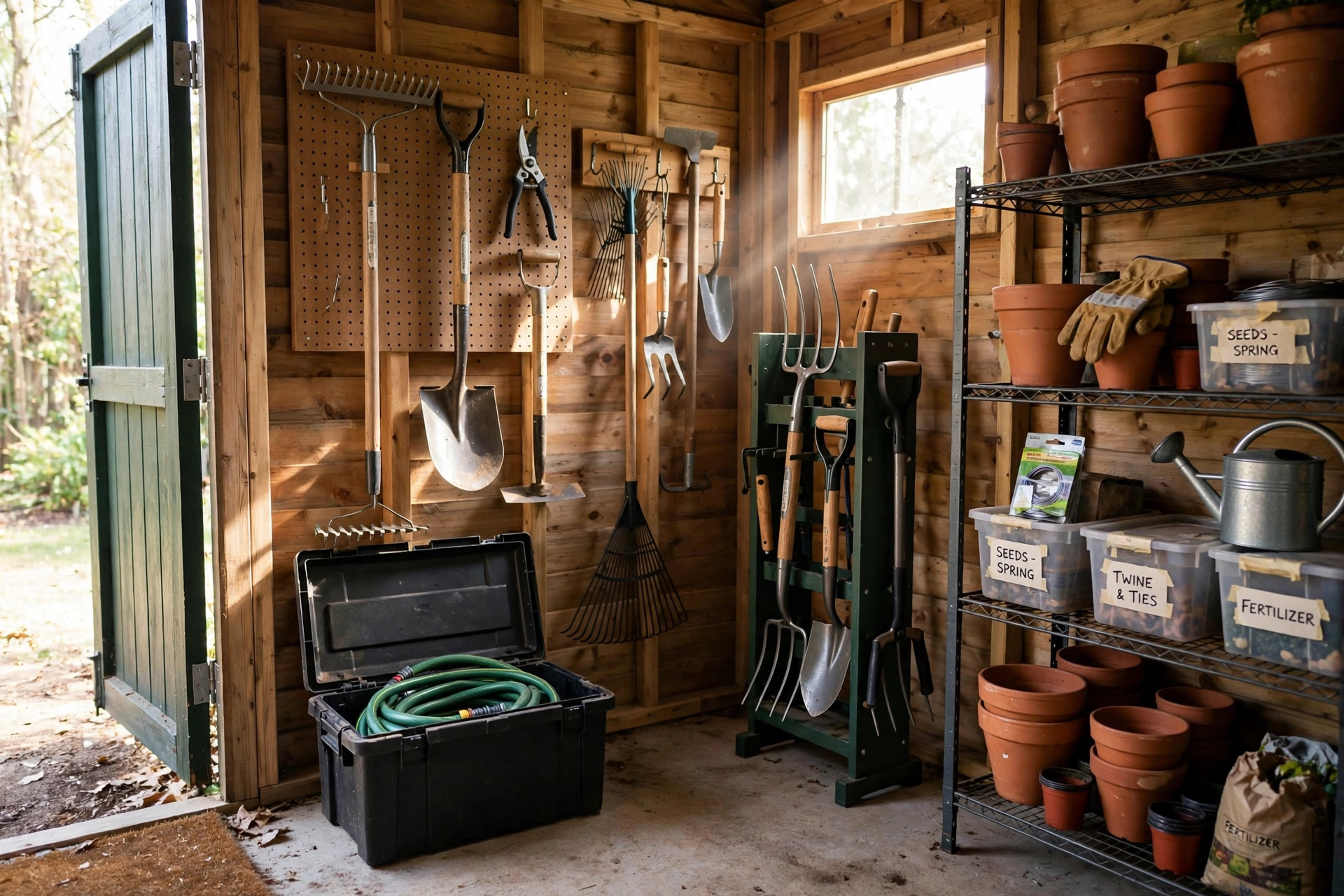

A garden shed fills up fast. One spring of planting and the floor is covered with shovels, rakes, bags of seed, and pots. This is why garden tool storage ideas for shed owners matter so much. A shed that is planned well saves time, keeps tools in good shape, and keeps the yard looking neat. Many people put off organizing their shed. The job looks big. It does not need to be. With a free afternoon and a simple plan, a shed can hold twice as many tools and still leave room to walk.
This guide gives practical garden tool storage ideas for shed spaces of all sizes, from small 4 by 6 foot sheds to large backyard barns. You will learn how to sort tools, pick the right racks, use the walls, and keep small parts in order. The goal is simple. Every tool has a place. Every place is easy to reach.
Why Good Storage Matters
Tools cost money. A good shovel or a sharp pair of pruners can last twenty years if it is stored dry and hung up. Left on a damp floor, the same tool rusts in one winter. Rust ruins the edge. A rusty blade needs more force to cut. More force means sore backs and tired arms. Good storage protects the tool and the gardener.
It also saves time. When every tool has a spot, there is no hunt for the trowel or the twine. The work starts sooner and ends sooner. A tidy shed is also safer. Sharp tools on the floor are a hazard for children and pets. A shed with open bags of fertilizer and loose sprays is worse. Hung on a wall or locked in a cabinet, these items stay out of reach.
Finally, an organized shed makes gardening more pleasant. The shed becomes a small workshop instead of a junk room. Many gardeners find they enjoy the work more when the tools are in order. A neat shed also keeps neighbors happy. A yard with tools strewn about looks untidy, while a closed shed door hides a well-run system.
What to Look for When You Plan Storage: Garden Tool Storage Ideas for Shed
Measure the Shed First
Take a tape measure and note the width, depth, and height of each wall. Write the numbers down. This step is dull and it matters more than any other. Racks and shelves come in set sizes. A rack that is two inches too wide is a rack you cannot use. Note the door swing too. Nothing should block the door when it opens. Note the wall studs if you can find them with a simple stud finder. Heavy tools need strong anchors, and studs give that strength.
Group Tools by Type
Long-handled tools like rakes, shovels, and brooms go together. Hand tools like trowels and pruners form a second group. Small parts like screws, plant labels, and seed packets form a third. Hoses, cords, and string form a fourth. When you group first, you can see what kind of storage each group needs. Tool makers such as Fiskars and Corona Tools publish care guides that also show how tools should be hung and stored.
Think in Zones
Put daily tools near the door. Put seasonal items like snow shovels or leaf blowers in the back or up high. Heavy bags of soil or seed belong low so no one lifts too much. This simple map makes the shed easy to use all year. The Spruce offers shed layout ideas that follow this same zone plan.
Types of Shed Storage
Wall Hooks and Pegboard
Walls are the best storage space in a small shed. The floor fills fast while the walls stand empty. Pegboard turns a wall into a grid of holes that hold hooks. Hang trowels, pruners, gloves, and cords where you can see them. Draw the outline of each tool on the board. Then every tool has a marked home and you can see at a glance what is missing.
Heavy-duty wall hooks hold rakes, shovels, and loppers. Anchor hooks into wall studs so they hold the weight. Pegboard and hooks are cheap and easy to move when the plan changes. DIY sites like Bob Vila show simple weekend projects for building custom wall organizers from scrap lumber.
Freestanding Racks
A garden tool storage rack stands on the floor and holds long handles upright. These racks are built for shovels, rakes, hoes, and brooms. They keep handles off the floor and blades in the air where they cannot hurt feet. Some racks have slots. Some have a rolling design that moves out of the way. Look for a rack with a wide base so it does not tip when you pull a tool out.
Before you buy, compare models at Family Handyman, which tests tool storage gear in real workshops. A rack that fits your tools and your floor space will serve for many years.
Cabinets and Lockers
A closed cabinet keeps dust off tools and keeps chemicals out of sight. Lockers work well for families with children. A simple metal or resin cabinet holds sprays, oils, and seed on shelves. Keep a small lock on the door. Lockers also slow damp air from reaching metal tools, which slows rust. A garden bench with storage can work as an outdoor cabinet too. Kept near the shed door, a garden bench with storage holds hand tools, gloves, and seed packets right where you sit to work.
Overhead Shelves
The space near the roof is wasted in most sheds. A shelf high on the wall holds boxes of pots, empty planters, and seasonal decor. Use this space for light items only. Do not store heavy bags up high where they can fall. Make sure the shelf is fixed to studs with strong brackets. In sheds with a low roof, skip overhead storage and use tall side shelves instead.
Small Tool Organizers
Hand tools get lost because they are small. A wall-mounted caddy, a canvas roll, or a bucket with a tool apron keeps them together. Seed packets and plant labels fit in a small parts box or a plastic tote with a lid. A seed storage organizer helps keep packets dry and sorted by season. Burpee and Gardener’s Supply Company sell seeds and small hand tools that fit well in these compact organizers.
Hose Storage
A loose hose is a trip hazard and a kinked hose breaks sooner. A garden hose storage box keeps the hose wound, dry, and out of the sun. Mount a reel on the shed wall or keep a free-standing box near the door. A wound hose lasts longer because it does not kink, and it stays cleaner when it is off the ground.
Cost and Price
Shed storage can be cheap. A few sturdy hooks cost a few dollars. A sheet of pegboard and a bag of hooks may cost under thirty dollars. Freestanding racks run from twenty to eighty dollars depending on size and material. Wall-mounted rail systems cost more but hold more weight and look neat in the shed.
Metal cabinets start near fifty dollars for a small unit and rise past two hundred for a large locking cabinet. Resin cabinets cost more but resist rust and damp air. Secondhand options cut costs a lot. Thrift stores and yard sales often sell shelves, hooks, and small cabinets for a few dollars each. Old pallets make free wall organizers when they are cleaned, sanded, and mounted on studs.
Do not buy more than you need. Start with hooks and one rack. Add more storage only when the shed is full and tools still have no home. Many gardeners spend less than one hundred dollars for a full setup. The money goes further when the plan comes first and the shopping comes second. Compare prices at The Home Depot and Lowe’s before you buy, and check buying guides from Consumer Reports for notes on which materials last longest in damp sheds.
Care and Upkeep
Storage only works if the tools stay clean. Knock soil off shovels and rakes before they go back on the rack. Wipe blades with an oiled rag once a month during the season. A light coat of oil stops rust before it starts. Sharpen pruners and hoes once or twice a year. Sharp tools cut clean and need less force, which means less strain on hands and wrists.
Check the shed once a season. Tighten loose hooks. Replace hooks that bend under weight. Sweep the floor so damp dirt does not touch metal tools. In fall, move summer tools to the back and bring winter tools forward. In spring, do the reverse. This takes ten minutes and keeps the zones working as planned.
Watch for leaks. A shed roof leak ruins storage fast. Check the roof after heavy rain. Dry any wet spot and fix the leak before mold grows. Bags of seed and fertilizer should sit on a shelf, never on the floor. Damp moves from the floor into paper bags. Plastic bins with lids keep these items dry and safe from mice.
Safety
A shed holds sharp edges, heavy bags, and chemicals. Treat it with care. Hang sharp tools blade-up and out of reach of children. Lock chemicals and sprays in a cabinet. Read the label on every chemical before use and follow the safety steps it gives.
Keep a first aid kit in the shed. Gloves, eye protection, and a dust mask belong on a hook near the door so they are easy to grab. Wear gloves when you handle rusty tools. Tetanus is a real risk from old metal, and a simple cut can turn serious.
Do not overload shelves. A shelf that breaks can drop heavy pots on feet. Keep the floor clear. A clear path to the door matters in an emergency. Ventilate the shed when you use sprays or paints. Leave the door open for fresh air. Keep a small fire extinguisher if you store fuel for mowers. Fuel should sit in an approved can, away from tools that spark. Check local rules before you store fuel in a shed, since some towns limit fuel storage near homes.
Frequently Asked Questions
How do I store garden tools in a small shed? Use the walls. Pegboard, hooks, and high shelves free the floor for the mower and large items. Group tools by type and keep daily tools near the door. Even a tiny shed holds a full set of tools when the walls do the work.
What is the best way to keep tools from rusting? Hang them off the floor so air moves around them. Wipe blades with an oiled rag each month. Fix shed roof leaks fast. Keep bags of fertilizer and seed on shelves, not on damp concrete or wood floors.
How much does shed tool storage cost? Basic hooks and a rack can cost under fifty dollars. Cabinets and rail systems cost more. Many gardeners finish the whole shed for under one hundred dollars, less if they buy secondhand shelves and hooks.
Should I lock my shed? A simple lock stops theft and keeps children away from chemicals and sharp tools. Lock cabinets with chemicals inside too. A lock is one of the cheapest safety steps a gardener can take.
Can I store a lawn mower in the shed? Yes. Give it a clear spot on the floor away from sharp tools. Drain the fuel or add stabilizer for winter. Keep the mower near the door so you do not have to move racks and boxes to reach it.
How often should I clean the shed? Do a quick sweep once a month. Do a full sort once a season. Move seasonal tools forward and back as the year turns. Ten minutes of upkeep keeps the whole system working.
A Final Word
A shed does not need to be fancy. It needs to work. Start with a plan. Measure the walls. Group the tools. Hang them where you can see them. Keep the floor clear and the chemicals locked away. Add storage only where it is truly needed.
With these garden tool storage ideas for shed spaces, the shed becomes a place that helps the garden instead of hiding the tools. The work gets easier. The tools last longer. And the shed door opens to order instead of clutter.
References
Bob Vila. (n.d.). Home improvement advice. https://www.bobvila.com Burpee. (n.d.). Seeds, plants, and gardening supplies. https://www.burpee.com Consumer Reports. (n.d.). Product reviews and ratings. https://www.consumerreports.org Corona Tools. (n.d.). Garden and landscape tools. https://www.corona-tools.com Family Handyman. (n.d.). DIY home repair and maintenance. https://www.familyhandyman.com Fiskars. (n.d.). Garden and cutting tools. https://www.fiskars.com Gardener’s Supply Company. (n.d.). Gardening tools and supplies. https://www.gardeners.com Lowe’s. (n.d.). Home improvement products. https://www.lowes.com The Home Depot. (n.d.). Home improvement products. https://www.homedepot.com The Spruce. (n.d.). Home and garden advice. https://www.thespruce.com
Was this guide helpful?

About Emily Rodriguez
The My Garden US editorial team writes practical, in-depth home and garden guides for American homeowners — tested advice, no fluff.
You May Also Like

Cold Frame Construction Plans Free: Build Your Own Season Extender
October 2, 2026 1 views
Cold Frame vs Greenhouse Pros Cons: A Plain Guide for Home Gardeners
February 13, 2026 0 views
The Best Garden Hose Storage Box Reviews for a Tidy Yard
July 6, 2026 0 views