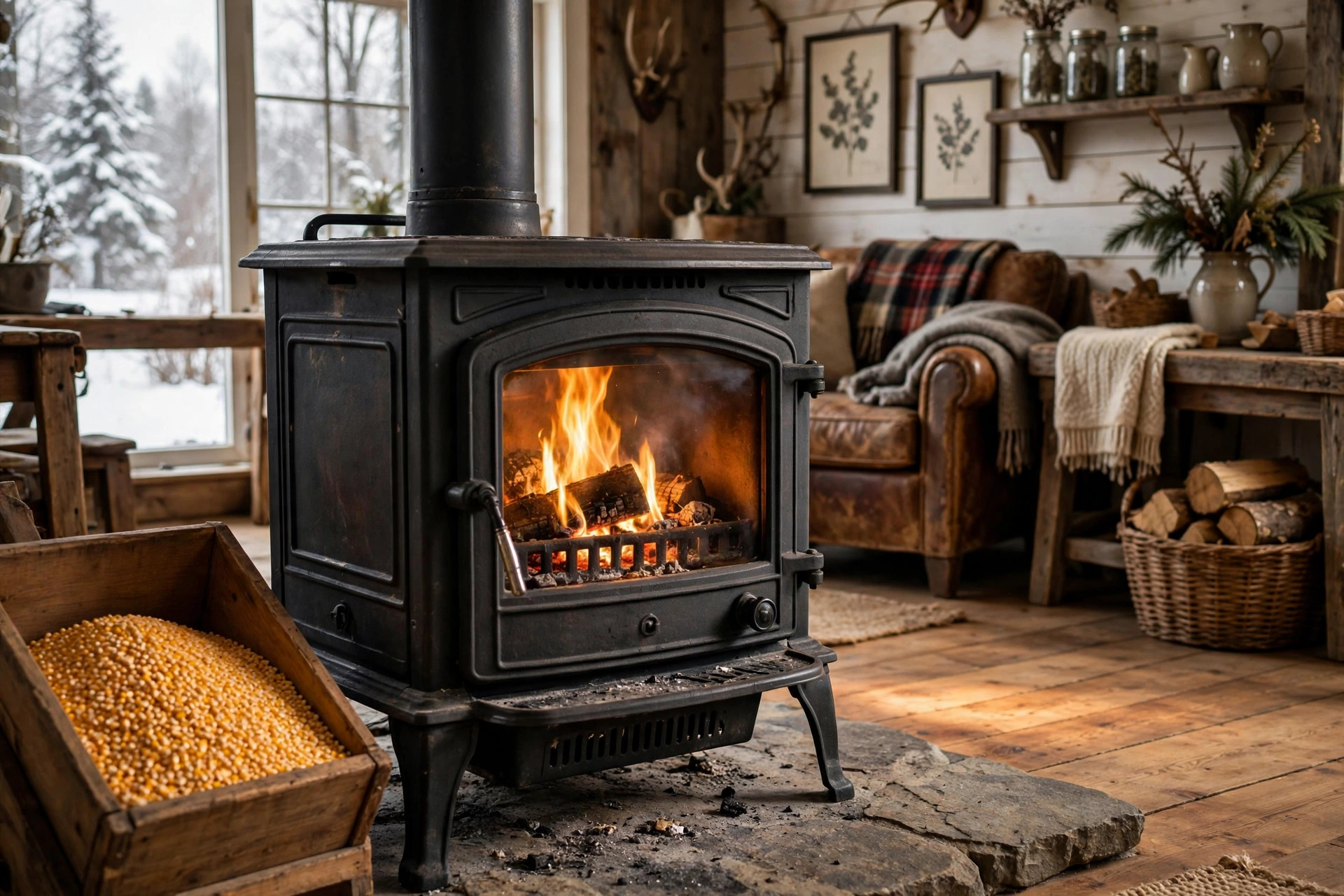

Reading the best corn stove for home heating reviews is a smart first step before you spend money on one of these machines. A corn stove burns shelled corn kernels to make heat. It looks much like a pellet stove, but it runs on grain instead of wood pellets. Farmers and rural homeowners have used corn stoves for many years. Reviews from owners can tell you which models run well and which ones cause trouble. This guide explains what the reviews say, what to look for, and what it costs to buy and run a corn stove.
Why a Corn Stove May Matter to Your Home
A corn stove matters most when fuel cost is the main problem. Many homes in farm country sit near corn fields. Corn is grown close by, so it can be cheap. Some owners buy corn from a neighbor or from a local grain dealer. When corn prices are low, heating with corn can cost less than heating with propane, oil, or electric heat. That is the main reason reviews exist for this kind of stove. People want to know if the savings are real.
A corn stove also gives steady heat. The stove feeds corn from a hopper into a burn pot with an auger. A fan blows warm air into the room. Many models have a thermostat. You set the heat level, and the stove feeds more or less corn to match it. Owners like this. A wood stove needs wood added by hand every few hours. A corn stove can run a day or more on one full hopper.
There is also the question of independence. A corn stove lets a homeowner heat with a local fuel. You do not depend on a gas line or an oil truck. In farm country, that freedom has real value. Reviews often come from people who like that feeling. They accept the extra work of cleaning and fuel handling because the stove runs on corn they know and trust.
Still, a corn stove is not for every home. It needs daily attention. It needs a good source of clean, dry corn. It needs proper venting. Reviews warn new buyers about these facts. Read this guide with care before you decide.
What to Look For When You Read Corn Stove Reviews: Best Corn Stove for Home Heating Reviews
Heat Output in BTU
Reviews always mention BTU output. BTU is a unit of heat. A small corn stove may put out 30,000 BTU per hour. A large one may reach 50,000 or more. For a small room or a cabin, a low BTU stove may be enough. For a whole house, you need a larger unit or a furnace-style model. Many reviewers say the biggest mistake is buying too small. The stove runs all day and never quite warms the house. Measure your space and check the rating before you buy.
Hopper Size
The hopper is the box that holds the corn. A big hopper holds more corn, so you refill it less often. Reviewers like hoppers that hold at least 80 pounds of corn. That amount can burn for a full day or longer at a medium setting. Small hoppers need filling twice a day in cold weather. Think about your daily routine. If you work long hours, a big hopper matters.
Efficiency Ratings
Good corn stoves burn 75 percent or more of the fuel as heat. The best ones reach 80 percent or higher. Efficiency tells you how much of your corn money turns into warm air. Reviews often compare this number. You can also learn about federal efficiency programs that rate home heating equipment. A higher efficiency rating means less corn burned for the same heat.
Build Quality and Brand Reputation
Long-running brands get the most reviews. St. Croix, Quadra-Fire, Harman, Magnum, and Bixby are names that appear often in the best corn stove for home heating reviews. Owners judge these brands on steel thickness, auger design, and how well the controls work. Cheap stoves may have thin steel and weak motors. They may need repairs sooner. Reviews help you spot weak designs before you buy.
Controls and Thermostat
Modern corn stoves have digital controls. Some have a room thermostat that turns the feed rate up and down. Reviewers like simple controls. They warn against models with confusing menus. A stove you cannot set with ease will be a daily annoyance.
Types of Corn Stoves and Options
Freestanding Room Heaters
A freestanding corn stove stands in a room and blows warm air into that space. It is the most common type. Owners place it in a living room, a basement, or a great room. It heats one zone well. Many reviewers say this type works best as extra heat or as the main heat for a small home. It does not replace a central furnace by itself.
Furnace-Style and Whole-House Models
Some corn stoves tie into ductwork. They heat the whole house like a furnace. These units cost more and need a planned install. Reviews for whole-house models talk about long burn times and strong heat. They also talk about more complex venting. If you want one heat source for a large home, this is the type to study. Compare them with other heating equipment from major heating manufacturers to see where a corn furnace fits your plan.
Multi-Fuel Stoves
Some stoves burn corn and wood pellets both. This is useful when corn prices rise. You can switch to pellets for a time. Reviews note that multi-fuel models need different settings for each fuel. They also need more cleaning. Still, the option to switch fuel gives peace of mind. Many buyers list it as a key reason for their choice.
Cost and Price: What the Reviews Say About Money
A new corn stove costs between 2,000 and 4,500 dollars for a freestanding model. Furnace-style units cost more, often 5,000 dollars or higher. Installation adds 500 to 2,000 dollars. Vent pipe, a hearth pad, and labor set the final number. Reviewers often say installation cost surprises new buyers. Always get a written quote before you commit.
Running cost depends on corn price and winter weather. A home may burn 150 to 300 bushels of corn per winter. A bushel of shelled corn weighs 56 pounds. If corn costs 4 dollars a bushel, the season may cost 600 to 1,200 dollars in fuel. Electric use for fans and the auger adds a small amount. Compare these numbers with your current heat bill. That math tells you if a corn stove saves money for your home.
Reviewers also warn about hidden costs. Corn must be clean and dry. Wet corn burns poorly and clogs the stove. Some owners buy a moisture meter. Others pay a dealer to clean and bag the corn. Storage matters too. Corn needs a dry bin or shed. Mice and moisture ruin stored corn. Plan for these costs when you read price claims in reviews.
Fuel Quality: The Heart of Corn Stove Heating
Every review agrees on one point. Corn quality makes or breaks the stove. Use clean, shelled field corn with 13 to 15 percent moisture. Wet corn makes clinkers, which are hard lumps of ash that choke the burn pot. Dirty corn with husks and dust clogs the auger. Owners who buy good corn have clean burns and few problems. Owners who burn poor corn spend hours scraping the burn pot.
Test moisture with a cheap grain meter. Buy from a trusted source. Store corn in a dry place off the ground. If you grow your own corn, let it dry well before use. Reviewers repeat this advice more than any other. It is the single best tip in all corn stove reviews.
Corn ash is different from wood ash. It is fine and slightly abrasive. It wears moving parts over time. Some stoves have hardened parts to resist this wear. Reviews note which brands hold up best. Ask about wear parts when you shop.
Care and Upkeep
A corn stove needs daily care in heating season. Empty the ash pan every day or two. Scrape the burn pot to remove clinker. Check the hopper for dust and fines, which are tiny corn pieces that can jam the auger. Many owners spend ten to fifteen minutes a day on the stove. Weekly, they clean the heat exchanger tubes and check the vent pipe. Seasonally, they take the stove apart for a deep clean.
Parts wear out. Igniters, auger motors, and fans last several years with good care. Keep spare parts on hand in winter. Reviews praise brands with parts that are easy to find. Stove care guides from home handbooks can help you build a cleaning routine.
The vent pipe needs care too. Corn stoves use direct vent pipe through a wall. Ash and soot build up inside. Clean the vent each season. A blocked vent can push smoke into the home. This is a safety matter, not just a chore.
Safety: What Every Owner Must Know
Heat safety starts with clearances. A corn stove needs set inches from walls and furniture. The manual lists exact numbers. Follow them. Place the stove on a non-combustible hearth pad. Keep curtains, papers, and dry wood away from the stove.
Install smoke alarms and carbon monoxide alarms on every floor. A corn stove burns with a fan-driven fire. If the vent fails, exhaust gas can enter the room. A carbon monoxide alarm gives warning. Test alarms monthly. This advice appears in federal energy guides for all home heating equipment.
Let a trained installer do the first setup. Venting must be sealed and sloped right. The electrical hookup must be safe. After install, have the stove checked each year. Many chimney sweeps service corn stoves. A yearly check catches worn gaskets and tired motors before they fail on a cold night.
Keep children and pets away from the hot glass door. The firebox runs very hot. A safety gate works well in family homes. Store corn fuel away from the stove to keep dust down.
Frequently Asked Questions
How much does a corn stove cost to run each winter?
It depends on corn price and how cold the winter is. Most reviewers report 150 to 300 bushels per season. At 4 dollars a bushel, that is 600 to 1,200 dollars. Add a small electric cost for the fans and auger. Check your current heat bill and compare.
Is a corn stove cheaper than a pellet stove?
It can be, where corn is cheap. Corn often costs less per BTU than bagged pellets. But corn needs more cleaning and more careful fuel storage. For a full cost picture, compare pellet stove costs for a basement install with corn stove costs in your area.
Can a corn stove heat a whole house?
A freestanding model heats one or two rooms well. For a whole house, you need a furnace-style corn unit tied to ductwork. Some owners use two freestanding stoves, one per floor. Reviewers say correct sizing matters more than brand for whole-house heat.
What kind of corn does a corn stove burn?
Use clean, shelled dent corn at 13 to 15 percent moisture. Do not burn sweet corn, popcorn, or moldy corn. Bad fuel clogs the stove and makes heavy clinkers. Buy from a grain dealer or a trusted neighbor.
Does a corn stove need a chimney?
Most corn stoves vent through a wall with a direct vent pipe. They do not need a tall masonry chimney. The vent must be installed per the manual with proper seals. Have a pro do it. A wood stove install guide shows why venting work is best left to trained hands.
How often must I clean a corn stove?
Daily during heating season. Scrape the burn pot, check the ash pan, and keep the hopper clean. Do a deeper weekly cleaning of heat exchanger surfaces. Take the stove down for a full service once a year before winter.
A Final Word
The best corn stove for home heating reviews point to one clear lesson. The stove is only as good as the fuel and the care behind it. Buy a proven brand with strong owner reviews. Size it right for your space. Feed it clean, dry corn. Clean it daily and service it yearly. Do these things, and a corn stove can give steady, low-cost heat for many winters. For more on fuel choice, see how reviewers compare wood stoves and pellet stoves on cost. If your home needs central heat from a classic brand, major furnace makers and heating system brands offer options to compare, as do Lennox heating systems and Goodman heating equipment. Home heating handbooks like This Old House can guide the rest of your planning.
Related guides on this site include energy efficient mini split for 1500 sq ft, ductless mini split installation cost per zone, and best mini split for cold climates reviews usa.
References
Best pellet stove for basement reviews usa. (n.d.). Home and garden information. https://best-pellet-stove-for-basement-reviews-usa/ Carrier. (n.d.). Heating and cooling systems. https://www.carrier.com ENERGY STAR. (n.d.). Energy efficient products. https://www.energystar.gov Family Handyman. (n.d.). DIY home repair and maintenance. https://www.familyhandyman.com Goodman. (n.d.). Heating and cooling equipment. https://www.goodmanmfg.com Lennox. (n.d.). Heating and cooling systems. https://www.lennox.com Rheem. (n.d.). Heating, cooling, and water heating. https://www.rheem.com This Old House. (n.d.). Home renovation guidance. https://www.thisoldhouse.com Trane. (n.d.). Heating and air conditioning. https://www.trane.com U.S. Department of Energy. (n.d.). Energy efficiency and renewable energy. https://www.energy.gov Wood stove installation cost near me. (n.d.). Home and garden information. https://wood-stove-installation-cost-near-me/ Wood stove vs pellet stove cost comparison. (n.d.). Home and garden information. https://wood-stove-vs-pellet-stove-cost-comparison/
Was this guide helpful?

About James Carter
The My Garden US editorial team writes practical, in-depth home and garden guides for American homeowners — tested advice, no fluff.
You May Also Like
The Best Pellet Stove for Basement Heating: Reviews USA
May 3, 2026 0 views
A Guide to Ceiling Fan Direction for Summer in the USA
March 8, 2026 0 views
Best Pool Heater for Cold Climates USA: How to Keep Your Water Warm All Season
June 13, 2026 0 views