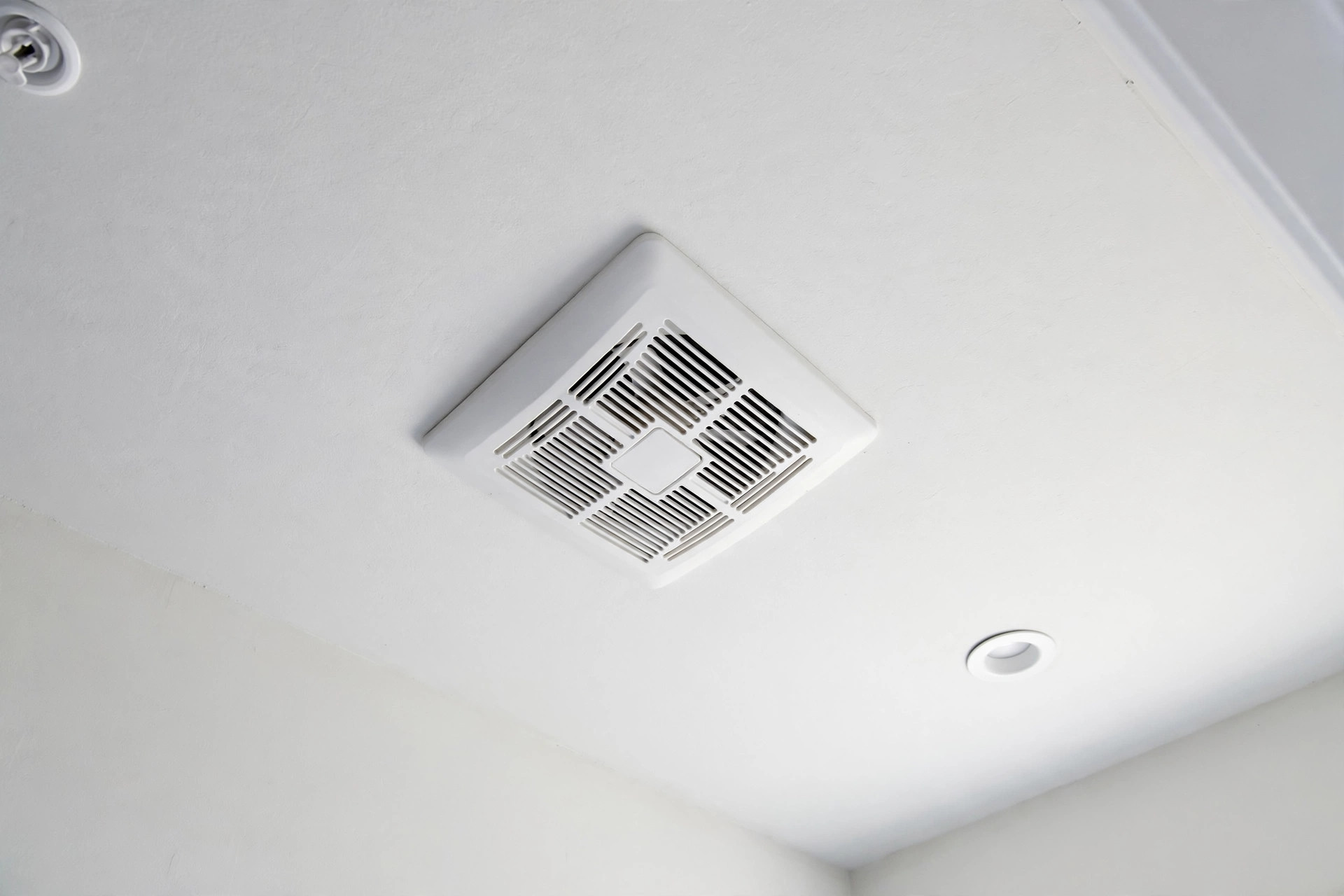

A bathroom fan with humidity sensor is one of the simplest upgrades a homeowner can make. This article collects bathroom fan with humidity sensor reviews usa readers have asked for, and it explains what these fans do, how to choose one, what they cost, and how to keep them working. Every home with a shower needs good ventilation. A smart fan takes the guesswork out of the job.
The problem is old and familiar. Hot water makes steam. Steam turns to water on cold walls and mirrors. That moisture feeds mold and mildew. Paint peels. Wallpaper lifts. Wood trim swells. A standard fan runs only while the switch is on, and most people turn it off too soon. A fan with a humidity sensor keeps running until the air is dry, then shuts itself off. Reviews from American homeowners show this one feature cuts bathroom moisture problems more than any other single change.
Why It Matters
Bathrooms are the wettest rooms in the house. A single shower can push indoor humidity past seventy percent. At that level, mold begins to grow within two days on damp surfaces. The United States Department of Energy notes that moisture control is a basic part of a healthy home, and bathroom exhaust is one of the main tools for the job.
A humidity-sensing fan does three things well. First, it runs on its own, so no one has to remember to leave it on. Second, it measures the air and stops when the job is done, so it does not waste electricity. Third, it protects the house. Dry air keeps paint, grout, and drywall in good shape. Homeowners who switched from a plain fan to a sensing model report fewer mold spots on ceilings and around tubs.
These fans also help with odors. Because the sensor keeps the fan running after a shower, stale air is pushed out fully instead of lingering. For homes with older windows and poor natural ventilation, the difference is easy to feel.
What to Look for When You Choose: Bathroom Fan with Humidity Sensor Reviews Usa
Reviews across the country point to the same handful of features. Noise level comes first. Fan noise is measured in sones. A fan rated at 1.0 sone or less is very quiet. Older fans often run at 3 or 4 sones, which is loud enough to drown out talk. If the fan is quiet, people do not mind that it runs longer. Most of the top-reviewed models in bathroom fan with humidity sensor reviews usa stay under 1.0 sone.
Airflow comes next. It is measured in CFM, or cubic feet per minute. The rule of thumb is one CFM for every square foot of bathroom floor. A fifty-square-foot bath needs at least fifty CFM. Larger baths, or baths with tall ceilings, need more. Many sensing fans offer 80, 110, or 150 CFM models in the same line.
Sensor Settings
The heart of the unit is the humidity sensor. Good models let you set the target humidity level. A setting around fifty to sixty percent works for most homes. Some fans also include a timer mode, so they run a set number of minutes after the switch turns on. Others add a night light or a small motion sensor. These extras are pleasant, but the humidity sensor is the part that matters most.
Size and Fit
Most sensing fans fit the standard ceiling hole used by common bath fans. Retrofit models are made to slide into an old housing without cutting new drywall. Check the duct size before you buy. A four-inch duct is common, but some strong fans need six inches to reach their rated airflow. A fan choked by a small duct will be louder and weaker than its rating suggests.
Energy Use
Look for the Energy Star mark. Energy Star certified fans use less power and move more air per watt than standard models. Over a year of daily showers, the savings add up, and the fan runs only as long as the sensor calls for it.
Types and Options
Not every humidity-sensing fan is built the same. The reviews sort them into a few clear groups.
Basic sensing fans. These are the simplest. They look like an ordinary bath fan and add a small humidity sensor to the grille. They cost the least and suit a straight replacement job.
Quiet premium fans. These add better motors, often DC motors, and thicker insulation. They run under 0.5 sones in many cases. Homeowners who hate fan noise rate these the highest, and the best quiet bathroom exhaust fan reviews usa show the same names appearing again and again.
Combination units. Some fans pair the sensor with a light, a night light, or even a small heater. These suit a full remodel where one unit can do several jobs. They cost more and need more wiring.
Inline and remote fans. In these designs, the motor sits in the attic or in the duct run, away from the bathroom. The room itself stays almost silent. They suit large baths and homes where noise must be near zero.
Duct Length and Fan Power
A long duct run with sharp bends slows the air. Reviews warn that even a strong fan can feel weak when it must push air through twenty feet of twisted flexible duct. Short, straight runs of smooth rigid duct give the best results. If the duct must be long, pick a fan with a higher CFM rating to make up for the loss. The rating on the box assumes an easy duct, so real homes need a little margin.
Cost and Price
A basic bathroom fan with a humidity sensor sells for about forty to ninety dollars at common American retailers. Mid-range quiet models run from ninety to one hundred and eighty dollars. Premium units with DC motors, lights, or heaters can reach two hundred and fifty dollars or more.
Installation adds to the bill. A straight swap, where the new fan fits the old hole and the wiring is already in place, is a simple job. An electrician may charge one hundred to two hundred dollars for it. A new installation that needs fresh wiring and a new duct run costs more. Our guide to bathroom exhaust fan installation cost usa breaks down the parts and labor in detail.
Running costs are small. A typical sensing fan draws ten to thirty watts. Because it shuts off by itself, it rarely runs longer than needed. Most homes will see only a few dollars a year in added electricity.
Care and Upkeep
A humidity-sensing fan needs little care, but it does need some. Dust builds up on the grille and on the fan blades. A dirty fan moves less air and makes more noise. Twice a year, turn off the power, pull the grille down, and wash it in warm soapy water. Wipe the blades with a damp cloth. Let everything dry before you restore power.
The sensor itself needs clean air to read well. Heavy dust on the sensor can make it slow to react. A soft brush or a short puff of air keeps it clear. Do not spray cleaners directly onto the sensor.
Check the duct once a year. Go into the attic and look at the duct run. It should slope toward the outside vent so water does not pool inside. The outside vent cap should open and close freely. A stuck vent cap can cut airflow in half.
Safety
Bathroom fans sit above showers and tubs, so safety rules are strict. Buy a fan listed by a recognized testing laboratory. If the fan will sit directly over a tub or shower, it must be rated for wet locations, and it must be on a ground-fault protected circuit.
Turn off power at the breaker before any cleaning or service. Water and electricity do not mix. If you are not sure about the wiring, call a licensed electrician. Reviews of sensing fans sometimes mention flickering or odd cycling. Most of these cases trace back to wiring errors or a sensor set too close to the normal room humidity. A professional can sort it out quickly.
One more safety note. Never vent a bathroom fan into the attic. Moist air dumped into an attic rots the roof deck and grows mold out of sight. The duct must run to the outside of the house, through a wall cap or a roof cap.
FAQ
How does a humidity sensor fan know when to run?
The sensor measures the relative humidity of the air. When the level rises above your set point, usually after a shower, the fan starts. When the air dries back below the set point, the fan stops. Most models also let you turn the fan on by hand with a wall switch.
Will a sensing fan run all day in a humid climate?
It can run longer in humid regions, but good models have timers and adjustable set points. Set the target a few points above the normal room level, and the fan will cycle only when steam pushes humidity well above normal. Pairing the fan with whole-home moisture habits helps too; our notes on basement humidity control tips for usa homes cover the wider picture.
Are humidity-sensing fans hard to install?
A direct replacement is straightforward for anyone comfortable with basic wiring. The new unit often fits the old housing. New installations, with fresh ductwork and wiring, are best left to a professional. The Family Handyman site offers clear step-by-step guidance for handy homeowners.
Do these fans use much electricity?
No. Most draw less than a small light bulb, and the sensor keeps run time short. Energy Star models are the most efficient. The Department of Energy lists ventilation as a small share of home energy use when equipment is sized and controlled well.
Can the sensor be adjusted?
Yes. Nearly every model lets you pick the humidity level that starts the fan. Start at sixty percent and move it down if mirrors still fog. Move it up if the fan runs when no one has showered.
How long do they last?
A well-kept bath fan lasts ten to fifteen years. DC motor models often last longer and run quieter. Regular cleaning is the main thing that extends life. When the motor grows loud or the sensor stops responding, it is time for a new unit.
A Short Final Word
The reviews agree on one point. A bathroom fan with humidity sensor is a small purchase that solves a large, daily problem. It clears steam on its own. It shuts off on its own. It keeps paint, grout, and drywall dry, and it asks nothing of the homeowner beyond an occasional cleaning. For any American home with a steamy bath and a tired old fan, this upgrade earns its place.
Shoppers should start with noise and airflow ratings, then check sensor settings and duct size. Buy from a known maker, vent to the outside, and keep the grille clean. Do that, and the fan will do the rest, quietly, for years.
The trend is clear. More American buyers now look for the sensor as a standard feature, not a luxury. Prices have fallen as the feature has spread, so a sensing fan costs only a little more than a plain one. The small extra cost pays back the first time a ceiling stays dry through a long, hot shower season.
For more background, see Carrier, Trane, and Lennox. Buying guides are also published by Goodman and Rheem.
References
Carrier. (n.d.). Heating and cooling systems. https://www.carrier.com ENERGY STAR. (n.d.). Energy efficient products. https://www.energystar.gov Family Handyman. (n.d.). DIY home repair and maintenance. https://www.familyhandyman.com Goodman. (n.d.). Heating and cooling equipment. https://www.goodmanmfg.com Lennox. (n.d.). Heating and cooling systems. https://www.lennox.com Rheem. (n.d.). Heating, cooling, and water heating. https://www.rheem.com Trane. (n.d.). Heating and air conditioning. https://www.trane.com U.S. Department of Energy. (n.d.). Energy efficiency and renewable energy. https://www.energy.gov
Was this guide helpful?

About Emily Rodriguez
The My Garden US editorial team writes practical, in-depth home and garden guides for American homeowners — tested advice, no fluff.
You May Also Like

Ventless vs Vented Gas Fireplace Comparison: Which One Fits Your Home
August 25, 2026 0 views
Home Energy Audit Cost Near Me 2026: What You Pay and What You Get
March 28, 2026 0 views
Boiler Replacement Cost Near Me 2026: What Homeowners Should Know
July 25, 2026 0 views