
The bathroom exhaust fan installation cost USA homeowners pay in 2026 is lower than most people think. A simple fan swap can cost under two hundred dollars when a contractor does it. A brand new install with fresh duct work can cost over one thousand dollars. The spread is wide, and it comes down to the fan you pick, the shape of your attic, and how your house was built. This guide walks through every part of the price. It also explains how to choose the right fan, how to care for it, and how to stay safe around electrical work in a wet room.
Why a Bathroom Exhaust Fan Matters
A bathroom holds more moisture than any other room in the house. A hot shower can push indoor humidity past seventy percent in minutes. That damp air does not just fog the mirror. It feeds mold and mildew on walls, ceilings, and grout. Over time it can rot window frames, peel paint, and damage drywall.
A good exhaust fan pulls that wet air out of the room and sends it outside the house. It keeps surfaces dry and protects the structure behind the walls. It also clears odors and keeps the air fresh. Many local building codes now require an exhaust fan in any bathroom that has no window that can open. Even where it is not required, it is cheap insurance against moisture damage that can cost thousands to repair.
A fan also helps the rest of your home. Moisture that is not vented out can travel into the attic or into wall cavities. There it can feed hidden mold and harm insulation. A small fan with the right size rating handles the whole job with very little electricity.
What to Look For When You Choose a Fan: Bathroom Exhaust Fan Installation Cost Usa
Not all fans move the same amount of air. Buying the cheapest fan at the store can leave you with a unit that is too weak for the room. Here are the three things that matter most.
Fan Size and CFM Rating
Fans are rated in CFM, which stands for cubic feet per minute. It tells you how much air the fan moves each minute. The common rule is simple: a bathroom needs at least one CFM for each square foot of floor space. A fifty square foot bathroom needs at least a fifty CFM fan. A one hundred square foot bathroom needs at least a one hundred CFM fan.
The pros at This Old House advise going a little larger than the bare minimum, especially for bathrooms with high ceilings or large showers. A stronger fan clears steam faster and runs for a shorter time. It also works better when duct runs are long or have bends.
Noise Level
Fan noise is rated in sones. A lower number means a quieter fan. Old builder-grade fans often run at three or four sones and sound like a small engine. Modern quiet fans run under one sone, which is close to a whisper. If you want to learn what makes a fan quiet, read our guide to the best quiet bathroom exhaust fan reviews usa.
A quiet fan is not just a comfort perk. People leave quiet fans on longer. That means more moisture gets vented out. A loud fan gets switched off early, and the moisture stays in the room.
Extra Features
Many new fans come with extras worth the money. A humidity sensor turns the fan on by itself when steam rises and turns it off when the air dries out. Our write-up on the bathroom fan with humidity sensor reviews usa shows how these models save energy and protect the room without you touching a switch.
Other options include a built-in light, a night light, a motion sensor, and an ENERGY STAR rating. An ENERGY STAR rated fan uses less power and runs quieter than a standard model. The ENERGY STAR program lists rated fans and explains the savings in plain terms.
Types of Bathroom Exhaust Fans
There are four main types. Each fits a different kind of bathroom.
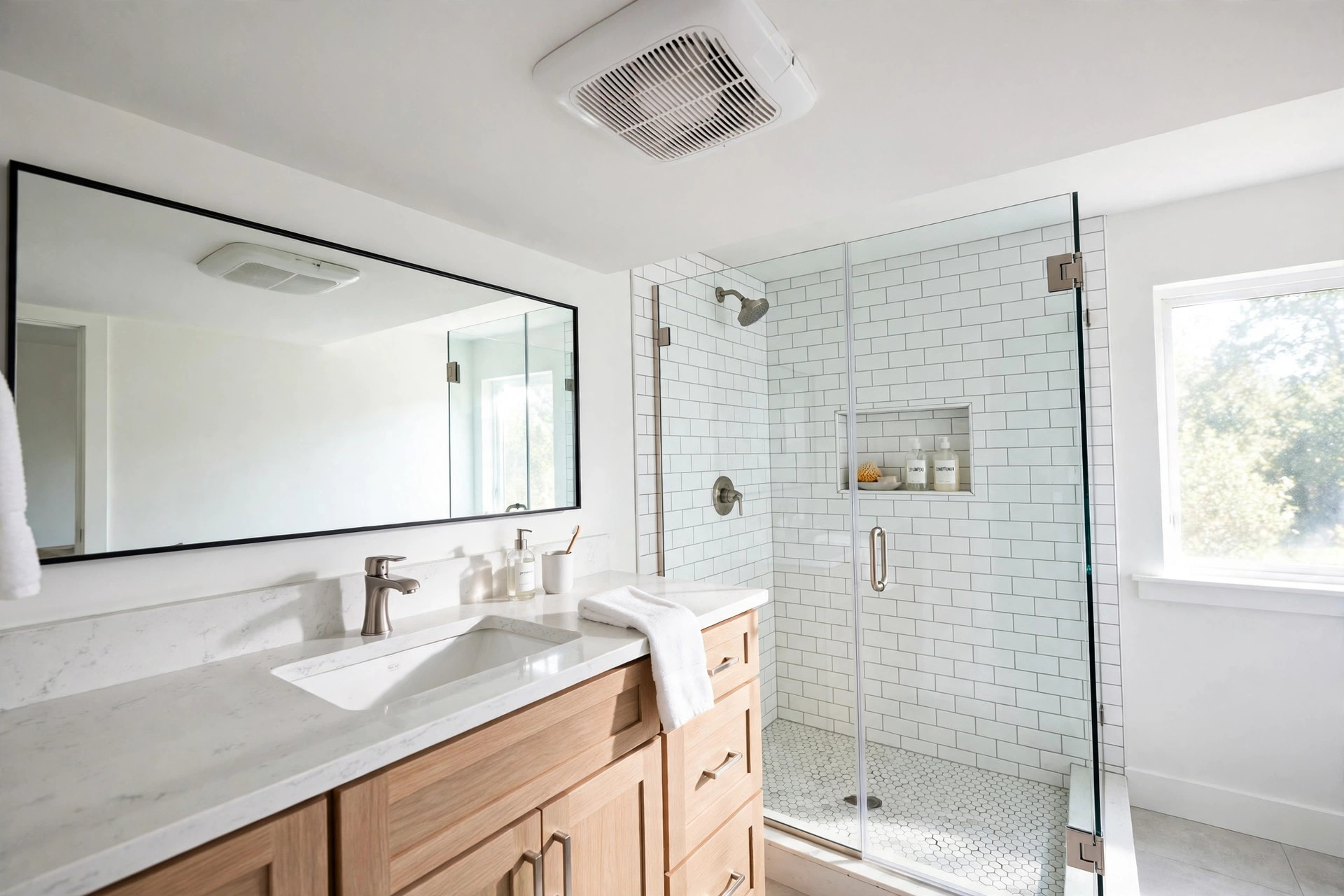
Ceiling-mount fans are the most common type. They sit in the ceiling above the shower or the middle of the room. They vent through duct work into the attic and out through the roof or a side wall. Most of the cost figures in this article refer to this type.
Wall-mount fans sit in an outside wall instead of the ceiling. They are common in half baths and in homes with no attic space above the bathroom. The duct run is very short, which keeps the install cost down.
Inline fans mount away from the bathroom, often in the attic. A duct connects the ceiling grille in the bathroom to the fan and then to the outside vent. These fans are very quiet because the motor sits far from the room. One inline fan can serve two bathrooms at once.
Combination units pair a fan with a light, and sometimes with a heater. A fan and light combo is popular in small bathrooms because it replaces two ceiling fixtures with one. The wiring is a bit more complex, so the install cost runs higher.
Bathroom Exhaust Fan Installation Cost USA: The Full Price Breakdown
Here is the core of this guide: what you will actually pay.
Fan Unit Cost
The fan itself is the smallest part of the bill. A basic builder-grade fan costs thirty to sixty dollars. It moves air and does the job, but it is loud and plain. A mid-range fan with low sones and an ENERGY STAR rating costs eighty to one hundred fifty dollars. A premium fan with a humidity sensor, light, and very quiet motor costs one hundred fifty to four hundred dollars. The big home improvement retailers such as The Home Depot and Lowe’s stock all three tiers, so you can compare models side by side.
Labor Cost
Labor is where most of the bathroom exhaust fan installation cost USA homeowners report comes from. An electrician or handyman usually charges by the hour or by the job. A straight fan replacement in the same ceiling spot takes one to two hours. Expect one hundred fifty to three hundred dollars for the labor on a simple swap.
A new install where no fan exists takes longer. The contractor must cut a hole in the ceiling, run new duct work, add a roof or wall vent cap, and wire the fan to a switch. That job takes three to five hours. Labor alone can run three hundred to six hundred dollars. If the attic is cramped or hard to reach, the price goes higher.
Total Project Cost
Putting fan and labor together, the typical totals look like this in 2026.
* Simple fan replacement, same spot, no new duct: one hundred eighty to four hundred dollars. * New install in a first floor bathroom with easy attic access: four hundred to nine hundred dollars. * New install with long duct runs, a roof vent, or a combination fan-light unit: seven hundred to one thousand two hundred dollars.
The Carrier and Trane dealer networks note that regional labor rates move these numbers up or down. Big cities on the coasts tend to run twenty to thirty percent above the national average. Smaller towns in the Midwest and South often come in below it.
Extra Costs That Can Surprise You
A few items can add to the bill. A new roof vent cap costs twenty to fifty dollars for the part plus the labor to cut through the roof. Patching and painting drywall around a new ceiling hole can add one hundred to two hundred fifty dollars if you do not do it yourself. If your electrical panel has no open slot for a new circuit, the electrician may charge one hundred to two hundred dollars more for the wiring work.
Permit fees are small but real. Some towns require a permit for new electrical work. The fee is usually twenty-five to seventy-five dollars. A licensed contractor will pull the permit for you.
Care and Upkeep
A bathroom exhaust fan needs little care, but it does need some. Dust builds up on the grille and the fan blades. A dirty fan moves less air and gets louder. Clean the grille every three to six months. Pull it down, wash it in warm soapy water, let it dry, and snap it back in place.
Once a year, turn off the power at the breaker and open the fan housing. Vacuum the blades and the motor area with a soft brush tool. Check the duct for kinks or sagging runs. A crushed duct can cut airflow in half. The Family Handyman site has step by step photo guides for this kind of yearly check.
Run the fan during every shower and for twenty to thirty minutes after. That is the single best habit for a healthy bathroom. If you hate waiting, a humidity sensor fan handles the timing for you. Timers that replace the wall switch cost fifteen to thirty dollars and are easy to install.
Most fans last ten to fifteen years. When the motor grows loud, slows down, or smells hot, it is time for a replacement. A failing motor can overheat, so do not ignore the warning signs.
Safety
Bathroom exhaust fans mix electricity and water, so take safety seriously. Always turn off the breaker before you open the fan housing or touch any wiring. Test the wires with a voltage tester before you start work. Water and open circuits are a bad mix.
The duct must vent to the outside of the house, never into the attic. Venting into the attic pumps warm moist air into a cold space, which grows mold on the roof deck and can rot the wood. The U.S. Department of Energy stresses this point in its home ventilation guides. A proper install ends at a roof cap or a wall vent with a backdraft damper.
Hire a licensed electrician for new wiring. Bathroom circuits must meet the electrical code, and many areas require ground fault protection in wet locations. A pro also knows how to seal the duct joints so moist air does not leak into the wall cavity. For larger ventilation projects, manufacturers like Rheem recommend working with trained HVAC contractors rather than going it alone.
If you see black spots that look like mold near the old fan, wear a mask and gloves during the swap. Large mold patches may need a remediation pro before the new fan goes in.
Frequently Asked Questions
How long does a bathroom exhaust fan install take? A straight replacement takes one to two hours. A brand new install with new duct work and a roof or wall vent takes three to five hours. Drywall patching and painting add another day of drying time.
Can I install a bathroom exhaust fan myself? A like for like swap is a fair do it yourself project if you are comfortable with basic wiring. A new install with fresh duct runs and roof work is harder. Most homeowners hire a pro for that. Bob Vila’s home advice library covers both paths and the tools each one needs.
What size fan do I need for my bathroom? Use the one CFM per square foot rule as a start. A sixty square foot bath needs a sixty CFM fan at minimum. Go one size up for high ceilings, large showers, or long duct runs. An oversized fan costs little extra and clears steam much faster.
Does the fan really need to vent outside? Yes. Venting into the attic is against code in most areas and causes mold and rot. The duct should run to a roof cap or an exterior wall vent. The shortest straight run gives the best airflow.
How much does it cost to replace just the fan motor? A replacement motor kit costs twenty to sixty dollars. Swapping it takes under an hour. If the housing is old and rusty, replacing the whole fan is often the smarter move. Kitchen exhaust projects follow the same logic; see our kitchen exhaust fan for island cooktop usa guide for the bigger picture on exhaust fans.
Do I need a permit to install a bathroom exhaust fan? Rules vary by town. A simple swap of an existing fan rarely needs one. New wiring and new vent cuts often do. Ask your contractor or call the local building office before work starts. The fee is small and keeps the job legal.
Final Word
The bathroom exhaust fan installation cost USA homeowners face in 2026 is fair for what it buys. A few hundred dollars protects a room that costs thousands to repair when moisture wins. Pick a quiet fan with the right CFM, vent it properly to the outside, and run it after every shower. That simple routine will keep your bathroom dry, clean, and safe for years.
References
Bob Vila. (n.d.). Home improvement advice. https://www.bobvila.com Carrier. (n.d.). Heating and cooling systems. https://www.carrier.com ENERGY STAR. (n.d.). Energy efficient products. https://www.energystar.gov Family Handyman. (n.d.). DIY home repair and maintenance. https://www.familyhandyman.com Lowe’s. (n.d.). Home improvement products. https://www.lowes.com Rheem. (n.d.). Heating, cooling, and water heating. https://www.rheem.com The Home Depot. (n.d.). Home improvement products. https://www.homedepot.com This Old House. (n.d.). Home renovation guidance. https://www.thisoldhouse.com Trane. (n.d.). Heating and air conditioning. https://www.trane.com U.S. Department of Energy. (n.d.). Energy efficiency and renewable energy. https://www.energy.gov
Was this guide helpful?

About James Carter
The My Garden US editorial team writes practical, in-depth home and garden guides for American homeowners — tested advice, no fluff.
You May Also Like

Best Space Heater for Large Room USA: A Simple Guide to Buying Right
July 19, 2026 0 views
Geothermal Heating Pros and Cons USA Homeowners Should Know
August 23, 2026 0 views
Best Window AC for Large Rooms Reviews USA
September 16, 2026 0 views