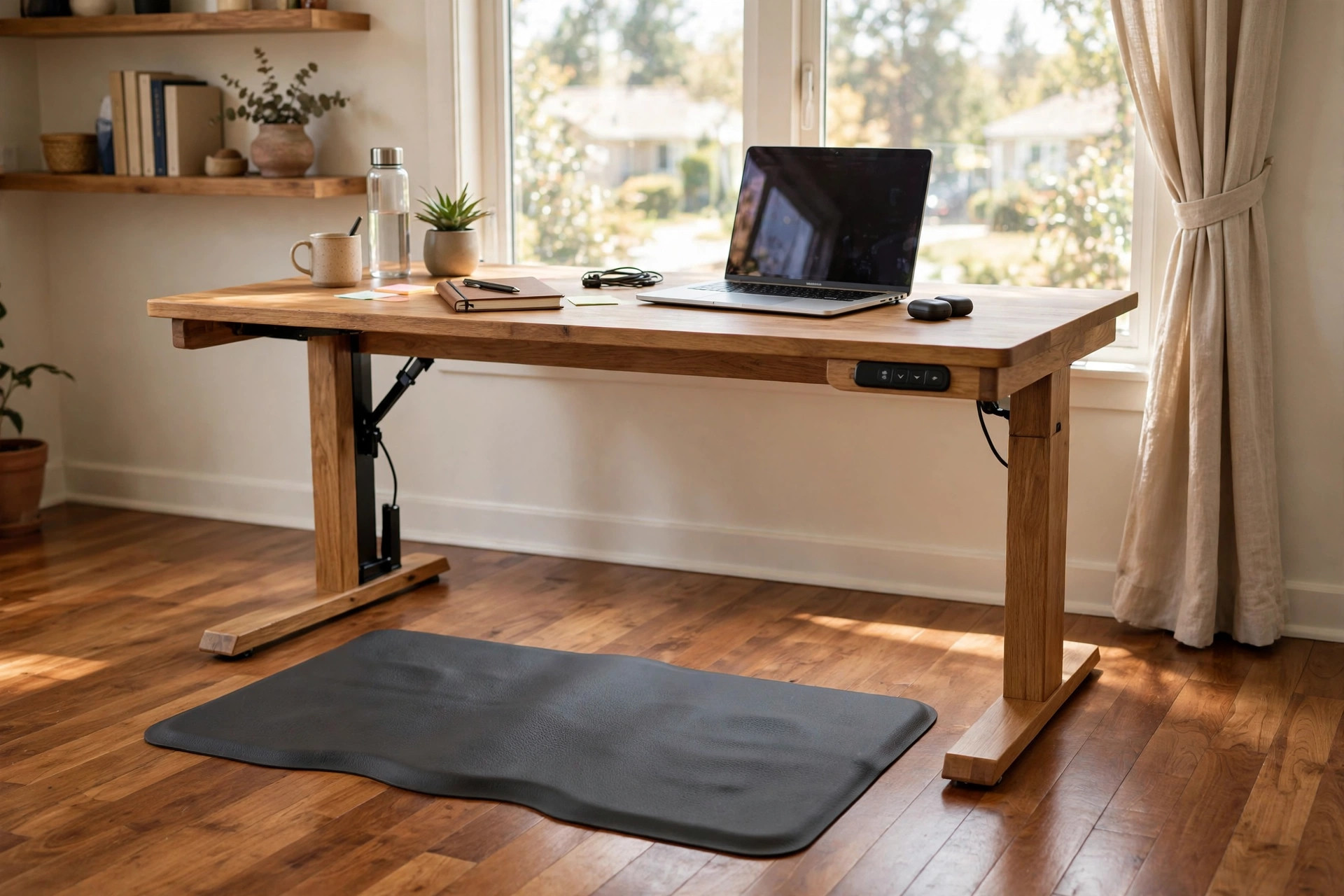

Standing for hours at a desk is hard on the feet. A standing desk anti fatigue mat for hardwood floors can make the day much easier. It gives your feet a soft surface to rest on. It also keeps the wood below it safe from harm. Many home workers stand on bare floors. They feel pain in their feet, knees, and lower back by the end of the day. A good mat can change that. It does not fix every problem. But it is one of the simplest and cheapest ways to feel better while you work.
Why Standing for Long Hours Hurts
The human body was not built to stand still on a hard floor. When you walk, your muscles move. Blood flows. Pressure shifts from one part of the foot to another. When you stand in one place, none of that happens. Pressure builds up in the same spots. Blood pools in the legs. Joints lock into place.
Hard floors make it worse. Wood, tile, and concrete give nothing back. Every ounce of your weight presses down through your feet into a surface that does not yield. Over time this leads to sore heels, aching arches, stiff knees, and a tired lower back. Some people feel pain after only an hour.
Research on workplace comfort has shown for many years that hard surfaces raise the level of discomfort during long periods of standing. Companies that care about worker health often provide mats for cashiers, factory workers, and others who stand all day. The same idea works at home. If you use a standing desk, the floor beneath you deserves the same care that a factory floor gets. Office furniture makers such as Herman Miller have published guidance on healthy posture at standing workstations. Their research points to the same simple truth. Small changes in the setup bring large gains in comfort.
What an Anti Fatigue Mat Does: Standing Desk Anti Fatigue Mat for Hardwood Floors
An anti fatigue mat is a thick pad that sits under your feet. The word fatigue means tiredness. The mat fights the tiredness that comes from standing. It does this in two ways.
First, it cushions. The foam or gel inside the mat takes in some of your weight. It spreads the pressure across the whole sole of the foot. This is much kinder than a hard wood plank.
Second, it moves with you. A soft mat lets your feet shift in tiny ways. These small shifts are called micro movements. They keep muscles working in a gentle way. They help blood move back up the legs. They keep joints from locking. This is the real secret of the mat. It does not just feel soft. It keeps your body in slight motion while you stand still.
People who switch from bare floors to a mat often notice a change in the first week. Feet hurt less at the end of the day. Legs feel lighter.
How to Choose the Right Mat
Not every mat suits every home. A mat that works on carpet may fail on wood. A mat made for a factory may be too thick for a home office. Think about your floor, your desk, and your own body before you buy.
Thickness and Cushion
Thickness is the first thing to check. Most mats for home offices run from half an inch to one inch thick. This range is a good middle ground. It is thick enough to cushion the feet. It is thin enough that you will not feel unsteady.
Very thick mats can cause problems. If the mat is too soft and deep, your ankles may wobble. This can strain the knees and the lower back. It can also make you tired in a new way. The goal is support, not a pillow.
Firmness matters as much as thickness. A good mat gives under your weight but pushes back a little. It should spring back when you step off. Cheap mats stay flat after a few months. They lose their cushion. A quality mat keeps its shape for years. Reviewers at Wirecutter test standing desk mats for long term comfort and pay close attention to how well each mat holds its shape.
Size and Shape
Size matters more than most people expect. A mat that is too small forces you to stand in one fixed spot. That defeats the purpose. You want room to shift your weight. You want room to take a half step left or right.
A good rule is to choose a mat at least as wide as your shoulders. Most adults are happy with a mat around twenty inches wide and thirty two inches long. Taller people may want more. Some mats come in larger sizes that let you move more freely.
Shape is a matter of taste. Flat rectangles are the most common. Some mats have curved edges that look softer in a room. A few have built in massage points or raised bumps. These can feel nice for short periods. They can also tire the feet if you stand on them all day. A plain flat top is the safest choice for long hours.
Materials That Are Safe for Hardwood
This is the most important section for wood floors. Some mats harm hardwood. The damage can be slow and hard to see at first. Then one day you lift the mat and find marks.
Rubber is the main risk. Some rubber mats contain chemicals that stain wood. They can leave dark marks or yellow spots on the finish. This is called staining or discoloration. It happens most often with cheap rubber and with floors that have oil based finishes.
Vinyl is usually safer. Many mats use polyurethane foam with a vinyl top. This mix cushions well and does not react with wood finishes. Polyurethane foam mats are among the most popular choices for home offices.
Check the bottom of the mat. Some mats have a rough or sticky underside meant to grip carpet. On wood, a rough bottom can scratch. A smooth, flat bottom is best for hardwood floors. If the mat slides, you can place a thin non slip pad under it. Choose one made for hardwood. Home care guides at The Spruce explain how to protect wood floors from furniture and heavy items, and the same rules apply to mats.
Also watch for dyes. Very dark mats can bleed color onto light floors if they get wet. A medium gray or tan mat is a safe pick. If you love a dark mat, place a thin cotton rug pad under it as a barrier.
Types of Mats You Will Find
Shoppers will meet several kinds of mats. Each has strengths and weak spots.
Foam mats are the most common. They use polyurethane or EVA foam. They are light, cheap, and kind to floors. They wear out faster than other kinds. A good foam mat lasts two to four years of daily use.
Gel mats cost more. They have a gel core under a foam or vinyl skin. They feel very soft at first. They keep their cushion well. They are heavier and pricier. Some gel mats have rubber bottoms, so check before placing one on wood.
Interlocking tile mats snap together like puzzle pieces. They are common in gyms and workshops. They let you build any size you want. The seams can catch dust.
Balance board mats sit on a rounded base that tilts. They turn standing into light exercise. They are fun for short bursts. They are not the best choice for long work sessions.
For most home offices on hardwood, a simple foam mat with a smooth bottom is the best value. It protects the floor. It costs little. It does the job.
Cost and Price
Prices for mats vary a lot. You can find basic mats for twenty to forty dollars. Mid range mats sell for fifty to ninety dollars. High end gel mats can cost over one hundred dollars.
The cheapest mats are thin and flat. They help for a few months. Then they lose their spring. Spending a bit more often pays off. A mat that keeps its cushion for three years costs less per year than a cheap one you replace twice. Independent testers at Consumer Reports rate office comfort products for long term value, and their findings echo the same point.
Retailers that sell home office gear carry wide ranges. Staples stocks mats and office accessories for home workers. Office Depot offers a similar range of comfort products. Big furniture stores like IKEA and Wayfair sell mats alongside the standing desks and home office furniture they display. Prices move with sales, so it pays to compare.
Set a budget before you shop. Then look for the best mat inside it. Do not buy on thickness alone. Read about the bottom surface. Read about the materials. A thirty dollar mat that is safe for wood beats a ninety dollar mat that stains it.
Care and Upkeep
A mat needs little care. But a little care goes a long way.
Wipe the top with a damp cloth once a week. This keeps dust and shoe dirt from grinding into the surface. Do not use harsh cleaners. Bleach and strong solvents can break down foam and vinyl. Warm water and a drop of dish soap is enough.
Lift the mat every few weeks. Let air reach the floor under it. This stops trapped moisture from harming the wood finish. Check the wood while you are at it. Look for early signs of marks or dull spots. If you see any, move the mat or add a barrier layer.
Keep the mat out of direct sun. Long hours of sunlight can dry out foam and fade color. If your desk sits by a window, pull the mat into the shade when you finish work.
If the mat starts to smell, air it out. Foam can hold odor from shoes. Stand on it in socks or bare feet when you can. Wash it with mild soap and let it dry fully before you use it again.
Replace the mat when it stops springing back. Press your thumb into the middle. If the dent stays, the mat is done. An old flat mat can fool you. It looks fine. But it no longer protects your feet or your floor.
Safety Tips
Mats are safe when used with care. Keep these points in mind.
Place the mat on a dry floor. A wet wood floor under a mat is a slip risk. It can also damage the finish. Wipe up spills at once.
Keep cords off the mat. Phone chargers and laptop cables can catch underfoot. Route them behind the desk.
Watch the edge. A thick mat edge can catch a toe. Some mats have beveled edges that slope down. These are safer and easier to step onto. If your mat has a square edge, get used to stepping up onto it.
Wear the right shoes, or none at all. High heels and hard boots defeat the mat. Socks, bare feet, or soft flat shoes work best.
If you have foot problems such as plantar fasciitis, talk to a doctor. A mat helps many people. It is not a cure. A doctor can tell you if a mat suits your condition.
FAQ
Will a mat damage my hardwood floors? A good mat will not damage wood floors. The risk comes from certain materials. Cheap rubber can stain finishes. Rough bottoms can scratch. Choose a mat with a smooth bottom and a vinyl or polyurethane top. Lift it now and then to let the floor breathe. With these steps, the mat protects the floor rather than harming it.
How thick should a standing desk mat be? Most home workers do best with a mat between half an inch and one inch thick. This gives real cushion without feeling unstable. Thinner mats wear out fast. Thicker mats can wobble underfoot. If you are light, half an inch may be enough. If you are heavy, aim for three quarters of an inch or more.
Can I use the mat on carpet too? Yes, but check the bottom first. Mats with smooth bottoms may slide on carpet. Mats made for carpet often have grippy backs. A mat that works on hardwood may not stay put on thick carpet. If you move between rooms, look for a mat that lists both surfaces as safe.
How long does an anti fatigue mat last? A quality foam mat lasts two to four years with daily use. Gel mats often last longer. Cheap thin mats may flatten in months. The thumb test tells the truth. Press the middle. If it springs back, it still works. If the dent stays, it is time for a new one.
Should I stand on the mat all day? No. Even with a great mat, all day standing is too much. The best habit is to switch between sitting and standing. Many experts suggest changing position every thirty to sixty minutes. The mat makes standing more pleasant. It does not make it safe to stand for eight hours straight.
Do I need a mat if my desk area has a rug? A thin rug over hardwood still leaves the feet on a hard base. You can place a mat on top of a low pile rug. Just make sure it does not slide. A home office rug to protect hardwood floors is a good start, but a real mat finishes the job.
A Final Word
A standing desk anti fatigue mat for hardwood floors is a small buy with a big payoff. It eases the pain that long standing brings. It shields the wood beneath from scratches and stains. It costs far less than a new desk or a new floor. Choose one with the right thickness, a smooth safe bottom, and a size that lets you move. Care for it with simple cleaning. Replace it when it wears out. Your feet will thank you. Your floors will too. Pair it with good habits, such as an ergonomic footrest for under desk at home for your sitting hours, and an ergonomic standing desk for small home office set at the right height, and your whole workday gets easier.
References
Consumer Reports. (n.d.). Product reviews and ratings. https://www.consumerreports.org Herman Miller. (n.d.). Office furniture and ergonomic seating. https://www.hermanmiller.com IKEA. (n.d.). Home furnishings. https://www.ikea.com Office Depot. (n.d.). Office supplies and furniture. https://www.officedepot.com Staples. (n.d.). Office supplies and furniture. https://www.staples.com The Spruce. (n.d.). Home and garden advice. https://www.thespruce.com Wayfair. (n.d.). Furniture and home goods. https://www.wayfair.com Wirecutter. (n.d.). Product reviews from The New York Times. https://www.nytimes.com/wirecutter
Was this guide helpful?

About David Wilson
The My Garden US editorial team writes practical, in-depth home and garden guides for American homeowners — tested advice, no fluff.
You May Also Like
Adjustable Drafting Chair for Tall Desk Users: A Complete Guide
September 16, 2026 0 views
A Small Corner Desk with Drawers for Apartment Office Work
January 4, 2026 0 views
Home Office Desk with Hutch and Storage: A Practical Guide
September 7, 2026 0 views