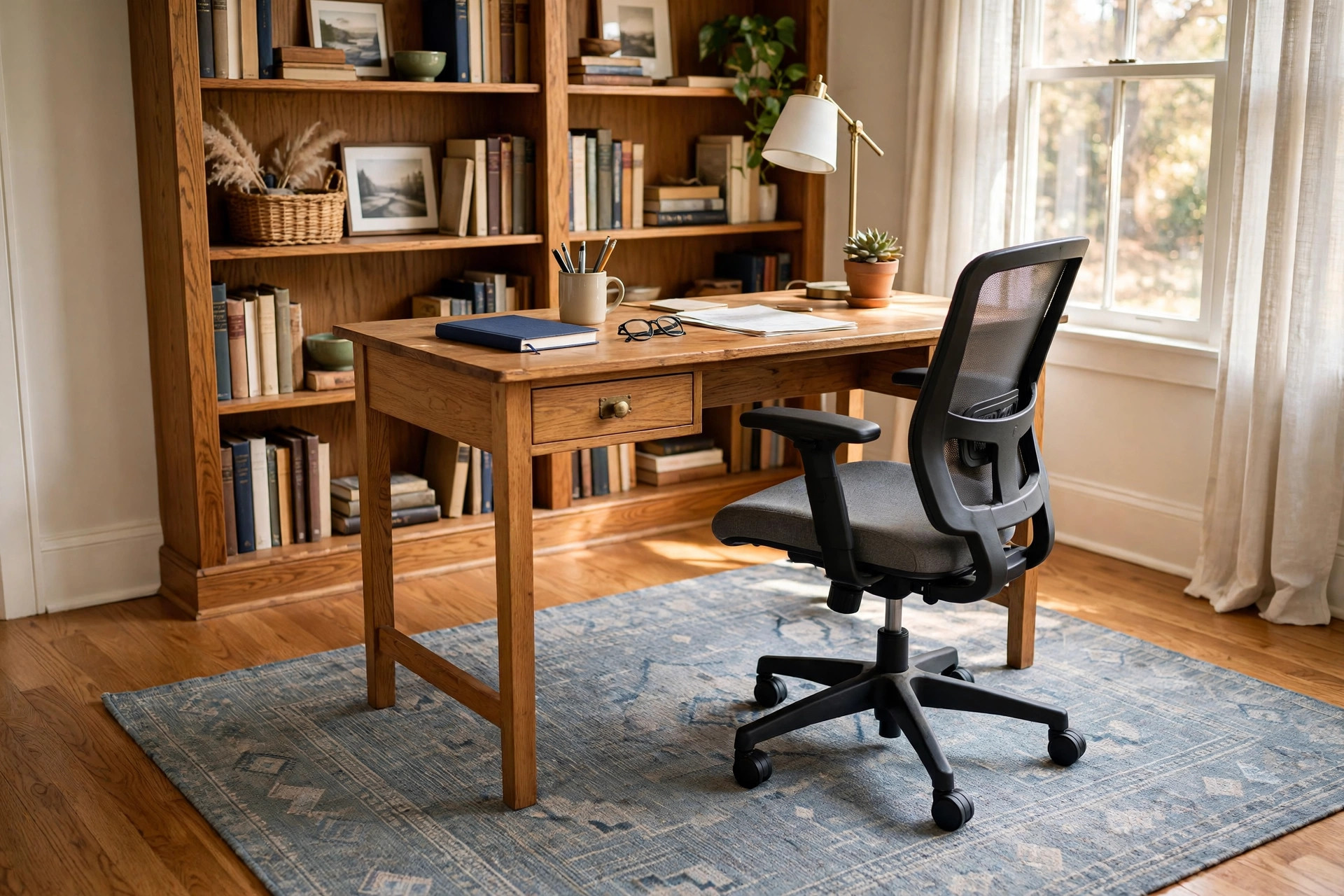

A home office rug to protect hardwood floors is one of the simplest upgrades a remote worker can make. A desk chair rolls across the same patch of floor thousands of times a year. Each roll drags small bits of grit across the finish. Over months, that small traffic lane turns dull, scratched, and worn while the rest of the room still shines. A rug placed under the desk and chair stops this damage before it starts.
More people now work from a corner of the living room, a spare bedroom, or a dining nook. Hardwood floors are common in these spaces. They are beautiful, but they scratch easily. This guide explains why a rug matters, what to look for, which types work best, what to pay, how to keep the rug clean, and how to keep it safe. By the end, you will know exactly which rug to buy for your own setup.
Why a Home Office Rug to Protect Hardwood Floors Matters
Office chairs are hard on wood. Most chairs use hard plastic casters. A person shifts in the seat, rolls forward to the desk, rolls back to stand, and repeats this motion dozens of times a day. Each move presses the caster wheels against the finish with the full weight of the seated person. Dirt and sand stuck in the wheels act like sandpaper.
The damage appears slowly. First the sheen fades in the chair zone. Then fine lines show in bright daylight. Then the lines turn into visible scratches that no polish can hide. Refinishing a floor costs far more than a rug. A full room refinish can run into the thousands of dollars and force you out of the room for days.
A rug also lowers noise. Chair wheels on bare wood click and thud. A rug softens that sound, which matters if you share walls with family or neighbors or join video calls all day. It adds warmth underfoot in winter. It defines the work zone in an open room, which helps the mind switch into work mode.
What to Look for When You Choose: Home Office Rug to Protect Hardwood Floors
Start with size. The rug must cover the full range of chair motion, not just the desk footprint. Sit in your chair and roll back as far as you would on a normal day. Mark the spot where the back wheels land. The rug should extend at least six inches past that point on every side. For a standard desk setup, a rug of 5 by 7 feet works in many cases. Larger desks or dual-monitor arms may need 6 by 9 feet or more.
Thickness matters. A low-profile rug, about one quarter inch thick or less, lets chair wheels roll with little effort. Thick, plush rugs feel nice under the feet, but wheels sink into them. Rolling becomes a workout, and the chair may tilt. Look for terms like flat weave, low pile, or thin profile.
The backing is the part that touches your floor, and it is the part people forget. Latex or PVC backings can stain some finishes over time. They can also trap moisture. Choose a rug with a cotton or felt backing, or plan to add a separate felt rug pad. Felt pads cushion the rug and grip the floor without chemicals. They are the safest choice for hardwood.
Material shapes durability and cleaning. Wool rugs last for decades and resist stains, but they cost more. Synthetic fibers such as nylon and polypropylene resist stains well and cost less. Cotton rugs are soft and washable but wear faster under a chair. Natural fibers such as jute or sisal look sharp, but their rough weave can trap grit and may scratch the very floor you want to protect. Use them with a quality pad or skip them for the chair zone.
Pattern and color serve a practical role. Solid light colors show dust and shoe marks. Busy patterns hide lint, hair, and light stains between cleanings. Medium tones in gray, beige, or navy hide the most. A pattern also helps the rug blend into a room that doubles as a living space.
Types and Options That Work Well
Flat-Weave Rugs
Flat-weave rugs are thin, tight, and hard-wearing. Wool and cotton kilims fall into this group, as do many modern low-pile synthetics. Chair wheels glide across them with almost no resistance. They lie flat at the edges, so they do not curl up and trip anyone. They are the best all-around choice for a home office rug to protect hardwood floors.
Chair Mats With a Rug Feel
Some mats combine a rigid plastic or tempered glass top with a rug-like look. Tempered glass mats are clear, heavy, and nearly invisible. They let the wood show through while taking the caster wear. Plastic mats with carpeted tops blend into a rug layout. These options cost more than a plain rug but solve the rolling problem completely.
Low-Pile Area Rugs
Low-pile area rugs, with fibers under half an inch, are the most common choice. They come in every size, color, and pattern. They roll up for easy moving and cleaning. They cost less than most specialty options. The trade-off is a slightly softer roll than a flat weave, but most people adjust within a day.
Washable Rugs
Washable rugs have a thin cover that pulls off a backing pad. You can machine-wash the cover. This helps if you eat at your desk, have pets, or spill coffee. The pad adds grip and cushioning. Check that the pad material is felt-based and safe for wood. Washable rugs are a strong pick for busy households.
Runner and Custom Cuts
If your desk sits in a narrow alcove, a runner shape may fit better than a rectangle. Carpet retailers will cut and bind a piece of commercial carpet to your exact size. Bound carpet tiles also work. This route gives you exact dimensions, but you must add your own felt pad underneath.
A finished desk space ties together when the storage pieces match the floor plan. Many readers also shop for a rolling file cabinet for home office organization that glides on the rug without denting the wood.
Cost and Price
Prices run wide. A basic 5 by 7 synthetic low-pile rug costs between forty and one hundred dollars at large retailers. Mid-range wool or branded rugs in the same size cost between one hundred fifty and four hundred dollars. Handmade or designer rugs run higher, often five hundred dollars and up.
A separate felt rug pad adds twenty to sixty dollars depending on size. This is money well spent. The pad stops the rug from sliding, adds cushioning, and keeps the backing away from the finish.
Tempered glass chair mats cost between one hundred and three hundred dollars. Plastic chair mats are cheaper, often thirty to eighty dollars, but they can crack and may yellow with age. Some people place a small plastic mat on top of the rug just for the chair. This protects the rug itself in the heaviest wear zone.
Think of the purchase as insurance. Even a two-hundred-dollar rug costs a fraction of a floor refinish. Buying the right size and pad the first time is cheaper than replacing a rug that is too small.
Retailers such as IKEA and Wayfair carry wide ranges of low-pile and washable rugs at clear price points. Reviews on Wirecutter compare popular office rugs side by side. The Spruce publishes plain-language buying guides for rug materials and pads.
Care and Upkeep
Vacuum the rug weekly. Use suction only or a beater bar turned off on low pile. A powered beater bar can pull fibers loose and wear the rug faster. Pay attention to the edges, where dust collects against the floor.
Blot spills at once. Press a clean cloth into the spot and lift. Do not rub, which spreads the stain and pushes it deeper. Plain water handles most spills on synthetics. Wool needs a gentle wool-safe cleaner. Keep a small stain kit in the desk drawer so you act fast.
Rotate the rug once or twice a year. Sunlight fades one side faster than the other. Rotation also spreads the chair wear across a wider area. Lift the rug every few months and sweep the floor under it. Grit trapped between the rug and the wood is the main cause of hidden scratches.
Washable covers go through the machine on a gentle cycle. Line dry or tumble dry low. Check the pad at the same time. Replace felt pads when they flatten or crumble, usually every two to three years.
If your rug has a plastic or latex backing, lift it monthly and check the floor. Look for haze, discoloration, or a sticky feel. If you see any of these signs, switch to a felt pad at once.
Safety
A sliding rug is a fall hazard. Test the rug by pushing it hard with your foot. If it moves, add or replace the pad. On very slick finishes, a felt pad with a thin rubber side can help, but keep the rubber away from direct contact with the wood. Some people place a sheet of non-slip rug underlay between the felt pad and the rug instead.
Mind the edges. Rug corners that curl up catch toes and chair wheels. Use corner tape or choose a rug that lies flat from the start. Keep cords off the rug or run them flat under a cable cover. A cord lump under a rug creates a bump that the chair wheels strike every day.
Ventilation matters during cleaning. Open a window when you use any cleaning product. Let the rug and floor dry fully before you put the pad back down. Trapped moisture under a rug can dull a wood finish.
Small spaces need the same care as large ones. If your desk fits into a corner, pair the rug with a corner bookshelf for small home office storage so heavy furniture never drags across bare wood.
FAQ
How big should a home office rug be?
Measure your chair zone. The rug should cover the desk footprint plus the full rolling range of the chair, with six inches of extra space on each side. For most single-desk setups, 5 by 7 feet is the minimum. Large or L-shaped desks often need 6 by 9 feet.
Will a rug damage hardwood floors?
A good rug with a felt pad will not damage the floor. The risk comes from rubber, latex, or PVC backings left in place for months, and from grit trapped underneath. Vacuum under the rug a few times a year and use a felt pad, and the floor will stay in good shape.
Can I just use a plastic chair mat instead?
You can. Plastic mats protect the floor well at low cost. But they slide, crack, and look out of place in a home. Many people place a clear tempered glass mat on the rug for the chair zone. This gives the best of both: floor protection, easy rolling, and a finished look.
What is the best rug material for an office chair?
Low-pile nylon or polypropylene is the practical winner. Wheels roll easily, stains lift out, and the price stays low. Wool flat-weaves last longer and look richer but cost more. Avoid high-pile shag rugs. Wheels sink in and rolling becomes hard.
Do I need a rug pad on hardwood?
Yes. A pad stops sliding, cushions the floor, and blocks backing chemicals from touching the finish. Felt pads are the safest choice for wood. Make sure the pad is cut slightly smaller than the rug so it does not peek out at the edges.
How do I clean coffee spills on an office rug?
Blot at once with a clean dry cloth. Press, do not rub. Then blot with a cloth dampened in plain water. For wool, use a wool-safe cleaner. For synthetics, a drop of mild dish soap in water works. Rinse with a damp cloth and let the spot air dry fully.
A Short Final Word
A home office rug to protect hardwood floors is a small purchase that saves a large repair. Pick a low-pile or flat-weave rug big enough for the chair zone. Add a felt pad. Vacuum often and lift the rug a few times a year to sweep beneath. Do these simple things and your floor will look as good in five years as it does today.
When the floor and rug are settled, the next comfort upgrade is often seating. A adjustable height stool for standing desk break pairs well with a rug that already handles the chair zone. Office furniture specialists such as Herman Miller, Steelcase, and UPLIFT Desk publish workspace setup guides, and technology reviewers at PCMag cover home office gear in depth.
References
Herman Miller. (n.d.). Office furniture and ergonomic seating. https://www.hermanmiller.com IKEA. (n.d.). Home furnishings. https://www.ikea.com PCMag. (n.d.). Technology product reviews. https://www.pcmag.com Steelcase. (n.d.). Office furniture and workplace research. https://www.steelcase.com The Spruce. (n.d.). Home and garden advice. https://www.thespruce.com UPLIFT Desk. (n.d.). Standing desks and ergonomic office furniture. https://www.uplift-desk.com Wayfair. (n.d.). Furniture and home goods. https://www.wayfair.com Wirecutter. (n.d.). Product reviews from The New York Times. https://www.nytimes.com/wirecutter
Was this guide helpful?

About David Wilson
The My Garden US editorial team writes practical, in-depth home and garden guides for American homeowners — tested advice, no fluff.
You May Also Like
Ergonomic Neck Pillow for Office Chair Headrest: A Plain Guide for Desk Workers
May 8, 2026 0 views
Small Bookshelf With Doors for Office Documents
June 2, 2026 0 views
Adjustable Monitor Stand Riser for Neck Pain: A Simple Buyer’s Guide
May 10, 2026 0 views