
Why It Matters
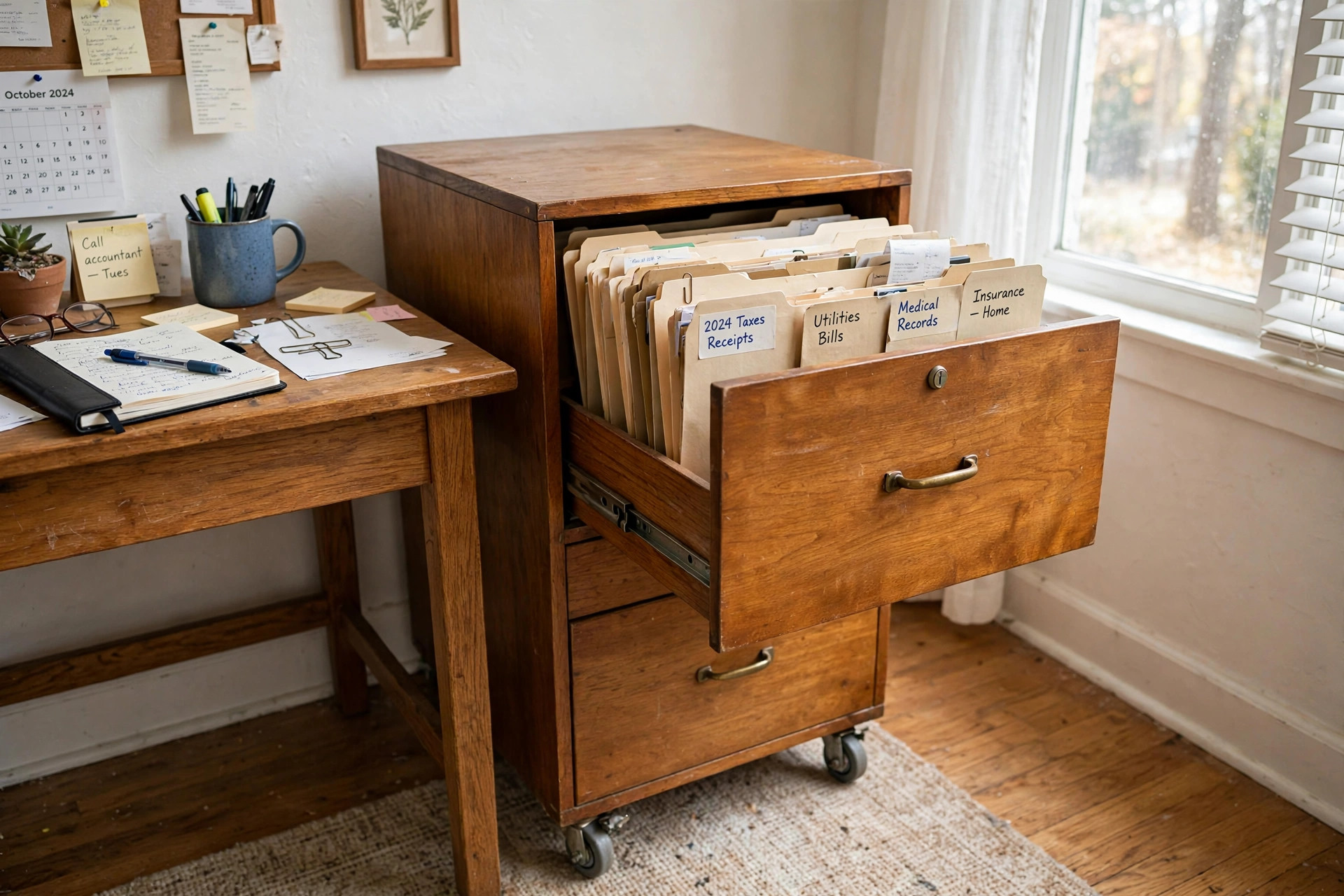
A rolling file cabinet for home office organization is one of the simplest ways to keep a home work space in order. Piles of paper grow fast. Bills, tax forms, receipts, school papers, and client files all need a home. A cabinet on wheels gives them one.
The rolling base is what sets this piece apart. You can slide it under a desk, pull it out when you need a file, and push it back when the day is done. The work surface stays clear. The papers stay sorted. The room feels larger and calmer.
Many people work from home now, often in a spare bedroom or a corner of a living room. Space is tight. A fixed cabinet takes up room all the time. A rolling file cabinet moves where you need it and disappears where you do not. That flexibility is worth a great deal in a small home office.
Good organization also saves time. The average worker loses hours each month looking for papers. A labeled cabinet with hanging folders ends that search. You open the drawer, find the tab, and get back to work.
What to Look For: Rolling File Cabinet for Home Office Organization
Size and Drawer Count
Most rolling file cabinets hold two or three drawers. A two drawer model suits a light paper load. A three drawer model suits a busy home business with tax records and client files. Measure the space beside or under your desk first. Standard heights run from about 24 to 28 inches. That height should clear the underside of your desk if you plan to tuck the cabinet away.
Check the drawer depth as well. Letter size drawers are the common standard in the United States. Legal size drawers are deeper and cost more. Make sure the cabinet accepts hanging file folders. Most do, but the frames may be sold apart.
Build and Materials
Steel cabinets are the old standard. They last for years, hold heavy loads, and take a beating. They also weigh more. Wood and laminate cabinets look warmer and match home furniture. They cost more than plain steel but less than solid hardwood.
Look at the drawer slides. Full extension slides let the drawer pull all the way out. That small detail makes a real difference when you hunt for a folder in the back. Ball bearing slides move smooth and quiet. Plain roller slides are cheaper and wear out sooner.
Wheels and Locks
A rolling file cabinet for home office organization must roll well. Check the casters. Dual wheel casters roll better on carpet. Locking casters keep the cabinet still when you work. At least two wheels should lock. That is enough to hold the unit in place.
A lock on the drawers is worth having if you keep tax papers, medical records, or client files at home. A simple key lock is standard on better models. Think of it as basic protection, not a safe. Pair a locked cabinet with a home office shredder for papers you no longer need.
Weight Capacity
Each drawer should hold at least 50 pounds of paper. Paper is heavy. A full letter size drawer can weigh 60 pounds or more. Weak slides sag under that load. Check the listed capacity before you buy. Steel frames and reinforced slides carry more.
Types and Options
Two Drawer Mobile Pedestal
This is the common form. Two deep drawers, one case, four casters. It fits under most desks. It holds letter or legal folders. It is the safe choice for most home offices.
Three Drawer Mobile Pedestal
A taller unit with three drawers. The top drawer often holds office supplies instead of files. This type works well beside the desk rather than under it. It suits a home business with a heavy paper flow.
Open Shelf Mobile Cart
Some mobile units mix open shelves with one file drawer. The shelves hold books, a printer, or supply bins. The drawer holds the files. This type suits a light filing load and a tight budget.
Wood Finish Mobile Cabinet
A wood or laminate case matches a home desk better than steel. These cabinets look like furniture. They cost more. They suit a home office that doubles as a guest room or a den where looks matter.
For larger paper archives, a lockable filing cabinet for home business documents may suit better than a small mobile unit. For documents that need a lock but stay near the desk, compare options with a home office storage cabinet with locking doors. A desk side file drawer unit on wheels is a close cousin of the rolling file cabinet and worth a look if drawer count matters less than a slim profile.
Cost and Price
Prices for a rolling file cabinet for home office organization run wide. A plain steel two drawer unit often sells for 60 to 120 dollars. A wood finish model runs 120 to 250 dollars. A three drawer steel unit with full extension slides and a lock runs 150 to 300 dollars. High end brands charge more.
A few facts help you judge value. Ball bearing slides cost more but last longer. A lock adds ten to thirty dollars. Wood finishes add fifty to one hundred dollars over bare steel. Brand names in office furniture, such as those sold through large office supply stores, tend to cost more but carry longer warranties.
Buy once if you can. A cheap cabinet with weak slides will annoy you every day. A solid unit will serve for a decade. Check return policies before you order. Heavy furniture costs real money to ship back.
Used office furniture stores often sell steel file cabinets for a fraction of the new price. A used steel cabinet with good slides is a fine buy. Check each drawer. Open and close it. Feel for sticking or wobble.
Watch for extra costs. Delivery fees add up fast on heavy furniture. Many big stores ship free above a set order total. Assembly is usually simple. Most cabinets ship flat and put together with a few bolts. Read the reviews. Buyers often note if the parts fit well or if the paint chips in the box. Those notes tell you more than the product photos do.
Care and Upkeep
A file cabinet needs little care. Wipe the case with a damp cloth when dust builds. Wax the drawer slides once a year if they start to drag. A dry silicone spray works well. Keep liquids away from the top. Coffee rings stain laminate and warp wood.
Do not overload the top drawer and leave the lower ones empty. A top heavy cabinet can tip when you pull a full drawer out. Load heavy files low. If the cabinet feels tippy, anchor it or move heavy folders to the bottom drawer.
Clean the casters now and then. Hair and thread wrap around the wheels. Pick it off with tweezers. Stiff wheels make the cabinet hard to roll and can scratch a wood floor. Felt pads under the casters help on hard floors.
Revisit your folders once a year. Pull out what you no longer need. Shred the old papers. File the new ones. A cabinet works only as well as the system inside it. Hanging folders with clear labels keep the order you set on day one.
Setting Up a Simple Filing System
A cabinet is only as good as the system inside it. Start with hanging folders. One folder per topic works well. Keep broad groups. Bills. Taxes. Medical. Home. Work. School. That is enough for most homes.
Label each folder with a clear tab. Use a label maker or a neat hand. Color coding helps. Red tabs for money. Blue tabs for home. Green tabs for health. The colors let you spot the right group at a glance.
Put the papers you touch most in the top drawer. Tax records and old papers go low. File new papers once a week. Pick one evening and spend ten minutes on it. A small weekly habit beats a big yearly purge.
Keep an inbox tray on your desk. Toss new papers there through the week. File them all on your filing evening. The desk stays clear. The cabinet stays current. Nothing gets lost.
For a busy home business, make one folder per client or per project. Close the folder when the job ends. Move it to a storage box in a closet. Free the cabinet for live work. An active cabinet should hold only what you use now.
Safety
A rolling file cabinet is safe when used with care. Keep it balanced. Never let a small child climb the open drawers. A falling cabinet can hurt a child badly. Lock the drawers when young children are in the room.
Place the cabinet on a flat floor. Lock at least two casters when you park it. On a slope, a rolling cabinet will drift. Do not store heavy items on top of a tall three drawer unit.
If you keep sensitive papers in the cabinet, lock it and keep the key in a safe spot. A file cabinet lock stops casual hands. It will not stop a thief. For tax records and medical files, that level of protection is enough for most homes. For business records with legal weight, talk to your accountant about proper storage.
Anchor tall units in earthquake country. A simple strap to a wall stud costs little and holds firm.
Frequently Asked Questions
Will a rolling file cabinet fit under my desk?
Most two drawer units fit under a standard desk. Measure first. Standard desk clearance runs about 25 to 29 inches. The cabinet height should be at least one inch less than that clearance. Allow room for the casters.
What is the difference between letter and legal size?
Letter size paper is 8.5 by 11 inches. Legal size paper is 8.5 by 14 inches. Most home offices need letter size only. Legal size drawers are deeper, cost more, and take more floor space. Check which size the cabinet holds before you buy.
How many hanging folders does one drawer hold?
A standard letter size drawer holds about 25 to 35 hanging folders, depending on how full each folder is. Paper is bulky. Leave some slack so folders slide with ease. A crammed drawer is hard to use and wears the slides.
Should I buy steel or wood?
Steel lasts longer and costs less. Wood looks better in a home. If the cabinet sits under the desk where no one sees it, steel is the smart buy. If it stands beside the desk in a room guests see, wood may be worth the extra cost.
Do I need a lock?
Buy a lock if you keep tax forms, medical records, or client papers at home. The lock keeps honest people honest and keeps children out of your files. It adds little to the price. Most better models include one.
Can a rolling file cabinet hold a printer?
A two drawer steel cabinet can hold a small printer on top if the case is rated for the weight. Check the top load rating. Keep the printer cables clear of the wheels. A three drawer unit is taller and less steady for a printer.
A Final Word
A rolling file cabinet for home office organization is a small buy with a large payoff. It ends paper piles. It frees desk space. It moves where you need it and parks where you do not. Choose full extension slides, a lock, and a size that fits your space. Label your folders. Keep the system simple. In a week you will wonder how you worked without it.
For more background, see UPLIFT Desk, The Spruce, and Wirecutter. For more background, see PCMag, IKEA, and Wayfair. Buying guides are also published by Herman Miller and Steelcase.
References
Herman Miller. (n.d.). Office furniture and ergonomic seating. https://www.hermanmiller.com IKEA. (n.d.). Home furnishings. https://www.ikea.com PCMag. (n.d.). Technology product reviews. https://www.pcmag.com Steelcase. (n.d.). Office furniture and workplace research. https://www.steelcase.com The Spruce. (n.d.). Home and garden advice. https://www.thespruce.com UPLIFT Desk. (n.d.). Standing desks and ergonomic office furniture. https://www.uplift-desk.com Wayfair. (n.d.). Furniture and home goods. https://www.wayfair.com Wirecutter. (n.d.). Product reviews from The New York Times. https://www.nytimes.com/wirecutter
Was this guide helpful?

About Jennifer Lee
The My Garden US editorial team writes practical, in-depth home and garden guides for American homeowners — tested advice, no fluff.
You May Also Like
Compact Bookshelf for Home Office Closet Setup: A Small-Space Guide
July 28, 2026 0 views
Home Office Desk With Built in Power Outlets: A Complete Buyer’s Guide
September 21, 2026 0 views
The Best Daylight Lamp for Home Office Winter Blues
May 7, 2026 0 views