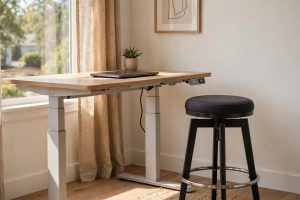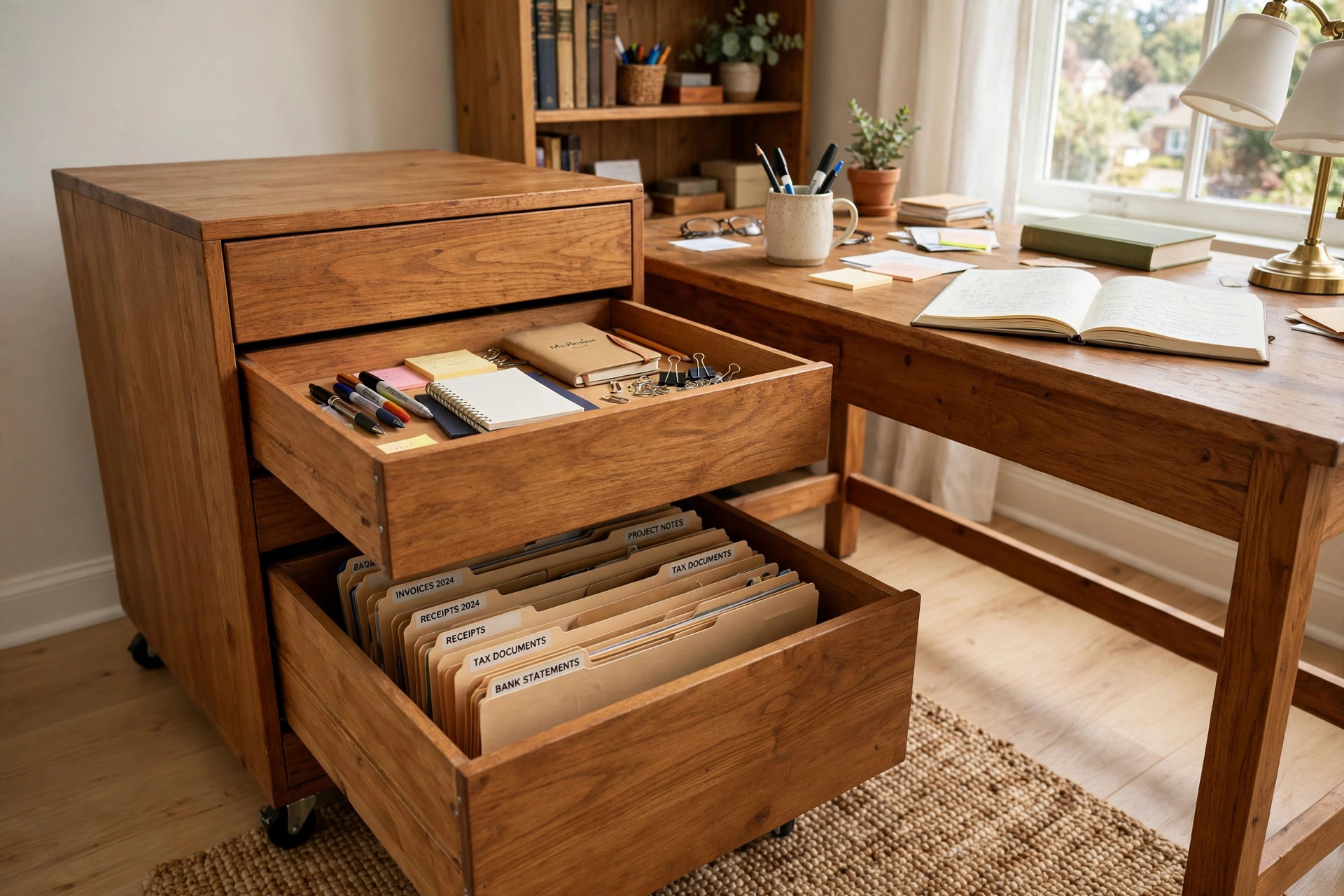

A desk side file drawer unit on wheels is a small cabinet that rolls on casters and fits beside a desk. It holds files, papers, and office tools. It can move when you need space and lock in place when you do not. Many home offices in the United States now use one of these units. They add storage without the cost of a large desk or a full filing cabinet.
Buying guides from Wirecutter and PC Magazine often compare popular models. This guide explains why a desk side file drawer unit on wheels matters, what to look for when you buy one, the main types, the cost, care, and safety. It also answers common questions.
Why It Matters
A home office often has less room than a company office. Papers pile up on the desk. Pens, notes, and bills take over the surface. Work slows down when you cannot find a document. A desk side file drawer unit on wheels fixes this problem in a simple way.
The unit sits beside the desk at arm’s reach. You pull a drawer open and take out the file you need. When you finish, you push the drawer shut. The desk stays clear. The room stays neat.
The wheels make the unit flexible. You can roll it out to reach the back of the desk. You can roll it to the other side of the room during a video call. You can move it out of the way when guests come. A rolling file cabinet for home office use does the work of a fixed cabinet but takes up less floor space.
People who work at home also like the comfort. Reaching a floor-level drawer can strain the back. A unit that fits under the desk height keeps drawers at a better level. Some users roll the unit closer while they sit and push it back when they stand.
What to Look for When You Choose One: Desk Side File Drawer Unit on Wheels
A good desk side drawer unit with casters should last for years. Check these points before you buy.
Size and Fit
Measure the space beside your desk, using sizing guides from furniture makers like IKEA. A standard unit is about 15 to 18 inches wide and 18 to 24 inches deep. The height should fit under your desk top if you plan to slide it underneath. Most desk tops sit 28 to 30 inches above the floor; desk height guides from UPLIFT Desk list the same range. Leave one inch of clearance so the top of the unit does not scrape the desk.
Check the drawer depth too. A file drawer must accept letter-size or legal-size hanging folders. Look for a drawer interior of at least 15 inches deep for letter files. Legal files need about 18 inches.
Number of Drawers
Two-drawer units are common. Three-drawer units give more room. A typical setup has one or two shallow drawers for pens, paper, and small tools, plus one deep file drawer for folders. Think about what you store now. If you keep ten years of tax records, you need more file space. If you mostly keep bills and notes, two drawers may be enough.
Wheel Type and Locks
Not all casters work the same. Larger wheels roll more smoothly over carpet. Smaller hard wheels work best on wood and tile floors. Two of the wheels should have locks. The lock keeps the unit still while you open a drawer. A unit that rolls away when you pull a drawer is a source of daily annoyance. Check that the locks are easy to reach with a foot.
Material and Build
Metal units cost more but last longer. Steel cabinets, like those built by Steelcase, resist dents and hold heavy files. Wood and particleboard units look warmer and match home furniture. They work well for light use. If you plan to store heavy binders, choose a steel frame or a solid wood box. Thin particleboard can sag under weight over time.
Drawer Slides
Full-extension slides let the drawer open all the way. You can reach folders at the back. Cheap rollers open only partway. Metal ball-bearing slides run smoother and last longer than plastic rollers. Open each drawer in the store or read the product details online. Good slides make a unit feel solid.
Lock for the Drawers
If you store tax forms, medical papers, or business contracts, a drawer lock matters. Many units have one key that locks all drawers at once. Keep the spare key in a safe place. A home office storage cabinet with locking doors can serve the same need for larger items, and a small drawer lock covers daily papers.
Types and Options
Manufacturers sell several styles of the desk side file drawer unit on wheels. Each fits a different need.
Two-drawer mobile file cabinet. This is the most common type. It has one shallow drawer and one file drawer. It fits under most desks. It suits a home office that needs basic file storage.
Three-drawer mobile pedestal. This unit has two shallow drawers and one file drawer. It is taller. It often cannot slide under a desk. It works well beside a standing desk or in a corner. People who want a desk side drawer unit with casters and extra supply room choose this style.
Metal lateral-style mobile unit. Some units are wider than deep. They hold more folders per drawer. They fit well under wide desks. They cost more than narrow units.
Wood-finish home style unit. These look like small nightstands or side tables. They match home decor. The top can hold a plant or a lamp. They serve double duty as furniture and storage. Under desk rolling file storage in a wood finish blends into a living room office.
Compact slim unit. A slim unit is about 12 inches wide. It fits tight spaces beside a small desk. It holds fewer files. It suits a small corner desk with drawers for apartment office setup where space is tight.
Some units include extras. A pull-out writing shelf adds a small work surface. A pencil tray organizes small items. A file frame lets you hang folders in a shallow drawer. These extras help but add cost. Decide if you will use them daily.
Cost and Price
A desk side file drawer unit on wheels costs between 60 and 400 dollars in the United States. Price depends on material, brand, and features.
Budget units sell for 60 to 120 dollars. They use particleboard or thin steel. The drawers may use plastic rollers. They work fine for light use with a few folders.
Mid-range units sell for 120 to 250 dollars. They use thicker steel or solid wood. The drawers have ball-bearing slides. Two locking casters are standard. This range gives the best value for most home offices.
High-end units sell for 250 to 400 dollars. They come from office furniture brands such as Herman Miller. They use heavy-gauge steel and smooth full-extension slides. They often include a top that matches office desks. They last for decades.
Watch for shipping costs. These units are heavy. Free shipping from large retailers like Wayfair saves money. Assembly is usually simple and takes 30 to 60 minutes. A unit that ships fully assembled costs more but saves time.
Think about cost per year. A 200 dollar unit that lasts ten years costs 20 dollars a year. A 70 dollar unit that breaks in two years costs 35 dollars a year. The mid-range unit often wins over time.
Care and Upkeep
A desk side file drawer unit on wheels needs little care. A few habits keep it working well for years.
Dust the top and drawers once a month. Use a damp cloth for wood tops. Use a dry cloth for metal to avoid rust spots. Clean the wheels twice a year. Hair and dust wrap around caster axles and slow the roll. Pull the debris out with tweezers.
Do not overload the drawers. Each drawer has a weight limit, often 25 to 50 pounds. Heavy files at the back of one drawer can tip the unit when the drawer opens. Spread heavy items across drawers. Keep the heaviest files in the bottom drawer.
Tighten screws once a year. Use of the unit loosens joints over time. A quick check with a screwdriver takes five minutes. Oil the drawer slides lightly if they start to stick. Use a silicone spray, not a heavy oil that collects dust.
Lock the wheels when the unit sits in place for a long time. This keeps the casters from wearing flat spots. If the unit sits on carpet, move it a few inches every few months. This keeps the carpet from forming deep dents.
Keep the lock working. Spray a small amount of graphite lubricant into the keyhole once a year. Do not use liquid oil in a lock. It attracts dust and jams the pins.
Safety
A desk side file drawer unit on wheels is safe when used with care. Follow these rules.
Lock at least two wheels before you open a drawer. An unlocked unit can roll and pinch a foot. Teach children not to climb on the unit. The drawers can pull out and tip the cabinet if a child stands on an open drawer.
Open only one drawer at a time. Full drawers are heavy. Two open drawers shift the weight forward and can tip the unit. Many units have a safety catch that blocks the second drawer. Do not force it.
Keep the unit away from heat sources. Paper files burn easily. Do not place the unit against a radiator or a space heater. A rolling file cabinet for home office use near a window should not block the path to the door.
Store no hazardous items in the unit. Cleaning fluids, paint, and batteries belong elsewhere. Keep matches and lighters away from paper files.
If the unit wobbles, stop using it until you fix the cause. Check that all four wheels touch the floor. Tighten loose legs or replace a broken caster. A wobbly cabinet full of files can fall and injure a foot or leg.
FAQ
How wide is a standard desk side file drawer unit on wheels? Most units are 15 to 18 inches wide. Slim models are about 12 inches wide. Measure your space before you buy. Leave one inch on each side so the unit rolls freely.
Can I slide it under my desk? Many units fit under a standard desk. The desk top must be at least 29 inches high for a typical 27-inch unit. Check both heights before you order. If the unit is too tall, use it beside the desk instead.
Do the wheels work on carpet? Yes, but larger wheels work better. Wheels of 2 to 3 inches roll over low-pile carpet well. On thick carpet, a unit may sink and drag. A hard plastic chair mat under the unit helps. A home office desk chair mat for carpet under the desk area can serve the same purpose and protect the floor.
What is the difference between a mobile file cabinet and a fixed pedestal? A mobile file cabinet has wheels and moves. A fixed pedestal has no wheels and stays under the desk. Mobile units suit small rooms where you rearrange often. Fixed pedestals suit large desks where the unit never moves.
How many files can one drawer hold? A standard file drawer holds 50 to 100 letter-size folders. Hanging folders make the files easy to flip. Do not pack folders so tight that you cannot pull one out. Leave a little room at the back.
Should I buy metal or wood? Buy metal for heavy files and long life. Buy wood for a warm look that matches home furniture. Both work well for normal home office use. A steel unit often costs less than a solid wood unit of the same size.
A Short Final Word
A desk side file drawer unit on wheels is a small purchase that changes a home office for the better. It keeps files close, the desk clear, and the room flexible. Measure your space, choose the right size, and check the wheels and slides. Spend a little more for ball-bearing slides and locking casters. Keep the drawers tidy and the unit will serve you for many years. For more ideas on office comfort, read our guides to home office desk chair mat for carpet.
References
Herman Miller. (n.d.). Office furniture and ergonomic seating. https://www.hermanmiller.com IKEA. (n.d.). Home furnishings. https://www.ikea.com PCMag. (n.d.). Technology product reviews. https://www.pcmag.com Steelcase. (n.d.). Office furniture and workplace research. https://www.steelcase.com The Spruce. (n.d.). Home and garden advice. https://www.thespruce.com UPLIFT Desk. (n.d.). Standing desks and ergonomic office furniture. https://www.uplift-desk.com Wayfair. (n.d.). Furniture and home goods. https://www.wayfair.com Wirecutter. (n.d.). Product reviews from The New York Times. https://www.nytimes.com/wirecutter
Was this guide helpful?

About Sarah Mitchell
The My Garden US editorial team writes practical, in-depth home and garden guides for American homeowners — tested advice, no fluff.
You May Also Like

Best Standing Desk for Gaming and Work Combo: A Complete Guide
June 21, 2026 0 views
Best Home Office Desk for Crafters and Sewing: A Practical Guide
June 1, 2026 0 views
Ergonomic Gaming Chair for Home Office Work
September 22, 2026 0 views