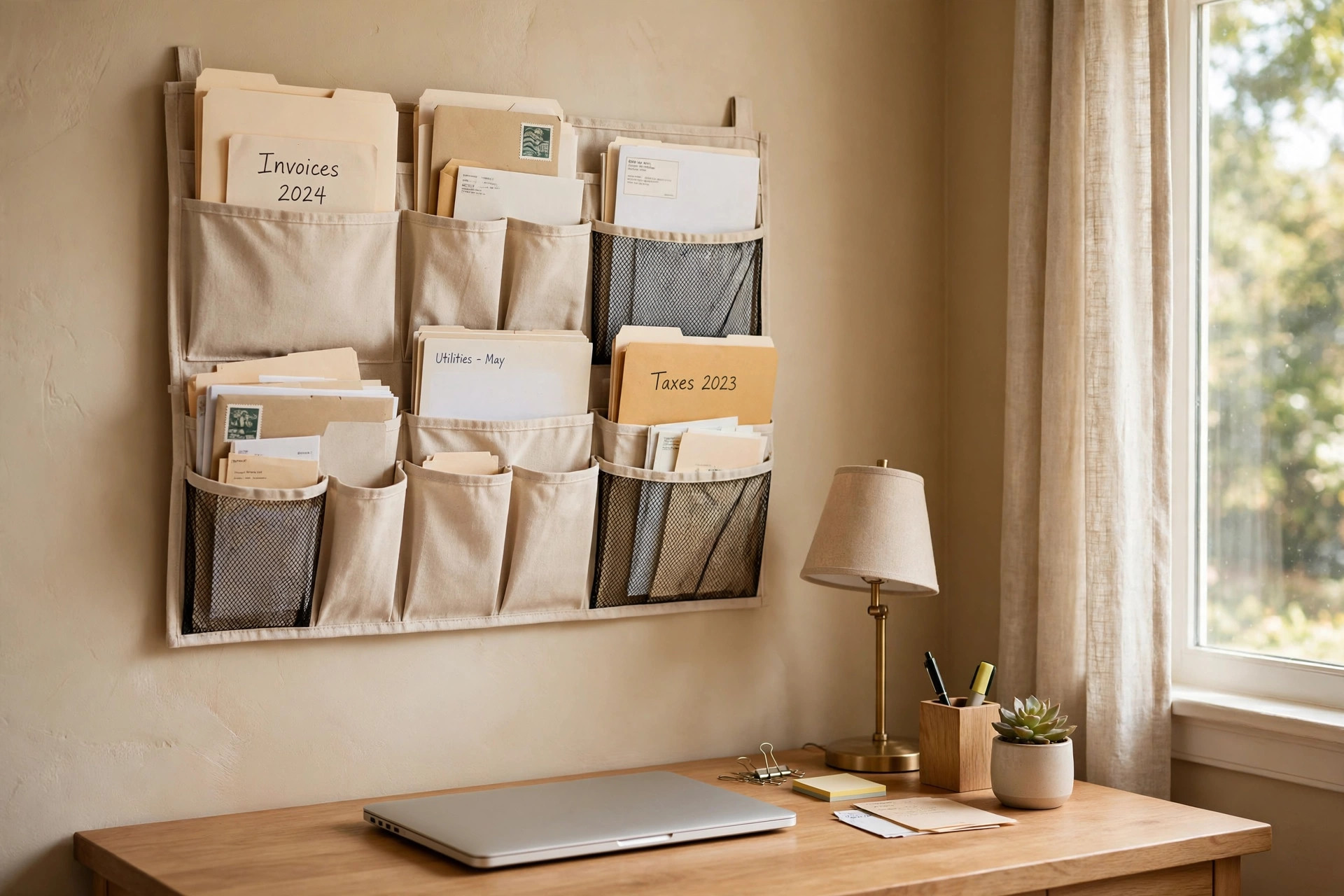

A home office file organizer with wall mounted pockets is one of the simplest tools you can add to a small workspace. It hangs on the wall beside or above your desk. It holds papers, mail, notebooks, and folders in open pockets. You can see everything at a glance. You can reach each item without leaving your chair.
Many people who work from home face the same problem. Papers pile up on the desk. Bills mix with school notes. Important letters hide under magazines. The desk grows crowded and the mind follows. A wall mounted organizer breaks this cycle. It gives every paper a clear place to wait.
This article explains why these organizers matter. It shows what to look for before you buy. It lists the main types on the market. It covers cost, care, and safety. It ends with answers to the most common questions. By the last page, you will know exactly which unit suits your wall and your work.
Why a Home Office File Organizer With Wall Mounted Pockets Matters
Desk space is precious. In a home office, the desk often doubles as a table for crafts, schoolwork, or meals. Every sheet of paper left on the desk takes room from the real work. A home office file organizer with wall mounted pockets moves paper off the flat surface and onto the wall. The desk stays clear. The room feels larger.
Visibility is the second gain. Closed drawers hide papers. You forget what you filed. Open wall pockets show each item. A bill due Friday stays in sight all week. A permission slip for your child waits where you can see it each morning. This simple sight line cuts down on missed deadlines and last minute searches.
A third gain is speed. Studies of office habits have long shown that workers lose many hours each year hunting for lost papers. A set of labeled pockets ends most of that search. You build a habit. Mail goes in the top pocket. Bills go in the second. School papers go in the third. When you need one, you reach for the right pocket the first time.
A home office file organizer with wall mounted pockets also suits renters. Many models hang from hooks or adhesive strips. You do not need to drill deep holes. When you move, the unit comes down and the wall stays clean. This matters to anyone in an apartment or a shared house.
Finally, the organizer trains the whole household. A pocket marked “in” collects the daily mail. A pocket marked “out” holds letters that need stamps. Children learn where to drop their school forms. A spouse knows where to leave a receipt. The wall becomes a small command center for the home.
What to Look for Before You Buy: Home Office File Organizer Wall Mounted Pockets
Size comes first. Measure the wall space you have. Most organizers range from twelve inches wide to thirty six inches wide. A narrow wall beside a door fits a single column of pockets. A wide wall above a desk fits a three or four column unit. Note the depth too. Deep pockets hold thick folders. Shallow pockets hold single sheets.
Material matters next. Fabric organizers are light and soft. They often hang from a single hook. They cost less. They suit light loads such as mail and thin folders. Metal mesh organizers are rigid. They hold heavy binders. They attach with screws and stay put for years. Wood organizers look warm and fine. They match wood desks and shelves. Plastic units are cheap and easy to wipe clean. Each material fits a different load and a different look.
Pocket count should match your paper flow. Count the paper streams in your house. Bills, mail, school forms, work folders, and receipts make five streams. Buy a unit with at least that many pockets. An empty spare pocket is fine. A missing pocket means papers will pile elsewhere.
Mounting method deserves care. Check what your wall can hold. Drywall needs anchors. Plaster needs a stud finder. Brick needs masonry screws. If you rent, look for over the door hooks or heavy adhesive strips rated for the weight you plan to carry. Read the weight rating on the box before you load it.
Labeling helps more than most buyers expect. Some organizers include label holders. Some do not. A small piece of masking tape works just as well. Label each pocket in plain words. “Bills.” “School.” “File today.” Clear labels keep the system alive after the first week.
Style is last but not least. The unit will hang in your sight all day. Pick a color and shape that pleases you. A tidy look makes you more likely to use the system. The Spruce offers many home office organization ideas that show how wall storage can blend with room decor.
Types and Options
The fabric pocket chart is the most common type. It is a panel of canvas or felt with stitched pockets. It rolls up for shipping and hangs flat on the wall. Prices are low. Weights are low. It works well for mail, coupons, and thin notebooks. It is a poor choice for heavy catalogs.
The metal wall file is the classic office type. It is a set of open trays stacked in a steel frame. Each tray tilts forward. You can see into each one. These units last for years. They suit a busy desk that handles many pages a day. They need screws and solid anchors.
The wooden wall rack brings a furniture look. It may have slots for files, a shelf for books, and small cubbies for pens. It costs more than fabric or metal. It fits a home office that also serves as a living room. Guests see it, so its looks count.
The clear acrylic sorter is a modern choice. Its pockets are see through. You can read the top sheet of each stack without pulling it out. It looks clean on a white wall. It shows dust, so it needs a wipe now and then.
The pocket door organizer hangs over the door or on hooks. It uses no wall space at all. It suits very small rooms. Its pockets are often narrow. It works best for thin items such as envelopes and cards.
Some shoppers pair a wall organizer with a wall mounted desk shelf above your computer monitor. The shelf holds books and supplies. The pockets hold paper. Together they free the whole desk top.
Cost and Price
Prices vary widely. A simple fabric chart with six pockets often sells for ten to twenty dollars. A metal mesh wall file with four tiers runs twenty to forty dollars. A wooden wall rack with cubbies can cost fifty to one hundred fifty dollars. Clear acrylic sorters fall in the middle range.
What drives the price? Material is the main driver. Wood and heavy steel cost more than canvas and thin wire. Brand is the second driver. Office brands with long warranties charge more. Size is the third driver. More pockets mean more material and a higher price.
Do not buy on price alone. A ten dollar chart that sags under a stack of bills is no bargain. Check the weight rating. Add up the weight of the papers you plan to store. A ream of paper weighs about five pounds. If your pockets will hold two reams at a time, buy a unit rated for at least fifteen pounds. This gives you a safe margin.
Where you buy matters too. Office supply stores such as Office Depot carry a wide range and let you see the unit in person. Online marketplaces offer more choice and lower prices. Home stores such as IKEA sell wall storage that matches their desks. Read the reviews before you order. Look for notes about sagging, weak hooks, and torn stitching.
For a best home office desk for two monitors, wall storage is even more useful. A wide desk for two screens leaves little room for paper trays. The wall above or beside the desk takes the paper load.
Care and Upkeep
A wall organizer needs little care, but it needs some. Dust the pockets once a month. A dry cloth or a soft brush works. Fabric charts can be shaken outside. Metal and plastic units wipe clean with a damp cloth.
Check the mounting twice a year. Screws can loosen. Hooks can slip. Adhesive strips can weaken in heat. A quick tug test keeps the unit from falling at night. If a screw feels loose, tighten it or replace the anchor.
Sort the pockets once a week. Pull out what is done. File what must be kept. Shred what is junk. A pocket system only works if old paper leaves on time. Set a weekly date. Friday afternoon works for many people. Sunday evening works for others.
Replace labels when they fade. A worn label loses its power. Fresh labels keep the household trained. This small step takes five minutes and pays off all month.
Watch the weight. It is easy to overload a pocket over time. A pocket meant for a few letters slowly fills with catalogs. Once a month, lift each pocket gently. If it feels heavy, move some papers to long term storage. A home office storage box for tax records is the right home for papers you must keep but rarely touch.
Safety
Wall storage is safe when it is mounted well. The main risk is a fall. A loaded organizer can weigh ten to twenty pounds. If it falls on a person, it can cause a bruise or a cut. Proper anchors prevent this.
Always mount into a stud when the unit is heavy. A stud finder costs little and finds the wood beam behind the drywall. Screws set in a stud hold far more than screws in bare drywall. For light fabric charts, rated adhesive strips are fine. Follow the weight rating on the package.
Keep the organizer away from heat. Do not mount it above a radiator or a space heater. Paper is fuel. Heat dries paper and raises fire risk. Keep a clear gap of at least two feet from any heater.
Keep it out of reach of small children if the pockets hold sharp items. Paper clips, staples, and letter openers can cut small fingers. Mount the unit at adult height. Store sharp tools in a closed drawer instead.
Check cords and outlets nearby. Do not block an outlet with the organizer. Do not let fabric touch a lamp that runs hot. Steelcase publishes research on safe office layouts that covers clearances around work zones.
If you rent, check your lease before you drill. Some leases ban wall holes. Some allow small holes that you fill later. Adhesive strips and over door hooks avoid the question entirely.
Frequently Asked Questions
How many pockets do I need in a home office file organizer with wall mounted pockets?
Count your paper streams. Most homes have four to six. Bills, mail, school papers, work folders, receipts, and coupons are the common ones. Buy a unit with one pocket per stream plus one spare. A six pocket chart fits most families. A home business may need ten or twelve.
Can I hang one on a plaster or brick wall?
Yes. Plaster needs screws set into the wood lath or into wall anchors made for plaster. Brick needs masonry screws and a drill with a masonry bit. Light fabric charts can also hang from adhesive strips rated for the weight. Test the hold before you load the pockets.
Will a fabric organizer hold heavy binders?
No. Fabric charts suit mail, envelopes, and thin folders. They sag under heavy loads. For binders and catalogs, choose a metal mesh wall file or a wooden rack. Check the weight rating on the box and stay under it.
How do I keep the pockets from turning into junk drawers?
Sort once a week. Give every pocket a clear label. Give every paper a time limit. Bills leave when paid. School forms leave when signed. Coupons leave when expired. What remains after a week should move to a file box or the trash. The Container Store sells filing boxes that pair well with wall systems.
Should the organizer go above the desk or beside it?
Beside the desk is best for daily use. You can reach the pockets without turning far. Above the desk works when the side wall is taken. Above the desk also keeps papers out of reach of small children. Either spot works if the lighting is good. Wirecutter reviews home office gear and often notes the best placement for wall accessories.
What is the best material for a damp room?
Choose metal mesh or plastic. Fabric can grow musty in damp air. Wood can warp. Metal mesh lets air pass through the pockets. Plastic wipes clean. If the room stays damp, fix the moisture first. A dehumidifier protects both papers and walls.
A Short Final Word
A home office file organizer with wall mounted pockets is a small buy with a large effect. It clears the desk. It shows every paper. It speeds up daily work. It trains the household. Measure your wall. Pick the right material. Mount it well. Sort it weekly. The papers will stop ruling your desk, and you will get the wall working for you instead.
Furniture makers such as Herman Miller have long argued that the workspace shapes the work. A clear wall and a clear desk shape a calm day. Adjustable desk brands like UPLIFT Desk make the same point about matching the furniture to the worker. Review sites such as PCMag test office products so buyers can compare before they spend. Start small, mount one chart, and build from there.
References
Herman Miller. (n.d.). Office furniture and ergonomic seating. https://www.hermanmiller.com IKEA. (n.d.). Home furnishings. https://www.ikea.com Office Depot. (n.d.). Office supplies and furniture. https://www.officedepot.com PCMag. (n.d.). Technology product reviews. https://www.pcmag.com Steelcase. (n.d.). Office furniture and workplace research. https://www.steelcase.com The Container Store. (n.d.). Storage and organization products. https://www.containerstore.com The Spruce. (n.d.). Home and garden advice. https://www.thespruce.com UPLIFT Desk. (n.d.). Standing desks and ergonomic office furniture. https://www.uplift-desk.com Wirecutter. (n.d.). Product reviews from The New York Times. https://www.nytimes.com/wirecutter
Was this guide helpful?

About Jennifer Lee
The My Garden US editorial team writes practical, in-depth home and garden guides for American homeowners — tested advice, no fluff.
You May Also Like
Best Document Holder for Typing at Desk: A Practical Buyer’s Guide
September 9, 2026 0 views
Home Office Desk with Keyboard Tray Slide Out: A Full Buyer’s Guide
May 12, 2026 0 views
Home Office Desk Mat in Leather for Writing: A Complete Guide
March 22, 2026 0 views