
A small desk lamp with magnifier for detailed work can change the way you use your desk. It shines bright light right where you need it. It also gives you a clear, larger view of tiny things. People who sew, build models, read fine print, or fix small parts all know the value of such a lamp. It takes the strain off your eyes. It lets you work longer with less tiredness. This guide will tell you what to look for, what types you can buy, what they cost, and how to care for them.
Why It Matters
Good light is the first need for fine work. Poor light makes the eyes work too hard. The room lamp on the ceiling gives light to the whole room, but it does not reach into the small space where your hands are. A small desk lamp with magnifier for detailed work solves that problem. It puts light and a lens in one tool. The lens makes small things look larger. The light makes them clear.
Many hobbies and jobs call for this kind of lamp. A seamstress threads a fine needle. A model maker paints parts no bigger than a coin. A stamp collector reads dates on old stamps. An older reader reads books with small print. In each case, the work is slow when the eyes must strain. With a lamp that lights and enlarges at the same time, the work goes faster and feels easier.
Eye strain is a real problem at home workstations. The home office desk pad with mouse pad combo helps keep a desk neat, but neatness alone does not save your eyes. When the eyes work in poor light, you may get headaches. You may get dry eyes. You may feel tired long before the job is done. A good desk lamp with a magnifier cuts down that strain. It is a simple fix, but it works well.
Small rooms also gain from a lamp of this kind. Many home offices sit in a corner of a room. Some use a home office closet to office conversion kit to turn a closet into a desk space. Such small spaces often have weak light. A small desk lamp with magnifier for detailed work fits in a tight spot. It gives strong light without taking much room.
What to Look For: Small Desk Lamp with Magnifier for Detailed Work
Lens Strength
The lens is the heart of the lamp. Lens strength is measured in diopters. A lens of 1.75 diopters makes things look about 1.5 times larger. A lens of 2.25 diopters makes them look about 1.75 times larger. A lens of 3 diopters gives about 2 times the size. For most home work, 1.75 to 3 diopters is enough. Very strong lenses are harder to use. They show a small area and need the work to sit very close to the lens. Choose the weakest lens that lets you see well. Your eyes will thank you.
Glass lenses cost more than plastic lenses, but they resist scratches better. Plastic lenses are lighter and cheaper. If you plan to use the lamp every day, glass is the better buy. Look for a lens with a clean, clear view from edge to edge. A cheap lens may bend the image near the edges. That bend can cause eye strain, which defeats the purpose of the lamp.
Light Type
Light bulbs matter. Old lamps used small fluorescent tubes. New lamps use light emitting diodes, known as LEDs. LEDs are the better choice today. They run cool. They use little power. They last for years. They also give a steady light with no flicker. Flicker can tire the eyes even when you do not notice it.
Look for a lamp that lets you change the color of the light. Warm white light, near 3000 Kelvin, feels soft and easy at night. Cool white light, near 5000 Kelvin, feels bright and sharp. Day light near 6000 Kelvin is close to noon sun. Being able to switch helps you work at any hour. A lamp with several brightness levels is also useful. Bright light for close work, soft light for reading a book.
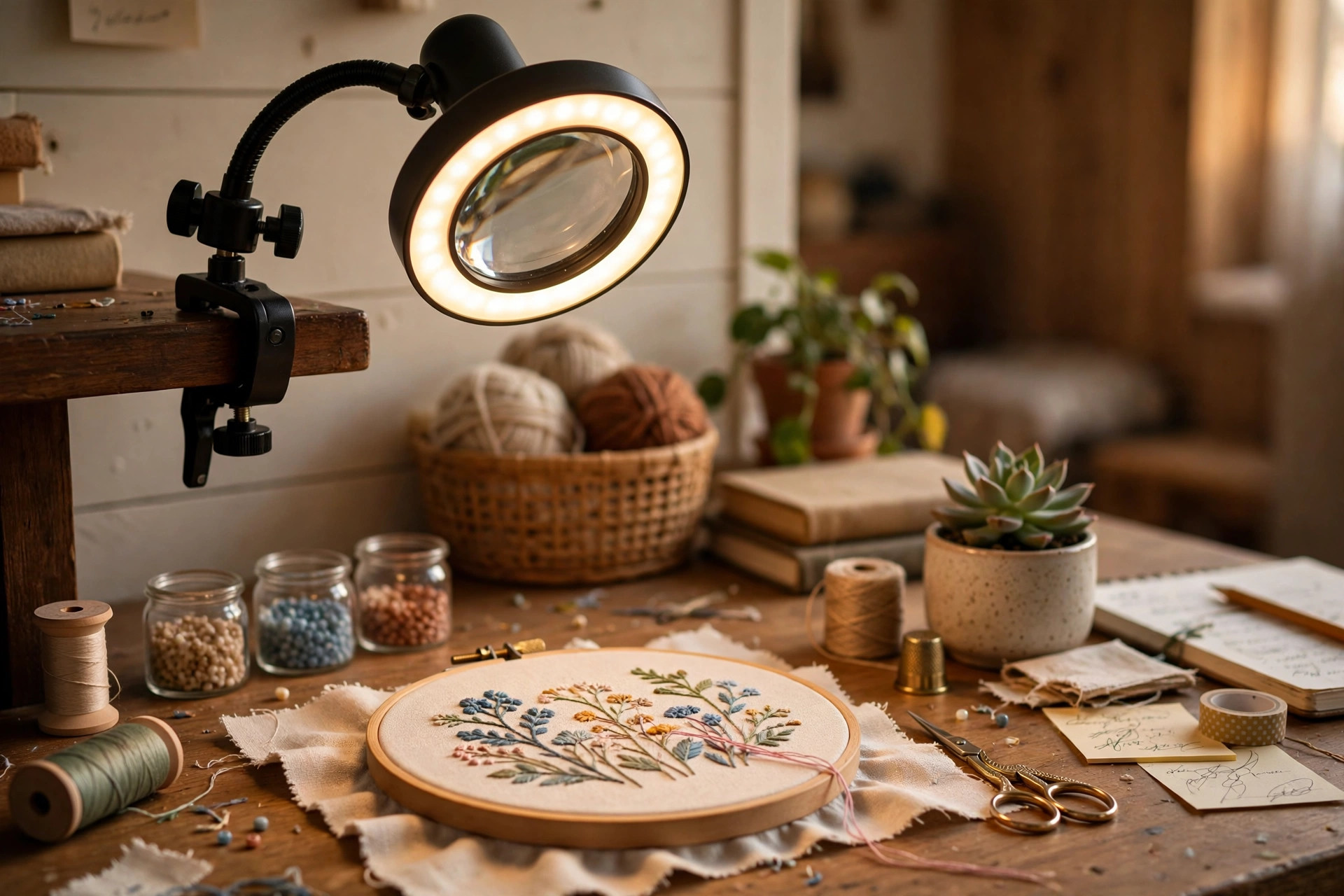
Some lamps use a ring of LEDs around the lens. This ring light removes shadows. Your hands do not block the light when you work under it. Ring lights are very common in magnifier lamps, and for good reason. They give even light across the whole lens.
Arm and Base
The way the lamp mounts to the desk is important. Many small magnifier lamps clamp to the edge of the desk. A clamp saves desk space. It also holds the lamp steady. A heavy weighted base is another choice. It lets you move the lamp from desk to table with ease. A home office desk mat leather for writing protects the desk top, and a weighted base will not scratch it if you place it with care.
The arm should move with ease and stay where you put it. Spring arms and jointed arms are the most common. Test the arm before you buy, if you can. A loose arm that drifts down while you work is a constant annoyance. A stiff arm that fights you is no better. Good joints hold their place with a light touch.
Size and Reach
Small is a word in the focus keyword, and it matters. A small desk lamp with magnifier for detailed work should fit a normal desk without crowding it. The lens itself is often three to five inches across. That is large enough to see your work but small enough to keep the lamp light. The arm should reach about 24 to 32 inches. That reach lets you swing the lens over your work and push it away when you are done.
Weight matters if you want to move the lamp. A lamp under five pounds is easy to carry. Heavier lamps feel more stable. Think about how you will use it before you pick.
Types and Options
Clamp Mount Lamps
Clamp mount lamps fix to the edge of a desk or shelf. They take no desk space. They stay put during hard work. They are a good pick for small desks and craft tables. The clamp should open wide enough for your desk top. Most fit desks up to two and a half inches thick.
Weighted Base Lamps
Weighted base lamps stand on their own. You can move them from the desk to the work bench to the bedside table. They are the most flexible type. The base must be heavy enough to stop the lamp from tipping when the arm is stretched out. Check reviews for notes about tipping before you buy.
Floor Standing Lamps
Some magnifier lamps come on a tall stand for the floor. These suit people who work in a chair away from a desk. They are common among people who sew in an armchair or read in a recliner. Floor models take more room, so measure your space first.
Headband and Hands-Free Options
For work that needs both hands far from the desk, some people use headband magnifiers with a small light. These are not desk lamps, but they serve the same need. They are worth a look if you work on large items like quilts or car parts. For desk work, though, a small desk lamp with magnifier for detailed work is still the better tool.
LED Ring Lamps With Phone Holders
Some newer lamps add a phone holder or a camera mount. These are aimed at people who film their craft work for video. The ring light around the lens gives even light for both the eyes and the camera. If you share your work online, this type can serve two needs at once.
Cost and Price
Prices for a small desk lamp with magnifier for detailed work cover a wide range. Simple models with a plastic lens and basic LED light sell for twenty to forty dollars. Mid range models with a glass lens, adjustable color light, and a sturdy arm sell for forty to ninety dollars. Top models with large glass lenses, strong clamps, and full dimming can cost ninety to two hundred dollars.
Do not judge a lamp by price alone. A thirty dollar lamp with a clear lens and steady light can serve well for light use. A person who works under the lamp for hours each day should spend more. The better lens and the better arm pay off in comfort over time.
Where you buy matters too. Home office gear is sold by large home stores and furniture sellers. IKEA and Wayfair carry a wide range of desk lighting for home offices. Office furniture makers like Herman Miller and Steelcase focus on full workstations, and their guides can help you think about light as part of good desk posture. For desks that move up and down, UPLIFT Desk sells lamps made to clamp to standing desks.
Before you buy, read a few independent reviews. PCMag tests desk gear and rates lamps on light quality. Wirecutter from the New York Times publishes tested picks for home office equipment. The Spruce covers home lighting with clear buying advice. A few minutes of reading can save you from a poor buy.
Also think about the cost of use. LED lamps cost very little to run. A ten watt LED used four hours a day costs only a few dollars a year in power. Replacement is rarely needed, since LED lights last tens of thousands of hours. That low running cost makes even a pricey lamp cheap over time.
Care and Upkeep
A magnifier lamp needs little care, but a few habits will keep it working well for years.
Keep the lens clean. Dust and fingerprints blur the view. Wipe the lens with a soft, dry cloth made for glasses. For stubborn marks, use a drop of lens cleaner on the cloth, never on the lens itself. Do not use paper towels or rough cloths. They scratch the surface, and scratches stay forever.
Keep the LEDs clean too. Dust on the light ring dims the output over time. Wipe the ring with a dry cloth once a month. Make sure the lamp is off and cool before you clean it.
Check the arm joints now and then. Screws can loosen with use. A small turn with a screwdriver keeps the arm tight. If the arm has springs, look for wear. A spring that is stretched or bent should be replaced before it breaks.
Store the lamp with care. If you move it, fold the arm in and hold the lens. Do not lift the lamp by the arm alone. Do not let the lens face the sun when the lamp is off. A magnifier lens can focus sunlight and burn what sits under it. This is a real fire risk. Always turn the lens away from windows or cover it when not in use.
Unplug the lamp during long absences. This is a simple safety habit. It also protects the lamp from power surges.
Safety
A small desk lamp with magnifier for detailed work is safe when used with sense. A few rules will keep it that way.
First, never leave the lens in direct sun. As noted above, a magnifier can focus sun rays to a hot point. Keep the lens covered or turned away when the lamp is not in use. This is the single most important safety rule for these lamps.
Second, give the lamp room to breathe. LEDs run cool, but the power supply can still get warm. Do not pile papers or cloth over the lamp head. Keep cords clear of hot surfaces and out of walkways.
Third, check the cord and plug. A frayed cord is a shock risk. Replace the lamp or have it repaired if the cord is damaged. Do not run the cord under rugs or through doorways where it can be pinched.
Fourth, use the right power. Plug the lamp into a normal wall outlet. If the lamp came with a power adapter, use that adapter and no other. A wrong adapter can overheat the lamp.
Fifth, keep water away. Do not use the lamp near sinks, baths, or wet work areas. If you work with liquids, such as in jewelry cleaning, keep the lamp at a safe distance.
Children and pets need care around these lamps too. A curious child may stare through the lens at the sun. Teach children to keep the lens covered when the lamp is off. Keep the lamp where a pet cannot knock it over.
Frequently Asked Questions
What diopter lens do I need for reading small print?
For reading small print, a lens of 1.75 to 2.25 diopters is usually enough. This gives about 1.5 to 1.75 times the normal size. Stronger lenses show a smaller area and need your eyes very close to the lens. Start low. Move up only if you still strain to read.
Are LED magnifier lamps better than fluorescent ones?
Yes, for most people. LEDs use less power, run cooler, and last far longer than fluorescent tubes. They turn on at once with no warm up time. They do not flicker. They also let you pick the color of the light. Fluorescent models are now rare in stores.
Can a small desk lamp with magnifier help with sewing?
It is one of the best tools for sewing. The lens makes the needle eye look large. The ring light removes shadows from your hands. Many sewers keep the lamp clamped to the sewing table at all times. A dimmable model helps, since you may want soft light for dark fabric and bright light for fine stitching.
How do I stop the lamp arm from drooping?
Drooping comes from loose joints or worn springs. Tighten the joint screws with a small screwdriver. If the arm uses springs, check that they are seated in their hooks. Some lamps have a tension knob on each joint. Turn it a little at a time until the arm holds. If the arm still droops, the springs may be worn out and need replacement.
Is a glass lens worth the extra cost?
For daily use, yes. Glass resists scratches much better than plastic. A scratched lens blurs the view and cannot be fixed. Plastic is fine for a lamp you use once in a while. If you work under the lamp for an hour or more each day, spend the extra money for glass.
Can I use a magnifier lamp for electronics repair?
Yes. These lamps are popular with people who solder small parts and fix phones. The lens makes tiny solder joints clear. The bright light shows details that room light hides. Choose a lamp with cool white light for this work, since it shows colors and small marks most clearly. Keep the lens at a safe distance from hot soldering irons.
A Final Word
A small desk lamp with magnifier for detailed work is a modest tool with a large payoff. It lights your work. It enlarges the small things. It spares your eyes. Pick a clear lens in the right strength, a steady LED light with dimming, and an arm that holds its place. Keep the lens clean and away from the sun. Do those simple things, and the lamp will serve you well for many years of fine work at your desk.
References
Herman Miller. (n.d.). Office furniture and ergonomic seating. https://www.hermanmiller.com IKEA. (n.d.). Home furnishings. https://www.ikea.com PCMag. (n.d.). Technology product reviews. https://www.pcmag.com Steelcase. (n.d.). Office furniture and workplace research. https://www.steelcase.com The Spruce. (n.d.). Home and garden advice. https://www.thespruce.com UPLIFT Desk. (n.d.). Standing desks and ergonomic office furniture. https://www.uplift-desk.com Wayfair. (n.d.). Furniture and home goods. https://www.wayfair.com Wirecutter. (n.d.). Product reviews from The New York Times. https://www.nytimes.com/wirecutter
Was this guide helpful?

About James Carter
The My Garden US editorial team writes practical, in-depth home and garden guides for American homeowners — tested advice, no fluff.
You May Also Like
Best LED Strip Lights for Home Office Desk: A Plain Guide
August 25, 2026 0 views
Floating Shelf Desk for Tiny Bedroom Office: A Simple Guide
August 14, 2026 0 views
Home Office Door Sign Do Not Disturb Working: A Complete Guide
March 28, 2026 0 views