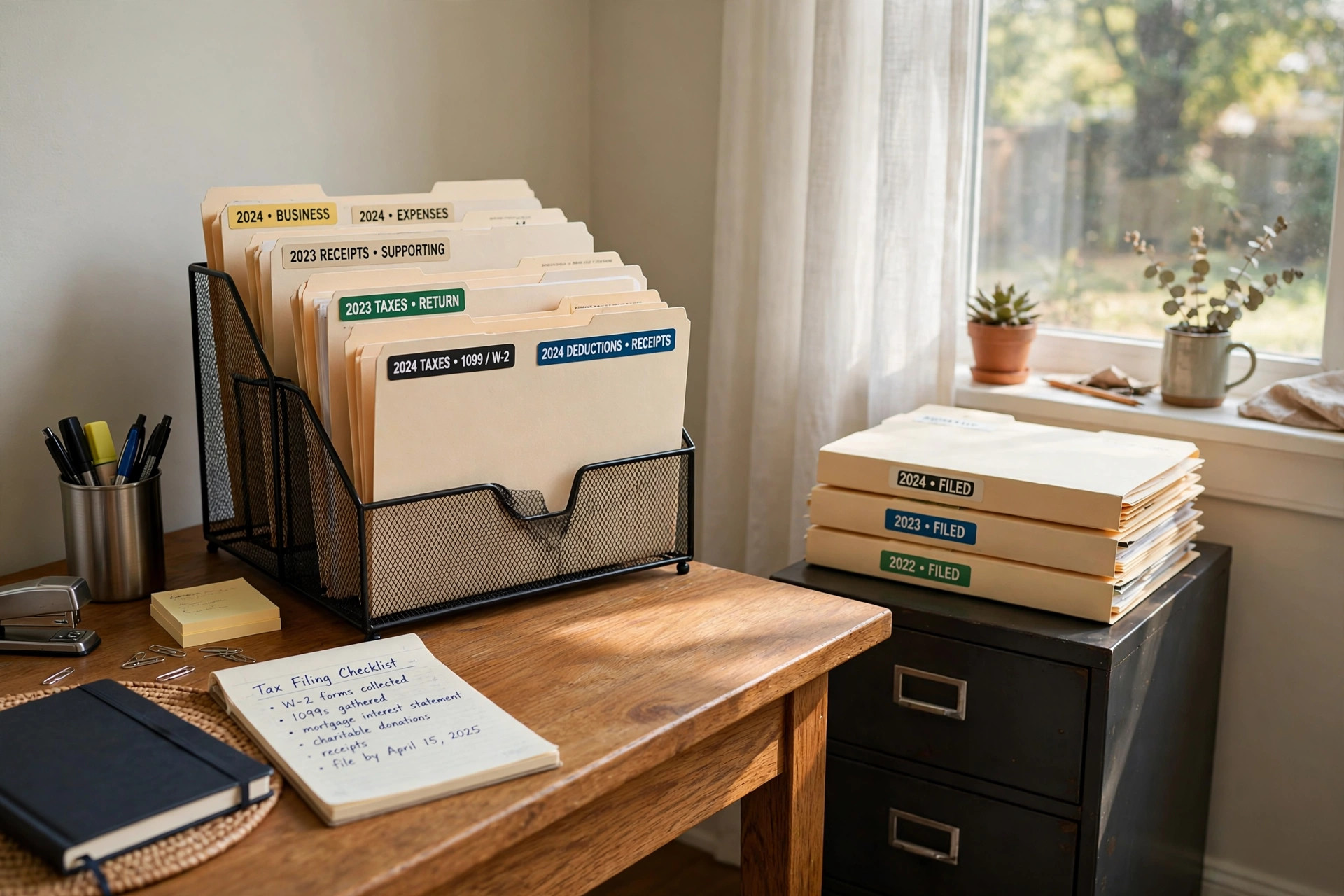

A home office filing system for tax documents is one of the simplest tools a working family can own. Every year, tax papers arrive in the mail, in email, and in the office bag. Receipts pile up on the desk. A small form hides under a stack of papers and is never found again. The result is stress when tax time comes, and sometimes money lost. A filing system changes all of that. It gives every paper a home. When tax time arrives, the filer opens the drawer, pulls out one folder, and the work is half done.
This guide explains how to build such a system. It covers why the system matters, what to look for when buying parts, the main types of systems, what they cost, how to keep the system in order, and how to stay safe. The words are plain and the steps are simple. Any reader can follow them.
Why It Matters
Tax papers are not like ordinary mail. They are records that the law asks people to keep. The Internal Revenue Service asks most taxpayers to keep records for at least three years, and longer in some cases. If a question comes up about a return, the filer must show proof. Without proof, a deduction can be lost. A home office storage cabinet with locking doors is one good place to keep these records safe.
A filing system also saves time. Studies of office work have shown that people spend many hours each year looking for lost papers. A home filer who spends three evenings hunting for a missing wage statement knows this pain well. One drawer, with one folder for each kind of paper, ends the search. The paper goes in the folder the day it arrives. The folder is there when the filer needs it.
There is a calmer benefit too. Money matters cause worry, and tax time is one of the worst moments of the year. A person who knows that every paper is in its place walks into tax season with a clear head. The work becomes routine instead of a crisis. That peace of mind is worth more than the cost of a few folders.
What to Look For: Home Office Filing System for Tax Documents
A filing system has three parts: the container, the folders, and the labels. Each part must fit the need.
The container must hold the papers a household keeps. Most families need space for about five to seven years of tax records. A two-drawer cabinet often does the job. A family with a home business may need four drawers. The container should close fully and sit in a dry place, away from pipes and windows that leak. Metal and wood both last for years.
The folders must be strong. Cheap folders tear at the tab after one season. Look for folders with a stiff tab and a clean fold. Letter size fits most American tax papers. Legal size folders fit longer forms but take more room.
Labels must be clear. A reader should know what is inside without opening the folder. Use plain words: “2026 Wages,” “2026 Medical Receipts,” “2026 Charitable Gifts.” Print labels on a small printer or write them with a dark marker. Faded pencil leads to mistakes.
One more point matters: locks. Tax papers carry names, Social Security numbers, and income figures. That is the raw material of identity theft. A locking drawer, or at least a locked room, keeps visitors and young children from seeing these papers. The rolling file cabinet for home office organization can roll into a closet at night, which adds one more layer of safety.
Types of Filing Systems
The Drawer System
The drawer system is the classic choice. Hanging folders hang on rails inside a cabinet drawer. Each folder holds a group of papers for one year. Inside the hanging folders sit manila folders for each type of income or deduction. This system is simple, cheap, and proven. It suits most households.
The Box System
The box system uses banker’s boxes or sturdy plastic bins. Each box holds one full year of records. The boxes stack on a shelf or in a closet. This system costs little and needs no furniture. It is a good pick for people who rent and move often. The risk is that boxes get buried and forgotten, so a list taped to the front of each box helps.
The Binder System
The binder system uses three-ring binders with tabbed dividers. Each binder holds one year. Tabbed sections split wages, bank interest, medical bills, and business receipts. Binders look neat on a shelf and are easy to carry to a tax preparer. They hold fewer papers than a drawer, so large businesses may outgrow them.
The Digital Hybrid System
Many filers now pair a paper system with digital copies. The rule is simple: scan every paper before it goes into the folder. The paper file stays as the master record. The digital copy is the backup and the quick search tool. A phone camera and a free scanning app can do the job. Keep the digital files in a folder tree that matches the paper labels. Back up the files to an outside drive or a safe online service. Readers who like a modern desk may enjoy the ideas on Wirecutter for scanning tools and desk gear.
The Wall Planner Tie-In
Some filers keep a planning board near the filing station. A yearly calendar marks the dates when papers arrive: wage statements by late January, bank forms by February, the filing deadline in April. A home office whiteboard for remote team planning can serve this purpose, listing what has arrived and what is still missing. It turns the filing system into a working plan, not just a store.
Cost and Price
A filing system can cost almost nothing or several hundred dollars. The range is wide, and most households need only the low end.
At the bottom of the range sits the box system. Banker’s boxes cost a few dollars each. A pack of manila folders costs about the same. Labels and a marker add a dollar or two. A full one-year box system can be built for under twenty dollars.
The drawer system costs more. A basic two-drawer metal cabinet often sells for between fifty and one hundred fifty dollars. Hanging folders add about fifteen dollars for a full drawer set. Wooden cabinets, which look finer in a home office, run from two hundred dollars upward. Shoppers can compare prices at big stores such as IKEA and Wayfair, or check office stores like Staples.
Binder systems sit in the middle. A heavy binder costs five to ten dollars. Dividers, sheet protectors, and a year of use bring the total to about thirty dollars per year of records.
Locking cabinets cost the most. A two-drawer locking cabinet from a brand like Herman Miller or Steelcase can run into the hundreds, but it will last for decades. The Container Store also sells locking boxes and bins at friendlier prices.
The smart rule is to start small and grow. A filer can begin with boxes and folders, then move to a locking cabinet when the home business grows. Money spent on the system is money well spent, because it protects records that are worth far more.
Care and Upkeep
A filing system dies from neglect. Papers go in, but nothing is ever cleaned out, and soon the drawer will not close. A simple yearly routine keeps the system alive.
First, file papers the day they arrive. Touch each paper once: read it, decide where it goes, and place it there. A small tray on the desk holds papers that need a decision. Empty the tray every week.
Second, do a yearly purge. After the tax return is filed, look at the oldest year in the system. In most cases, records older than three years from the filing date can leave the files, and records older than seven years can be shredded. State rules vary, and business records may need to stay longer, so check the current rules before shredding. The Spruce offers plain guides on how long to keep household papers.
Third, check the labels once a year. Tax life changes. A new job, a new child, a new home business all bring new kinds of papers. Add a folder when a new need appears. Remove folders that stay empty year after year.
Fourth, guard against water and heat. Do not place filing cabinets under a bathroom or near a water heater. Keep a small distance from heating vents, which dry out paper and make it brittle. If the home sits in a flood zone, raise the cabinet off the floor or move records to an upper level.
Safety
Tax records are a treasure chest for thieves. They hold full names, birth dates, Social Security numbers, account numbers, and signatures. A stolen folder can open the door to false tax returns and stolen refunds. Safety must be part of the system, not an afterthought.
Lock what you can. Use the cabinet lock every night. If the cabinet has no lock, keep the records in a locked room or a closet with a keyed knob. Shred what you do not keep. A crosscut shredder turns old tax papers into confetti. Do not throw whole forms into the trash.
Guard the digital side too. Scan files hold the same sensitive data. Use a strong password on the computer and on the backup service. Keep backup drives in the locked cabinet, not on the desk. Readers who work from home full time can find safety tips for home offices on PCMag and ergonomic and workspace advice from UPLIFT Desk.
Finally, think about fire. Paper burns. A fireproof safe or a fire-rated filing cabinet protects the most vital papers: the last three years of returns and the records that support them. Older years can live in cheaper storage. This split keeps the cost down while protecting what matters most.
Frequently Asked Questions
How long must I keep tax papers?
For most people, keep records for at least three years after the date the return was filed or the tax was paid, whichever is later. Keep records longer if income was underreported by a large amount, or if no return was filed. Property records should be kept until the property is sold and the tax on the sale is settled.
What papers belong in the tax file?
Keep wage statements, bank interest forms, brokerage statements, business income records, receipts for deductions, medical bills, charitable gift letters, property tax bills, and a copy of the filed return itself. When in doubt, keep the paper. Storage is cheap. A lost deduction is not.
Should I keep paper or digital copies?
Keep paper for the papers that arrive on paper, and keep digital scans as backup. The IRS accepts well-kept digital records, but paper originals are the safest proof. A hybrid system gives both safety and easy searching.
What if I lose a tax paper?
Do not panic. Most payers can send a copy. Employers reissue wage statements. Banks reprint interest forms. The IRS can also supply transcripts of filed returns and wage data. Note the loss in the file folder so the gap is explained, and get the replacement into the system.
Can I store tax records in the cloud?
Yes, if the service is reputable and the account is locked with a strong password and two-step sign-in. Cloud storage is a good backup, but it should not be the only copy of sensitive papers. Keep a local backup on an outside drive in the locked cabinet.
How do I organize papers for a home business?
Keep a separate folder or drawer for the business, apart from personal papers. Inside the business section, split income, expenses, payroll, and equipment. At year end, the business file hands the tax preparer everything in one clean package.
A Short Final Word
A home office filing system for tax documents is not a grand project. It is a small habit with a large reward. Buy a few folders, set up one drawer, and file each paper the day it arrives. Purge the old years once a year. Lock the drawer at night. These small steps turn tax season from a hunt into a routine. The papers stay safe, the numbers stay honest, and the filer sleeps well through the whole year.
References
Herman Miller. (n.d.). Office furniture and ergonomic seating. https://www.hermanmiller.com IKEA. (n.d.). Home furnishings. https://www.ikea.com PCMag. (n.d.). Technology product reviews. https://www.pcmag.com Staples. (n.d.). Office supplies and furniture. https://www.staples.com Steelcase. (n.d.). Office furniture and workplace research. https://www.steelcase.com The Container Store. (n.d.). Storage and organization products. https://www.containerstore.com The Spruce. (n.d.). Home and garden advice. https://www.thespruce.com UPLIFT Desk. (n.d.). Standing desks and ergonomic office furniture. https://www.uplift-desk.com Wayfair. (n.d.). Furniture and home goods. https://www.wayfair.com Wirecutter. (n.d.). Product reviews from The New York Times. https://www.nytimes.com/wirecutter
Was this guide helpful?

About Emily Rodriguez
The My Garden US editorial team writes practical, in-depth home and garden guides for American homeowners — tested advice, no fluff.
You May Also Like

Adjustable Monitor Stand Riser for Neck Pain: A Simple Buyer’s Guide
May 10, 2026 0 views
Ergonomic Laptop Stand for Couch and Bed: A Buyer Guide
September 26, 2026 0 views
Compact Desk With Keyboard Tray for Small Room
April 9, 2026 0 views