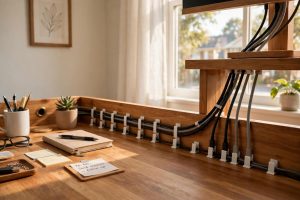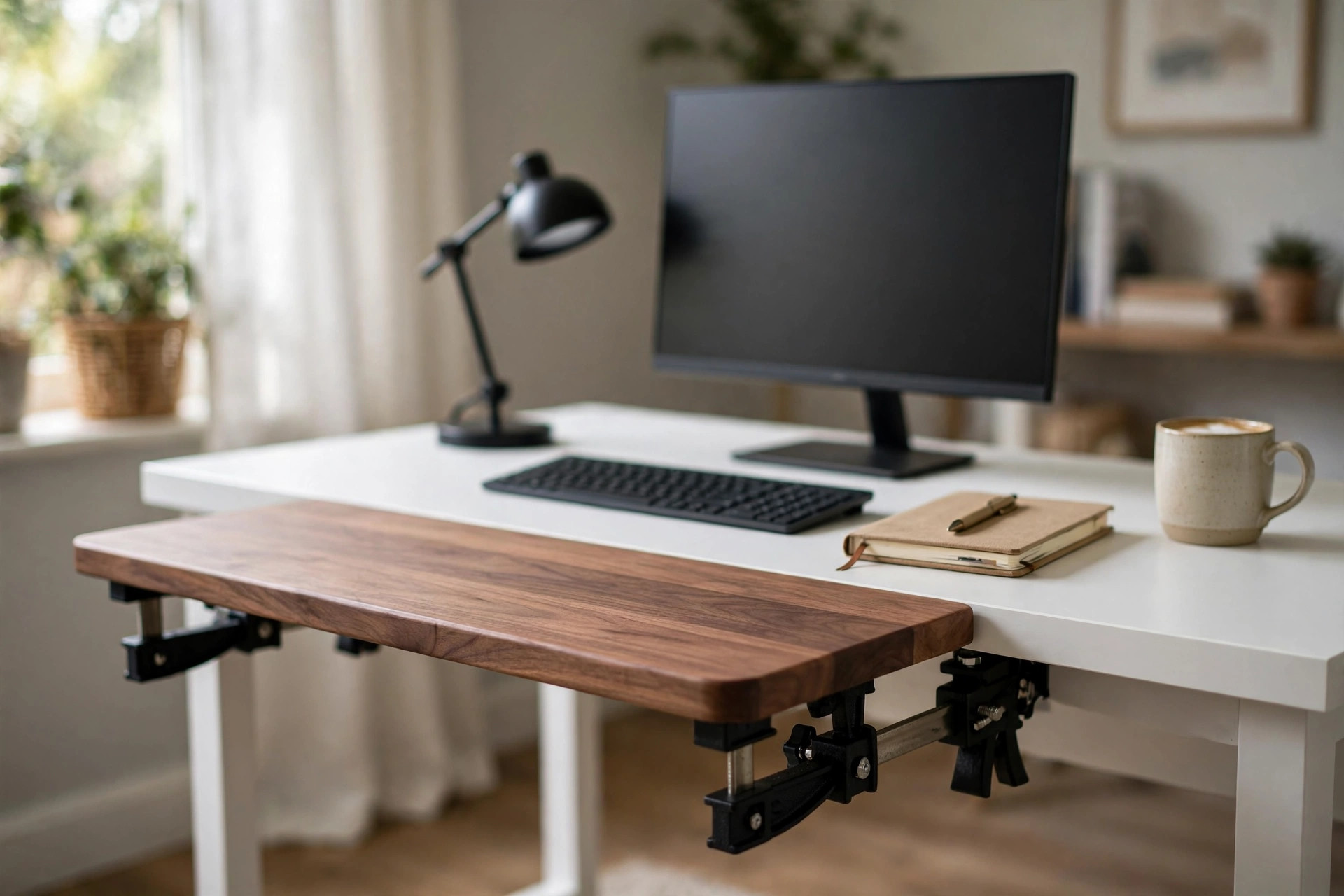
A home office desk extension for wider workspace is a simple panel or board that adds extra surface to the desk you already own. It clamps, slides, or bolts onto the front, side, or back of your desk. The result is more room for your screen, your keyboard, and your papers.
Many home offices began as small corners. A laptop desk that was fine years ago now holds two monitors, a keyboard, a notebook, and a phone. The space fills up fast. An extension panel can add six to twelve inches of depth or width. That small change makes daily work feel much easier.
Before you buy a whole new desk, look at this option. It costs less. It fits most standard desks. And in most cases it sets up in under an hour. This guide covers why it matters, what to look for, the main types, what it costs, how to keep it in good shape, and how to use it with care.
Why a Wider Desk Matters
Desk space shapes how you work more than most people admit. When the surface is too small, you push things aside to make room. The monitor sits too close. Your elbows hang off the edge. Your notebook slides onto your lap. Each small problem adds up through a long day.
A wider workspace gives your gear a set place. The monitor moves back to a healthy distance. The keyboard rests flat with your wrists straight. Your papers sit in a neat stack instead of a pile on the floor. Your day feels calmer when the desk is calm.
Two screens are now common in home offices. A second monitor can double what you see at once, but it eats surface fast. Pair it with a phone stand, a mug, and a desk lamp, and a forty-eight-inch desk runs out of room. An extension brings back that lost space without a trip to the furniture store.
There is also the cost to think about. A new desk with more surface can run three hundred to eight hundred dollars. A desk extension costs a fraction of that. For a renter or a budget-minded worker, that gap is hard to ignore.
Less waste is another quiet benefit. A desk that still stands strong should not go to the curb. An extension panel keeps good furniture in use. That is kind to your wallet and to the earth.
If your current desk is simply too small for your life now, a small corner desk with drawers for apartment office is one full replacement option. But for most people, an extension panel solves the problem with less fuss.
What to Look For When You Shop: Home Office Desk Extension for Wider Workspace
Not every extension fits every desk. Check these points before you buy.
Size and Fit
Measure your desk first. Write down the width of the front edge and the depth of the top. Most extension panels are twelve to thirty inches wide and six to twelve inches deep. Match the panel to the space you need, not to the space you wish you had.
Look at the edge of your desk. Clamp styles need a flat lip of about two inches to grip. If your desk has a thick rounded edge or a built-in modesty panel, a clamp may not hold. Slide-out and bolt-on styles work better on such desks. When in doubt, ask the seller for the fit rules.
Weight Rating
Every good panel lists a weight limit. Clamp-on boards often hold ten to thirty pounds. Fixed or bracket-mounted panels can hold forty pounds or more. Add up what you plan to rest on it: a monitor arm with a screen can weigh twenty pounds alone. Stay under the limit by a fair margin.
Attachment Style
The three common styles are clamps, slide rails, and fixed brackets. Clamps need no holes and move with you. Slide rails let the panel tuck away when not in use. Fixed brackets give the firmest hold but ask for screws in your desk. Pick the style that fits your desk and your temper.
Surface Material and Finish
Panels come in laminate, solid wood, bamboo, and metal mesh. Laminate is cheap and wipes clean. Solid wood and bamboo look warm and last long. Metal mesh is light but can let small items fall through. Pick a finish close to your desk color so the join looks neat.
Finish matters for your hands too. A rough edge can scrape your wrists all day. Look for rounded or banded edges. If you write by hand, a smooth matte top beats a glossy one.
Types of Desk Extensions
Desk extensions fall into a few clear groups. Knowing them helps you pick fast.
Clamp-On Front Extensions
These are the most popular. Two or more clamps grip the front edge of your desk, and the panel floats out toward you. They add depth, which is the direction most people lack. They suit laptop users who want the screen a few inches farther back.
Clamp-on boards range from twenty to one hundred twenty dollars. They install with a hex key in ten to twenty minutes. They also come off just as fast when you move.
Slide-Out Side Returns
A side return mounts under your desk and slides out like a drawer leaf. Push it in when you need the floor space. Pull it out when you need room for files or a second keyboard. These suit people who share a room and want the desk to stay small most of the day.
Corner Fillers
Corner desks often waste the wedge where two sections meet. A corner filler turns that dead spot into usable space. It is a fine pick if you run a small corner desk with drawers for apartment office and lose the corner to clutter.
L-Bracket Fixed Panels
For the firmest hold, brackets screw the panel to the desk frame or wall. This style holds printers, small speakers, and heavy reference books. It takes more work to install, but it feels like part of the desk once it is on.
Custom Wood Panels
If you want an exact match, a local woodworker can cut a panel to size. Bring your desk measurements and a drawer front or leg for color matching. This is the priciest route, but the result looks built in.
An adjustable height desk converter for existing table is a cousin of these ideas. It sits on your desk and raises your screen, while an extension widens the surface. Some workers use both and keep the whole setup on one desk.
Cost and Price
Prices run wide, so it helps to know the bands.
Basic clamp-on laminate panels cost thirty to eighty dollars. Brand-name versions with cable slots and rounded edges run eighty to one hundred fifty dollars. Slide-out side returns land in the same range.
Fixed bracket panels cost eighty to two hundred dollars, not counting the screws and tools if you lack them. Custom-cut wood panels from a local shop run one hundred fifty to four hundred dollars, with hardwood on the high end.
Watch for extras that push the price up. Cable management trays, wrist rests, and matching finish trims all add cost. Some sellers bundle these; others sell them apart. Read the list of what is in the box before you pay.
Secondhand panels turn up on local marketplaces for ten to forty dollars. A used panel from a known brand can be a fine deal. Check that all clamps and screws are present before you hand over cash. A missing bracket is often hard to replace alone.
Compare these sums to a new desk. A decent sixty-inch office desk costs three hundred to six hundred dollars at most furniture stores, and a well-known ergonomic desk maker can charge more. An extension at one hundred dollars buys back much of the same surface for far less.
Care and Upkeep
A desk extension needs little care, but a small routine keeps it firm and neat.
Wipe the panel once a week with a damp cloth. Dust builds up fast under monitors, and grit can scratch the finish. For wood panels, a light coat of furniture oil twice a year keeps the surface rich.
Check the clamps or screws once a month. Vibration from typing and chair bumps can loosen them over time. A quick turn of the hex key restores the hold. If the panel starts to wobble, stop using it for heavy items until you tighten it.
Keep heat and water away from the edge. A hot mug can ring a laminate top. A small tray or coaster set prevents most stains. Cables that rub against the panel edge can wear the finish, so route them through a grommet or clip.
If you pair the extension with a best desk organizer set for small office desk, dust less by giving every small item a home. Trays and pen cups keep tiny tools from rolling under the panel lip.
Safety
Safety is simple here, but it matters.
First, respect the weight limit. A panel rated for fifteen pounds will not hold a twenty-pound printer. Overloading can crack the board or rip the clamp off the desk edge. The fall can break gear and hurt feet.
Second, seat the clamps on solid wood or metal, not on a thin edge band. Press each clamp and tug the panel before you load it. Re-test after the first week of use.
Third, watch tip-over risk on small desks. A heavy load far out on an extension can tip a light desk forward. Keep the heaviest items close to the desk legs. If your desk is narrow, add weight to the back or anchor it to the wall.
Fourth, mind cables. Power cords and charger leads should run behind the desk, not across the extension. A snagged cord can drag a laptop off the panel. A simple cable clip set costs little and prevents most snags.
For broader workspace guidance, the home office setup tips from home improvement writers cover cable routing and desk placement in plain terms.
Frequently Asked Questions
Will a desk extension fit any desk?
Almost any flat-edged desk accepts some style of extension. Clamp styles need a two-inch flat lip. Desks with thick rounded edges or glass tops need screw-mounted or slide-rail styles instead. Measure your edge and check the fit rules before you order.
How much weight can a desk extension hold?
Clamp-on panels usually hold ten to thirty pounds. Bracket-mounted panels hold forty pounds or more. Add up the weight of your screen, arm, and gear, and stay well under the stated limit.
Can I use an extension with a standing desk?
Yes, in most cases. A clamp-on front panel rides up and down with the desk top. Keep the panel shallow so it does not hit your knees when you stand. For more on height-adjustable work, standing desk makers explain clearance needs on their sites.
Will the clamps scratch my desk?
Cheap clamps can mar soft wood or veneer. Look for clamps with rubber or felt pads. A strip of felt tape on the clamp jaw adds more guard. Tighten just enough to hold, not more.
Is it hard to install?
Most clamp-on panels need only a hex key and ten to twenty minutes. Bracket styles need a drill and a level, which takes an hour or so. If drilling makes you uneasy, a handyman can mount it in one short visit.
Should I buy an extension or a bigger desk?
Buy the extension first if your desk is sound and you need six to twelve extra inches. Buy a bigger desk if the frame is weak, the surface is worn out, or you need much more room. The extension costs far less, so it is a good first step.
A Final Word
A home office desk extension for wider workspace is one of the simplest upgrades you can make. It costs less than a new desk, it installs fast, and it gives your gear the room it needs. Measure your desk, pick a style that fits, respect the weight limit, and keep the clamps tight. Your workday will feel roomier by tonight.
For more background, see Steelcase, Wirecutter, and PCMag. Buying guides are also published by IKEA and Wayfair.
References
Herman Miller. (n.d.). Office furniture and ergonomic seating. https://www.hermanmiller.com IKEA. (n.d.). Home furnishings. https://www.ikea.com PCMag. (n.d.). Technology product reviews. https://www.pcmag.com Steelcase. (n.d.). Office furniture and workplace research. https://www.steelcase.com The Spruce. (n.d.). Home and garden advice. https://www.thespruce.com UPLIFT Desk. (n.d.). Standing desks and ergonomic office furniture. https://www.uplift-desk.com Wayfair. (n.d.). Furniture and home goods. https://www.wayfair.com Wirecutter. (n.d.). Product reviews from The New York Times. https://www.nytimes.com/wirecutter
Was this guide helpful?

About Robert Taylor
The My Garden US editorial team writes practical, in-depth home and garden guides for American homeowners — tested advice, no fluff.