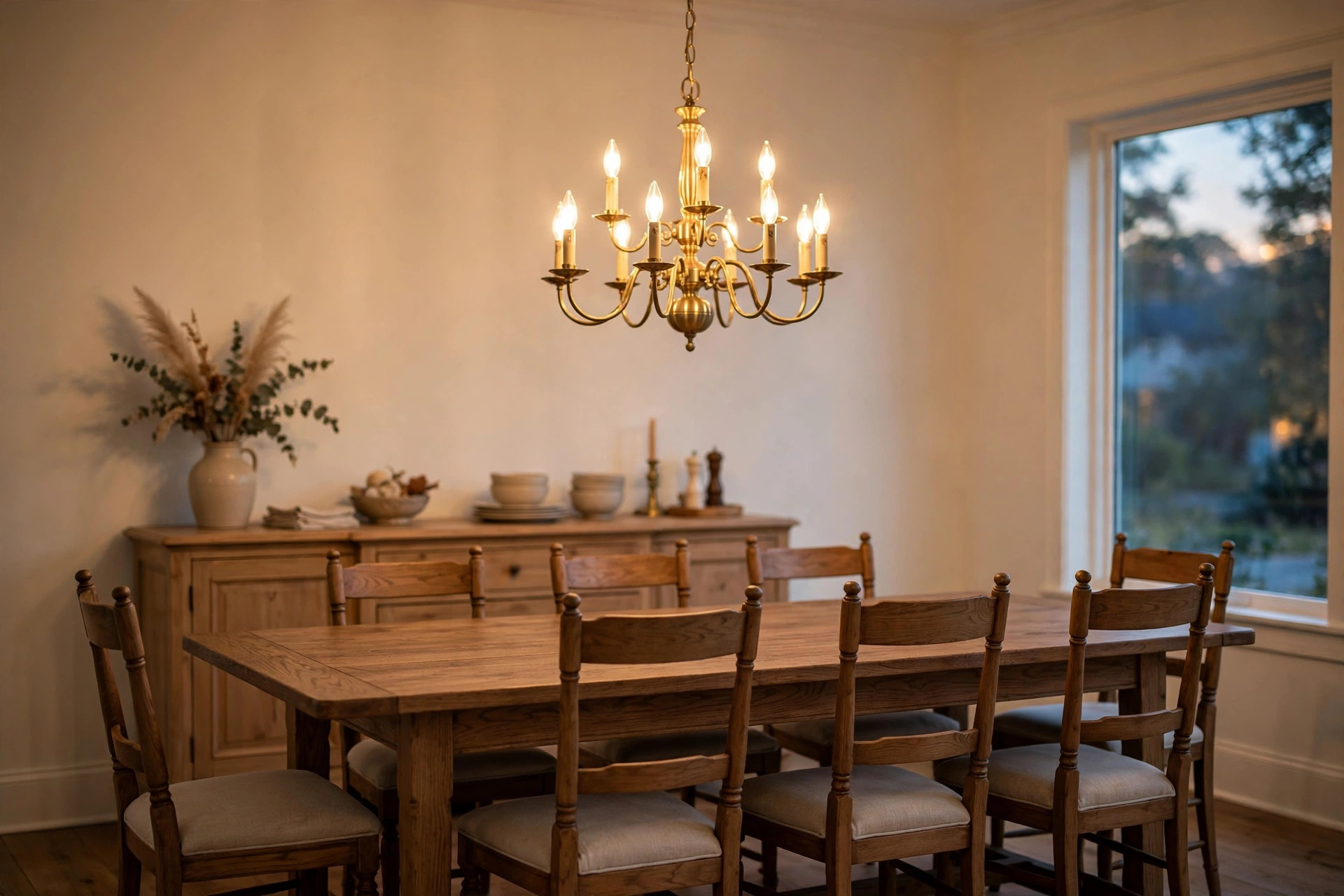

If you are asking about dining room chandeliers where to buy USA shoppers turn to, you are asking the right question. A chandelier is the one light that can change a whole room. It hangs in the center. It sets the mood. And it is often the first thing guests see when they sit down to eat.
Buying one is not hard, but buying the right one takes some thought. The size must fit the table. The style must fit the home. The price must fit the budget. This guide walks through each point in plain words. It covers why a chandelier matters, how to choose one, the types you will find, the places that sell them, what they cost, how to care for them, and how to keep them safe.
Why the Right Chandelier Matters
The dining room is where a family gathers. Meals happen there. Guests sit there. Holiday dinners take place there. The light above the table shapes how all of this feels.
A bare bulb or a plain flush mount gives light, but it gives little warmth. A chandelier spreads light across the table and the faces around it. It makes food look good. It makes a room feel finished. Even a modest home can feel grand with the right fixture in the right place.
The chandelier also sets the style of the room. A crystal fixture says formal. A wood beam fixture says farmhouse. A black iron ring says modern. When the style matches the rest of the house, the room feels calm and put together. When it clashes, the eye keeps going back to the mismatch.
Good light helps the eyes too. A shaded or dimmed chandelier cuts glare. People can talk without squinting. Older eyes see plates and glasses more clearly. The right fixture is not just pretty. It is useful.
How to Choose the Right Chandelier: Dining Room Chandeliers Where to Buy Usa
Measure the Room First
Before you shop, take two simple measurements. First, measure the dining table. A good rule is that the chandelier should be about one half to two thirds as wide as the table. A fixture that is too small looks lost. One that is too large crowds the table.
Next, measure the room. Add the length and width of the room in feet. That number, in inches, is a fair guide to the diameter of the fixture. A room that is 12 feet by 14 feet gives 26, so a chandelier about 26 inches wide is a fair start. This is only a guide. Your eye is the final judge.
Then check the hang height. The bottom of the chandelier should sit about 30 to 36 inches above the table top. In rooms with very high ceilings, you may hang it a little higher. No one should have to duck under it, and no one should be blinded by bare bulbs at eye level.
Pick a Style That Fits the Home
Chandeliers come in many styles. The safe choice is the style that already lives in the house.
A traditional home suits crystal, brass, or bronze fixtures with curved arms. A modern home suits clean lines, matte black, brushed nickel, or glass globes. A farmhouse kitchen suits wood, rope, or distressed metal. A coastal home suits rattan, driftwood tones, or light airy frames.
Look at the chairs, the table, and the sideboard. If they are heavy and dark, a light airy fixture can balance them. If they are light and simple, a fixture with more shape can give the room weight. The metal finish on the chandelier does not have to match every other fixture in the house, but it helps if the tones sit well together. Many shoppers pick lighting after they have settled the furniture, and that order works well.
Check the Light It Gives
Count the bulbs. A fixture with six bulbs gives more light than one with three. Check the type of bulb it takes. Many new fixtures use LED bulbs, which last long and use little power. The guides at ENERGY STAR explain how LED lamps save energy and still give warm light.
Look at the color of the light too. Warm white, around 2700K, feels like candle light and suits a dining room. Cool white feels like an office. Most people want warm light over the dinner table. A dimmer switch lets you turn the light down for a quiet meal and up for homework or crafts. If you want a dimmer, make sure the bulbs you buy are marked as dimmable.
Types of Dining Room Chandeliers
Shops carry many types. Knowing the names helps you search and compare.
Tiered chandeliers have two or three rings of lights stacked one above the other. They suit large rooms and long tables. They give a grand look.
Drum chandeliers have a fabric or metal shade shaped like a drum around the bulbs. They spread soft light and hide glare. They fit many styles.
Linear chandeliers are long and narrow. They hang over long tables. They are common in modern and farmhouse rooms.
Globe and sputnik chandeliers have round bulbs on arms that reach out in all directions. They look playful and modern. They work well with LED bulbs.
Crystal chandeliers use cut glass that throws small points of light around the room. They are formal and classic. They need more cleaning than most.
Rustic chandeliers use wood, iron, or rope. They suit cabins, farmhouses, and country homes.
Mini chandeliers are small fixtures, often used in pairs over a long table or in a small dining nook.
When you browse a large store like The Home Depot, you can filter by all of these types. That makes it easier to compare prices on the same kind of fixture.
Where to Buy: Stores and Shops in the USA
American shoppers have many good places to buy a dining room chandelier. Each kind of store has its own strength.
Big home improvement stores such as The Home Depot and Lowe’s carry a wide range of fixtures at fair prices. You can see many models in person, take them home the same day, and return them easily if the size is wrong. Their staff can answer basic questions about wiring and dimmers.
Lighting specialty stores focus only on lights. Lumens and Lamps Plus are two well known names. They carry more styles and more high end brands than the big stores. Their sites let you filter by size, finish, and price, which saves time.
General home retailers also sell chandeliers. Their prices can be good during sales, and they often carry styles that match their furniture lines. This helps if you want the fixture to match a table or sideboard from the same store.
Online marketplaces give the widest choice of all. Prices run from very low to very high. Read the reviews before you buy. Check the return policy. Measure twice, because sending a large fixture back can be costly.
Local lighting showrooms still exist in many towns. They let you see the true color of the metal and the true warmth of the light. Some will let you take a fixture home on approval. If your town has one, it is worth a visit before you buy online.
Electrical supply houses sell to contractors, but many sell to the public too. Their prices on plain, well made fixtures can be very good. Ask a local electrician where they buy.
For plain advice on picking lights for any room, the guides at The Spruce are a helpful free resource. They cover styles, sizes, and common mistakes in simple terms.
Cost and Price
Chandeliers range from under fifty dollars to many thousands. Most dining room chandeliers for an average American home fall between one hundred and eight hundred dollars.
Small mini chandeliers and simple drum fixtures often cost 60 to 150 dollars. Mid range fixtures in metal or glass run 150 to 500 dollars. Large crystal or designer fixtures run 500 to 2,000 dollars and more. The price follows the size, the material, and the brand name.
Do not forget the extra costs. An electrician may charge 150 to 400 dollars to install a chandelier, more if the wiring must be moved or the ceiling is very high. A dimmer switch costs little but may need an electrician to fit. Bulbs cost extra if they are not included. Heavy fixtures may need a special ceiling brace, which adds to the job.
Sales follow the seasons. Lighting often goes on sale in January, during spring home sales, and around the winter holidays. If you are not in a hurry, watch the price for a few weeks. Many stores will also match a lower price found at a competitor.
Care and Upkeep
A chandelier is easy to care for if you keep up with it. Dust is the main enemy. Dust dulls the finish and dims the light.
Turn the power off before you clean. For most fixtures, a soft dry cloth or a feather duster used once a month is enough. For crystal, you can use a damp cloth with a little mild soap, then dry it well. Never spray cleaner straight onto the fixture while it hangs. Spray it on the cloth instead.
Change bulbs as soon as they burn out. A missing bulb can make the fixture look shabby and can strain the eye. Keep a few spare bulbs in the house so you are not left in the dark. If the fixture uses LED bulbs, you may go years between changes.
Once a year, check that the fixture hangs straight and that all screws and chains are tight. A chandelier is heavy. A loose mount is a danger. If anything feels loose, call an electrician.
Safety
Lighting is electrical work, and electrical work deserves respect. Always turn off the power at the breaker before you touch a fixture. Do not trust only the wall switch.
If you are not sure how to wire a chandelier, hire a licensed electrician. This is not the place to guess. Bad wiring can start a fire. The U.S. Department of Energy offers plain guides on safe home lighting and energy use.
Heavy chandeliers need strong support. A standard ceiling box may not hold a fixture that weighs more than about 35 pounds. Heavier fixtures need a special brace or a fan rated box. Your electrician can check this in a few minutes.
Keep the fixture clear of anything that can burn. Do not hang fabric or paper near hot bulbs. Use bulbs with the wattage the fixture allows. If the fixture says 60 watts maximum per bulb, do not put in a hotter bulb. LED bulbs run cooler and are often the safer choice. The lamp guides at Philips explain bulb types and safe wattage in plain words.
Frequently Asked Questions
What size chandelier do I need over my dining table? Aim for a fixture about one half to two thirds as wide as the table. Hang it 30 to 36 inches above the table top. These two rules fit most rooms.
How much should I spend on a dining room chandelier? Most homes do well with a fixture between 100 and 800 dollars. Simple fixtures cost less. Large crystal or designer pieces cost more. Add 150 to 400 dollars if you need an electrician to install it.
Can I install a chandelier myself? If the wiring is already in place and the fixture is light, a careful homeowner can do it. Turn off the breaker first. If you must move wiring, support a heavy fixture, or work on a high ceiling, hire a licensed electrician.
Are LED chandeliers a good choice? Yes. LED bulbs last for years, use little power, and now come in warm colors that suit a dining room. Make sure the bulbs are dimmable if you want a dimmer switch.
Where is the cheapest place to buy a chandelier in the USA? Prices change often, but big stores like The Home Depot and Lowe’s often have the lowest prices on plain fixtures, while specialty sites like Lumens and Lamps Plus run frequent sales on nicer brands.
Should the chandelier match the other lights in the house? It does not have to match exactly. It should sit well with them. If your landscape spot lights outside are black and simple, a black fixture inside keeps a calm line. The same goes for outdoor wall lanterns by the door and sensor porch lights over the steps. One metal tone through the house feels settled.
A Short Final Word
A dining room chandelier is a simple thing to buy and a lasting thing to enjoy. Measure the table. Pick a style that fits the home. Buy from a store you trust. Hang it at the right height. Then sit down under it with the people you love. That is what the light is for.
References
ENERGY STAR. (n.d.). Energy efficient products. https://www.energystar.gov Lamps Plus. (n.d.). Lighting and home decor. https://www.lampsplus.com Lowe’s. (n.d.). Home improvement products. https://www.lowes.com Lumens. (n.d.). Lighting and ceiling fans. https://www.lumens.com Philips. (n.d.). Lighting products. https://www.philips.com The Home Depot. (n.d.). Home improvement products. https://www.homedepot.com The Spruce. (n.d.). Home and garden advice. https://www.thespruce.com U.S. Department of Energy. (n.d.). Energy efficiency and renewable energy. https://www.energy.gov
Was this guide helpful?

About Robert Taylor
The My Garden US editorial team writes practical, in-depth home and garden guides for American homeowners — tested advice, no fluff.
You May Also Like

Dining Room Chandeliers for Sale USA: A Plain Buying Guide
June 30, 2026 0 views
Deck Cap Lights for Sale USA: A Plain Guide to Bright, Safe Decks
March 17, 2026 0 views
Under Cabinet Strips: Where to Buy in the USA
June 3, 2026 0 views