
If you searched for garlic bulbs planting california homes usa, this plain guide gives you the whole method in simple words. It is a simple job that pays off for many months. A home gardener in the USA can plant cloves in the fall and dig up full heads the next summer. The crop asks for little. It needs sun, loose soil, and a cold spell to form bulbs. California offers all of these across its many growing zones. From the cool coast to the warm valleys, gardeners grow garlic with plain methods. You will learn when to plant, which types to choose, how to prepare the soil, and how to care for the plants. It also covers cost, safety, and answers to common questions.
Why Garlic Belongs in a California Garden
Garlic is one of the easiest crops a home gardener can grow. It takes up little space. A small bed along a fence can hold fifty plants or more. The plants stay green through the winter, when most of the garden rests. The harvest comes in early summer, before tomatoes and peppers take over.
California weather suits garlic well. Most of the state has mild winters. Garlic needs a period of cold to form a bulb. In California, winter nights often drop below forty degrees. That is cold enough for most types. Spring brings warm days and long light. Garlic uses that light to size up its bulbs. By June or July, the heads are ready.
Home-grown garlic tastes better than much of what sits in store bins. Fresh heads are firm and strong. They keep for months in a dry place. Garlic also helps the garden. Its sharp smell keeps some pests away from nearby plants. Many gardeners plant it next to roses or fruit trees for this reason.
The plant is also cheap to start. A few bulbs of seed garlic can turn into dozens of heads. No special tools are needed. A trowel, a bag of compost, and a sunny spot are enough. For beginners, garlic builds skill with little risk. It is a crop that forgives small errors.
Choosing Seed Garlic: What to Look For: Garlic Bulbs Planting California Homes Usa
Buy seed garlic, not grocery garlic. Heads from the store may carry disease. They may also be types that do not grow well in your zone. Seed garlic comes from growers who keep their stock clean. It is sold by nurseries and seed houses each fall.
Hardneck and Softneck
Garlic falls into two broad groups. Softneck garlic forms many small cloves around a soft stem. It braids well and stores for a long time. It likes mild winters and does very well across most of California. If you want reliable results at a California home, softneck is the safe pick.
Hardneck garlic forms a stiff central stalk. Its cloves are fewer and larger. It needs more cold than softneck. In the coolest parts of California, such as the far north and the mountains, hardneck does well. In warm coastal and southern areas, it may form small heads. Choose hardneck if your winter nights fall below freezing often. Choose softneck if they do not.
Where to Buy Seed Garlic
Order seed garlic in late summer or early fall. Good stock sells out fast. Local nurseries carry types suited to the area. Ask the staff what grew well for other customers. Mail-order catalogs give a wider choice: the Burpee garden seed catalog, the seed garlic suppliers at Gurney’s, and the Park Seed catalog list tested varieties with planting notes. The garlic care articles on Gardening Know How explain how each type behaves by zone, and the bulb planting advice from White Flower Farm covers soil depth and timing in plain terms. Zone guidance from growers such as Proven Winners and Monrovia also helps match types to local weather.
Look for large, firm heads with no soft spots. Avoid bulbs with green mold or dark stains. One pound of seed garlic plants about twenty-five to forty cloves. Keep the bulbs whole until planting day. Break them into cloves only when you are ready to plant. Each clove should have its papery skin on.
Types and Options for California Homes
California has many climates. The coast is cool and damp. The inland valleys are hot in summer and mild in winter. The mountains see real frost. Match the variety to your zone.
Best Varieties for Coastal, Inland, and Desert Zones
For the coast and most of Southern California, choose softneck artichoke types. California Early, California Late, and Inchelium Red are proven names. They handle mild winters and form large heads. They store for six months or more in a cool, dry place.
For the Central Valley and inland areas, the same softneck types work well. Hot summers do not harm garlic, since the crop is harvested by early summer. Give the plants steady water in spring.
Cloves and Bulbils
You can start garlic two ways. Cloves are the normal way. One clove grows one head. It is fast and sure. Bulbils are the tiny seeds that form on the flower stalk of hardneck garlic. They take two years to make a full head. Most home gardeners stick with cloves.
Garlic goes into the ground in the fall, much like tulip bulbs in our fall bulb planting guide. Both crops use winter cold to set their roots. If you already plant flower bulbs, garlic will feel familiar.
How to Plant: Step by Step
Timing
Plant garlic in the fall, four to six weeks before the ground freezes. In most of California, that means October or November. Coastal and southern gardeners can plant as late as December. The goal is simple: roots should form before winter, but green tops should not grow too tall. A few inches of green growth is fine.
Check the Old Farmer’s Almanac fall planting calendar for your town. Enter your zip code to find first frost dates. The Almanac fall planting calendar gives clear dates for each zone. The Spruce garlic growing guides also give month-by-month timing for warm states.
Soil Preparation
Garlic needs loose, rich soil. Heavy clay holds water and rots the bulbs. Sandy soil drains too fast. Aim for a middle ground. Work compost or aged manure into the top six to eight inches. This feeds the plants and loosens the ground. Add a balanced fertilizer at a modest rate. More is not better. Too much nitrogen makes big tops and small bulbs.
Pick a bed that gets full sun. Six hours of direct light is the least. Eight is better. Do not plant garlic where onions or garlic grew in the last three years. Disease can linger in the soil. A raised bed works very well in California. It warms fast in spring and drains well after rain.
Planting Depth and Spacing
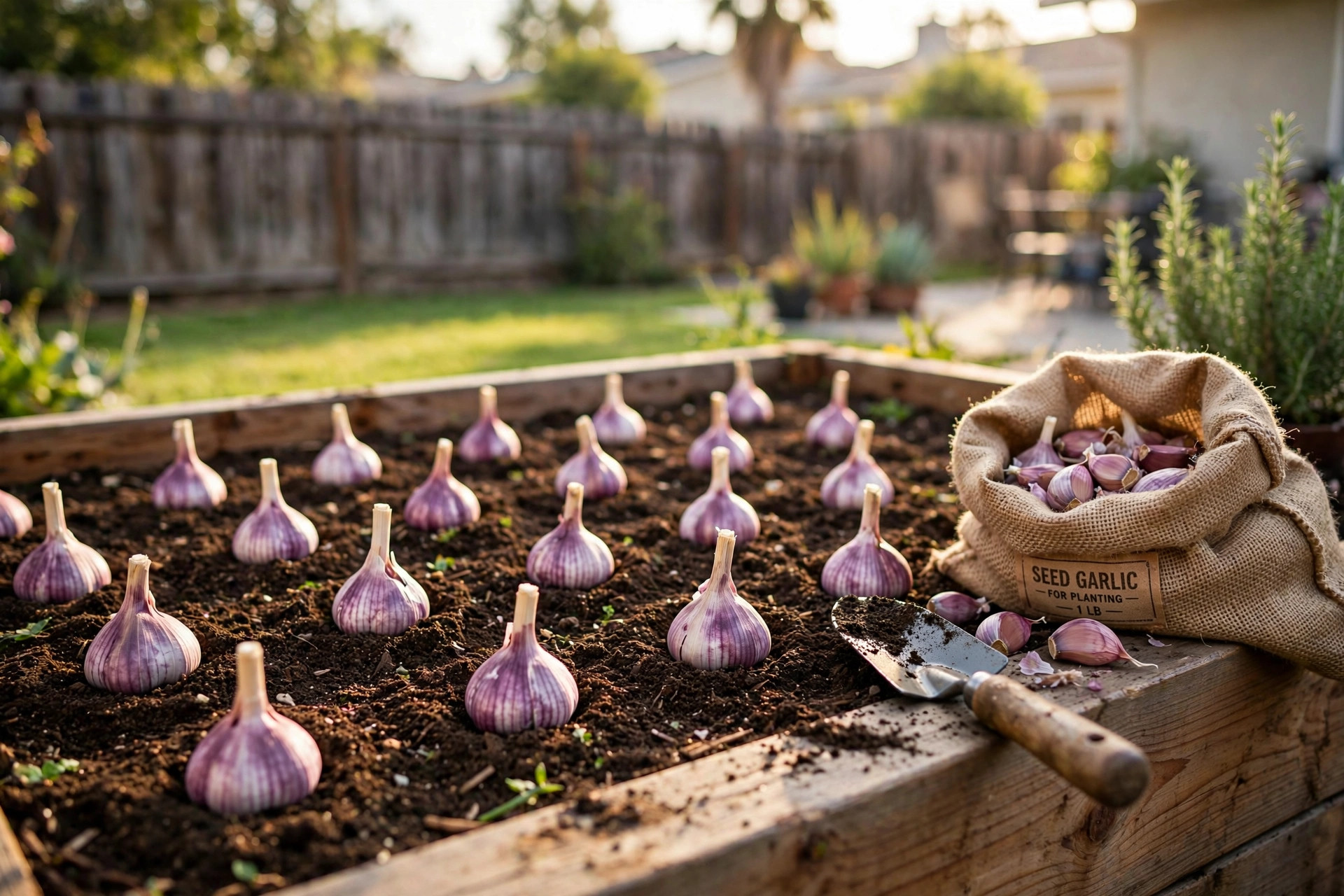
Break each head into cloves on planting day. Keep the pointed end up. Push each clove two inches deep. Space cloves four to six inches apart in rows. Leave eight to twelve inches between rows. Firm the soil over each clove. Water the bed well after planting.
Cover the bed with three to four inches of mulch. Straw, shredded leaves, or wood chips all work. Mulch holds moisture and blocks weeds. It stops the soil from washing away in winter rain. The USDA extension research programs publish notes on mulch use in home gardens.
Cost and Price
Garlic is a low-cost crop. Seed garlic sells for about eight to twenty dollars a pound. One pound plants a bed of thirty or more cloves. Each clove grows into a head with six to twelve cloves inside. A twenty-dollar order can yield two hundred dollars of garlic at store prices.
Compost and mulch add a small cost. A bag of compost runs a few dollars. If you already keep a garden, you may spend nothing extra. You need a trowel and a hose. No lights, no heaters, no special gear.
Home gardeners in other warm states face the same math. Readers in Texas may like our notes on planting onion sets at Texas homes. Onions and garlic share the same fall planting habit and the same low cost.
Care and Upkeep
Garlic needs steady care but not much of it. Once the cloves root, the plants grow on their own. Your job is water, food, and weeds.
Watering
Water the bed when the top inch of soil feels dry. In dry spells, water deeply once a week. Spring is the key season. The bulbs size up in April and May. Keep the soil evenly moist then. Stop watering when the lower leaves turn yellow. This is usually two to three weeks before harvest. Dry soil at the end helps the bulbs cure and store well.
Feeding
Garlic is a moderate feeder. The compost you added at planting feeds it through fall and winter. In early spring, give the plants one side dressing of balanced fertilizer. Sprinkle it beside the rows and water it in. Do not feed after May. Late feeding delays the bulbs and hurts storage.
Mulching and Weeding
Keep the mulch layer in place through spring. Pull weeds by hand when they are small. Garlic roots are shallow. A hoe can cut them. Weeds steal water and food. A clean bed grows bigger heads. If the mulch thins, add more.
If you shop for other seeds in the same season, you may notice sellers offer garlic near their flower stock. When you browse sunflower seed packs for sale, you will see the same sellers list fall garlic. Buying from one source saves shipping.
Watching Growth
In spring, hardneck garlic sends up a flower stalk called a scape. Cut the scapes when they curl. This sends energy into the bulb. The scapes are good to eat.
Pests, Disease, and Safety
Garlic has few pests. Aphids may gather on the leaves in spring. A strong spray of water knocks them off. The sharp smell of garlic keeps many insects away. This is one reason gardeners plant it near other crops.
Disease is a bigger threat. White rot and basal rot live in the soil. They turn bulbs soft and mushy. There is no cure. Prevention is the only answer. Buy clean seed garlic. Rotate beds. Do not overwater. If a plant looks sick, pull it and throw it in the trash. Do not compost it.
Safety is simple. Garlic is safe to handle and eat. Wear gloves if your skin is sensitive. The juice can sting small cuts. Keep the bed tidy so tools and hoses do not trip anyone. Store harvested garlic out of reach of dogs. Large amounts can upset a dog’s stomach.
Harvesting and Curing
Harvest when the lower third of the leaves turns brown. The top leaves should still be green. Do not wait until all the leaves die. Overdue bulbs split open in the ground and store poorly. Loosen the soil with a fork and pull each plant by hand. Shake off loose dirt. Do not wash the bulbs.
Cure the garlic in a dry, shaded spot with good air flow. A garage or a covered porch works. Lay the plants in a single layer or hang them in bunches. Keep them out of direct sun. Sunburn ruins the flavor. Curing takes two to four weeks. The outer skins will turn papery. The necks will feel dry and tight.
After curing, cut the tops to one inch. Trim the roots. Set aside the largest heads for next fall’s seed. Store the rest in a cool, dry place. Good softneck garlic keeps for six to eight months. Hardneck keeps for three to five months. Check the stored heads each month. Use any soft ones first.
Frequently Asked Questions
Can I plant garlic from the grocery store? You can, but it is a poor choice. Store garlic may carry disease. It is often a type that does not suit your zone. Some store heads are treated to stop sprouting. Seed garlic costs little more and grows far better.
How much sun does garlic need? Garlic needs full sun. Give it at least six hours of direct light each day. Eight hours is better. Shade makes small bulbs. Pick the sunniest bed you have.
Does garlic need cold weather to form bulbs? Yes. Garlic needs weeks of cold to trigger bulbing. Winter nights in the forties are enough for softneck types. Hardneck types want colder nights. This is why garlic is planted in fall. Spring-planted garlic often forms one round clove instead of a full head.
How long does garlic take to grow? Garlic takes about seven to nine months from planting to harvest. Fall planting leads to a June or July harvest in most of California.
Can I grow garlic in containers? Yes. Use a pot at least eight inches deep. Fill it with good potting soil mixed with compost. Plant cloves two inches deep and four inches apart. Water when the top inch dries out. Containers dry faster than beds, so check them often.
When should I stop watering garlic? Stop watering two to three weeks before harvest. The lower leaves will start to yellow. This is the sign. Dry soil at the end helps the bulbs cure. Wet soil at harvest time leads to rot in storage.
A Final Word
Garlic bulbs planting at California homes in the USA is a task any beginner can finish in an afternoon. Pick the right type for your zone. Plant in fall. Give the bed sun, compost, and steady water. Harvest in early summer and cure the heads in the shade. Start small this fall. Next year, plant more.
References
Burpee. (n.d.). Seeds, plants, and gardening supplies. https://www.burpee.com Gardening Know How. (n.d.). Gardening guides and plant care. https://www.gardeningknowhow.com Gurney’s Seed & Nursery Co. (n.d.). Seeds, plants, and garden supplies. https://www.gurneys.com Monrovia. (n.d.). Plants for home gardens. https://www.monrovia.com National Institute of Food and Agriculture. (n.d.). Agricultural research and extension. https://www.nifa.usda.gov Park Seed. (n.d.). Seeds, plants, and gardening supplies. https://www.parkseed.com Proven Winners. (n.d.). Plants and gardening inspiration. https://www.provenwinners.com The Old Farmer’s Almanac. (n.d.). Gardening calendars and advice. https://www.almanac.com The Spruce. (n.d.). Home and garden advice. https://www.thespruce.com White Flower Farm. (n.d.). Plants, bulbs, and garden supplies. https://www.whiteflowerfarm.com
Was this guide helpful?

About David Wilson
The My Garden US editorial team writes practical, in-depth home and garden guides for American homeowners — tested advice, no fluff.
You May Also Like
Lavender Seed Packets Florida Homes USA: A Plain Guide to Growing Lavender from Seed in the Sunshine State
February 11, 2026 0 views
Succulent Variety Packs: Where to Buy Them in the USA
February 12, 2026 0 views
Seed Starting Trays for Sale USA: A Plain Guide for American Gardeners
February 15, 2026 0 views