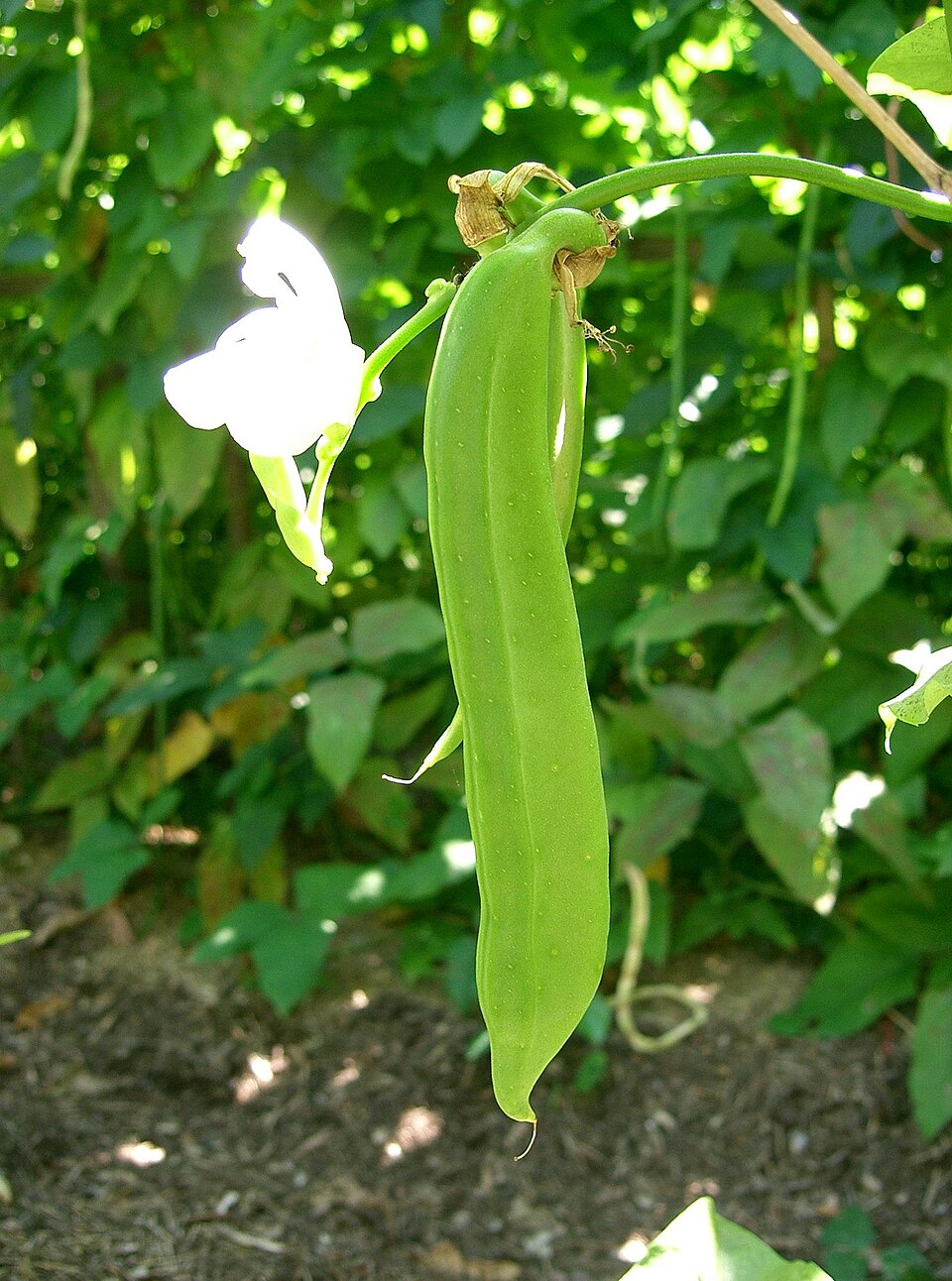
Sword beans grow pods over a foot long, hanging like green sabers from a vigorous tropical vine. It is one of the most dramatic vegetables you can plant, and the yields per vine are huge. Learning how to grow sword beans means giving this ambitious climber a truly sturdy trellis, a long hot season, and respect for one cooking rule: mature beans must be cooked thoroughly, never eaten raw.
Table of Contents
Table of Contents
This is a novelty crop with real food value. The young pods slice up like giant green beans. The mature seeds, properly cooked, are a substantial dry bean. And the vine itself, with its bold foliage and oversized pods, is a conversation piece that happens to feed you.

Photo: Wikimedia Commons
Quick facts: Sun: full sun. Soil: well-drained, fertile. Water: moderate. Sow large seeds 1.5 inches deep, 12 inches apart. Days to maturity: 120 to 150. Needs a long frost-free season to mature its large pods.
Choosing a Variety and Getting Started
When it comes to how to grow sword beans, getting the details right makes all the difference.

Many homeowners find that how to grow sword beans is easier than they expected once they know the basics.
Sword bean seed is sold by tropical vegetable suppliers, usually just as sword bean. The seeds are strikingly large, among the biggest of any bean, which makes them easy to handle and fun to plant. Buy fresh seed; like all large seeds, they store reasonably well in cool, dry conditions but germinate best when fresh.
The trellis is the first decision, not an afterthought. Sword bean vines are vigorous, and the pods are heavy. A flimsy structure will collapse under the load by midsummer. Build a strong trellis from stout posts and heavy wire or a cattle panel before you plant, and make it tall; the vines want to climb high. Before the season, check your USDA zone planting dates on the planting calendar, since sword beans need 120 to 150 warm days.
If you have grown green beans on poles, scale up your expectations of vigor. Lima beans share the long-season habit, and winter squash vines give you a sense of the space an ambitious vine demands.
When and How to Plant
Many homeowners find that how to grow sword beans is easier than they expected once they know the basics.
The key to how to grow sword beans is choosing the right approach for your space and budget.
Direct sow the large seeds about three weeks after your last spring frost, once the soil has warmed thoroughly. Sword beans need a long, hot season, so planting into cold ground is pointless; wait for real warmth. In short-season areas, start seeds indoors in large pots a few weeks early and transplant carefully, since the seedlings dislike root disturbance.
Sow 1 to 2 inches deep at the base of the trellis, spacing seeds 12 inches apart. Water them in well. The big seeds push up strong seedlings quickly in warm soil. Guide the young vines onto the trellis as soon as they start reaching; they climb eagerly and will twine around anything nearby if you do not direct them.
The Old Farmer's Almanac planting calendar can help you time sowing. Give the plants rich soil; unlike lean-soil desert beans, sword beans are hungry growers that reward fertility.
Soil and Sun
The key to how to grow sword beans is choosing the right approach for your space and budget.
With a little planning, how to grow sword beans can fit even a busy schedule.
Give sword beans full sun and well-drained, fertile soil. Dig in plenty of compost before planting. These are big, fast-growing vines, and they need the nutrition to support all that growth plus pods over a foot long. A fertile, moisture-holding loam is ideal.
Good drainage still matters. Rich does not mean soggy. If your soil holds water, plant on a slight ridge or in a raised bed. The Clemson Home & Garden Information Center has solid guidance on building fertile, well-drained beds for heavy-feeding vegetables.
Look up the plant's background under Canavalia gladiata in the USDA PLANTS Database. Warm-climate growers can find related vine-crop advice through UF IFAS Gardening Solutions.
Watering and Feeding
With a little planning, how to grow sword beans can fit even a busy schedule.
Before you start, it helps to understand how how to grow sword beans works in real homes.
Water regularly and mulch. Sword beans are thirsty for a bean, and steady moisture supports the huge pods. A deep watering once or twice a week, plus mulch to hold it, keeps the vines growing strongly. Drought during pod fill gives you smaller pods and fewer of them.
Feed with compost at planting and a midseason side dressing if the vines look pale. These plants are heavy feeders by legume standards, and they respond visibly to good nutrition. That said, avoid drowning them in nitrogen; like all legumes, they fix some of their own, and the goal is pods, not just vine.
The University of Minnesota Extension covers feeding strategies for vigorous vining vegetables, and the same balanced approach suits sword beans.
Care Through the Season
Before you start, it helps to understand how how to grow sword beans works in real homes.
A good plan for how to grow sword beans saves time, money, and frustration.
Train the vines up the trellis and give them room. The vines are ambitious and will wander onto neighboring plants, fences, and anything else within reach. Check them weekly and redirect strays. Once the vines reach the top of the trellis, let them cascade; the hanging pods are easier to harvest and less likely to rot on damp ground.
Few pests trouble sword beans. Their vigor outruns most insect pressure. In humid climates, good airflow through the trellis prevents fungal leaf issues; do not let the vines mat into an airless tangle. Thin overcrowded growth if needed.
The pods themselves need watching as they swell. A pod over a foot long is heavy, and a cluster of them is heavier. Make sure the trellis stays sound through the season; tighten wires and check posts after storms.
Harvest
A good plan for how to grow sword beans saves time, money, and frustration.
For most people, how to grow sword beans comes down to a few smart choices.
Harvest young pods under about 8 inches as a vegetable. Slice them and cook like green beans; at this stage they are tender and mild. Pick them before the seeds inside start to bulge the pod. Frequent picking keeps the vine producing new pods.
For mature seeds, let the pods fill and dry on the vine, then shell out the large beans. Here is the critical rule: cook mature sword beans thoroughly, changing the cooking water, and never eat them raw. Undercooked sword beans can cause serious stomach upset. Boiled properly until completely tender, with the water changed during cooking, they are a productive and satisfying dry bean.
Yields per vine are huge. A few healthy vines give you more pods than a family can eat fresh, which is why most growers harvest young pods for the kitchen and let a portion mature for dry beans.
Cooking Sword Beans Safely
For most people, how to grow sword beans comes down to a few smart choices.
If you are new to how to grow sword beans, start with the simplest option and build from there.
Young pods are the easy harvest. Pick them under about 8 inches, while they are still flat and tender, and slice them on the diagonal like giant green beans. They stir-fry beautifully: hot oil, garlic, a splash of soy sauce, two minutes of fierce heat. The slices stay crisp and look dramatic on the plate, which makes them fun for guests. They also steam well and pickle nicely, holding their shape in the jar.
Mature beans demand respect and reward it. Shell the large seeds from fully dry pods and soak them overnight. Drain, cover with fresh water, and boil hard, changing the water once during cooking, until the beans are completely tender all the way through. This thorough cooking is non-negotiable; undercooked sword beans cause serious stomach upset. When properly cooked, they are substantial and satisfying, good in stews and bean pots where their size makes an impression.
Never eat any part of the mature bean raw, and do not shortcut the cooking. But do not let the caution scare you off the crop. The rule is simple, the cooking is straightforward, and the payoff is a novelty harvest that feeds a crowd. Store the dried mature beans in sealed jars like any dry bean, and save a few of the largest for next year's planting.
Saving Sword Bean Seed
If you are new to how to grow sword beans, start with the simplest option and build from there.
When it comes to how to grow sword beans, getting the details right makes all the difference.
The huge seeds make sword beans one of the easiest crops to save seed from. Let pods on your healthiest vines mature and dry fully on the plant until they are papery and the big seeds rattle inside. Shell them out and dry the seeds further indoors for a week or two; large seeds hold interior moisture longer than they appear to, so be thorough. Store them sealed in jars in a cool, dark place.
Save seed from vines that produced the most young pods, not just the biggest mature seeds. You are selecting for productivity and vigor, the traits that matter in the garden. Because sword beans are largely self-pollinating, the seed comes reasonably true without isolation, though growing only one variety removes all doubt.
The seeds are so large and attractive that they make excellent gifts for gardening friends. A handful of sword bean seeds, with a note about the trellis they need and the cooking rule for mature beans, is a memorable present. Just be sure to pass along the cooking caution with the seed; it is part of responsible sharing.
Troubleshooting
When it comes to how to grow sword beans, getting the details right makes all the difference.
Many homeowners find that how to grow sword beans is easier than they expected once they know the basics.
Vines grow but pods are few. Usually a short season or poor pollination early on. Keep the plants healthy and be patient; pod set often improves as the season peaks.
Trellis collapses under the weight. Build stronger next time: stout posts sunk deep, heavy-gauge wire or cattle panels. Midseason, prop up sagging sections before pods touch the ground.
Stomach upset after eating mature beans. They were undercooked. Mature sword beans must be boiled thoroughly with the water changed. When in doubt, cook longer.
Seeds rot after sowing. Cold, wet soil. Wait for warmth and sow in well-drained ground.
Sword beans are the showpiece vine for gardeners with a long, hot season: dramatic pods, huge yields, and one non-negotiable cooking rule. For a smaller-scale climbing bean, green beans are the easy alternative. More on dramatic edibles is available from Gardenia.net, and crop background through the USDA National Agricultural Library.
References
Many homeowners find that how to grow sword beans is easier than they expected once they know the basics.
Old Farmer's Almanac. (n.d.). Growing beans in home gardens. https://www.almanac.com/
Clemson Cooperative Extension. (n.d.). Home & Garden Information Center. https://hgic.clemson.edu/
UF IFAS Gardening Solutions. (n.d.). Vegetable gardening in hot climates. https://gardeningsolutions.ifas.ufl.edu/
University of Minnesota Extension. (n.d.). Growing vining vegetables in home gardens. https://extension.umn.edu/
Was this guide helpful?

About My Garden US
The My Garden US editorial team writes practical, in-depth home and garden guides for American homeowners — tested advice, no fluff.