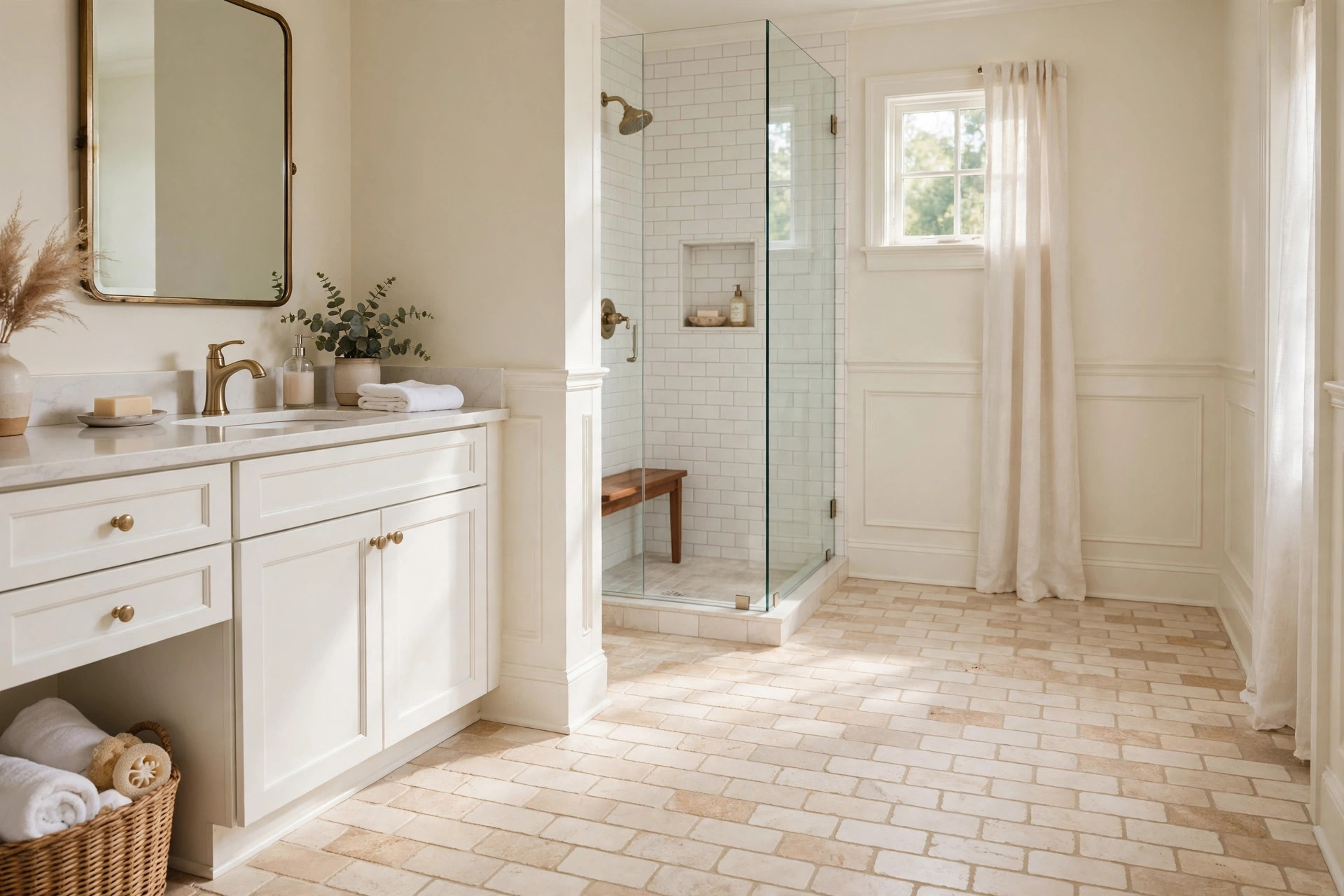

When a homeowner reads travertine tile for bathroom floor reviews, one pattern shows up again and again. People love the look. The stone feels warm under bare feet. The colors are soft and natural. Yet the same reviews carry honest warnings about sealing, slip, and upkeep. This guide gathers what buyers report in real homes. It covers the good and the bad in plain words so you can decide if travertine fits your bathroom.
Why Homeowners Read Travertine Tile Reviews
Travertine is a natural stone. It forms in hot springs and limestone caves over thousands of years. Its surface holds small pits and veins left by water and minerals. Many reviews praise this texture. They say it gives a bathroom the feel of an old Roman bath. No two tiles look alike, and that is the point.
Buyers choose travertine when they want a floor that feels calm and solid. Reviews often compare it with porcelain. Porcelain is cheaper and tougher. But porcelain cannot match the soft warmth of real stone. Travertine takes the chill off a morning shower routine. Several owners say their guests notice the floor before anything else in the room.
The same reviews note a trade. Travertine asks for more care than factory tile. It must be sealed. It can stain. It can chip if something heavy falls on it. People who read travertine tile for bathroom floor reviews before buying report fewer surprises after the install.
What to Look for When You Choose Travertine: Travertine Tile for Bathroom Floor Reviews
Grade and Fill
Stone yards grade travertine by the number of holes and flaws. Premium grade has small, even pits. Standard grade has larger voids that need more filler. Reviews advise buyers to look at full boxes, not single sample tiles. A single tile can hide the wide range of color in one batch. Open three or four boxes at the store. Lay the tiles side by side. This is how you judge what will cover your floor.
Many bathroom floors use filled and honed travertine. The factory fills the pits with resin or cement. Then it hones the surface to a soft matte finish. This is the form most reviews recommend for bathrooms. Polished travertine looks rich but turns slippery when wet. Tumbled travertine has a rustic look and a rough face. It suits a country style, but the texture can trap soap scum.
Finish and Slip
Safety matters on a bathroom floor. Honed travertine gives fair grip when dry. When wet, it is less sure than textured porcelain. Reviews from families with small children or older parents stress this point. Some owners add a non-slip sealer for peace of mind. Others place bath mats at the tub and the shower door. Both steps are cheap and simple.
Finish also changes cleaning. A honed surface shows water spots less than a polished one. Tumbled stone hides dust well but needs more scrubbing in the pits. If you like low upkeep, honed is the finish most reviews favor for a bathroom floor.
Color and Pattern
Travertine comes in warm tones. Ivory, cream, walnut, and rust are the common names. Vein-cut tiles show long lines. Cross-cut tiles show cloud-like swirls. Reviews suggest you buy about ten percent extra tile. The extra covers cuts, chips, and one cracked tile later. Because dye lots vary, buy all your tile from one batch if you can.
For layout ideas, look at other bathroom floors before you commit. Simple brick and grid patterns suit most homes. A kit kat tile for bathroom reviews usa page can show how small-format tile reads in a real room. Pattern choice changes both the look and the labor cost.
Types of Travertine Tile for Bathroom Floors
Honed and Filled
This is the most common choice. The pits are filled at the factory. The face is honed to a soft matte sheen. Reviews call it the safe pick for a bathroom. It cleans well. It takes sealer well. It costs a mid-range price.
Tumbled
Tumbled travertine is rolled in a drum to round the edges and soften the face. The look is old and weathered. Reviews from country-style and Mediterranean homes rate it high. The drawback is the open texture. It asks for careful sealing and a bit more cleaning effort.
Polished
Polished travertine shines like marble. It suits a formal powder room where feet stay dry. Reviews warn against it for full bathrooms with a shower or tub. Wet polished stone is slick. It also shows etch marks from acidic cleaners faster than honed stone.
Vein Cut Versus Cross Cut
Vein cut stone is sliced along the vein. The result is bold, straight lines. Cross cut stone is sliced across the vein. The result is soft, cloudy patterns. Reviews note that vein cut tiles can look busy in a small bathroom. Cross cut reads calmer and hides dirt better. Either works if you love the look.
Cost and Price: What Reviews Report
Prices move with grade, size, and where you buy. Common travertine floor tile sells from about four to twelve dollars a square foot in many United States stores. Premium select grades and large formats can cost more. A basic bathroom of fifty to eighty square feet may need three hundred to one thousand dollars in tile alone.
Labor adds a large share. Stone is harder to cut than ceramic. It also needs a flat, firm subfloor. Many reviews report labor quotes of eight to fifteen dollars a square foot for install. Setting mortar, grout, and sealer add more. Some owners save by laying the tile themselves. Reviews say a careful do-it-yourselfer can do it, but the first row must be level. One crooked row ruins the whole floor.
Do not forget the extras. Sealer costs twenty to sixty dollars a can. Grout for a bathroom must resist mold. A decoupling membrane under the stone can stop cracks from movement in the subfloor. Several reviews say the membrane was the best money they spent. If you are planning a bigger remodel, a tub to shower conversion cost calculator usa tool can help you budget the whole project before you order tile.
Care and Upkeep
Sealing is the heart of travertine care. A penetrating sealer fills the tiny pores of the stone. It keeps water and soap from sinking in. Most reviews say to seal before grouting and again after the grout cures. After that, reseal once a year in a busy bathroom. The test is simple. Drop a little water on the floor. If it beads up, the seal is good. If it darkens the stone, it is time to reseal.
Daily cleaning is easy if you use the right products. Use a pH-neutral stone cleaner or plain warm water. Never use vinegar, lemon, or bleach on travertine. Acids etch the surface and leave dull spots. Many negative reviews trace back to one harsh cleaner. The owners blamed the stone, but the cleaner did the damage.
Grout lines need their own care. Sanded grout suits most floor joints. Keep the grout sealed too. A stiff brush and a mild cleaner remove mildew before it sets in. Bath mats help, but lift them often so the floor can dry. Trapped dampness can darken stone over time.
Small pits may open up as the factory filler wears. This is normal. A stone repair kit with matching filler can patch them. Deep chips may need a tile swap, which is why you keep a few spare tiles from the same batch.
Humidity also shapes upkeep. Bathrooms hold damp air after every shower. Run the exhaust fan for twenty minutes after bathing. This dries the grout and the stone and slows mildew. In homes with hard water, mineral rings can form around the toilet base and the tub edge. A soft cloth and a stone-safe spray remove them. Do this weekly and the rings will not build up. Reviews from dry climates note less sealing work, while humid states ask for stricter habits.
Safety Points
Water and stone demand respect. Reviews list three safety steps that most owners take.
First, choose a honed finish, not polished, for the main floor. Second, apply an anti-slip treatment or a grip-enhancing sealer if anyone in the home is unsteady on foot. Third, use bath mats with rubber backing at the tub, the shower, and the sink. Make sure the mats dry between uses so mold does not grow under them.
Electrical safety matters in any bathroom remodel. Keep hair dryers and radios away from wet stone. A stone floor does not forgive a splash the way carpet would. If your remodel moves outlets or lights, have a licensed electrician do the work.
Travertine Versus Other Bathroom Floors
Reviews often compare travertine with the main rivals.
Porcelain tile costs less and asks for almost no care. It can mimic stone, but owners say the pattern repeats and the feel is colder. Ceramic is even cheaper and fine for walls, but it chips more easily on floors.
Natural marble looks grand but costs more and etches faster than travertine. Slate gives strong grip but reads darker and more modern. Luxury vinyl planks are cheap and warm, yet they lack the solid feel of stone. Some owners pair travertine in the main bath with soft rugs in dry areas. Reviews of best outdoor rugs for patio reviews usa show how much texture choice matters underfoot, indoors and out.
The right pick depends on your budget and your patience for upkeep. If you want beauty with modest care, travertine earns its fans. If you want a floor you can ignore, porcelain wins.
FAQ
Is travertine tile good for a bathroom floor? Yes, with care. Honed and filled travertine suits bathrooms well. It needs sealing and gentle cleaners. Most owners who follow those two rules report happy results.
Is travertine slippery when wet? It can be. Honed travertine has fair grip, but polished travertine gets slick. Reviews recommend bath mats and anti-slip sealers for extra safety.
How often should I seal travertine bathroom tile? Most reviews say once a year for a busy bathroom. Test with a drop of water. If the stone darkens, reseal. Light-use powder rooms can go longer.
Does travertine stain easily? It can stain if left unsealed. Soap, oils, and colored liquids sink into open pores. A good penetrating sealer and quick wipe-ups prevent most stains.
Can I use vinegar to clean travertine? No. Vinegar is an acid. It etches travertine and leaves dull marks. Use a pH-neutral stone cleaner or warm water with a drop of mild dish soap.
How long does a travertine bathroom floor last? With proper sealing and care, decades. Many reviews come from floors that are ten to twenty years old and still look fine. Heavy abuse and harsh cleaners shorten that life.
A Final Word
Travertine tile for bathroom floor reviews tell a steady story. The stone is beautiful, warm, and full of character. It is not a set-and-forget material. Seal it. Clean it gently. Give it grip where water lands. Do those things, and the floor will reward you for years. Read a few reviews from people with bathrooms like yours, buy from one batch, and keep spare tiles. That is the plain advice most owners would give a friend.
For more background, see The Spruce, The Home Depot, and Lowe’s. For more background, see LL Flooring, Shaw Floors, and Mohawk Flooring. Buying guides are also published by Daltile and This Old House.
References
Daltile. (n.d.). Ceramic and porcelain tile. https://www.daltile.com LL Flooring. (n.d.). Hardwood, vinyl, and tile flooring. https://www.llflooring.com Lowe’s. (n.d.). Home improvement products. https://www.lowes.com Mohawk Flooring. (n.d.). Flooring products. https://www.mohawkflooring.com Shaw Floors. (n.d.). Flooring products. https://www.shawfloors.com The Home Depot. (n.d.). Home improvement products. https://www.homedepot.com The Spruce. (n.d.). Home and garden advice. https://www.thespruce.com This Old House. (n.d.). Home renovation guidance. https://www.thisoldhouse.com
Was this guide helpful?

About Jennifer Lee
The My Garden US editorial team writes practical, in-depth home and garden guides for American homeowners — tested advice, no fluff.
You May Also Like

Waterproof Vinyl Flooring for Kitchen Reviews: What Real Buyers Say
April 23, 2026 0 views
Best Outdoor Rugs for Patio Reviews USA: A Plain Guide for American Homes
June 13, 2026 0 views
Flagstone Patio Installation Cost Near Me: A Homeowner’s Guide
July 25, 2026 0 views