
Heating and cooling keeps a home livable through every season. But it also costs money to run, and it can cost a lot to fix. Many American homeowners ask: are hvac maintenance plans worth it usa shoppers should know the answer before they sign. A maintenance plan is a yearly service contract from an HVAC company. The company visits your home once or twice a year to clean and tune your system. In return, you pay a flat fee. This guide walks through what these plans include, what they cost, and when they pay for themselves.
Why Maintenance Plans Exist
A heating and cooling system works hard. It cycles on and off thousands of times a year. Dust builds up on coils. Filters clog. Belts wear. Small problems hide inside the unit, unseen, until they turn into large repair bills. This is why makers of furnaces and air conditioners ask owners to have their systems checked each year. Many warranties even demand yearly service by a licensed firm. Skip it, and the maker can void the warranty.
Maintenance plans grew out of this need. They bundle the yearly visits into one simple price. The goal is steady care instead of emergency calls. A tech looks at the system in spring before cooling season and in fall before heating season. The tech cleans parts, tests controls, and spots wear early. Some plans also give members perks. These can include priority scheduling during heat waves, a cut in the cost of parts, and waived trip fees.
For many homes, the plan also brings peace of mind. You do not have to remember to call. The company calls you. This matters in busy homes where service dates slip. The Trane site, for one, walks homeowners through seasonal tune-up tasks that many plans cover.
What to Look for in a Plan: Are Hvac Maintenance Plans Worth It Usa
Not all plans are equal. Read the fine print before you sign. A good plan should list each task the tech will do at every visit. It should name how many visits you get each year. Two visits, one for the air conditioner and one for the furnace, is the common setup. One-visit plans cost less but cover less.
Check the repair terms. Most plans cover labor for the checkup. Parts are extra unless the plan says otherwise. Some plans give a discount on parts, often ten to twenty percent. Few plans pay for a whole new part. Ask what the plan does not cover. Many plans exclude refrigerant, large parts, and after-hours calls. This matters. A late-night breakdown in July may still cost you the full emergency fee.
Also check the firm itself. Look for a licensed and insured company with a local address. Ask how long techs stay on each job. A rushed twenty-minute visit will not find much. The best plans promise a full checklist and a written report after each visit. Keep those reports. They prove care if a warranty claim ever comes up. The U.S. Department of Energy offers plain guidance on what good HVAC service should include.
Questions to Ask Before You Sign
Bring these questions to the sales call:
– How many visits per year, and what does each visit include? – What is the flat yearly price, and does it rise after the first year? – Is there a discount on repairs or parts for members? – Are trip fees and emergency call fees waived? – Does the plan cover both heating and cooling units? – Can I cancel at any time, and do I get a refund for unused months?
A firm that answers these clearly is a firm you can trust. Vague answers are a red flag.
Types of Maintenance Plans
Companies sell plans in a few shapes. The basic plan is the most common. It includes one or two tune-up visits per year. You get the standard checklist: clean coils, check refrigerant levels, test the thermostat, inspect wiring, and change the filter. Basic plans fit homes with newer systems that run well.
A mid-level plan adds member perks. You may get front-of-line scheduling, no trip fees, and a cut on repair costs. Some mid-level plans cover the blower motor or small electrical parts. These plans suit older homes where repairs are more likely. They also suit homes in harsh climates where the system runs for long hours.
The premium plan is the priciest. It may cover many parts outright. It may include free filter changes between visits. Some premium plans even throw in free duct checks. Premium plans make sense when your system is old, when past repair bills were high, or when you want near-total cover. Read the part lists with care. “Covered parts” can still leave out the big-ticket items like the compressor.
Some firms also sell plans per unit. If you have two air conditioners, you may need two plan slots. Ask for the price of the whole home, not one unit, before you compare. Many makers, like Carrier and Lennox, describe upkeep needs that help you judge which tier fits your home.
Cost and Price Breakdown
Are hvac maintenance plans worth it usa pricing shows a wide spread. Basic plans often run from one hundred fifty to three hundred dollars a year. Mid-level plans can run three hundred to five hundred dollars. Premium plans can pass five hundred dollars a year. Prices rise in cities with high labor costs. They also rise for large homes with big or multiple systems.
Compare the plan price with the cost of paying per visit. A single tune-up visit booked on its own often costs one hundred to two hundred dollars. Two visits, booked separately, can cost two hundred to four hundred dollars a year. At that math, a basic plan priced near the cost of two visits is close to a wash. The value comes from the perks: no trip fee, priority service, and repair discounts.
Think about repairs too. A failed capacitor can cost one hundred fifty to three hundred dollars to fix. A blower motor can cost four hundred to seven hundred. A compressor can run into the thousands. A plan that gives twenty percent off repairs saves real money on big jobs. But if your system is young and trouble-free, you may pay the yearly fee and never use the discount. This is the gamble at the heart of every plan.
Energy savings add another piece. A dirty system works harder and eats more power. A tuned system can cut cooling and heating costs by a noticeable margin. The ENERGY STAR program notes that good upkeep keeps systems near their rated efficiency. Over a long summer, that can mean tens of dollars saved each month.
When a Plan Pays for Itself
A plan is most likely worth it in these cases. First, your system is more than eight years old. Older systems break down more. Second, you own rental units or a large home with several systems. More units mean more visits and more savings. Third, you live where the weather is harsh. Homes in the deep South run cooling for most of the year. Homes in the far North run heating hard. Long run hours wear parts fast.
A plan may not pay in these cases. Your system is new and still under full warranty with free first-year service. You are handy and already do the basic upkeep yourself. Your home is small with one young unit that runs light. In those cases, paying per visit can cost less.
Do the math on paper. Add the plan price. Add the likely repair discounts you will use. Subtract the trip fees you will dodge. Then compare that total with the cost of two single visits. Many homeowners find the plan wins by a small margin. Others find it loses. Both answers are fine. The right choice is the one that fits your home and your habits.
Related choices also matter. A well-tuned system works with the rest of your home. For example, our guide on the best heat pump for northeast winters usa looks at cold-climate options that need steady care to last. And if you heat a workshop or garage, see our electric garage heater 240v reviews usa for safe picks.
Care and Upkeep You Can Do Yourself
A plan does not replace your own care. The owner handles the simple tasks between visits. These small jobs keep the system clean and catch trouble early.
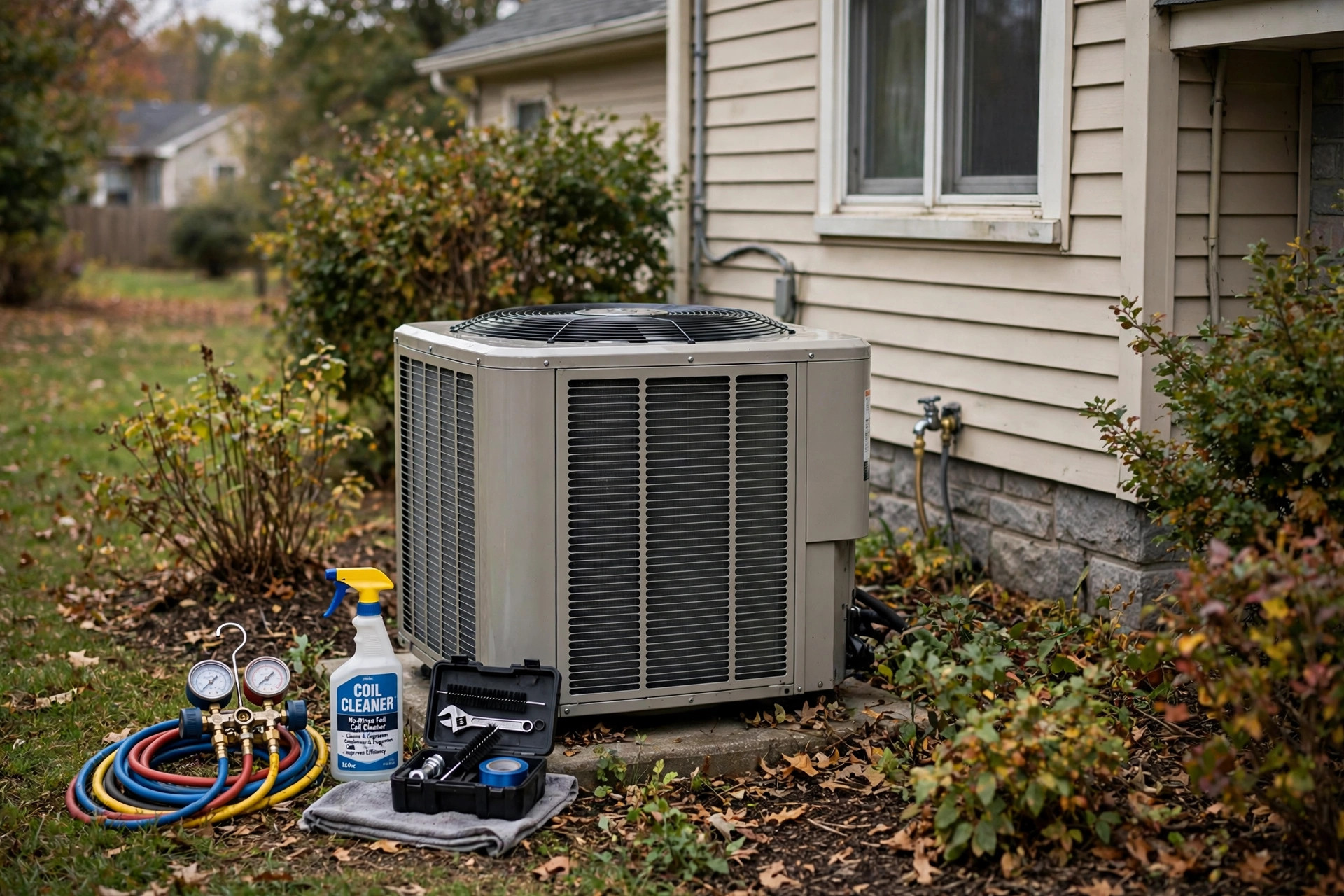
Change or clean the air filter every one to three months. A clogged filter chokes air flow. It strains the blower and cuts efficiency. Keep the outdoor unit clear. Trim grass and bushes at least two feet back. Hose off the outdoor coils each spring. Inside, keep vents open and unblocked. Do not stack boxes on the indoor unit.
Listen and watch. Rattling, grinding, or squealing sounds point to wear. Musty smells can mean mold in the drain line. Water pooling near the indoor unit points to a clogged drain. Note these signs and tell the tech at the next visit. Early notes lead to small fixes. Ignored signs lead to large ones.
Set your thermostat with sense. Large swings force the system to work hard. A steady setpoint is kinder to the parts. Programmable models can ease the load when you are away. The tech can show you the best settings during a visit. Goodman and Rheem both stress that steady owner care extends system life.
Safety
Heating and cooling gear uses electricity, gas, and sharp metal parts. Leave gas and electrical work to licensed techs. Never open the furnace cabinet if you are not trained. If you smell gas, leave the home and call your gas firm from outside. Do not flip switches or light matches.
Carbon monoxide is a silent risk with fuel-burning heat. Keep a working carbon monoxide detector on each floor. Test it monthly. Change its batteries twice a year. A tune-up visit should include a check of the heat exchanger for cracks. Cracked exchangers can leak this deadly gas. This one check alone makes yearly service worth much.
Electrical safety matters too. Turn off power at the breaker before you touch any part of the system. Keep water away from the indoor unit and its wiring. If a breaker trips again after you reset it, call a tech. Do not keep resetting it. Repeated trips point to a fault that needs a pro.
FAQ
How much do HVAC maintenance plans cost in the USA?
Basic plans often cost one hundred fifty to three hundred dollars per year. Mid-level plans run three hundred to five hundred. Premium plans can pass five hundred. Prices vary by region, home size, and the number of systems covered.
Do maintenance plans cover repairs?
Most plans cover the checkup labor only. Parts cost extra, though many plans give a member discount of ten to twenty percent. Premium plans may cover some small parts outright. Always read the parts list in the contract.
Are hvac maintenance plans worth it usa for new systems?
For brand-new systems, the value is lower. Many makers give free first-year service, and failures are rare in the first few years. Yearly visits still protect the warranty, but paying per visit may cost less than a plan until the system ages.
How often should my HVAC system be serviced?
Most makers ask for two visits a year: one for the air conditioner in spring and one for the furnace in fall. Heat pumps used year-round also do best with two visits. The tech follows a checklist and gives you a written report.
Can I cancel a maintenance plan?
Most plans allow canceling, but terms vary. Some give a refund for unused months. Some lock you in for a full year. A few auto-renew unless you cancel in writing. Read the cancel clause before you sign.
Will a plan keep my warranty valid?
Yearly service by a licensed firm is what most makers demand to keep a warranty valid. A plan makes this easy because visits happen on a schedule. Keep the service reports as proof. This is one of the strongest reasons to hold a plan.
A Short Final Word
So, are hvac maintenance plans worth it usa homeowners must decide case by case. The plan is not magic. It will not stop every breakdown. But it does three useful things. It keeps your system clean and tuned. It protects your warranty with proof of care. And it buys you fast help and lower repair costs when trouble comes.
Run the numbers for your own home. Weigh the age of your system, the length of your heating and cooling seasons, and your comfort with small DIY care. If the math is close, the warranty proof and priority service often tip the scales. A tuned system runs quieter, lasts longer, and costs less each month. That is a good deal no matter how you pay for it.
Good upkeep also touches the rest of the home. Clean air flow starts with a working system and clean ducts. If your kitchen vents tie into the same air path, our under cabinet range hood reviews 2026 usa can help you pick a hood that keeps grease out of the system. For deeper seasonal advice, This Old House publishes clear walkthroughs of fall and spring tune-up routines.
References
Carrier. (n.d.). Heating and cooling systems. https://www.carrier.com ENERGY STAR. (n.d.). Energy efficient products. https://www.energystar.gov Goodman. (n.d.). Heating and cooling equipment. https://www.goodmanmfg.com Lennox. (n.d.). Heating and cooling systems. https://www.lennox.com Rheem. (n.d.). Heating, cooling, and water heating. https://www.rheem.com This Old House. (n.d.). Home renovation guidance. https://www.thisoldhouse.com Trane. (n.d.). Heating and air conditioning. https://www.trane.com U.S. Department of Energy. (n.d.). Energy efficiency and renewable energy. https://www.energy.gov
Was this guide helpful?

About Jennifer Lee
The My Garden US editorial team writes practical, in-depth home and garden guides for American homeowners — tested advice, no fluff.
You May Also Like

Bathroom Exhaust Fan Installation Cost USA: A Full 2026 Guide
May 23, 2026 0 views
Pool Heat Pump Reviews for Inground Pools: A Buyer’s Guide
March 20, 2026 0 views
Ventless vs Vented Gas Fireplace Comparison: Which One Fits Your Home
August 25, 2026 0 views