Many homes in the United States have one cold room or one hot room. The rest of the house feels fine. The best inline duct fan reviews 2026 USA buyers rely on all point to the same fix. A small fan, placed inside the duct, can move more air where it is needed. It costs far less than a new heating or cooling system. It is a simple device with a simple job. It boosts airflow through a long or weak duct run.
This guide explains what these fans do, what to look for, the main types, and what they cost. It also covers care, safety, and answers common questions. Every word is written to help you choose with confidence.
Why an Inline Duct Fan Matters
Air does not always travel well through a house. Ducts can be long. They can bend and turn. They can leak at the joints. The room at the far end of a long run gets less air than the rooms near the furnace or air handler. This is a common complaint in two-story homes. The upstairs bedrooms stay warm in summer. The basement stays cold in winter.
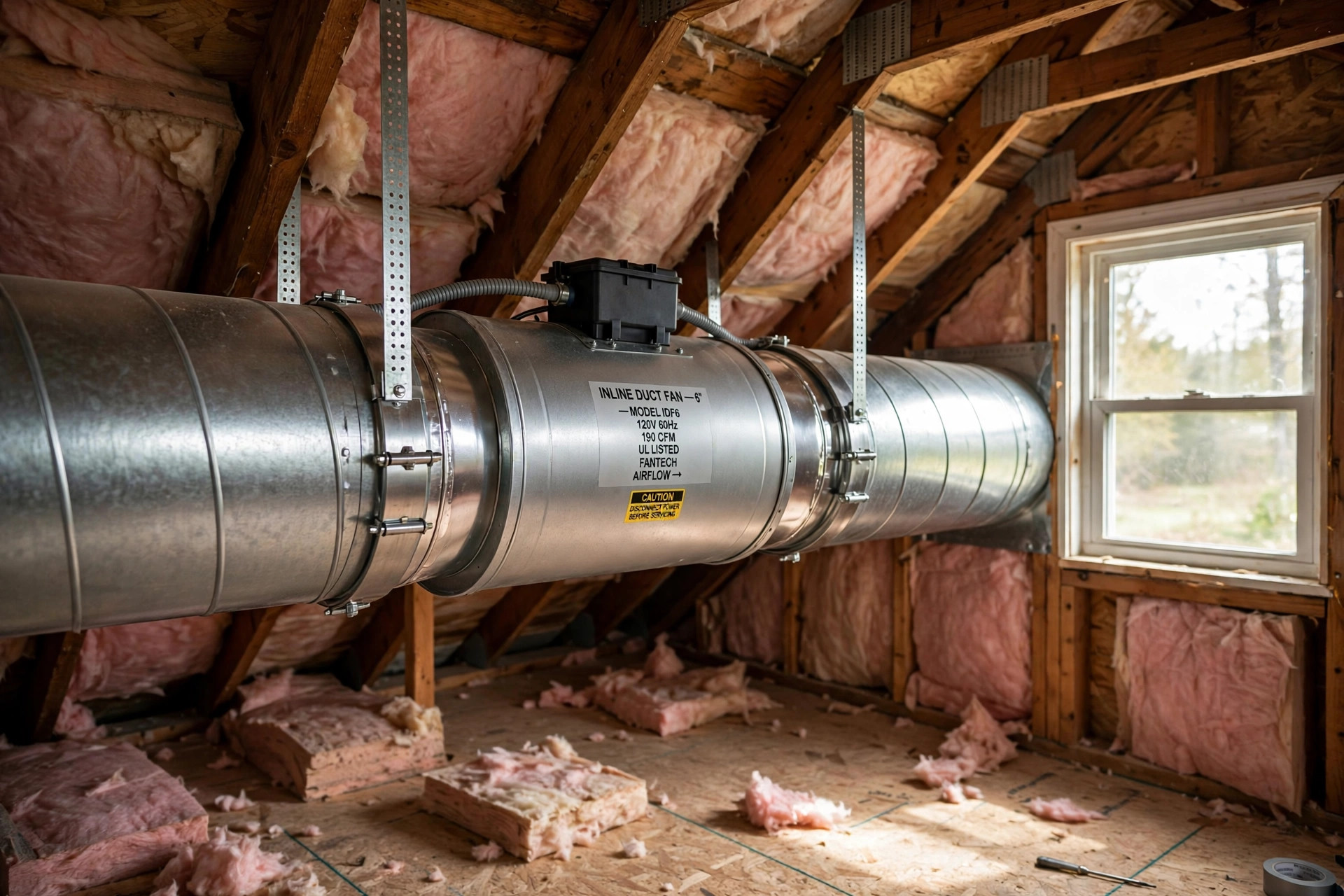
An inline duct fan adds push to the air stream. It mounts inside a round duct, usually in the attic or crawl space. When the main blower runs, the inline fan runs with it. The two work together. The result is more air at the register in the problem room.
This matters for comfort and for cost. A room that stays cold forces the thermostat up. The whole system runs longer. Fuel bills rise. A small booster fan can even out temperatures so the system runs less. Homeowners often try closing vents in unused rooms first. That can raise pressure in the ducts and stress the blower. A fan is a gentler fix.
It also matters for air quality. Stale rooms hold moisture. Moisture feeds mold. Moving the air helps the room dry out and stay fresh. For a fraction of the cost of duct replacement, an inline fan can bring a tired duct run back to life.
Common Signs You Need One
Watch for a few clear signs. One register barely blows while others blow strong. One room is five or more degrees off from the thermostat. A long duct run crosses a cold attic or a hot crawl space. The duct has many turns. If any of these sound familiar, an inline duct fan may be the answer.
What to Look for When You Choose: Best Inline Duct Fan Reviews 2026 Usa
Not all inline fans are equal. Reviews from the best inline duct fan reviews 2026 USA lists reward the same few traits. Use them as your checklist.
CFM Rating
CFM means cubic feet per minute. It measures how much air the fan moves. A small 4-inch booster may move 100 CFM. A 10-inch fan may move over 1,000 CFM. Match the fan to the duct size and the room. Too small, and nothing changes. Too large, and it may be loud or fight the main blower. A good rule is to size the fan to the existing duct diameter and to the airflow the room should get. A range hood CFM calculator for a gas stove shows how CFM math works, and the same idea applies to room ventilation.
Noise Level
Fans are rated in sones or decibels. Lower is quieter. Mixed-flow fans are often the quietest choice for the air they move. Check reviews for real noise reports. A fan in an attic above a bedroom can hum through the ceiling. Look for rubber mounting feet or insulated duct wraps to cut vibration. Quiet operation is worth paying for.
Duct Size
Inline fans come in 4, 6, 8, 10, and 12-inch sizes. Measure your duct before you buy. The fan should fit snugly inside the round duct or connect to it with standard fittings. An adapter can bridge a small gap, but a direct fit is best.
Speed Control
A variable speed control is a strong plus. Full speed is not always needed. A lower speed means less noise and less power use. Some fans include a plug-in speed controller. Others work with smart switches. The U.S. Department of Energy notes that slowing a fan even a little cuts power use a great deal, so energy.gov is a good place to learn more about efficient home ventilation.
Build Quality and Motor
Look for a sealed motor with ball bearings. These last longer than cheap sleeve-bearing motors. The housing should be metal, not thin plastic. Thermal protection matters too. It shuts the fan down if it overheats. Brands with long HVAC track records, such as Carrier, Trane, Lennox, Rheem, and Goodman, set the standard for durable motors, and good inline fan makers borrow the same design ideas.
Types of Inline Duct Fans
Inline duct fan reviews in 2026 describe three main types. Each suits a different job.
Axial Booster Fans
These are the small, low-cost fans. They sit inside a 4, 6, or 8-inch duct and give the airflow a gentle boost. They are popular for a single weak register. They are easy to install and draw little power. Their limits are real, though. They move modest CFM and can add noise at high speed. They work best on short problem runs.
Mixed-Flow Fans
Mixed-flow fans blend axial and centrifugal design. They move more air than simple boosters and stay quieter doing it. Many of the best-reviewed models in 2026 are mixed-flow. They cost more, but the extra CFM and lower noise are worth it for bedrooms and living rooms. If you want one fan for a long duct run, start here.
Centrifugal Inline Fans
These are the heavy lifters. A centrifugal wheel throws air outward and builds high pressure. They serve 10 and 12-inch ducts and long commercial-style runs. They are larger and louder than mixed-flow fans. They suit whole-branch duct work, not a single room. For most homes, they are more than is needed.
Smart and Speed-Controlled Models
A growing number of fans in 2026 ship with smart controls or plug-in speed dials. Some tie into a thermostat signal so they run only when the main blower runs. That is the right way to wire them. A fan that runs alone, without the main blower, can pull air backward through the system. Guides at This Old House and Family Handyman show proper wiring and mounting practice for do-it-yourself homeowners.
Cost and Price
Inline duct fans are one of the cheapest HVAC upgrades. Small 4-inch axial boosters often sell for 30 to 60 dollars. Mid-size 6 and 8-inch mixed-flow fans run 80 to 180 dollars. Large 10 and 12-inch centrifugal models can cost 200 to 400 dollars.
Speed controllers add 20 to 50 dollars if not included. Duct fittings, clamps, and a short length of insulated flex duct add another 20 to 40 dollars. If you hire an electrician or HVAC tech, labor may add 150 to 300 dollars. Many homeowners do the job themselves in an afternoon.
Compare that with the cost of new ductwork, which can run into the thousands. Or compare it with a new furnace or air handler. The fan is a small bet. That is why inline duct fan reviews stay popular year after year.
Running costs are low. Most fans draw 20 to 70 watts. At typical U.S. power rates, that is a few dollars a month, and only when the system runs. Choosing an efficient model helps. ENERGY STAR lists efficient ventilation products and explains what the ratings mean.
Where to buy is simple. Big home improvement stores stock the common sizes. Home Depot carries boosters, mixed-flow fans, speed controls, and all the fittings in one trip. HVAC supply houses carry the larger sizes.
Care and Upkeep
An inline duct fan needs little care, but a little care goes far. Check it once a year. Cut power first. Open the access point and look at the blades. Dust builds up on blades and slows the fan. Wipe the blades with a damp cloth. Check that the mounting is still tight. A loose fan rattles and wears out faster.
Listen for new noise. A hum that was not there before can mean a failing bearing or a loose bracket. Catch it early. A fan that seizes can block the duct and starve the room of air.
Keep the duct around the fan clean. Seal small leaks in nearby joints with mastic or foil tape. Leaky ducts waste the boost you just paid for. Good upkeep keeps the fan quiet and strong for ten years or more.
Safety
Electricity and attics demand care. Turn off the breaker before you touch any wiring. Use a voltage tester to be sure the power is off. If the fan must tie into the furnace control board, read the furnace manual first. A wrong wire can damage the board.
Mount the fan so its weight rests on straps or brackets, not on the duct alone. Support both sides of the duct near the fan. Wear a mask and gloves in the attic. Old insulation can irritate lungs and skin.
Do not use an inline duct fan to vent a gas appliance unless the fan is rated for that job. Dryer and range hood ducts have their own rules. A bathroom fan with humidity sensor is a better pick for damp bathrooms, and our quiet bathroom exhaust fan reviews cover low-noise picks for that job.
If you are unsure about wiring, hire a licensed electrician. The job is small and the cost is fair. Safe work lasts.
Frequently Asked Questions
Will an inline duct fan work with my existing furnace or air conditioner?
In most cases, yes. The fan goes inside the supply duct and runs when the main blower runs. It does not change the furnace or the thermostat. Check that the fan size matches your duct size. Also check that your system has enough spare capacity. A tech can confirm this in one visit.
How much louder will my system get?
A good mixed-flow fan adds very little noise. Cheap boosters at full speed can hum. Mounting the fan away from bedrooms helps. Insulated flex duct on both sides of the fan cuts sound further. Read noise comments in reviews before you buy.
Can I install it myself?
Many homeowners can. The steps are simple. Cut the duct, insert the fan, seal the joints, and wire it. The wiring is the part that needs care. The fan should run only when the main system runs. If you are not comfortable with wiring, hire a pro for that part and do the duct work yourself.
What size inline duct fan do I need?
Match the fan to your duct diameter first. Then look at CFM. A 6-inch fan moving 250 to 400 CFM suits most bedroom runs. An 8-inch fan suits larger rooms or longer runs. When in doubt, choose the quieter mixed-flow model in the right duct size.
Do inline duct fans use a lot of electricity?
No. Most draw less power than a light bulb, between 20 and 70 watts. They run only when the heating or cooling runs. The monthly cost is small. A speed control set to the lowest speed that fixes the room keeps costs lowest.
Can a fan fix a room that gets no air at all?
It can help, but check the cause first. A crushed duct, a closed damper, or a disconnected joint will beat any fan. Inspect the duct run before you buy. Fix damage first, then add the fan if the room still lags.
A Final Word
A cold or hot room is a daily annoyance. The best inline duct fan reviews 2026 USA shoppers trust show a clear path. Measure the duct. Pick the right size and CFM. Choose a quiet mixed-flow model if the budget allows. Wire it to run with the main blower. Seal the nearby joints. Do those steps, and one small fan can make the whole house feel right.
References
Carrier. (n.d.). Heating and cooling systems. https://www.carrier.com ENERGY STAR. (n.d.). Energy efficient products. https://www.energystar.gov Family Handyman. (n.d.). DIY home repair and maintenance. https://www.familyhandyman.com Goodman. (n.d.). Heating and cooling equipment. https://www.goodmanmfg.com Lennox. (n.d.). Heating and cooling systems. https://www.lennox.com Rheem. (n.d.). Heating, cooling, and water heating. https://www.rheem.com The Home Depot. (n.d.). Home improvement products. https://www.homedepot.com This Old House. (n.d.). Home renovation guidance. https://www.thisoldhouse.com Trane. (n.d.). Heating and air conditioning. https://www.trane.com U.S. Department of Energy. (n.d.). Energy efficiency and renewable energy. https://www.energy.gov
Was this guide helpful?

About Jennifer Lee
The My Garden US editorial team writes practical, in-depth home and garden guides for American homeowners — tested advice, no fluff.