
Cooking fills the air with steam, smoke, and grease. A good range hood pulls those things out before they settle on your walls and cabinets. Under cabinet range hood reviews 2026 usa can help you sort through the many models sold this year. This guide walks through what matters most. It covers size, power, noise, ducted and ductless designs, price, care, and safety. Read it once and you will shop with confidence.
Why an Under Cabinet Range Hood Matters
Every time you fry, saute, or boil, fine particles enter the air. Grease vapor rises and lands on nearby surfaces. Over time it builds a sticky film on cabinets and walls. Steam adds moisture that can feed mold in poorly vented kitchens.
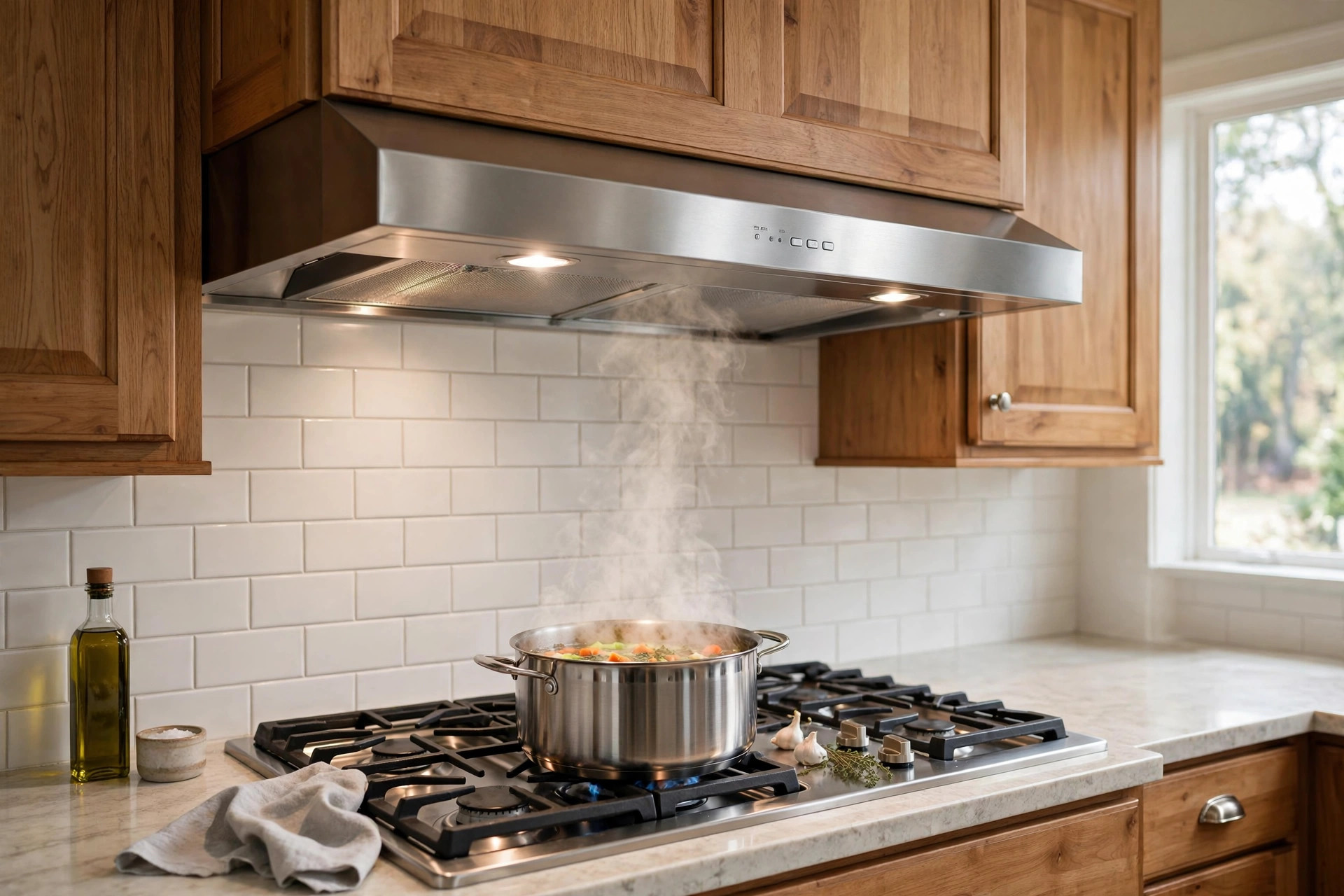
An under cabinet hood mounts to the bottom of your wall cabinet above the cooktop. It sits low and close to the cooking surface. That close position helps it catch smoke at the source. It is the most common hood style in American homes with standard cabinet layouts.
Good ventilation also protects your lungs. Gas stoves release nitrogen dioxide and other byproducts when they burn. Studies have linked high levels of cooking fumes to breathing problems. A working hood reduces those fumes. Even a simple ductless model is better than no hood at all.
How to Read Under Cabinet Range Hood Reviews: Under Cabinet Range Hood Reviews 2026 Usa
Product reviews are useful only if you read them with care. Look for patterns, not single opinions. One bad review about noise may be a one-time defect. Twenty reviews that all mention the same loud fan tell you more.
Check the date on reviews. Models change each year, and under cabinet range hood reviews 2026 usa reflect current models with new motors and controls. A review from 2019 may describe a hood that has since been redesigned.
Note whether the reviewer used ducted or ductless mode. The same hood can behave very differently in each setup. Noise and grease capture both drop in recirculating mode. When a review praises a hood, check how it was installed. That detail explains most of the gap between glowing and angry reviews.
Also note the size of the kitchen and the type of stove. A hood that works well over a small electric cooktop may struggle over a large gas range. The best range hood CFM calculator for gas stove advice pairs the hood with the heat output of your burners.
Types of Under Cabinet Range Hoods
Ducted Models
A ducted hood pushes air through ductwork to the outside of the house. It removes smoke, heat, moisture, and odors. It is the most effective design. Most building experts recommend ducted venting when you can install it.
Ducted hoods need a clear path through the wall or ceiling. That can mean extra work in a remodel. But the payoff is real. Grease leaves the home instead of being trapped in a filter. The kitchen stays fresher, and the hood works less hard.
Ductless Models
A ductless hood filters air and blows it back into the kitchen. It uses charcoal or carbon filters to catch odors and some grease. There is no ductwork to install. That makes it a good fit for apartments, condos, and older homes where ducting is hard to add.
Ductless hoods are less powerful than ducted ones. They cannot remove heat or moisture as well. Their filters must be replaced on a schedule, which adds cost over time. For more detail, see our roundup of ductless range hood reviews for 2026.
What to Look for When You Buy
Size and Fit
Under cabinet hoods come in standard widths, most often 30 inches and 36 inches. Match the hood to your cooktop width. A 30 inch cooktop pairs with a 30 inch hood. For heavy cooking, some experts suggest a hood two inches wider than the range.
Measure the space between the cooktop and the bottom of the cabinet. The hood must sit at the right height. Too high and it misses smoke. Too low and it blocks your view and traps heat. Check the mounting depth as well. The hood should cover the front burners where most splatter happens.
Airflow Power (CFM)
CFM stands for cubic feet per minute. It measures how much air the hood moves. Most under cabinet hoods range from 200 to 600 CFM. Light cooking with an electric stove may need only 200 to 300 CFM. A gas range with high heat burners may need 400 CFM or more.
A simple rule uses the BTU rating of your stove. Divide the total BTU of all burners by 100 to get a rough CFM target. A 60,000 BTU gas range suggests 600 CFM. But large ducted blowers in tight homes can cause backdraft problems. In such cases a makeup air unit for range hood may be needed to keep air pressure balanced.
More CFM is not always better. Very strong hoods cost more and make more noise. Pick the level that matches your cooking style. A family that mostly reheats meals does not need the same power as a family that deep fries weekly.
Noise Level
Noise is measured in sones. One sone is about the sound of a quiet refrigerator. Two sones is normal conversation. Three sones and above is clearly loud. Many buyers regret loud hoods more than any other feature.
Check the sone rating at each fan speed, not only at the top speed. A hood that runs quiet on low speed is the one you will actually use. Variable speed controls let you raise power only when smoke is heavy. Some 2026 models add a delay shutoff that runs the fan for a few minutes after cooking, then turns itself off.
Filters
Mesh filters use layers of aluminum screen to trap grease. They are common and easy to clean in a dishwasher. Baffle filters use curved metal channels. They catch more grease and are easier to wipe clean. They cost more but last longer.
Ductless hoods need charcoal filters too. These cannot be washed. They must be replaced every three to six months, depending on how often you cook. Factor that cost into your budget. Some brands sell multi packs that lower the price per filter.
Lights and Controls
Good lighting matters more than buyers expect. Look for bright LED lights that cover the whole cooktop. Two lamps beat one. They should be easy to replace or long lasting.
Controls should be simple. Push buttons, rocker switches, and touch panels all work. Pick what you can read and reach while cooking. Some models add a heat sensor that turns the fan on by itself when the air gets hot. That feature is handy but can be touchy if set too sensitive.
Cost and Price
Basic under cabinet hoods start near 100 dollars. These are simple ductless or low CFM models with mesh filters. They suit light cooking in small kitchens.
Mid range models run from about 200 to 500 dollars. This is the sweet spot for most buyers. You get stronger motors, better filters, LED lighting, and lower noise. Many of the best rated 2026 models sit in this band.
High end models cost 600 dollars and up. They offer 600 CFM or more, baffle filters, quiet blowers, and fine finishes such as brushed stainless steel. Professional style hoods can reach 1,000 dollars or more. For most homes, that extra power is not needed.
Installation costs are separate. A simple swap of an old hood may take an electrician or handyman one hour. New ductwork can add 300 to 800 dollars, depending on the path through the house. Ductless models avoid that cost entirely. Ask for a quote before you buy, so the full price is clear.
Care and Upkeep
Clean the grease filter often. A dirty filter chokes airflow and raises fire risk. Mesh filters can go in the dishwasher about once a month. Baffle filters wipe clean with warm soapy water. Let them dry fully before you put them back.
Wipe the hood body and the underside weekly. Grease builds fastest near the fan intake. Use a mild cleaner and a soft cloth. Avoid harsh scouring pads on stainless steel. They leave scratches that catch more grease later.
Replace charcoal filters in ductless hoods on schedule. Write the date on the filter with a marker when you install it. That simple habit keeps you on track. Check the light bulbs too. LED lamps last years, but when one fails, replace it with the type the maker specifies.
Once a year, look at the ductwork if you can reach it. Check for loose joints and grease buildup. In ductless models, vacuum the inside of the hood to remove dust. Ten minutes of care keeps the hood running like new.
Safety Notes
Keep a clear space above the cooktop. Grease filters can catch fire if flames reach them. Never leave frying food unattended. If a grease fire starts in a pan, turn off the heat and cover the pan with a metal lid. Do not use water on a grease fire.
Mount the hood at the height the maker recommends. Most call for 24 to 30 inches above the cooking surface. Mounting too low invites fire. Mounting too high hurts performance. Follow the manual, not a guess.
Make sure the circuit is right for the hood. Most under cabinet hoods plug into a standard outlet or wire to a simple circuit. If the wire or breaker is undersized, call an electrician. Do not run extension cords for a fixed hood.
If you choose a powerful ducted hood, think about fresh air. A strong blower can pull air from a furnace or water heater vent. That backdraft can send carbon monoxide into the home. Homes with gas appliances and hoods above 400 CFM may need makeup air. Talk to a heating contractor if you are unsure. Safety reviewers at the U.S. Consumer Product Safety Commission publish guidance on ventilation and carbon monoxide risks.
Frequently Asked Questions
How loud should a good under cabinet range hood be?
Look for under 4 sones on the highest speed and under 2 sones on low speed. You will use low speed most of the time, so the low speed number matters most. A quiet under cabinet range hood is one you hear as a soft hum, not a roar.
Are ductless under cabinet range hoods worth it?
They are worth it when ducting is not possible. They cut odors and some grease, and they install in an afternoon. They cannot match a ducted hood for smoke and heat removal. If you fry often, save toward a ducted install. For renters and condo owners, ductless is often the only choice, and it helps more than nothing.
What size hood do I need for a 30 inch stove?
Buy a 30 inch hood at minimum. If you do a lot of high heat cooking, a 36 inch hood over a 30 inch stove catches more of the spillover. Check that your cabinet can hold the wider model. Measure twice before you order.
How often should I clean or replace the filters?
Wash metal grease filters about once a month with regular cooking. Heavy frying may need cleaning every two weeks. Replace charcoal filters every three to six months. A clogged filter is the most common reason a hood stops working well.
Do under cabinet range hoods need to vent outside?
No, but venting outside works best. Ducted hoods remove smoke, heat, and moisture from the house. Ductless hoods filter and return the air. Building codes in some areas require outside venting for gas ranges above a certain BTU level. Check your local code before you decide.
Which finish is easiest to keep clean?
Stainless steel looks sharp but shows fingerprints. A brushed finish hides smudges better than polished steel. White and black models show less dust but can stain near heavy grease. Wipe any finish weekly and it will stay clean.
A Short Final Word
The best hood is the one that fits your stove, your kitchen, and your cooking habits. Start with size and ducting. Then weigh power against noise. Then compare price and filter costs. Under cabinet range hood reviews 2026 usa give you the details to compare. Take your time, read with care, and choose the model you will actually use every day. Your kitchen will smell better, your cabinets will stay cleaner, and your air will be safer to breathe.
For more background, see This Old House, Family Handyman, and Carrier. For more background, see Trane, U.S. Department of Energy, and Lennox. See Goodman for more detail.
References
Carrier. (n.d.). Heating and cooling systems. https://www.carrier.com Family Handyman. (n.d.). DIY home repair and maintenance. https://www.familyhandyman.com Goodman. (n.d.). Heating and cooling equipment. https://www.goodmanmfg.com Lennox. (n.d.). Heating and cooling systems. https://www.lennox.com This Old House. (n.d.). Home renovation guidance. https://www.thisoldhouse.com Trane. (n.d.). Heating and air conditioning. https://www.trane.com U.S. Consumer Product Safety Commission. (n.d.). Product safety information. https://www.cpsc.gov U.S. Department of Energy. (n.d.). Energy efficiency and renewable energy. https://www.energy.gov
Was this guide helpful?

About Lisa Anderson
The My Garden US editorial team writes practical, in-depth home and garden guides for American homeowners — tested advice, no fluff.
You May Also Like
Electric Fireplace Insert Reviews 2026 USA: A Plain Buyer’s Guide
January 24, 2026 0 views
Closed Cell vs Open Cell Foam Comparison USA: Which Spray Foam Insulation Is Right for Your Home?
June 4, 2026 0 views
Rigid Foam Insulation for Basement Walls USA: A Plain Guide
September 15, 2026 0 views