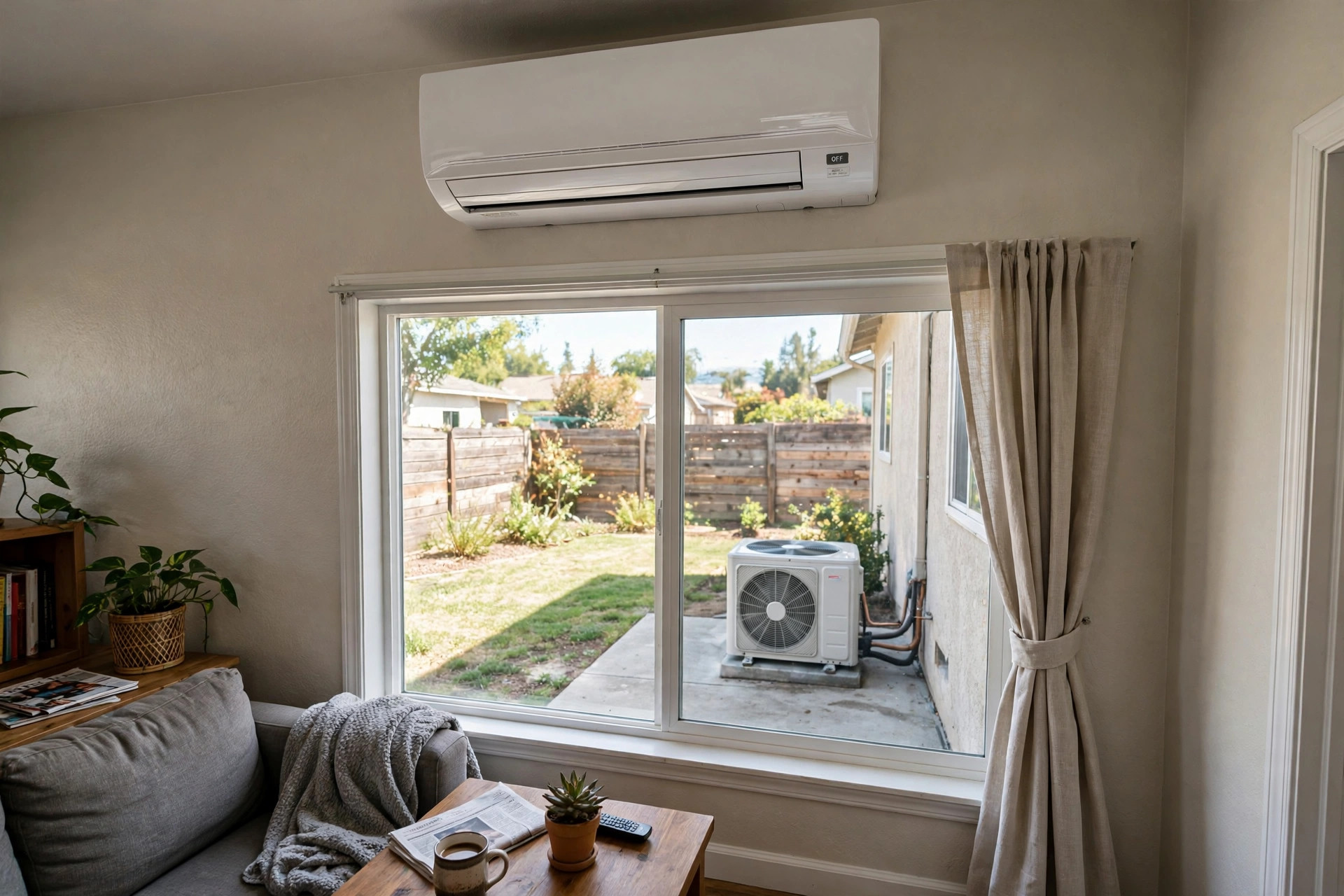

When the long cooling season arrives, many American homes still depend on one central system that cools every room at once. In houses without ducts, or in rooms that the main system never reaches, a different answer has grown popular. The ductless mini split places a quiet indoor unit on the wall and a small outdoor unit by the foundation, linked by a slim line set. Two names lead this market in the United States: Daikin and Mitsubishi Electric. Both firms have built their names over many decades. Both hold a large share of the ductless market. Yet the daikin vs mitsubishi mini split reviews usa give a mixed verdict, and the right choice turns on facts about your house, your climate, and your budget.
This guide lays out the facts in plain order. It covers what the two brands offer, how their reviews compare, what to check before you buy, what the job costs, and how to keep the system running for many years.
Why the Daikin vs Mitsubishi Choice Matters
A mini split is not a small purchase. A single-zone system can cost two to four thousand dollars installed. A multi-zone job can pass ten thousand. The unit will run for twelve to twenty years if it is sized well and kept clean. That is a long time to live with a decision made in a hurry.
Daikin is the largest air conditioner maker in the world. It sells through a wide network of American dealers and stocks parts across the country. Mitsubishi Electric, its chief rival, holds a strong place in the premium ductless field. American contractors often hold views on both. Some favor Daikin for price and parts reach. Others favor Mitsubishi for quiet build quality and long warranty terms. Online reviews repeat this split. Neither brand wins on every point. The daikin vs mitsubishi mini split reviews usa tell a story of two strong products with different strengths, and the wise buyer reads past the stars to the details.
What to Look for When You Compare the Two Brands: Daikin vs Mitsubishi Mini Split Reviews Usa
A mini split system has two parts. The indoor head blows treated air into the room. The outdoor condenser makes the heat exchange happen. Between them run refrigerant lines, power wire, and a drain tube. Both Daikin and Mitsubishi sell single-zone units, which serve one room, and multi-zone units, which serve up to eight rooms from one outdoor box. Your choice starts with how many rooms need service.
Efficiency ratings matter next. The Seasonal Energy Efficiency Ratio, called SEER2 in current ratings, measures cooling efficiency across a season. The Heating Seasonal Performance Factor, HSPF2, measures heating efficiency. Both brands offer units above 20 SEER2 in their high lines. Mitsubishi’s top residential lines often reach a point or two higher on the same scale. In cold states, low-temperature heating performance matters more than the label numbers. Mitsubishi’s Hyper-Heating models hold rated output down to five degrees Fahrenheit or lower. Daikin’s cold-climate lines reach similar depths. When you read daikin vs mitsubishi mini split reviews usa from northern states, check what winter lows the writer faced. A unit that runs well in Georgia may strain in Minnesota.
Noise level deserves a place on your list. Indoor units from both brands run near 19 to 25 decibels on low fan, which is quieter than a library. Reviews often praise both. Some writers say Mitsubishi units hold a steadier low hum. Others find no difference at all. The outdoor unit matters too if it sits near a bedroom window or a patio. Check the published sound data for the exact model, not the brand name alone.
Warranty terms round out the basics. Daikin offers up to twelve years on parts for residential units when a registered dealer installs the system. Mitsubishi offers up to twelve years on the compressor and ten on parts in many lines, with registration. Warranty length means little without a dealer who answers the phone. Ask local installers which brand they support best before you commit.
Types and Options Across Both Lines
Each brand sells in three tiers. Daikin’s entry Aurora and Entra lines cover basic rooms at a fair price. Its mid-range Emura line adds slim design and better efficiency. Its top MXL and VRV lines serve whole homes and light commercial jobs. Mitsubishi’s lineup runs from the GL wall-mounted series through the FH and FS Hyper-Heating series to the MXZ multi-zone outdoor units. A few specialty heads exist in both lines: floor-mounted units for rooms with low walls, ceiling cassettes that sit flush in the ceiling grid, and concealed duct units that feed short duct runs into a hallway.
Single-zone systems suit add-on rooms, garage shops, sunrooms, and finished basements. One indoor head pairs with one outdoor unit, and the job is simple. Multi-zone systems suit whole homes that never had ducts. One outdoor unit feeds two to eight heads, and each room gets its own remote. Both brands cap the total indoor capacity the outdoor unit can serve. A dealer sizes this with a load calculation that counts windows, insulation, sun exposure, and local design temperatures. Do not guess at size from square footage alone. An oversized unit short-cycles and leaves the air damp. An undersized unit runs all day and never catches up.
Smart controls have become standard. Both brands sell Wi-Fi adapters and smartphone apps that set schedules, track energy use, and alert you to filter changes. Some lines work with voice assistants. Reviewers praise these tools when they work and complain when apps need updates. If smart control matters to you, confirm that the exact model you buy supports the app you want to use.
What Daikin vs Mitsubishi Mini Split Reviews in the USA Say
Across review sites and contractor forums, several themes repeat. Daikin earns praise for value. Its mid-range lines cost less than Mitsubishi’s nearest rivals while posting solid efficiency numbers. Parts reach is strong, and dealers say factory support answers quickly. Some reviewers note that Daikin’s entry models feel plain and that their fans run a touch louder on high speed than the premium Mitsubishi heads.
Mitsubishi earns praise for build quality and cold-weather strength. Its Hyper-Heating models hold capacity deep into winter, which matters in the northern half of the country. Owners often describe quiet, steady operation and long life. The price runs higher, sometimes fifteen to thirty percent above a like-for-like Daikin job. A few reviewers note that certain older models drew grumbles about circuit board failures, though current lines carry longer warranties.
Both brands draw the same warning from technicians: the install matters more than the badge. Reviews of bad jobs blame poor sizing, sloppy line-set work, or missing vacuuming of the refrigerant lines. The same unit earns five stars in one house and two stars in the next, and the difference is the installer. When you read daikin vs mitsubishi mini split reviews usa, give more weight to reviews that name the installer and the house size. A review with no detail tells you little.
Cost and Price in the American Market
Prices move with region, dealer, and job difficulty. As a rough guide, a single-zone mini split installed in a simple location often runs between two thousand and five thousand dollars. A two-zone job often runs between five and nine thousand. A whole-home multi-zone job can run from ten to twenty thousand dollars or more. Mitsubishi jobs trend toward the high side of each range. Daikin jobs trend toward the middle or low side.
Federal tax credits and utility rebates can cut the bill. High-efficiency heat pumps qualify for federal credits under current law, and many power companies pay rebates per ton for qualifying models. Rules change from year to year, so check the current guidance at Energy.gov and the ENERGY STAR program before you sign. Both brands list qualifying models on their sites, and a good dealer will file the paperwork with you.
Operating cost turns on efficiency and local power rates. A mini split heat pump moves heat rather than making it, so it can use a third of the power of electric baseboards for the same heat. In mild climates it may be the cheapest way to heat a room. In deep cold it pairs well with a backup heat source. Long-tail advice on pairing heat pumps with home insulation can be found in guides such as best insulation for crawl space walls usa, and broader heating topics appear in insulation for pole barn house reviews usa. For homes with young children, quiet supplemental options are covered in best bladeless fan for nursery reviews usa.
Care and Upkeep
A mini split asks little but repays attention. Clean or wash the indoor filters every month during heavy use. A clogged filter starves the coil of air and raises the power bill. Wipe the indoor head with a damp cloth. Keep the outdoor unit clear of leaves, grass, and snow. Trim plants back two feet on all sides so air can move freely. Hose the outdoor coil gently in spring, with the power off.
Once a year, or once every two years in light use, have a technician service the system. The visit should check refrigerant pressure, clean the coils and drain, test the electrical parts, and confirm the drain line runs clear. A blocked drain sends water down the inside wall, which is the most common repair call these units see. Do not open the outdoor unit yourself. The refrigerant and high-voltage parts belong to a licensed technician.
Remote controls and apps need care too. Replace batteries once a year. Keep the app updated so schedules keep working. If a unit shows an error code, note the code and call the installer before you reset anything more than once.
Safety
A mini split runs on high voltage at the outdoor unit and stores refrigerant under pressure. Only a licensed contractor should wire, charge, or open the system. Federal law bars the release of refrigerant to the air, and the installer must recover it during service.
Place the outdoor unit on a level pad or wall bracket, away from bedroom windows if noise worries you. Keep the disconnect switch within sight of the unit so service can cut power fast. Inside, mount indoor heads high on the wall and away from direct sun on the sensor. Never cover an indoor head with cloth or hangers; blocked air can overheat the coil.
If you smell burning or see water stains below a head, switch the unit off at the breaker and call your dealer. If a storm floods the outdoor unit, do not restart it until a technician checks the electrical parts.
Frequently Asked Questions
Which is better, Daikin or Mitsubishi?
Neither brand is better in every case. Mitsubishi often leads on cold-climate heating and quiet operation, while Daikin often leads on price and parts reach. The daikin vs mitsubishi mini split reviews usa agree on one point: the installer matters more than the brand. Get quotes from dealers who service both, and pick the one who sizes the job with a real load calculation.
How long does a mini split last?
With proper sizing and yearly care, most units run twelve to twenty years. The outdoor unit faces weather and wears first. Units that run all year in harsh climates land at the low end. Units in mild climates with clean filters land at the high end.
Can one outdoor unit heat and cool several rooms?
Yes. Both brands sell multi-zone outdoor units that feed two to eight indoor heads. Each room gets its own temperature control. Total capacity has limits, so a dealer must match the outdoor unit to the sum of the indoor loads.
Do mini splits work in cold winters?
Modern cold-climate models heat down to minus five or minus thirteen degrees Fahrenheit. Mitsubishi’s Hyper-Heating and Daikin’s Aurora lines both hold output well below freezing. In the coldest zones, owners often keep a backup heat source for the worst nights.
How much does a single-zone mini split cost installed?
Most simple single-zone jobs in the USA run between two thousand and five thousand dollars installed. Hard wall runs, electrical upgrades, or long line sets raise the price. Multi-zone jobs run higher.
Are mini splits noisy?
No. Indoor heads from both brands run near the level of a quiet library on low fan. Outdoor units are quieter than most central condensers. Mount the outdoor unit away from bedroom windows if you are a light sleeper.
A Short Final Word
Daikin and Mitsubishi Electric both make fine ductless systems. Daikin brings value, wide dealer reach, and solid efficiency. Mitsubishi brings quiet build quality, deep cold-weather strength, and long warranties. Read the daikin vs mitsubishi mini split reviews usa with care, but spend more care on the contractor. A well-sized, well-installed mid-range unit will beat a poorly installed flagship every time. Get three written quotes, ask for load calculations, and choose the dealer you trust to answer the phone in January.
For more background, see Rheem, This Old House, and Family Handyman. For more background, see Carrier, Trane, and Lennox.
References
Carrier. (n.d.). Heating and cooling systems. https://www.carrier.com ENERGY STAR. (n.d.). Energy efficient products. https://www.energystar.gov Family Handyman. (n.d.). DIY home repair and maintenance. https://www.familyhandyman.com Lennox. (n.d.). Heating and cooling systems. https://www.lennox.com Rheem. (n.d.). Heating, cooling, and water heating. https://www.rheem.com This Old House. (n.d.). Home renovation guidance. https://www.thisoldhouse.com Trane. (n.d.). Heating and air conditioning. https://www.trane.com U.S. Department of Energy. (n.d.). Energy efficiency and renewable energy. https://www.energy.gov
Was this guide helpful?

About Robert Taylor
The My Garden US editorial team writes practical, in-depth home and garden guides for American homeowners — tested advice, no fluff.
You May Also Like

Swamp Cooler vs AC for Dry Climates USA: Which Cools Your Home Best?
March 16, 2026 0 views
Window Fan for Whole House Cooling Reviews
June 24, 2026 0 views
How Often to Change Your HVAC Filter: A Plain USA Guide
May 6, 2026 0 views