
The best insulation for crawl space walls can change how a whole house feels. Cold floors, high heating bills, and damp air often start in the dark space under the home. Many American homeowners never think about that space until the first cold snap. When winter air sinks under the house, heat escapes through the floor. The furnace runs longer. Rooms feel cold even when the thermostat reads fine.
Insulating the crawl space walls is often the fix. The walls of the crawl space form the boundary between the earth and the living space. When those walls are left bare, heat moves out through the concrete. When they are covered with the right material, the crawl space stays warmer and drier. The floor above feels warmer. Energy bills drop. Moisture problems often ease as well.
This guide walks through the best insulation for crawl space walls in American homes. It covers why the work matters, what to look for, the main types, the cost, and how to keep the job safe and lasting.
Why Insulating Crawl Space Walls Matters
A crawl space is the low gap between the ground and the first floor of a house. It holds pipes, ducts, and wires. It also holds air. In winter, that air gets cold. In summer, it gets humid. Both states hurt the house.
Cold air under the floor pulls heat out of the rooms above. The heating system must work harder to replace the lost heat. Studies from the U.S. Department of Energy show that proper insulation in the building shell can cut heating and cooling use by a large share. The crawl space is part of that shell.
Moisture is the second problem. Warm summer air enters the vents of a crawl space and meets cool earth and cool concrete. Water condenses. Wood beams stay damp. Mold grows. Pests come. When the crawl space walls are insulated and the vents are sealed, the space stays drier. The air no longer carries as much moisture into the wood and ducts.
A sealed and insulated crawl space also helps the air the family breathes. Air moves up through floors. Dust, mold spores, and radon from the crawl space can rise into the home. Good insulation plus a vapor barrier cuts that flow. The result is a healthier house from the ground up.
How to Choose Insulation for Crawl Space Walls: Best Insulation for Crawl Space Walls Usa
Not every insulation fits a crawl space. The space is low, damp, and hard to reach. The right choice resists moisture, handles close contact with concrete, and meets fire codes.
Check the R-Value
R-value measures how well a material resists heat flow. A higher number means better insulation. For crawl space walls in the United States, most building codes call for R-9 to R-19, based on the climate zone. Colder states need the higher end. A local code office can confirm the number for the county. Program guidance from ENERGY STAR offers a solid starting point for zone-by-zone values.
Pick Moisture-Safe Materials
Fiberglass can work in dry attic spaces. It fails in damp crawl spaces. It absorbs water, sags, and feeds mold. Foam boards and closed-cell spray foam are the leaders because they block both heat and moisture. Consumer Reports tests insulation performance and notes that moisture resistance is the key trait in below-grade spaces.
Think About Fire Safety
Many foam insulations must be covered with a fire barrier such as drywall or a thermal coat in certain areas. Local codes vary, so ask the building department before starting. The U.S. Consumer Product Safety Commission publishes guidance on fire-safe building materials for homes.
Main Types of Insulation for Crawl Space Walls
Three options cover almost every home. Each has its strengths and its limits.
Rigid Foam Board Insulation
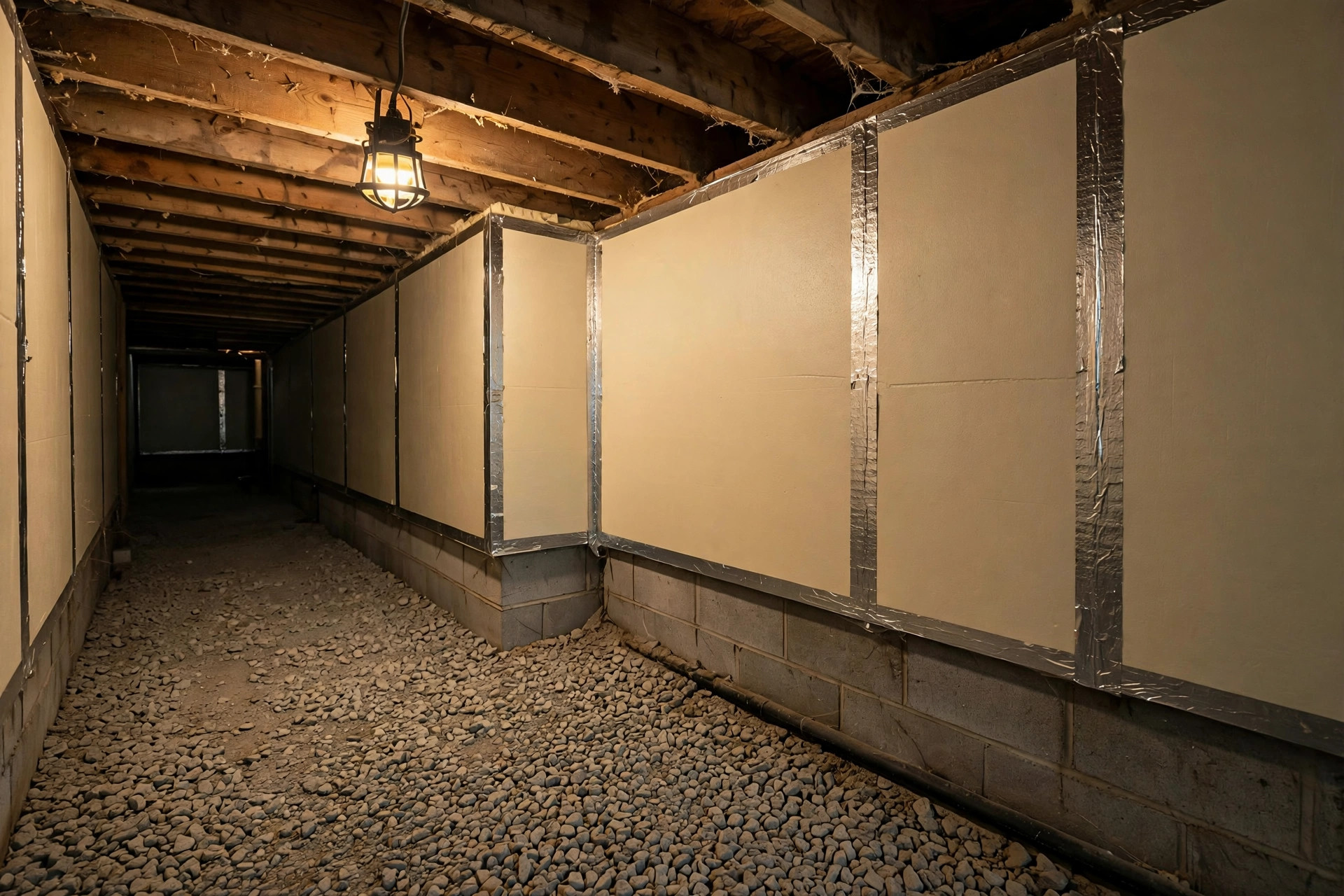
Rigid foam board is the most common pick for crawl space walls. It comes in large panels that stick or screw to the concrete or block walls. Common types include polystyrene and polyisocyanurate boards. A two-inch board of polystyrene gives about R-10. The same thickness of polyisocyanurate can reach R-13 or higher.
Foam board is cheap, light, and easy to cut. A careful homeowner can do the job in a weekend. The boards also act as a vapor barrier when the seams are taped. That double duty is what makes them the best insulation for crawl space walls for most American homes. Brands sold at The Home Depot and Lowe’s make them easy to find across the country.
The main limit is air sealing. Gaps between boards leak air. The seams must be taped or foamed shut. Boards can also be damaged by pests if the edges are left open.
Closed-Cell Spray Foam Insulation
Closed-cell spray foam is sprayed as a liquid that grows and hardens on the wall. It gives about R-6.5 per inch, the highest of common options. Two inches on a crawl space wall can reach R-13. It seals every crack and sticks to rough block better than boards can.
The seal is the big advantage. Spray foam stops air leaks and blocks moisture in one pass. It adds some strength to old walls as well. It is the choice of many pros for older homes with uneven stone or block walls where boards will not sit flat.
The drawback is cost. A pro job runs much more than foam board. The chemicals also need care during the spray. The home must be aired out. This is not a typical do-it-yourself job. This Old House has detailed guides on how spray foam crews work and what the job involves.
Fiberglass Batts Between Rim Joists
Fiberglass batts still have one honest use in the crawl space: the rim joist area, the wood framing at the top of the foundation wall. Cut batts fit between the joists above the wall line. They are cheap and easy to place.
But fiberglass should never be the main wall insulation in a damp crawl space. It does not block air. It holds water against wood. When it gets wet, its R-value falls apart. Many mold problems in crawl spaces trace back to old fiberglass batts. If the batts are already there and damp, they should come out before new foam goes on. Family Handyman shows how to remove and replace old batts safely.
Cost and Price
Price is the first question for most homeowners. The best insulation for crawl space walls must also fit the budget.
Rigid foam board is the low-cost leader. Materials run about $1 to $3 per square foot of wall, based on board type and thickness. A 1,000-square-foot crawl space might need $1,000 to $2,500 in boards, tape, and glue for a do-it-yourself job. Hiring a contractor adds $1,500 to $3,000 in labor.
Closed-cell spray foam costs more. A pro job runs $2 to $5 per square foot at typical thickness. That same crawl space might cost $3,500 to $6,000 installed. The price climbs in tight spaces where the crew must work bent over.
These are national ranges for 2026. A space that needs mold cleanup or a new vapor barrier will cost more before insulation starts. Getting two or three written quotes is the wise move. Homeowners comparing heat pump installation cost near me 2026 often use the same quote strategy, and it works just as well for insulation.
Rebates can cut the bill. Many power companies and state programs pay part of the cost of insulation work. A call to the power company is the fastest way to find local rebates.
Installation Basics
The work follows a clear order. Skip a step and the insulation will not last.
1. Dry out the space. Standing water must go first. Fix the source: poor grading, a broken downspout, or a high water table. Insulation over a wet crawl space is money lost.
2. Clean the walls. Brush off dirt and loose paint. Wet walls must be dry before foam goes up. Mold must be cleaned before anything is covered.
3. Lay the vapor barrier. Heavy plastic sheeting, at least 6 mil thick, covers the ground and runs up the walls a few inches. Tape the seams.
4. Install the insulation. Foam boards stick to the wall with foam-safe glue, held by concrete screws. Tape the seams and fill gaps with canned foam. For spray foam, the crew preps the space and sprays to the target thickness in passes.
5. Seal the rim joists. The wood rim joist area at the top of the wall is a major leak. Cut foam board to fit between the joists and foam the edges.
6. Close the vents. Old vents get sealed from the inside. Some codes ask for a small vent or a dehumidifier instead. The local code office can confirm.
A skilled homeowner can handle foam board in a tall, dry crawl space. Tight, wet, or moldy spaces belong to the pros.
Care and Upkeep
Good insulation is not a one-time job. A small bit of care keeps it working for decades.
Walk the crawl space once a year, or hire an inspector for the job. Look for fallen boards, chewed edges, and water stains. Pests love to nest behind foam, so look for droppings and holes. Check that the vapor barrier is still flat and taped. Water pooled on the plastic means a new leak started.
Keep the gutters and grading in shape outside the house. Water must run away from the foundation. A clogged downspout can flood a crawl space in one storm and ruin the work.
If a dehumidifier is installed, empty or drain it and clean the filter. Keep the humidity under 60 percent. A small hygrometer hung in the space makes this easy to watch.
Repairs are simple. A loose board gets re-glued. A torn vapor barrier gets taped. Small holes in foam get filled with canned spray foam. Catching these early keeps the system tight.
Safety
Crawl space work has real hazards. Take them seriously.
Mold and rodent droppings are the top health risks. Wear a proper respirator, not a paper dust mask. Wear gloves, long sleeves, and eye protection. Old spaces may hold fiberglass dust that irritates skin and lungs.
Watch for wiring and pipes. Old wires may be bare. A sharp board edge can cut a pipe. Turn off circuits that run through the space if there is any doubt.
Spray foam has its own rules. The liquid chemicals irritate the eyes, skin, and lungs during the spray and cure. Only trained crews with proper gear should apply it. The family and pets should stay out until the crew says the space is safe.
Check for radon. Radon is a natural gas that rises from the soil and causes lung cancer. Sealing a crawl space changes how air moves, so test the home for radon after the work. Test kits are cheap and easy. The U.S. Environmental Protection Agency sets the action level at 4 picocuries per liter.
Frequently Asked Questions
What is the best insulation for crawl space walls in cold climates? Closed-cell spray foam or thick rigid foam board, at least two inches, is the best pick for cold states. The target is R-13 to R-19 on the walls. Seal the rim joists and the vents as part of the job. In places like Minnesota or Maine, three inches of foam board is common.
Should I insulate crawl space walls or the floor above? Insulating the walls is the better choice in most cases. It brings the crawl space inside the warm envelope of the house. The floor stays warmer, and pipes and ducts in the space stay warmer too. Insulating only the floor joists leaves the space cold and damp, which can harm pipes in winter.
Can I install crawl space wall insulation myself? Rigid foam board is a fair do-it-yourself job in a tall, dry crawl space. The boards are light and cut with a utility knife. Spray foam is not a do-it-yourself job. It needs a pro crew with the right gear. If the space is wet, moldy, or shorter than three feet, call a pro either way.
Does insulating crawl space walls stop moisture? Insulation alone does not stop moisture. It must pair with a vapor barrier on the ground, sealed vents, and good drainage outside. Together they form a sealed crawl space system. Insulation is one part of that system, not the whole fix.
How long does crawl space insulation last? Rigid foam board and closed-cell spray foam can last 30 to 80 years if kept dry and undamaged. The weak points are pests, water leaks, and fallen boards. Yearly checks catch small problems before they grow.
Will insulating the crawl space lower my heating bill? In most homes, yes. A sealed and insulated crawl space cuts the heat lost through the floor and stops cold air from leaking up. Homeowners often see heating bills drop by 10 to 20 percent. Homes looking at geothermal heat pump cost per ton usa as a bigger upgrade often do the insulation first, since it shrinks the heating load the new system must carry.
A Short Final Word
The best insulation for crawl space walls is rigid foam board or closed-cell spray foam, chosen to match the climate and the state of the space. The job is simple in shape: dry the space, lay a vapor barrier, cover the walls, seal the rim joists, and close the vents. The payoff is warm floors, lower bills, and a drier house for decades. Homeowners who take on bigger comfort projects later, such as central ac replacement cost near me 2026, will find that a tight crawl space makes every other system work less and last longer.
References
Consumer Reports. (n.d.). Product reviews and ratings. https://www.consumerreports.org ENERGY STAR. (n.d.). Energy efficient products. https://www.energystar.gov Family Handyman. (n.d.). DIY home repair and maintenance. https://www.familyhandyman.com Lowe’s. (n.d.). Home improvement products. https://www.lowes.com The Home Depot. (n.d.). Home improvement products. https://www.homedepot.com This Old House. (n.d.). Home renovation guidance. https://www.thisoldhouse.com U.S. Consumer Product Safety Commission. (n.d.). Product safety information. https://www.cpsc.gov U.S. Department of Energy. (n.d.). Energy efficiency and renewable energy. https://www.energy.gov U.S. Environmental Protection Agency. (n.d.). Protecting human health and the environment. https://www.epa.gov
Was this guide helpful?

About Lisa Anderson
The My Garden US editorial team writes practical, in-depth home and garden guides for American homeowners — tested advice, no fluff.
You May Also Like

Energy Star HVAC Rebate Finder by State: A 2026 Guide
June 13, 2026 0 views
What Does a Gas Garage Heater Installation Cost in the USA?
September 23, 2026 0 views
Best Evaporative Cooler for Garage USA: A Practical Buying Guide
June 30, 2026 0 views