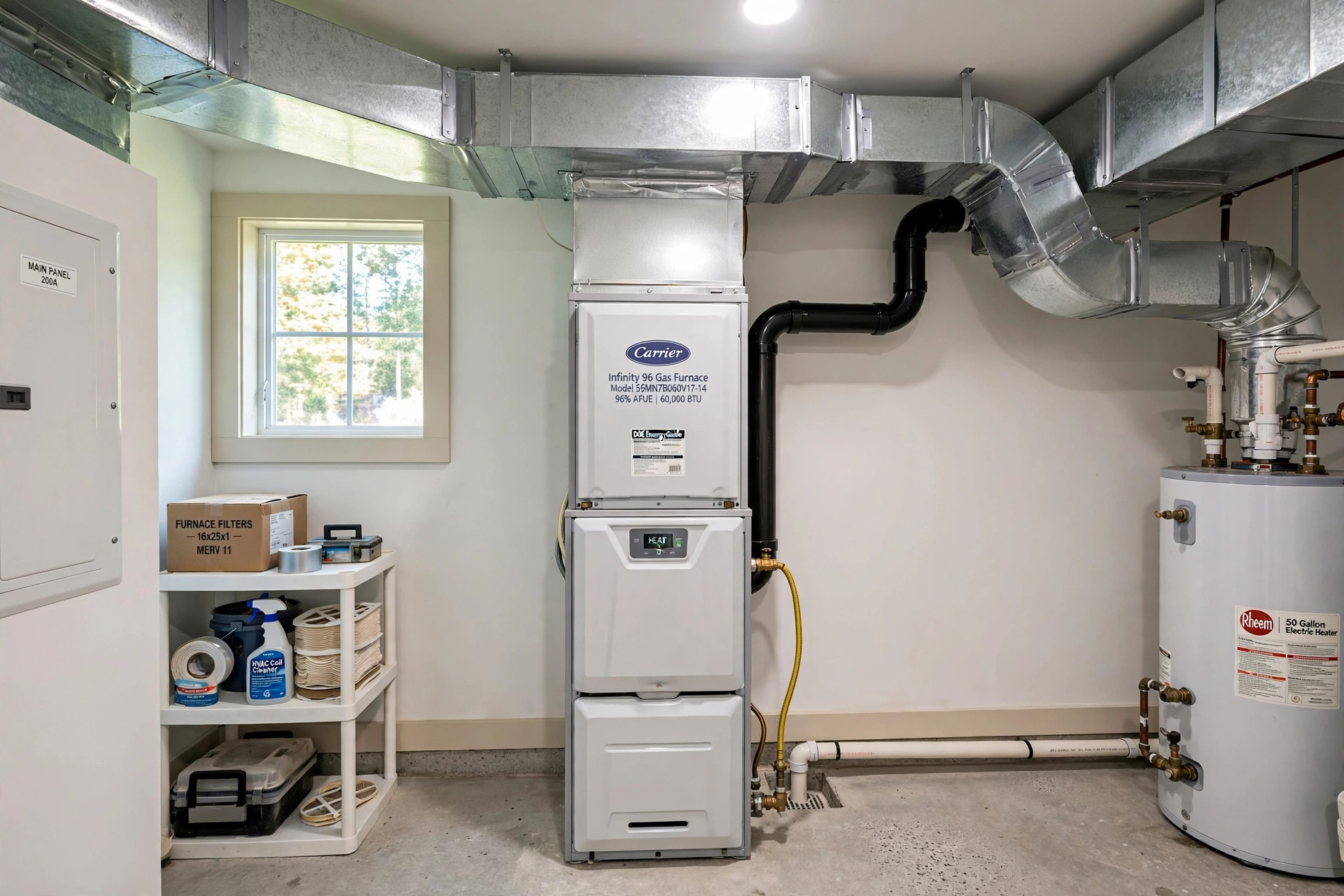

Winter in the northern states is long. It is cold. It is costly. A furnace is the machine that stands between a family and the cold. Most furnaces fall into two groups: single stage and two stage. Shoppers often feel lost between them. This two stage furnace vs single stage comparison will lay out the facts in plain words. It covers how each type works, what each costs, and how each holds up over time.
A single stage furnace has one level of heat. It is either on or off. It runs at full power. Then it stops. A two stage furnace has two levels of heat. It can run at a low level on most days. It can shift to a high level on the coldest days. That difference shapes comfort, noise, and the gas bill.
Why the Choice Matters
Heat is the largest energy cost in most homes. The government sites that track home energy use say heating eats the biggest share of the winter bill. A poor choice locks a family into ten to twenty years of higher cost. A good choice pays back year after year.
Comfort matters too. A single stage furnace blasts heat and then rests. The rooms near the vents get hot. The rooms far away stay cool. Then the cycle starts again. Some call this the hot-cold dance. A two stage furnace runs longer at low heat. It keeps the air moving. The rooms stay closer in temperature. Many owners say the house simply feels more even.
Noise is a third factor. A single stage unit fires up loud. It roars at full blast. Then it goes quiet. The change is easy to hear, and it can wake light sleepers. A two stage unit spends most of its time at the low stage. It is quiet. It hums along. On bitter nights it steps up, but those nights are fewer.
How a Single Stage Furnace Works: Two Stage Furnace vs Single Stage Comparison
A single stage furnace is the oldest and simplest design. When the thermostat calls for heat, the gas valve opens fully. The burners fire at one hundred percent. The blower moves air at one fixed speed. When the set point is reached, the whole unit shuts down.
There is no middle ground. A mild day of 45 degrees gets the same blast as a hard day of 10 degrees. The thermostat ends up cycling the unit on and off many times each day. These short bursts are hard on parts. Motors and valves wear faster when they start and stop all day.
The single stage design is still the most common in American homes. Builders put them in new homes because they cost less up front. Many older homes keep them because the ductwork was built for them. There is nothing wrong with a simple machine. It heats the house. It does the job it was made to do.
How a Two Stage Furnace Works
A two stage furnace has a gas valve with two settings. It has a blower that can run at two speeds. On a mild day, the unit fires at about sixty percent of its full power. The blower runs slow and steady. The house warms up a little at a time. On a very cold day, the unit shifts to full power. The blower speeds up. The house gets the heat it needs.
The thermostat decides which stage to use. Most two stage furnaces work best with a two stage thermostat. The thermostat reads the gap between the room temperature and the set point. A small gap means low stage. A large gap means high stage. Some units use a timer instead. They run low for a set time, then step up if the call for heat is still there.
Longer run times at low speed do more than save gas. They mix the air better. They keep dust from settling. They keep the humidity more stable. Many two stage models pair well with air filters and humidifiers for this reason.
Two Stage Furnace vs Single Stage Comparison: Comfort
Comfort is where the two stage unit wins most clearly. A single stage furnace can swing the room temperature by two or three degrees above and below the set point. The swing is easy to feel. A sweater comes off. A sweater goes back on.
A two stage furnace holds the room within about one degree of the set point. The air from the vents feels warm but not hot. The floors stay less cold. The far bedrooms come closer to the living room in temperature. People who work from home often notice the difference first, since they sit in one room all day.
House size matters here. A small ranch home may feel fine with a single stage unit. A large two story home, with rooms far from the furnace, gains more from the two stage design. Multi level homes with cold basements also gain more.
Noise and Air Quality
A furnace that runs loud can wear on a family. Bedrooms over the utility room hear every start up. Single stage units make the most noise at start up. The gas ignition is sharp. The blower roar is strong.
Two stage units start soft. They stay soft most of the winter. The low blower speed is a background hum. Many owners place the thermostat in a hall and never hear the unit at all.
Air quality follows the same path. A blower that runs longer at low speed moves more air through the filter each day. It catches more dust. It spreads humidity more evenly. Homes with allergy sufferers may notice cleaner air. This is one reason buyers in cold states now ask for two stage units when they compare heat pump vs furnace cost options and other heating upgrades.
Cost and Price
The price tag is where the single stage unit fights back. A single stage furnace costs less to buy and less to install. For a typical American home, a single stage gas furnace with basic installation often runs between two thousand and three thousand five hundred dollars. A two stage unit of the same brand often runs between three thousand and five thousand dollars. The gap is roughly one thousand to one thousand five hundred dollars.
Running cost is a different story. A two stage furnace uses less gas over a season because it rarely needs full fire. The gas savings depend on the climate. In a mild state like Georgia, the savings are small. In a cold state like Minnesota, the savings are real. Many buyers figure the payback at five to eight years in cold climates.
Electricity cost also counts. A two stage blower at low speed uses far less power than a single stage blower at full speed. The blower runs longer, but the low speed is cheap. Over a season, the blower savings add up.
Homeowners who want the full picture often run a dual fuel heat pump system review beside the furnace numbers, since dual fuel pairs a heat pump with a gas furnace and changes the math.
Fuel Use and Efficiency Ratings
Furnaces carry an AFUE rating. AFUE stands for Annual Fuel Utilization Efficiency. It tells how much of the fuel turns into heat. A single stage furnace today usually carries 80 to 92 percent AFUE. A two stage furnace usually carries 92 to 98 percent AFUE. The highest ratings belong to two stage and modulating units with sealed combustion.
The rating is measured in a lab. Real world results vary. Duct leaks, poor insulation, and wrong sizing eat the gains. A two stage furnace with leaky ducts will still waste heat. Fixing the ducts and adding insulation often saves more than the furnace upgrade alone. Buyers should look at the whole house, not only the box in the basement.
The federal Energy Star program lists high efficiency furnaces and explains the AFUE label. The Department of Energy publishes guides on home heating that help owners read these labels with care.
Installation and Sizing
Sizing is the step most often done wrong. A furnace must match the heat loss of the house. Too large, and it short cycles, which wastes fuel and wears parts. Too small, and it runs non stop on cold days without reaching the set point.
A load calculation, often called a Manual J, is the right way to size a furnace. A good contractor measures the house, checks the windows and insulation, and runs the numbers. A contractor who sizes by the old rule of thumb, or by the size of the old unit, is guessing.
Two stage units are more forgiving of slight oversizing. The low stage covers mild days without short cycling. But no unit forgives a wild miss. Owners should ask the contractor for the written load calculation before signing.
Ductwork matters as well. A two stage blower needs ducts that can handle low speed air flow. Old ducts may be too small or too leaky. A contractor should test the ducts and seal the leaks. This step costs money, but it protects the whole investment.
Repair and Upkeep
Both types need the same basic care. Change the filter every one to three months. Keep the vents clear. Have a technician service the unit once a year, before the heating season. The yearly visit should check the burners, the heat exchanger, the flame sensor, and the safety controls.
Single stage parts are simple and cheap. The gas valve is simple. The control board is simple. Repairs are fast and parts are easy to find. Many technicians carry the common parts on the truck.
Two stage parts cost more. The two stage gas valve is more complex. The control board has more to do. The variable or multi speed blower motor costs more to replace. When something fails after the warranty, the repair bill runs higher. This is the main trade off of the two stage design: higher comfort and lower fuel use, with costlier parts when they break.
Warranties help. Most brands now offer ten year parts warranties with registration. Some offer lifetime heat exchanger warranties. Owners should register the unit within the required window, usually sixty to ninety days. An unregistered unit often gets only five years of parts cover.
Readers who like hands on maintenance guides can find plain how to articles at Family Handyman, which covers furnace filter changes and yearly checklists in simple terms.
Safety
Gas furnaces burn fuel in the home. Safety is not optional. Both single stage and two stage units need the same safeguards.
The heat exchanger is the key part. It keeps the exhaust gases away from the breathing air. A cracked heat exchanger can let carbon monoxide into the house. Carbon monoxide has no smell and no color. Every home with a gas furnace should have working carbon monoxide detectors on each floor.
The yearly service visit should include a check of the heat exchanger. Older units, past fifteen years, should be watched closely. Rust, strange smells, and soot marks near the unit are warning signs. A technician should see them at once.
Venting matters too. High efficiency furnaces vent through plastic pipe out the side of the house. The pipes must stay clear of snow and nests. Standard efficiency furnaces vent through a metal chimney. The chimney must be sound. A blocked vent is dangerous in either case.
For a deeper look at home safety practice, This Old House carries long running guides on heating system care and carbon monoxide safety.
Which One Should You Buy
The answer depends on the house, the climate, and the budget. A short list helps.
Choose a single stage furnace if the budget is tight, the house is small, the winters are mild, or the plan is to sell the home within a few years. The simple unit heats the house and costs less up front. In a warm climate the fuel savings of a two stage unit may never pay back the higher price.
Choose a two stage furnace if the winters are cold, the house is large or has cold spots, comfort matters more than the lowest price, or the plan is to stay in the home for ten years or more. The comfort gain is real. The fuel savings grow each year. The quieter run is a daily pleasure.
Buyers who also weigh cooling may want to read a two stage vs single stage AC comparison, since air conditioners use the same two stage idea and the same trade offs.
FAQ
How long does a furnace last? Most furnaces last fifteen to twenty years. Two stage units last about as long as single stage units when they get yearly service. Lack of service kills both types early.
Does a two stage furnace need a special thermostat? It works best with a two stage thermostat. Some units can run on a single stage thermostat with a built in timer. The timer method works, but the true two stage thermostat gives better control.
Can I replace my single stage furnace with a two stage unit? Yes, in most homes. The gas line and the ducts usually stay. The installer may need to run new thermostat wire for the two stage control. A contractor can say in one visit whether the swap is simple.
Will a two stage furnace save me money? It saves gas in cold climates, often enough to pay back the higher price in five to eight years. In mild climates the savings are smaller. The comfort gain is there in either case.
Is a two stage furnace worth it for a small house? Often the gain is smaller. A small house heats fast with either type. The two stage unit still runs quieter and holds temperature more evenly, but the dollar payback is weaker.
What is the difference between two stage and modulating? A modulating furnace has many small steps, not just two. It adjusts the flame in fine grades. It costs more than a two stage unit. Think of single stage as a light switch, two stage as a three way bulb, and modulating as a dimmer.
A Short Final Word
A furnace is a twenty year friend. It runs while the family sleeps. It runs while the children play on the floor. The two stage furnace vs single stage comparison comes down to a simple trade. The single stage unit costs less and asks little. The two stage unit costs more, comforts more, and sips fuel. For cold homes that are kept for years, the two stage unit is the wiser buy. For mild homes and tight budgets, the single stage unit still does honest work. Either way, a proper load calculation, sound ducts, clean filters, and yearly service will do more for the family than any badge on the cabinet.
For more background, see Lennox, Goodman, and Rheem. See Carrier for more detail.
References
Carrier. (n.d.). Heating and cooling systems. https://www.carrier.com ENERGY STAR. (n.d.). Energy efficient products. https://www.energystar.gov Family Handyman. (n.d.). DIY home repair and maintenance. https://www.familyhandyman.com Goodman. (n.d.). Heating and cooling equipment. https://www.goodmanmfg.com Lennox. (n.d.). Heating and cooling systems. https://www.lennox.com Rheem. (n.d.). Heating, cooling, and water heating. https://www.rheem.com This Old House. (n.d.). Home renovation guidance. https://www.thisoldhouse.com U.S. Department of Energy. (n.d.). Energy efficiency and renewable energy. https://www.energy.gov
Was this guide helpful?

About Michael Thompson
The My Garden US editorial team writes practical, in-depth home and garden guides for American homeowners — tested advice, no fluff.
You May Also Like
Best Whole House Humidifier Reviews 2026 USA: A Practical Guide for Dry Homes
April 11, 2026 0 views
Smokeless Fire Pit Reviews 2026 USA: What the Reviews Say and How to Choose
April 28, 2026 0 views
Daikin vs Mitsubishi Mini Split Reviews USA: Which Ductless System Should You Buy
August 22, 2026 0 views