A neat dresser saves time every morning. This dresser drawer dividers reviews and buying guide explains the main types of dividers, the materials they come in, the prices you can expect, and the simple steps that keep them in good shape. Whether you are outfitting one bedroom dresser or a full set of drawers through the house, the facts below will help you buy with confidence.
Why Drawer Dividers Matter
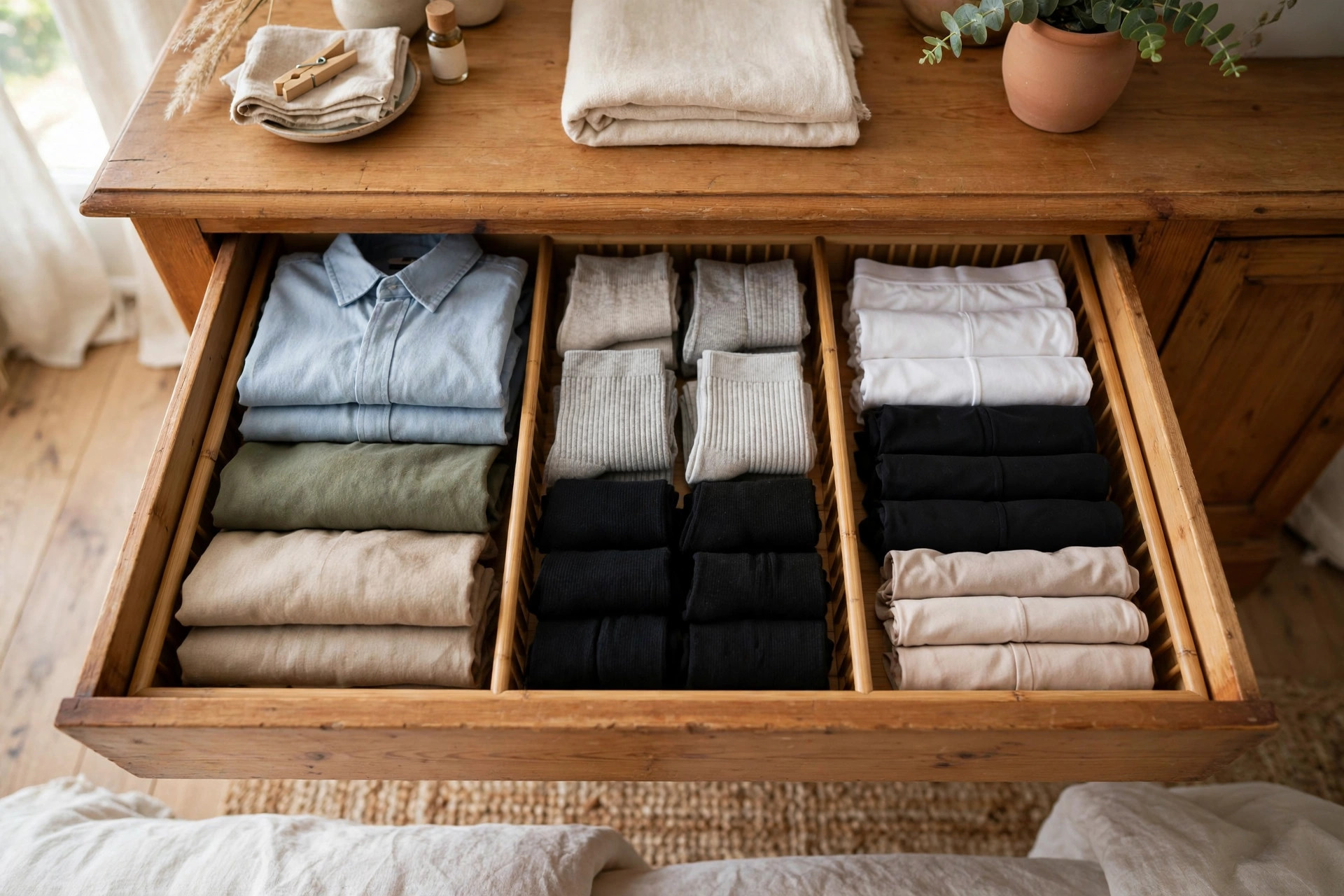
Drawers collect clutter by nature. Socks slide into a corner. Belts tangle with ties. Folded shirts that once stood in rows fall into a heap after a week of hurried mornings. Dividers stop this drift. They break one wide drawer into a set of narrow slots, and each slot holds one kind of item. The result is a drawer where everything stays where it belongs.
Dividers also make the drawer easier to clean. With items in their own slots, dust and lint gather in one place instead of spreading through a jumbled pile. A quick wipe takes a minute when the drawer is ordered. An undivided drawer takes far longer because everything must come out first.
There is a quiet mental benefit too. A drawer that opens to show neat rows sets a calm tone for the day. Parents report that children keep their clothes neater when drawers are divided, because each child can see exactly where each item goes. Older adults find dividers useful as well, since narrow slots make it easier to reach small items like watches and reading glasses without digging.
What to Look For Before You Buy: Dresser Drawer Dividers Reviews and Buying Guide
Measure first. Pull the drawer out and note its inside width, depth, and height. Many buyers skip this step and learn later that their dividers are too tall and keep the drawer from closing, or too short and fall over when the drawer slides. A tape measure and one minute of care prevent both mistakes. Fixed dividers come in set sizes, so the measurements must match. Adjustable and spring-loaded dividers forgive small errors because they expand to fill the drawer.
Look next at the material. Bamboo and wood dividers look warm and feel solid, and they suit wood dressers best. Plastic dividers weigh less and cost less, and they wipe clean with a damp cloth. Metal mesh dividers breathe well and resist rust when they have a coated finish. Fabric dividers are soft and kind to delicate items, but they hold their shape less well over time.
Check how the divider stays in place. Some models wedge between the drawer walls with spring tension. Others use small feet or rubber pads to grip the drawer floor. Slot-together grids lock into a frame without any hardware. Each method works, but the tension-fit style needs a fairly exact drawer width to hold firm, while the grid style needs a flat drawer floor to sit level.
Think about what you will store. Deep dividers work best for jeans, sweaters and rolled t-shirts. Shallow dividers suit underwear, socks and ties. Long, narrow slots hold belts and scarves. If one drawer holds many kinds of items, a set with mixed slot sizes gives the best use of the space. Guides at The Container Store show how to map a drawer layout on paper before you buy, which is a sound habit for any storage project.
Types of Dresser Drawer Dividers
Bamboo and Wood Dividers
Bamboo is the most reviewed material in most dresser drawer dividers reviews and buying guide roundups, and the reasons are plain. Bamboo is strong, light and naturally resistant to moisture. It takes a smooth finish that looks good in both modern and traditional dressers. Solid wood models in pine or paulownia cost a little more and carry a classic look that suits older furniture. Many bamboo sets come with notched slots so the pieces cross into a grid that you size to fit.
Plastic Dividers
Plastic dividers are the budget pick. They come in clear or white, and the clear ones let you see items at a glance. They are easy to cut to length with a small saw if the size is not quite right. Their weak point is heat. Do not set them near radiators or heat vents, because warped plastic no longer fits the drawer.
Spring-Loaded Adjustable Dividers
These are the easiest to install. You squeeze the divider, set it in the drawer and let it expand. The spring holds it tight against the drawer walls. They suit renters well because they leave no marks and move from drawer to drawer with ease. Reviewers on Wayfair often praise them for kitchen and desk drawers as much as for dressers.
Honeycomb and Grid Inserts
Honeycomb inserts are molded cells shaped like a bee’s comb. Each cell holds one small item: a pair of socks, a tie, a rolled handkerchief. Grid inserts work the same way with square cells. They are ideal for dressers where one drawer holds all the small items that are hardest to keep neat. IKEA sells simple fabric versions that fold flat for storage.
How the Main Types Compare
For a quick sense of how each style fits a dresser drawer, here is a plain summary.
| Type | Best For | Install | Price Range | |—|—|—|—| | Bamboo or wood grid | Shirts, jeans, folded clothes | Slot together | $15 to $35 | | Plastic strips | Socks, underwear, ties | Press fit | $8 to $18 | | Spring-loaded | Renters, any drawer | Expand to fit | $12 to $25 | | Honeycomb insert | Small items, kids’ drawers | Drop in | $10 to $22 |
Prices are rough averages for a set that outfits one standard dresser drawer. Most buyers need two or three sets for a full dresser.
Cost and Price
Dresser drawer dividers are one of the least costly ways to improve a bedroom. A basic plastic set costs less than ten dollars. A bamboo set with several sizes of slots costs between fifteen and thirty-five dollars. Large multi-drawer kits for a whole dresser run from forty to seventy-five dollars.
Price follows material and count. Bamboo costs more than plastic. Sets with more pieces cost more than sets with fewer. Brand name adds a few dollars but usually brings better fit and finish. Sales at big home stores can cut the price by a third, so watch the seasonal ads at Home Depot and Lowe’s if you are in no hurry.
Do not pay extra for features you will not use. A set with twenty tiny cells is wasted money if your drawer holds only folded sweaters. A plain two-slot divider is enough for a drawer that holds just jeans. Match the purchase to the drawer, and you will spend less and get more use from the set.
Care and Upkeep
Dividers need little care. Dust them when you dust the dresser. Wipe bamboo and wood with a dry or slightly damp cloth and let them dry before they go back in the drawer. Wipe plastic with a damp cloth and mild soap. Fabric inserts can be shaken out or washed by hand with gentle soap, then laid flat to dry.
Once or twice a year, pull the dividers out and check the drawer itself. Look for dust in the corners and check that the drawer slides move freely. This is a good time to re-sort the contents. Clothes that no longer fit or have worn out can go to the donation bag, which keeps the drawer from overfilling and straining the dividers.
If a bamboo grid loosens over time, a small strip of felt or cork glued to the ends will tighten the fit. If a spring-loaded divider loses tension, it is time to replace it. Springs do not repair well, and a new pair costs only a few dollars.
Safety Notes
Drawer dividers are simple items, but a few safety points are worth noting. Choose finishes that are non-toxic, since dividers sit in constant contact with clothing. This matters most for children’s dressers and for drawers that hold baby clothes. The U.S. Consumer Product Safety Commission is not a source for divider reviews, but its guidance on nursery furniture safety is worth a look if you are setting up a child’s room.
Keep small divider parts away from toddlers. Tiny feet, pegs and corner clips can be choking hazards. Choose one-piece or slot-together designs for nursery dressers rather than sets with small loose parts.
Anchor tall dressers to the wall. This advice is not about dividers, but a divided drawer is easier to open and close, and an open drawer on an unanchored dresser can tip it forward. Wall anchors cost a few dollars and take ten minutes to fit.
Frequently Asked Questions
Will dividers fit any dresser drawer?
They fit most drawers, but you must measure first. Standard bedroom dresser drawers in American homes are often between 28 and 36 inches wide, 14 and 18 inches deep, and 6 to 10 inches tall. Fixed-size dividers must match the inside width. Adjustable dividers fit a range of widths, which is why many first-time buyers start with them.
Are bamboo dividers better than plastic?
Neither is better in every case. Bamboo lasts longer, looks nicer and holds heavier folded clothes without bending. Plastic costs less, weighs less and cleans faster. For a master bedroom dresser, bamboo is the common pick. For a child’s dresser or a drawer you clean often, plastic is the practical pick.
How many dividers do I need per drawer?
One drawer usually needs between three and six dividers, depending on the drawer size and what you store. A drawer of folded shirts needs three or four to make four or five slots. A drawer of mixed small items may need a honeycomb insert with twenty cells plus two straight dividers to frame it.
Do dividers work in deep drawers?
Yes, with the right height. Buy dividers that are at least two thirds as tall as the drawer interior. Short dividers in a deep drawer let tall stacks of clothes fall over them, which defeats the purpose. Some makers sell tall dividers meant for deep dresser drawers, so read the product height before you order.
Can I make my own drawer dividers?
Yes, and many people do. Thin plywood, craft board or even sturdy cardboard cut to fit makes a fine divider. The Family Handyman site has plain step-by-step plans for shop-built dividers. Homemade dividers cost almost nothing, but they take time to cut and sand, and they rarely fit as well as a made set unless your cuts are exact.
Where else can I learn about home storage?
Organization blogs are a good next stop. The Spruce keeps an updated library of drawer and closet guides. Apartment Therapy covers small-bedroom storage with real-home photos. For product ratings, Amazon and Target both carry large review counts on popular divider sets, which lets you compare buyer experience across many households.
A Final Word
A drawer divider is a small thing, but it changes how a dresser feels to use. The drawer opens clean, the morning search for matching socks ends, and the dresser holds more because folded clothes pack tighter in slots than in a pile. Start with one drawer and a simple adjustable set. See how it fits your routine. Then decide whether the rest of the dresser needs the same treatment. Most buyers who try one drawer end up buying for the whole dresser within the month.
For the rest of the bedroom, the same orderly approach pays off. If you like this dresser drawer dividers reviews and buying guide, you may also find our wicker storage baskets reviews and buying guide useful for closets and shelves, our nightstands with storage drawers reviews and buying guide for bedside storage, and our top rated freestanding wardrobe closets for USA homes for extra hanging space.
References
Amazon. (n.d.). Online shopping. https://www.amazon.com Apartment Therapy. (n.d.). Home design ideas and inspiration. https://www.apartmenttherapy.com Family Handyman. (n.d.). DIY home repair and maintenance. https://www.familyhandyman.com IKEA. (n.d.). Home furnishings. https://www.ikea.com Lowe’s. (n.d.). Home improvement products. https://www.lowes.com Target. (n.d.). Retail store. https://www.target.com The Container Store. (n.d.). Storage and organization products. https://www.containerstore.com The Home Depot. (n.d.). Home improvement products. https://www.homedepot.com The Spruce. (n.d.). Home and garden advice. https://www.thespruce.com U.S. Consumer Product Safety Commission. (n.d.). Product safety information. https://www.cpsc.gov Wayfair. (n.d.). Furniture and home goods. https://www.wayfair.com
Was this guide helpful?

About Sarah Mitchell
The My Garden US editorial team writes practical, in-depth home and garden guides for American homeowners — tested advice, no fluff.