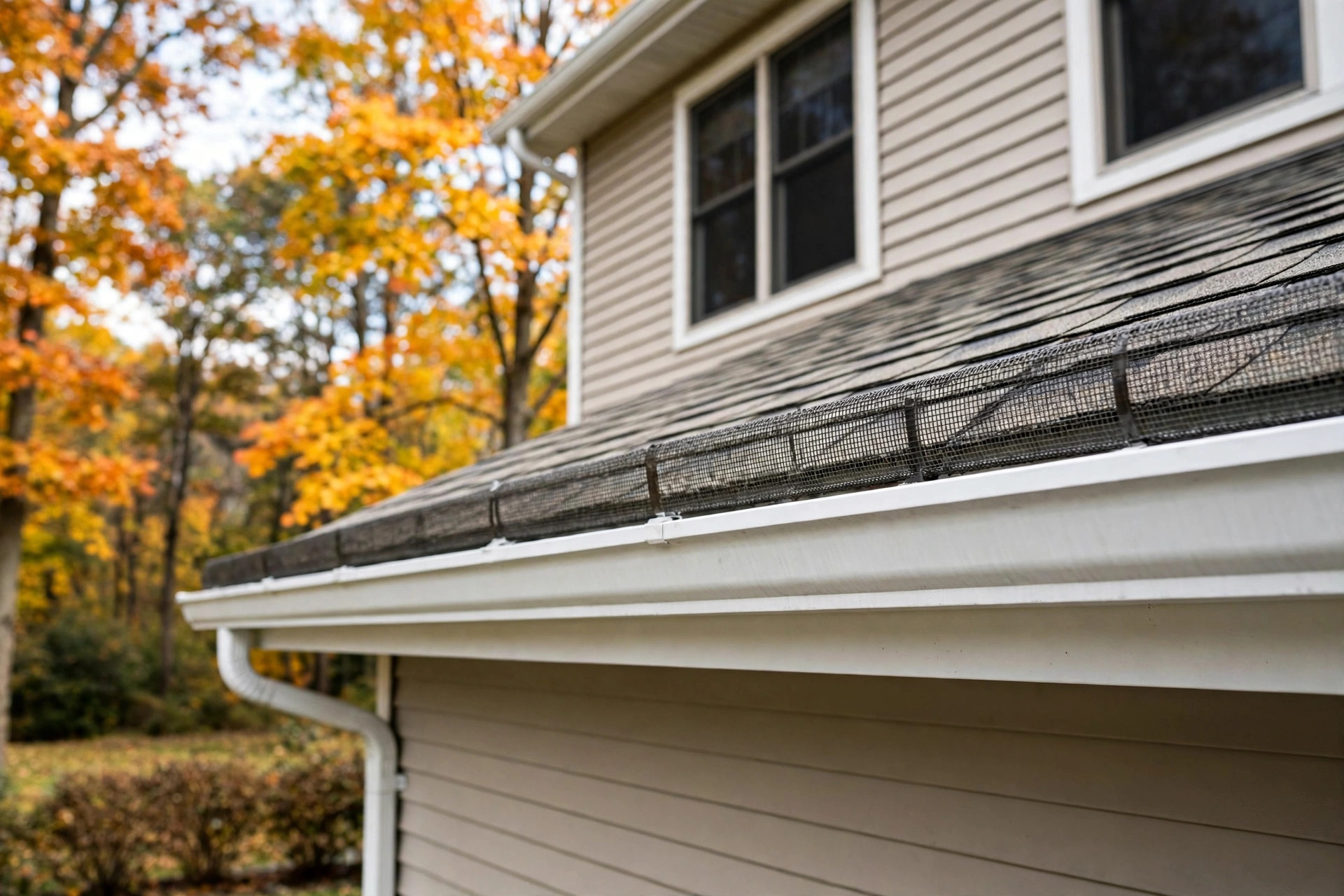

Every autumn, the same job waits at the ladder. Leaves fill the gutters, rain spills over the edge, and the homeowner climbs up with a bucket and a hose. A seamless gutter guards price comparison usa study shows one simple way to cut that chore down to size. Gutter guards keep leaves and seed pods out of the channel while letting rain flow through. When they sit on a seamless gutter, the pairing works even better, because a seamless run has no joints where debris likes to catch. The cost, however, varies widely. Some covers sell for a few dollars per foot, while professional systems run past twenty dollars per foot. This guide lays out the price ranges, the guard types, and the trade-offs, so you can judge what fits your house and your budget.
Why It Matters
Clogged gutters cause damage that starts quietly and ends loudly. Water that overflows the channel can rot the fascia board behind it. It can splash against the siding, soak into the foundation line, and freeze in winter to form ice dams. In most homes across the United States, gutters are the first line of defense against water, and guards extend their working life.
A guard does not make a gutter maintenance-free. No product on the market keeps out every bit of dust and pine needle. What a good guard does is slow the build-up so that cleaning drops from four times a year to once every year or two. For an older homeowner, a tall two-story house, or a home ringed by oak and maple trees, that change matters a great deal. It turns a risky ladder chore into a rare check-up.
Seamless gutters deserve special note here. Most American homes now carry seamless aluminum gutters, formed on site from one long coil of metal. With no seams along the run, they leak less and hold their shape longer than sectional gutters. A guard that fits a seamless run works on any standard gutter, but installers often prefer seamless runs because the straight, even channel makes the guard sit flat and true.
What to Look For When Choosing: Seamless Gutter Guards Price Comparison Usa
Shopping by price alone leads to poor choices. A cheap plastic screen may bow under wet leaves by the second season. A better approach is to weigh four points before you compare any numbers.
Mesh size and water flow
The guard must keep debris out but let heavy rain in. Mesh guards with fine openings stop pine needles and shingle grit. Screen guards with wider holes pass water faster in downpours but catch less of the small stuff. In a rainy state like Florida or Washington, fast flow matters more. In a pine forest, fine mesh wins.
Material and weight
Aluminum and stainless steel guards resist rust and last the longest. Galvanized steel is strong but can corrode where its coating wears thin. Plastic screens cost little and go up fast, yet sun and ice crack them within a few years. Foam inserts break down even sooner and can grow mold in damp climates.
Fit with your gutter
Guards come as snap-on, slide-under-shingle, or screw-on systems. Slide-under types hide beneath the first row of shingles and look neat, but some roof warranties object to anything placed under the shingle. Screw-on guards fasten to the gutter lip and stay put in high wind. Before you buy, check your roof’s age and read the warranty terms.
Warranty and support
Professional systems often carry a twenty-year or lifetime warranty against clogging. Store-bought screens carry one to five years. A warranty is only as good as the company behind it, so choose a maker with a long record. Retailers such as The Home Depot and Lowe’s stock guards from many makers, and their product pages list warranty terms beside the price.
Types of Gutter Guards
The market offers five main types. Each suits a different house and budget.
Brush guards
A bottle-brush of stiff bristles sits inside the gutter. Leaves land on the bristles while water falls between them. Cost runs low, about three to four dollars per foot, and installation is easy. The drawback is that small debris settles deep into the bristles and takes real effort to pull out.
Screen guards
Metal or plastic screens snap over the gutter opening. They keep out leaves and twigs but let pine needles and seeds pass through. Prices sit near three to six dollars per foot installed by the homeowner. Screens are the most common choice for do-it-yourself buyers, and they work well where large leaves are the main problem.
Mesh guards
Fine metal mesh filters out almost everything except water and dust. Stainless steel mesh on an aluminum frame is the top choice of many contractors. Prices range from about six to fifteen dollars per foot for professional installation. Mesh lasts twenty years or more and rarely needs attention.
Reverse curve guards
These solid covers use surface tension to guide rainwater around a curved nose and into the gutter while leaves fall off the edge. They perform well in heavy rain and shed large leaves on their own. Professionally installed systems cost roughly fifteen to twenty-five dollars per foot. They are visible from the street, so check the look before you commit.
Foam inserts
Porous foam wedges fit inside the gutter and block leaves while absorbing water. They cost about two to four dollars per foot and take minutes to install. However, foam holds moisture against the metal, breaks apart over time, and can become a bed for weeds and mold. Most professionals no longer recommend it.
Cost and Price Comparison
Here is where the seamless gutter guards price comparison usa buyer needs hard numbers. Prices below are typical United States ranges per linear foot, installed, as of 2026. Regional labor rates move them up or down.
– Foam inserts: $2 to $4 per foot installed. Cheapest up front, shortest life. – Plastic screen guards: $3 to $5 per foot installed by the homeowner. – Brush guards: $3 to $6 per foot installed. – Metal screen guards: $4 to $8 per foot installed. – Aluminum mesh guards: $6 to $12 per foot with professional installation. – Stainless steel micro-mesh: $9 to $18 per foot professionally installed. – Reverse curve systems: $15 to $25 per foot, professional installation only.
For a typical American home with about 200 linear feet of gutter, the total cost runs from roughly $600 for do-it-yourself foam to $5,000 for a top-grade professionally installed micro-mesh system. If you also need new seamless gutters, add about $6 to $12 per foot for seamless aluminum installation, on top of the guard price. A soffit and fascia repair guide can help you judge whether the wood behind your gutters needs work first, since guards on rotted fascia are money wasted.
Homeowners should also price the cleaning they avoid. A professional gutter cleaning visit costs $150 to $300. If guards stretch cleanings from twice a year to once every two years, the savings add up. A $2,500 guard job pays for itself in cleaning savings within five to eight years, not counting the damage it may prevent. Shoppers comparing exterior project costs often find that gutter protection ranks among the cheapest forms of water-damage insurance.
Care and Upkeep
Guards reduce maintenance; they do not end it. Twice a year, walk the roofline after a storm and look for trouble. Leaves may pile on top of a mesh guard instead of inside the gutter. Brush them off with a broom or a blower from the ground. Check that downspouts still drain freely. Run a hose at the far end and watch the outlet. If water backs up, a small ball of grit may have slipped through the mesh and lodged in the elbow.
In pine country, check more often. Needles slip through almost every guard except fine micro-mesh. In ice country, watch for ice forming on top of the guard. A solid cover can actually worsen ice dams if the roof edge is cold, so make sure the attic has proper insulation and ventilation before the first freeze.
Every few years, lift a section of an easily removed guard and inspect the channel. Look for rust spots, loose hangers, and nails pulling free of the fascia. A coat of paint on exposed wood keeps rot at bay. Good habits here keep the whole system honest, and they cost nothing but an hour on a dry Saturday.
Safety
Gutter work sends thousands of Americans to the emergency room each year. Falls from ladders cause broken bones and head injuries. If you install guards yourself, follow plain rules. Set the ladder on firm, level ground at a safe angle. Keep three points of contact at all times. Never reach more than an arm’s length to either side. Work on a dry, calm day.
For two-story homes, think twice about doing the work yourself. A professional installer carries insurance, owns the right ladder, and finishes the job in hours. The added cost of professional installation often buys safety as much as skill. The United States Consumer Product Safety Commission publishes ladder safety rules that every homeowner should read before climbing. If your roof is steep or your gutters sit high, professional installation is the sound choice.
Frequently Asked Questions
Do gutter guards really work on seamless gutters?
Yes. Guards fit any standard K-style gutter, and seamless gutters are the straightest and truest kind. The even channel lets screens and mesh sit flat with fewer gaps. Installers prefer seamless runs for exactly this reason.
How long do gutter guards last?
Plastic screens last three to five years. Aluminum screens last ten to fifteen. Stainless steel mesh and reverse curve systems last twenty years or more, often as long as the gutters themselves. Foam inserts break down within two to five years.
Will gutter guards work in heavy rain?
Quality mesh and reverse curve guards handle heavy downpours. Cheap wide-hole screens may let water shoot over the edge in a hard storm. If your region sees intense rain, choose a guard rated for high flow and make sure the gutters are pitched correctly toward the downspouts.
Can I install gutter guards myself?
Yes for snap-on screens, brush guards, and foam inserts. These need only a ladder and basic tools. Screw-on mesh and reverse curve systems suit a confident do-it-yourselfer but often go up straighter in professional hands. If your roof is tall or steep, hire help.
Do gutter guards void my roof warranty?
Some do. Slide-under-shingle guards can void a shingle warranty if the maker forbids lifting the bottom row. Always read the roofing warranty before installing anything that touches the shingles. Screw-on guards that fasten only to the gutter carry no such risk.
What is the cheapest gutter guard that still works?
Metal screen guards from a home center offer the best balance at the low end, roughly three to six dollars per foot. They block leaves and twigs, install in an afternoon, and last a decade. For pine needles, step up to fine mesh.
A Final Word
A seamless gutter guards price comparison usa search returns a flood of numbers, but the decision is simpler than it looks. Match the guard to your trees, your rain, and your roof. Weigh the install cost against the cleaning cost you leave behind. Choose rust-proof metal if you want the job done once. Whether you buy screens at a home center or hire a crew for micro-mesh, the right guard turns the gutters from a twice-a-year chore into a system that quietly does its work while you stay off the ladder. Homeowners planning wider exterior updates can also browse siding and exterior guides, manufacturer resources, and general home advice at This Old House and The Spruce. For a sense of what professional gutter work runs, see reviews of top rated gutter installation services and energy efficient gutter installation services, and do not forget the wood behind the gutter: weather resistant soffit and fascia repair for homeowners.
References
Bob Vila. (n.d.). Home improvement advice. https://www.bobvila.com CertainTeed. (n.d.). Building materials and exterior products. https://www.certainteed.com Family Handyman. (n.d.). DIY home repair and maintenance. https://www.familyhandyman.com James Hardie. (n.d.). Fiber cement siding and exterior products. https://www.jameshardie.com Lowe’s. (n.d.). Home improvement products. https://www.lowes.com The Home Depot. (n.d.). Home improvement products. https://www.homedepot.com The Spruce. (n.d.). Home and garden advice. https://www.thespruce.com This Old House. (n.d.). Home renovation guidance. https://www.thisoldhouse.com U.S. Consumer Product Safety Commission. (n.d.). Product safety information. https://www.cpsc.gov
Was this guide helpful?

About Michael Thompson
The My Garden US editorial team writes practical, in-depth home and garden guides for American homeowners — tested advice, no fluff.
You May Also Like

Top Rated Vinyl Replacement Windows for USA Homes: A Plain Guide
January 16, 2026 0 views
Where to Buy Stone Veneer Panels in California: A Practical Guide
June 1, 2026 0 views
Premium Asphalt Shingle Roofing for Sale: What to Know Before You Buy
August 12, 2026 0 views