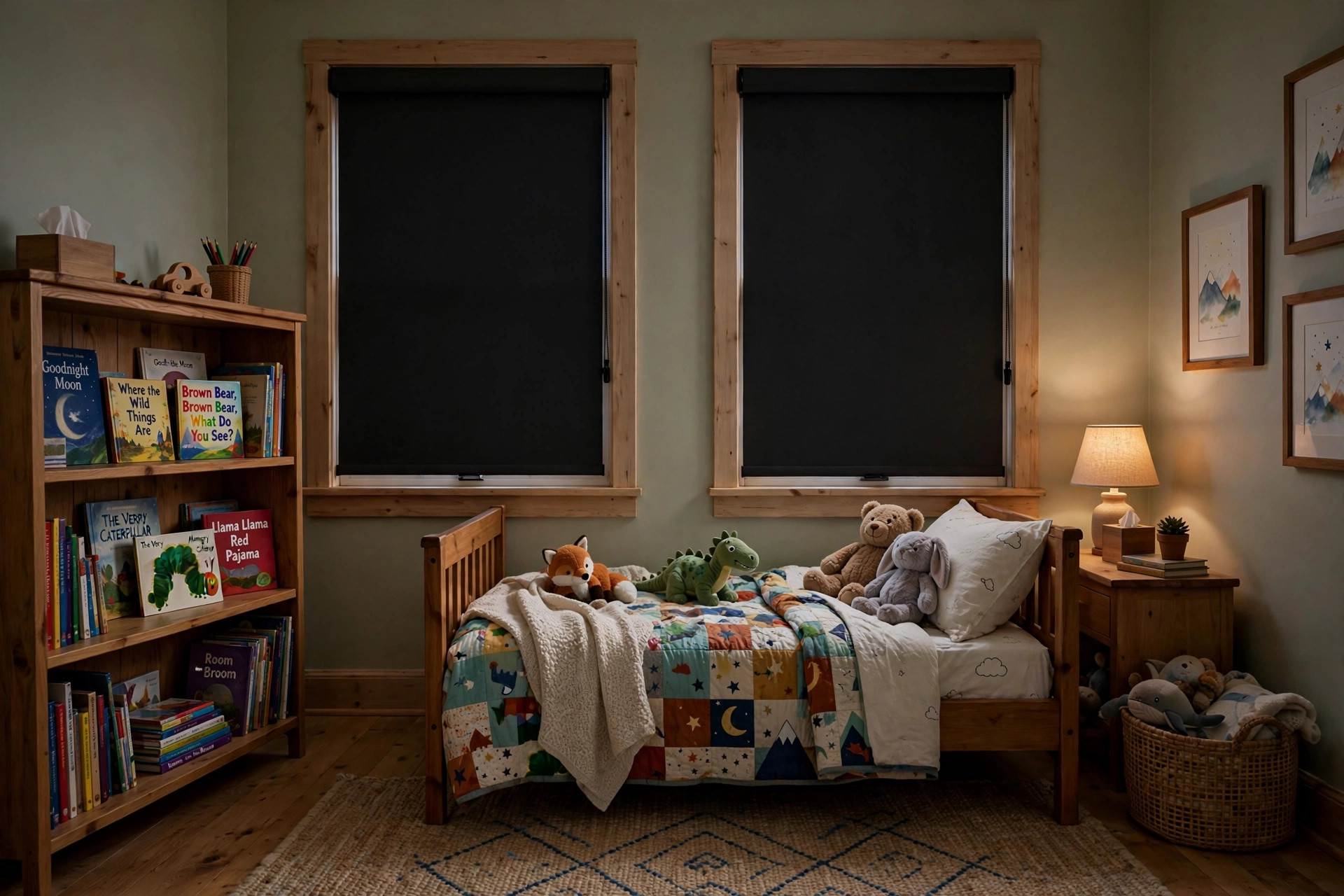

Many parents know the sound well. It is six in the morning, the sun is up, and a child is wide awake. The day has begun too early. Kids bedroom blackout shades for better sleep can change this pattern. These shades block the light that enters through windows. They keep the room dark at dawn and at nap time. A dark room tells the body it is time to rest. Children often fall asleep faster and stay asleep longer when the light is gone. This guide explains why these shades matter, what types exist, how to choose the right set, what they cost, and how to use them safely.
Why Dark Rooms Help Children Sleep
Light has a strong effect on the human body. When light reaches the eyes, it tells the brain to wake up. When darkness falls, the brain makes melatonin. Melatonin is the hormone that brings on sleep. Children are very sensitive to these signals. A street lamp outside the window can be enough to wake a light sleeper. Early summer sunrises can end a night of sleep hours before it should end.
Daytime naps suffer too. Many children stop napping in bright rooms. A toddler who fights a nap may simply be fighting the light. When parents install shades that block nearly all light, naps often grow longer. Bedtimes get easier as well. A dark room gives a clear signal that the day is over.
Darkness also helps with shift schedules. Some families keep unusual hours. Some children share rooms with siblings on different bedtimes. Blackout shades make it possible to sleep while the sun still shines.
How to Choose the Right Shades: Kids Bedroom Blackout Shades for Better Sleep
Choosing shades for a child’s room is not the same as choosing shades for a living room. Safety comes first. Then comes light blocking. Then style. The paragraphs below walk through each point in order.
Measure the Window Carefully
Measure the window frame before you buy. Write down the width and the height. Measure in three places: top, middle, and bottom. Use the smallest number. A shade that is too small will leak light at the edges. A shade that is too large may not fit the brackets.
Decide between an inside mount and an outside mount. An inside mount fits within the window frame. It looks neat and trim. An outside mount covers the frame and part of the wall. It blocks more light because it covers the edges. For the darkest result, an outside mount is the better choice. Mount the shade two or three inches above and to each side of the frame. This overlap stops light from slipping past the edges.
Check the Light Blocking Rating
True blackout shades block 99 to 100 percent of light. Room darkening shades block less, often 90 to 95 percent. For a child’s sleep, true blackout is worth the extra care. Hold a sample up to a bright lamp in the store. If you see light through the fabric, it is not true blackout. Retailers such as Blinds.com and The Home Depot often show the opacity rating on the product page.
Pick Cordless Styles for Safety
Cords are a hazard for children. Long cords can wrap around a small neck. The safest choice is a cordless shade. Cordless shades push up and pull down by hand. Motorized shades are another safe option. They open and close with a remote or a phone app. They cost more, but they remove cords entirely. Guidance from the U.S. Consumer Product Safety Commission warns parents about corded window coverings and urges cordless designs in homes with young children.
Match the Room Decor
Children’s rooms have their own style. Shades come in many colors and prints. Solid colors in soft tones work in most rooms. Some brands print stars, animals, or maps on blackout fabric. A child who likes the pattern may look forward to pulling the shade down. Stores like IKEA, Wayfair, and Pottery Barn Kids carry blackout options made with children’s rooms in mind. Photo guides at The Spruce show these shades in finished rooms.
Types of Blackout Shades and Blinds
Several kinds of window coverings block light well. Each has strengths and weak points. The list below covers the most common choices for a child’s bedroom.
Roller Shades
Roller shades are simple. A flat sheet of fabric rolls around a tube at the top. Pull it down to cover the window. Push it up to let light in. Blackout roller shades use a thick coated fabric. They are among the least costly blackout options. They fit well in small rooms because they take little space. Cleaning is easy. Wipe the fabric with a damp cloth.
Cellular Shades
Cellular shades are also called honeycomb shades. The fabric folds into pockets that look like a honeycomb. These pockets trap air. This gives the shade some insulation. The room stays cooler in summer and warmer in winter. Blackout cellular shades have a dark lining inside the cells. They block light well and look soft on the window. They cost more than roller shades.
Roman Shades
Roman shades fold into neat pleats when raised. They look like fabric drapes but work like shades. Blackout Roman shades have a dark backing layer. They suit rooms with a classic or soft style. They cost more than roller shades. The folds can collect dust, so they need regular dusting.
Blackout Curtains as a Second Layer
Some families pair shades with blackout curtains. The shade sits inside the frame. The curtains hang over the whole window. Together they block nearly all light. Curtains also soften the look of the room. This two-layer method costs more and takes more work to install. But it gives the darkest result of all.
Portable Blackout Panels
Portable panels are a newer option. They attach to the window with suction cups or hook-and-loop strips. They are useful for travel or for rental homes where drilling is not allowed. They do not look as neat as mounted shades. But they work well for naps at a grandparent’s house. Many parents keep one set for trips.
Motorized Shades
Motorized blackout shades run on batteries or house power. A remote, a wall switch, or a phone app moves them. They are fully cordless, which makes them very safe for children. They also allow parents to close the shades without entering a sleeping child’s room. The price is higher than manual shades. Battery models need new batteries once or twice a year.
Cost and Price Guide
Prices vary by size, type, and brand. A basic blackout roller shade for a standard window often costs between 25 and 60 dollars. Cellular blackout shades often run 50 to 120 dollars per window. Roman blackout shades often cost 70 to 150 dollars per window. Motorized shades start near 150 dollars and can pass 300 dollars for large windows.
Custom-made shades cost more than ready-made ones. They fit odd windows and give a cleaner look. Expect to pay 50 to 100 percent more for custom work. Installation adds cost too. A handyman may charge 30 to 60 dollars per window. Many shades are easy to install with a drill and a screwdriver. The instructions take about 20 minutes per window.
Blackout curtains range from 20 to 80 dollars per panel. Most windows need two panels. Portable panels cost 20 to 50 dollars per set. When planning a budget, measure every window in the room. A child’s room often has one or two windows. Covering both gives the best result. Shoppers can compare prices and read product tests at Consumer Reports before they buy.
Installation Tips
Good installation matters as much as the shade itself. Light leaks undo the work of a fine shade. Follow these steps for the darkest result.
First, gather the tools. You will need a drill, a screwdriver, a tape measure, a pencil, and a level. Read the full instruction sheet before you drill any holes.
Second, mark the bracket spots with a pencil. Hold the level against the marks. A crooked shade will not close evenly.
Third, drill pilot holes. This stops the wall or frame from splitting. Fasten the brackets with the screws in the kit.
Fourth, snap the shade into the brackets. Test it. Raise and lower it several times. Watch for rubbing or sticking.
Fifth, check for light gaps. Turn off the room light during the day. Look at the edges of the shade. If light slips through, add side channels or a valance. Some brands sell side tracks that catch the edge of the shade. These tracks close the gap almost fully.
For an outside mount, center the shade over the window. Leave equal overlap on both sides. This gives a clean look and blocks edge light.
Care and Upkeep
Blackout shades need little care. Dust them once a month with a soft cloth or a vacuum brush. Wipe vinyl or coated fabrics with a damp cloth and mild soap. Let the shade dry fully before rolling it up. A damp shade can grow mildew.
Check the cords and mechanisms twice a year. This applies even to cordless shades. Look for worn strings on cellular shades. Oil any stiff parts with a dry silicone spray. Keep the spray away from the fabric.
Teach children to use the shades gently. Pull from the center of the bottom rail, not from one corner. Rough pulls can tilt the shade and bend the slats or crease the fabric. With gentle use, a good shade lasts five to ten years.
Replace shades that no longer block light. The blackout coating can wear thin with age and sun. If the room grows brighter at dawn, the coating may be failing. New shades will restore the dark.
Safety Comes First
Window coverings are one of the top hidden hazards in a child’s room. The U.S. Consumer Product Safety Commission has recorded injuries and deaths from window cords. Young children can reach cords that seem out of the way. They can pull a cord loop over the head in seconds.
Follow these safety rules in every child’s room. Choose cordless or motorized shades. If a shade has cords, cut looped cords and add tassels that break apart. Keep all cords out of a child’s reach. Move the crib, bed, and furniture away from windows. A child standing on a bed can reach cords and the shade itself.
Mount shades firmly. A shade that falls can strike a child. Use the right anchors for the wall type. In drywall, use toggle bolts or wall anchors. In wood trim, drive screws into the solid wood.
Check for small parts. Some shades have end caps or clips that can come loose. A loose part can be a choking hazard. Tighten or replace worn parts at once.
Also think about the room as a whole. A safe sleep space has a firm mattress and no loose bedding for infants. Groups such as What to Expect and HealthyChildren.org publish checklists for safe sleep. Pairing safe window coverings with safe sleep habits gives parents peace of mind. For more ideas on setting up a child’s room, see our guides to the best kids desk with hutch for homework, crib bedding bumper free safe sleep sets, and nursery storage drawers under crib space.
Frequently Asked Questions
Do blackout shades really help children sleep better?
Yes, in most cases. Light is a strong wake signal. When shades remove that signal, children fall asleep faster and wake less often. Many parents report longer naps within the first week. Results vary by child. Some children are deep sleepers who rest well in any light. Light sleepers gain the most.
What is the difference between blackout and room darkening?
Blackout shades block 99 to 100 percent of light. Room darkening shades block about 90 to 95 percent. Room darkening leaves a soft glow around the edges. For naps and early bedtimes, true blackout gives a darker room. The price difference is often small. For a child’s sleep, blackout is the better pick.
Are cordless shades worth the extra cost?
Yes. Cordless shades remove a real hazard. They also look cleaner and are easy for older children to use. The price gap between corded and cordless has shrunk in recent years. Many stores now sell cordless as the standard model. Given the safety gain, the cost is well spent.
Can I use blackout shades in a nursery for a newborn?
Yes. Newborns sleep in short cycles around the clock. A dark room helps them link sleep with nighttime. Use cordless or motorized shades only. Keep the crib away from the window. Make sure the room does not grow too warm, since blackout fabric can trap heat. A room thermometer helps you check.
Will blackout shades make the room too dark during playtime?
No. Shades roll or fold up fully during the day. The room gets full daylight for play. Pull them down only at nap time and bedtime. Some children like a middle setting. Top-down, bottom-up shades let light in at the top while the lower half stays covered. This style costs more but gives fine control.
How do I clean blackout shades without ruining the coating?
Dust often and wash rarely. Use a dry microfiber cloth for weekly dusting. For spots, dab with a damp cloth and mild soap. Do not scrub hard. Do not soak the fabric. Do not use bleach or harsh cleaners. These can break down the blackout coating. Let the shade dry fully before you raise it.
Final Word
Kids bedroom blackout shades for better sleep are a simple change with a large payoff. They cost less than most nursery furniture. They install in an afternoon. Most of all, they give children the dark, calm space that sleep needs. Measure well, choose cordless, block the edges, and the whole family may soon enjoy quieter mornings.
References
American Academy of Pediatrics. (n.d.). HealthyChildren.org. https://www.healthychildren.org Blinds.com. (n.d.). Window blinds, shades, and shutters. https://www.blinds.com Consumer Reports. (n.d.). Product reviews and ratings. https://www.consumerreports.org IKEA. (n.d.). Home furnishings. https://www.ikea.com Pottery Barn Kids. (n.d.). Kids furniture and decor. https://www.potterybarnkids.com The Home Depot. (n.d.). Home improvement products. https://www.homedepot.com The Spruce. (n.d.). Home and garden advice. https://www.thespruce.com U.S. Consumer Product Safety Commission. (n.d.). Product safety information. https://www.cpsc.gov Wayfair. (n.d.). Furniture and home goods. https://www.wayfair.com What to Expect. (n.d.). Pregnancy and parenting guidance. https://www.whattoexpect.com
Was this guide helpful?

About Sarah Mitchell
The My Garden US editorial team writes practical, in-depth home and garden guides for American homeowners — tested advice, no fluff.
You May Also Like

A Kids Bedroom Lamp for Reading in Bed: A Parent’s Guide
February 17, 2026 0 views
Kids Night Light with Timer for Bedtime Routine: A Parent’s Guide
May 6, 2026 0 views
Nursery Diaper Caddy Organizer Portable: A Complete Guide
October 4, 2026 0 views