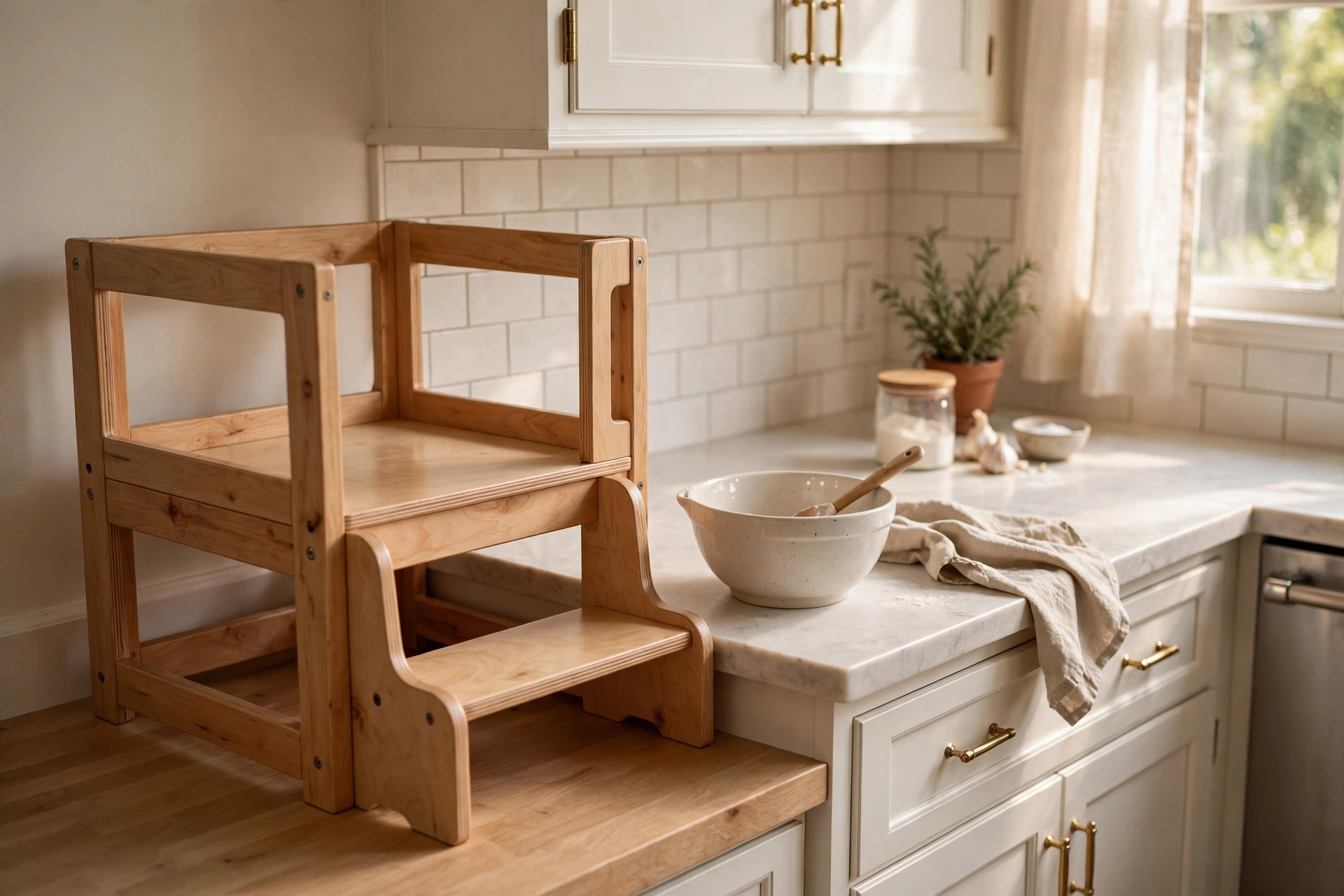

Every parent knows the moment. You are at the stove or the sink, and your toddler stands at your legs, arms raised, asking to be lifted. He wants to see. He wants to stir the pot. He wants to pour and mix. A kitchen helping stool, often called a toddler tower or learning tower, answers this wish in a safe way. It lifts the child to counter height and holds him steady while he works beside you. The best toddler tower for kitchen helping stool use is one that is solid, the right height, and easy to keep clean. This guide walks through what matters, what the choices cost, and how to keep your child safe.
Why a Toddler Tower Matters in the Kitchen
A toddler tower is more than a small step. It is a low platform with rails on all four sides. The child climbs in through an opening or over a low rail, then stands on a raised floor at counter height. The rails keep him from stepping off the edge. This design lets a two or three year old stand at the counter and take part in real work.
The value shows in daily life. A child who helps pour water, tear lettuce, or press cookie dough learns by doing. He practices hand skills and learns the names of foods and tools. Parents gain time, because a child who is busy helping is not pulling at your leg. Many families say the kitchen tower is the single most used piece of child furniture they own.
There is also a plain reason of safety. A kitchen chair pushed to the counter can tip. A stool without rails lets a child fall. A well made tower with a closed railing solves both problems. The child stands inside a guard, not on top of a perch. When chosen well, the best toddler tower for kitchen helping stool duty becomes a fixed part of the kitchen routine, used day after day.
What to Look For When You Choose: Best Toddler Tower for Kitchen Helping Stool
The market offers many towers. Prices range from thirty dollars to three hundred. The differences lie in a few points that matter more than brand names.
Height and fit. Standard kitchen counters stand about thirty six inches high. The tower platform should bring the child so that the counter meets him near the waist or upper chest. Some towers have platforms that move to two or three heights. That feature is worth the money, because a child grows fast, and a tower with set levels can serve from age eighteen months to age five.
Width and depth. The base must be wide enough that the tower cannot tip when the child leans on the rail. Look for a base of at least eighteen inches on each side. Deep platforms give the child room to turn and face the work. Narrow towers wobble. A heavy tower, or one with a low center of weight, stays put.
The climbing opening. Towers differ in how the child enters. Some have a fixed opening on one side. Some have rails that slide down to make a step. The child should be able to climb in and out alone, without your help, so that he does not hang from the rails. Test this with the child in the store if you can. If you buy online, read the reviews on the product page and look for parent reports about how a child gets in and out.
Material and finish. Solid wood towers last the longest and look best in a real kitchen. Pine and birch are common. Metal frame towers fold flat and store in a closet, which suits small kitchens. All finishes should be smooth, with no rough edges, and the paint or stain should be rated safe for children.
Weight limit. Most towers hold one hundred to one hundred fifty pounds. Check the number on the label. A higher limit means the frame is stronger and the tower may serve two children at once or an older child who still likes to help.
Ease of cleaning. Flour dust, egg, and sticky juice will reach every surface. A tower that wipes down with a damp cloth saves you real work. Sealed wood and coated metal clean best. Raw wood soaks up stains.
Assembly. Many wood towers ship flat and need an hour of work with a hex key. Read the instructions before you start. Tighten every bolt. A loose tower is a dangerous tower.
Types and Options on the Market
The Classic Wood Learning Tower
This is the tall wooden stand with four rails and a raised floor. It does one job well. It is heavy, which is good for balance, and it looks like real furniture. Wood towers from child furniture makers often convert to a small table and chair when the platform drops to its lowest set. That feature doubles the life of the piece. You can read more about child furniture on the sites of makers such as Pottery Barn Kids and IKEA, or browse nursery and playroom pieces at Wayfair.
The Foldable Tower
A foldable tower uses a metal or plastic frame that folds flat against the wall or slides into a closet. It suits apartments and small kitchens where a wood tower would block the way. A light tower can move when a child pushes against the rail, so the best models have locking legs and wide feet.
The Convertible Tower
Some towers turn into a table, a desk, or a step stool with a few moved parts. These cost more up front but serve for years. A convertible tower can sit in the playroom as a toddler table and chair set for playroom once the child outgrows the kitchen years. For families who dislike single use furniture, this is the best value over time.
The Budget Plastic Step Tower
Basic plastic towers cost the least and weigh almost nothing. They wash in the sink. The rails are often lower than on wood models, so they suit careful toddlers who do not climb. Check the weight limit, because some budget models bend at the joints under a forty pound child. They are a fair first choice if you are unsure the child will use a tower at all.
Cost and Price
A plain wood tower from a mass seller costs between sixty and one hundred dollars. Well known child brands charge one hundred twenty to two hundred dollars for birch models with moving platforms and rounded rails. Foldable metal towers run eighty to one hundred forty dollars. Convertible models that become a table cost one hundred eighty to three hundred dollars. Used towers sell for half these sums on local markets, and wood towers hold up well second hand. When you compare prices, factor in years of use. A two hundred dollar tower used daily for three years costs less than twenty cents a day.
There is no need to pay extra for extras the child will not use. Chalkboard panels, abacus beads, and cloth canopies look sweet in photos, but flour and juice will ruin them in a week. Put the money into solid rails and a wide base instead. For price research across sellers, Target and Walmart list many models with parent reviews, and Consumer Reports rates child products with testing notes that help you judge claims.
Care and Upkeep
A kitchen tower lives where food flies. Wipe the rails and platform each day with a damp cloth and mild soap. Dry the wood after, because standing water lifts the finish. Once a month, check every bolt and screw. Wood swells and shrinks with the seasons, and joints loosen. Tighten what has moved. If the tower has a chalkboard side or a tray, wash it apart from the frame.
Keep the tower in its spot when not in use, or teach the child to park it. A tower left in the middle of the kitchen becomes a trip hazard for the cook. If your tower folds, fold it after each meal. If it is wood and stays out, place it against the counter end where it does not block the work path.
Stains happen. A paste of baking soda and water lifts most food stains from sealed wood. For deeper marks, a light sand and a coat of child safe oil restores the surface. Never use harsh sprays near the tower, because the child breathes the air at that height and puts his hands on every rail.
Safety Rules for Kitchen Use
A tower is a safe tool, but only with rules. Teach these from the first day and keep them every day.
One child at a time. Most towers are built for one. Two toddlers in a tower will push and lean, and the balance shifts. If you have twins or two small helpers, buy two towers or take turns.
Feet stay on the floor. The child stands. He does not sit on the rails or hang over them. Rails are guards, not seats.
An adult stays within reach. The tower is not a babysitter. The child may use it while you cook, but you stay at the counter. Hot pans, knives, and boiling water remain adult work. Set a clear line: the child helps with cold and warm tasks, and you handle the heat.
Place the tower on a flat floor. Tile and wood floors are fine. Rugs and mats under the tower let it rock. Move the rug or move the tower.
Lock folding models open. If your tower folds, check the lock each time the child climbs in. A half locked frame can close under weight.
Mind the stove and the sink. Set the tower at the counter end away from burners. The child can stir a cool bowl, rinse fruit, or tear herbs while you tend the hot work. The pediatric guidance at HealthyChildren.org reminds parents that burns and scalds are among the most common kitchen injuries to small children, and a tower does not remove that risk.
Check for recalls. Before you buy, and once a year after, look up the model on the Consumer Product Safety Commission recall list. If a tower is recalled, stop use and follow the maker fix.
Weight and age. Most makers say eighteen months to five years. A child who can walk well and follow a simple rule is ready. A child who climbs everything in sight may need closer watch, tower or not.
Frequently Asked Questions
What age is right for a toddler tower? Most children start between eighteen months and two years, when they can walk on their own and climb a small step. There is no upper age limit while the child fits. Many five year olds still use a tower to reach the counter. The toddler bed with guard rails for first bed serves a child at the same stage of growth, and the two pieces often enter the home together.
Is a toddler tower safer than a kitchen chair? Yes, by a wide margin. A chair tips when the child leans. A chair has no rails at the sides. A tower has a closed guard on all four sides and a base made to resist tipping. That said, no furniture makes the kitchen safe alone. Adult watch is still the rule.
Wood or plastic: which is better? Wood lasts longer, looks better, and feels more solid. Plastic costs less, weighs less, and washes faster. For daily kitchen use by a busy toddler, wood wins. For a grandparent house or a trial run, plastic is fine. Either choice should meet the safety checks on the Consumer Product Safety Commission site.
Can the tower be used at the bathroom sink? Yes, many families move the tower to the bathroom for hand washing and tooth brushing. The tower must stand on a dry flat floor, not on a wet mat. If you move it often, a lighter model saves your back. A small toddler step stool for bathroom and kitchen can also serve the sink, and some families keep both.
How do I clean a wooden tower? Wipe with a damp cloth and mild dish soap, then dry. For stuck food, use a soft brush. Once a year, rub the wood with a child safe oil to keep the finish sound. Avoid bleach and strong sprays. Parenting guides at What to Expect and home care pieces at The Spruce both favor gentle cleaning around children.
Will it fit in a small kitchen? A wood tower needs about two square feet of floor. A foldable model needs that space only while in use. Measure your kitchen before you buy. In a galley kitchen, park the tower at the end of the counter. If the space is truly tight, a toddler step stool for bathroom and kitchen takes less room but offers less guard.
A Final Word
The best toddler tower for kitchen helping stool use is the one that fits your child, your kitchen, and your daily habits. A wide base, solid rails, a platform at the right height, and a finish that wipes clean will serve you well for years. The price matters less than the build. Buy the strongest tower you can afford, check the bolts each month, and set the safety rules from day one. Then let the child climb up and stir the soup. The kitchen becomes his classroom, and the small jobs you share now become the good habits he keeps for life.
References
American Academy of Pediatrics. (n.d.). HealthyChildren.org. https://www.healthychildren.org Consumer Reports. (n.d.). Product reviews and ratings. https://www.consumerreports.org IKEA. (n.d.). Home furnishings. https://www.ikea.com Pottery Barn Kids. (n.d.). Kids furniture and decor. https://www.potterybarnkids.com Target. (n.d.). Retail store. https://www.target.com The Spruce. (n.d.). Home and garden advice. https://www.thespruce.com U.S. Consumer Product Safety Commission. (n.d.). Product safety information. https://www.cpsc.gov Walmart. (n.d.). Everyday low prices. https://www.walmart.com Wayfair. (n.d.). Furniture and home goods. https://www.wayfair.com What to Expect. (n.d.). Pregnancy and parenting guidance. https://www.whattoexpect.com
Was this guide helpful?

About Robert Taylor
The My Garden US editorial team writes practical, in-depth home and garden guides for American homeowners — tested advice, no fluff.
You May Also Like

Kids Nightstand Lamp for Bedtime Reading: How to Choose the Right One
April 27, 2026 0 views
Kids Bedroom Blackout Shades for Better Sleep
March 8, 2026 0 views
The Best Kids Desk Lamp for Eye Protection: A Parent’s Guide
July 11, 2026 0 views