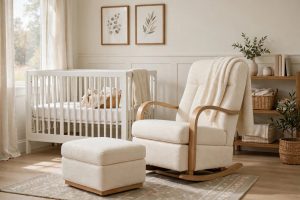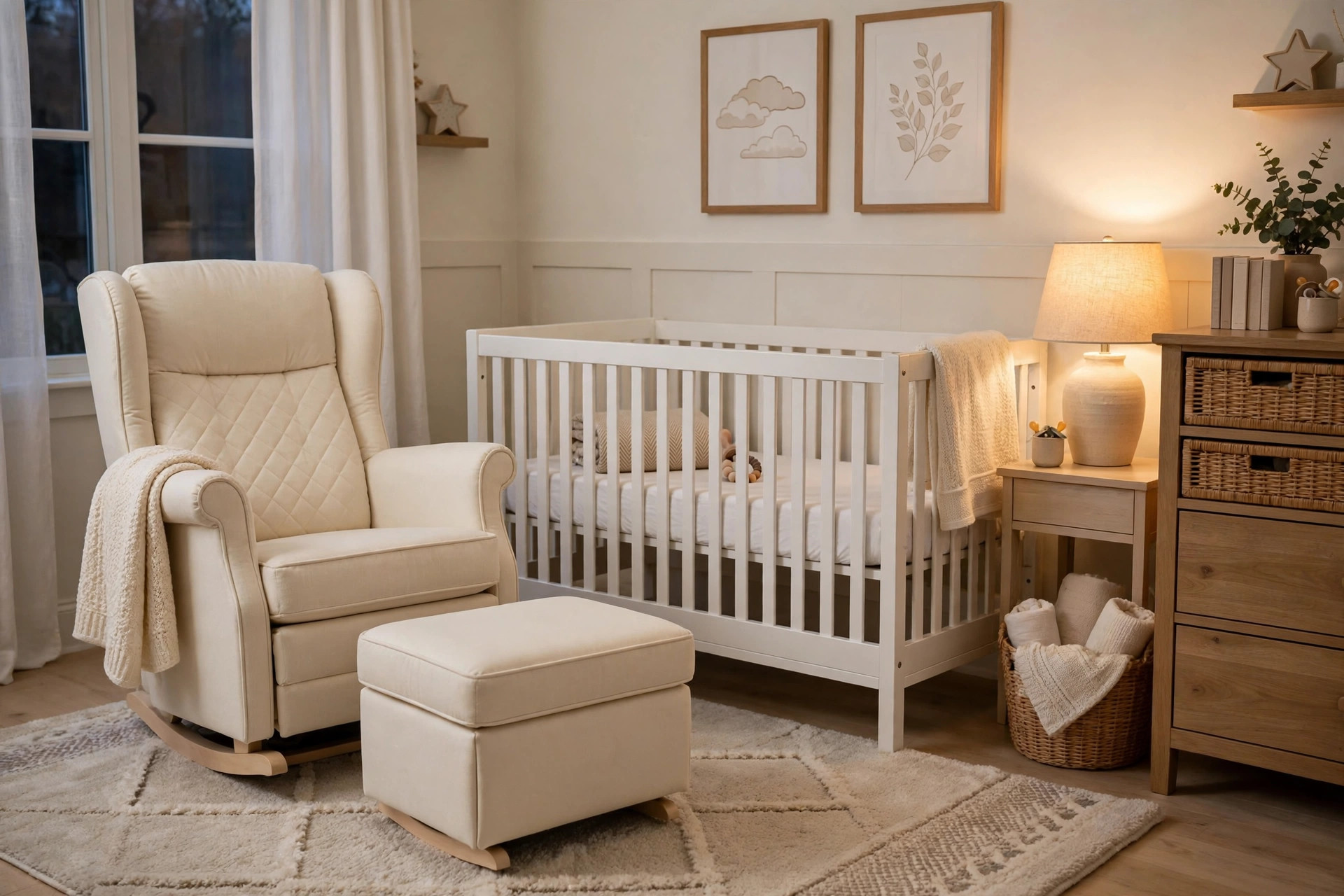

A mother nursing a newborn spends hours in a chair each day. A nursery ottoman matching glider for nursing gives her a place to rest, rock, and feed in comfort. The glider moves in a smooth back and forth motion. The ottoman supports tired feet and legs. Together they form a nursing corner that makes long nights easier. This guide explains what to look for, what styles exist, what they cost, and how to keep the set clean and safe.
Why a Nursing Glider and Ottoman Matter
Newborns feed every two or three hours in the first months. Each feeding can last twenty to forty minutes. Night feedings add more. A mother who sits on a stiff chair feels this in her back and neck. A mother who holds the baby with no leg support feels it in her shoulders.
A glider made for nursing solves these problems. The seat has firm but soft padding. The back rises high enough to hold the head. The armrests sit at the right height to carry the weight of the baby. A matching ottoman glides with the chair, so the feet move with the body. This keeps the mother relaxed and helps her hold the baby at the correct angle for feeding.
Comfort also helps milk flow. Health experts note that a calm and supported mother nurses more easily. When the body is relaxed, the baby latches on with less trouble. A nursery chair is not a luxury. It is a tool that supports both mother and child.
How to Choose the Right Set: Nursery Ottoman Matching Glider for Nursing
Choosing a nursery ottoman matching glider for nursing takes some thought. The set must fit the room, fit the mother, and last through the nursing years.
Seat Size and Shape
Look for a seat that is wide enough to hold the mother and the baby side by side. A seat depth of about twenty-two to twenty-four inches works well for most women. Taller women may want a deeper seat. The back should rise to the top of the head when sitting back. This gives the neck support during long feeds.
The Glide Motion
Good gliders move with a quiet, smooth push. Test the motion if you can. The chair should not squeak or jerk. A metal glide base tends to be stronger and quieter than a wooden one. Some chairs lock upright when you need to stand with the baby. Others stay free. A lock is useful in the first weeks when standing up from a low seat feels hard.
Ottoman Shape
Ottomans come in two main shapes. A flat-top ottoman gives a level place for the feet. A nursing ottoman with a sloped or angled top lifts the feet and keeps the knees in a natural bend. Angled ottomans move with the glider, which feels more restful on long nights. Make sure the ottoman is wide enough for both feet and firm enough to hold steady.
Fabric and Cleaning
Babies spit up. Milk spills. Choose fabric that wipes clean. Microfiber and performance fabrics resist stains and wash well. A soft fabric guide can help you compare cotton, linen, and polyester blends. Removable slipcovers are a strong plus. You can wash them in the machine and put them back on. Dark or patterned fabric hides stains better than light solid colors.
Height and Ergonomics
The armrest height matters more than most people think. Arms held too high strain the shoulders. Arms held too low give no support. The best arm height lets the mother rest her elbows so the baby sits at breast level. This avoids hunching. If the mother is short or tall, she should check the chair size in person before buying.
Types and Options
Several types of nursery glider and ottoman sets exist. Each has strengths.
Classic Rocker Glider
The classic glider has wooden arms and a simple upholstered seat. It costs less than other types. It rocks in a gentle arc. It fits well in traditional rooms. The wooden arms can feel hard after a long feed, so many mothers add a small pillow.
Reclining Glider
A reclining glider opens flat like a lounge chair. This is useful when the mother wants to rest between feeds. Some models recline far enough for a light nap while the baby sleeps in a crib nearby. Recliners cost more and need more floor space. Check that the recline lever is easy to reach and quiet.
Swivel Glider
A swivel glider turns in a full circle and glides at the same time. A mother can turn to reach a side table or look at the door without standing. Swivels are popular in small rooms because the chair can face any direction. The base must be heavy enough to stay steady when it turns.
Nursing Stool Versus Full Ottoman
Some sets come with a small nursing stool instead of a full ottoman. A stool is cheaper and takes less space. A full ottoman gives more comfort because it holds the whole foot and the lower leg. For mothers who nurse many times a day, the full ottoman is worth the cost and the floor space. A glider and ottoman set from a family furniture store shows how the two pieces work as one unit.
Budget and Premium Sets
Budget sets use simpler frames and thinner padding. They still do the job for one or two nursing years. Premium sets use hardwood frames, thick high-density foam, and stain-proof fabric. They often look good enough to move to the living room when nursing ends. Later, as the child grows, a toddler wardrobe armoire for a small bedroom can replace nursery storage while the glider stays on for reading. Think about how long you will use the chair before you pay for premium features.
Cost and Price
Prices for a nursery ottoman matching glider for nursing vary with brand, material, and features.
Most basic sets cost between one hundred fifty and three hundred dollars. These have simple fabric and a standard glide base. They serve well for a single child. Mid-range sets cost between three hundred and five hundred dollars. These add better foam, quieter motion, and removable covers. Premium sets cost between five hundred and one thousand dollars or more. These use solid wood, top-grade fabric, and recline or swivel features.
Shop during sales to save money. Nursery furniture goes on sale near holidays and at the end of the baby season. A price comparison at major retailers can show the range for your area, and a baby gear store often carries glider sets from well-known nursery brands. A nursery furniture maker like Pottery Barn Kids also sells glider and ottoman sets in many fabrics. Buying the glider and ottoman as a set usually costs less than buying each piece alone. Used sets can be a good deal, but check the frame and the glide hardware for wear before you pay.
Remember that a nursing chair is used every day, many times a day, for months or years. The cost per use is low. Spending a little more for comfort is often wise.
Care and Upkeep
A little care keeps the glider and ottoman fresh through years of use.
Vacuum the seat and ottoman each week with a soft brush head. This lifts dust and crumbs before they settle into the fabric. Treat spots at once with a damp cloth and mild soap. Rubbing hard can push the stain deeper, so blot instead.
If the set has removable covers, wash them by the label rules. Most covers can be machine washed in cold water and dried on low heat. Put them back on while still slightly warm so they fit tight. Rotate the seat cushion once a month to keep the padding even.
Check the glide hardware twice a year. Tighten any loose bolts with a wrench. A small drop of household oil on the glide rails keeps the motion quiet. Keep the set out of strong direct sun, which fades fabric and dries wooden parts.
Plan for the future. When nursing ends, many families move the glider to a reading corner or a den, joined by a kids bean bag chair for a reading corner for story time. Choosing a neutral fabric color helps the set blend into any room later. Choosing a color you like for years, not just for the nursery, saves money in the long run.
Safety
Safety comes first in any nursery item.
The glider must be stable. It should not tip when you sit down with the baby or when you stand up. A wide base helps. Keep fingers and toes away from the glide hardware while the chair is in motion. Teach older children not to push the glider or climb on the ottoman.
Check for recalls before you buy. The U.S. Consumer Product Safety Commission lists recalls for nursery furniture, including gliders with faulty hardware. New chairs should meet current safety standards. If you buy a used chair, look up its model number to make sure it was not recalled.
Place the glider away from cords, curtains, and heaters. Leave enough space behind the chair for the full glide motion. Do not let the chair hit the wall or the crib. A small rug under the set protects the floor and marks the nursing zone. The rug should have a non-slip pad so it does not bunch under the glides.
Fabric safety matters too. Look for fabric that meets flammability standards without heavy chemical treatments. Health guidance from children’s health experts offers advice on safe nursery setups, including seating. If the chair has a strong chemical smell when new, let it air out in another room for a few days before use.
FAQ
How long will I use the glider?
Most mothers use the glider for nine to eighteen months of nursing. Some keep using it for bedtime stories and rocking long after that. A well-made chair can serve for ten years or more as a reading chair.
Does the ottoman have to match the glider?
It does not have to match. A matching set looks tidy and the ottoman glides in rhythm with the chair. A mismatched ottoman can still work if it is the right height and steady. Many families buy the glider first and add the ottoman later.
What is the best fabric for a nursing glider?
Performance microfiber and treated cotton blends clean best. They resist milk, spit-up, and sweat. Look for removable, machine-washable covers. Avoid silk, velvet, and other fabrics that stain easily or need dry cleaning.
Can a short mother use a standard glider?
Yes, but she should test the chair first. Short mothers need a shallower seat so the feet reach the ottoman. Some chairs have a higher seat that works better for short legs. A small footstool can fill the gap if needed.
Is a reclining glider worth the extra cost?
It is worth it for mothers who want to rest in the chair between feeds. The recline lets you lean back with the sleeping baby. If your budget is tight, a standard glider with a good ottoman gives most of the comfort for less money.
Where should the nursing corner go?
Pick a quiet spot near the crib so you can lay the baby down without walking far. A dim lamp, a small side table for water and a phone, and the glider with its ottoman make a complete corner. A nursery bookshelf wall mounted for small space keeps feeding supplies within arm’s reach. A nursery layout guide can help you plan the room around the chair.
A Short Final Word
A nursery ottoman matching glider for nursing turns hard nights into quiet ones. The right set supports the back, the arms, and the feet. It keeps the baby at the right height for feeding. It gives the mother a calm place of her own in the nursery.
Take time to test chairs in person when you can. Check the glide, the fabric, and the arm height. Read safety records. Buy the set as a pair to save money. Then set up your corner with a lamp and a table, and let the chair do its quiet work.
References
American Academy of Pediatrics. (n.d.). HealthyChildren.org. https://www.healthychildren.org buybuybaby. (n.d.). Baby gear, furniture, and nursery decor. https://www.buybuybaby.com IKEA. (n.d.). Home furnishings. https://www.ikea.com Pottery Barn Kids. (n.d.). Kids furniture and decor. https://www.potterybarnkids.com The Spruce. (n.d.). Home and garden advice. https://www.thespruce.com U.S. Consumer Product Safety Commission. (n.d.). Product safety information. https://www.cpsc.gov Wayfair. (n.d.). Furniture and home goods. https://www.wayfair.com What to Expect. (n.d.). Pregnancy and parenting guidance. https://www.whattoexpect.com
Was this guide helpful?

About Jennifer Lee
The My Garden US editorial team writes practical, in-depth home and garden guides for American homeowners — tested advice, no fluff.
You May Also Like

Nursery Glider Recliner for Small Apartment: A Complete Guide
September 4, 2026 0 views
Kids Wall Decal Growth Chart for Measuring Height: A Complete Guide
September 18, 2026 0 views
Nursery Wall Decal Quote for Above Crib
March 15, 2026 0 views