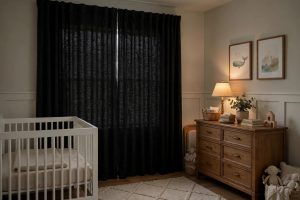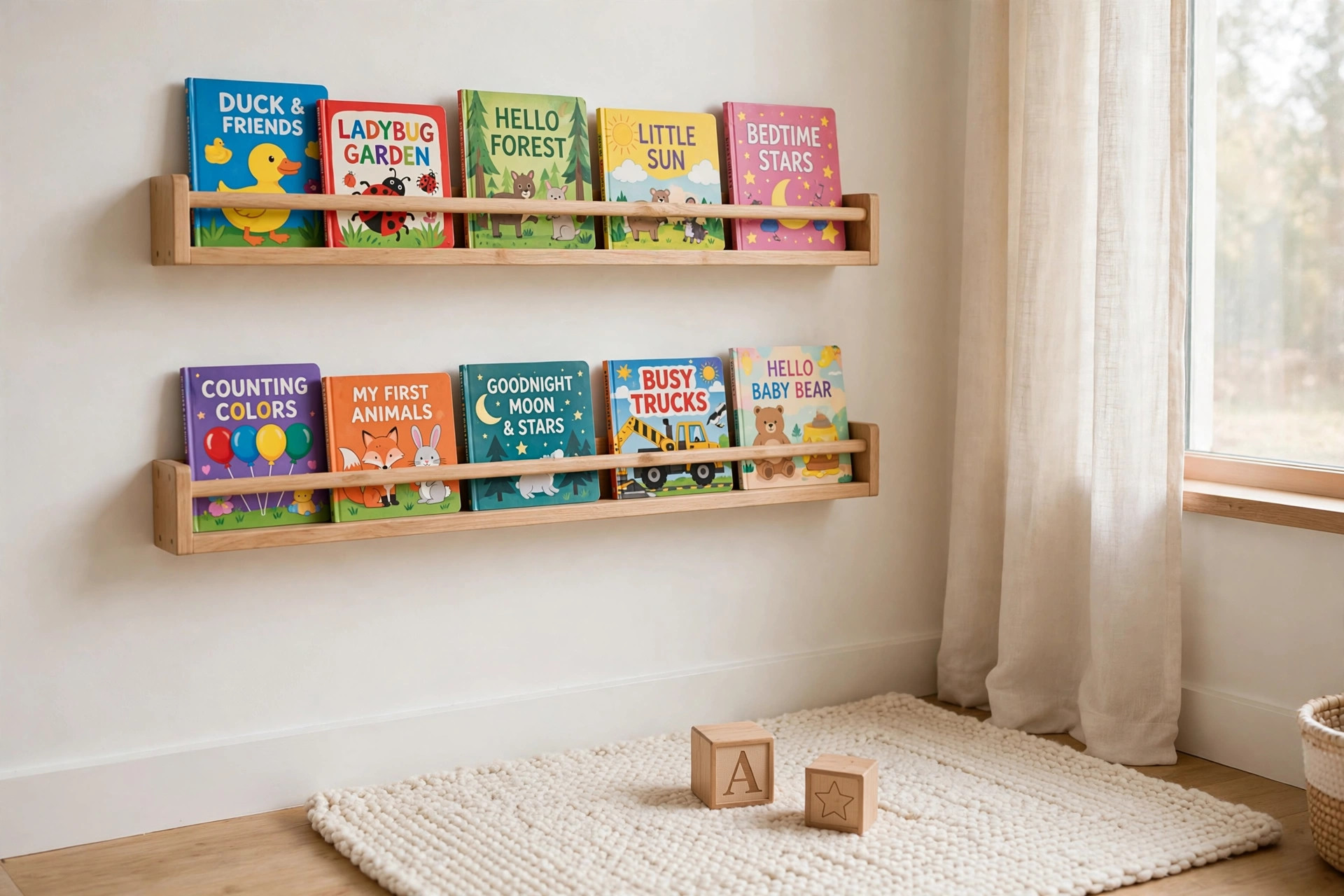

A nursery bookshelf wall mounted for small space can solve one of the hardest problems new parents face. Most nurseries are small. The crib takes one wall. The dresser takes another. A rocking chair needs its corner. By the time parents add a changing table, there is no floor left for a bookshelf. Books then end up in piles on the floor, stacked on the dresser, or lost in a closet. A wall-mounted bookshelf fixes this. It lifts books off the floor and puts them on the wall, where the space was going unused. It turns dead wall space above a chair or beside a crib into a small library for the child.
This guide explains what a wall-mounted nursery bookshelf is, why it matters in a small nursery, and how to choose one. It covers the main types, the costs, the care they need, and the safety rules that matter most. It answers common questions parents ask. The aim is simple. Give parents the facts they need to buy the right shelf, mount it well, and keep their child safe.
Why a Wall-Mounted Bookshelf Matters in a Small Nursery
Space is the first reason. A nursery bookshelf wall mounted for small space uses the wall instead of the floor. A standard standing bookshelf needs two to three square feet of floor. In a small nursery, that floor may not exist. A wall shelf needs no floor at all. It hangs flat against the wall. Parents in small homes, apartments, and shared rooms gain storage without giving up walking room.
Order is the second reason. Books stay in one place when they have a shelf. Babies and toddlers learn where books live. At clean-up time, parents can put each book back in its slot. The room stays tidy with less work. A tidy room also stays safer, because fewer books sit on the floor where a crawling baby or a tired parent might step on them.
Access is the third reason. A low wall shelf lets a toddler choose a book alone. The child can see the covers, point to one, and pull it out. This builds early reading habits. When books sit high in a closet, the child never sees them. Out of sight means out of mind, even for a two-year-old. A wall-mounted shelf at the right height invites the child to read every day.
It turns dead wall space into a small library for the child.
What to Look for When You Choose: Nursery Bookshelf Wall Mounted for Small Space
Choosing a wall-mounted nursery bookshelf takes more care than it seems. Parents should weigh five points: size, material, design, weight capacity, and finish.
Size and Fit
Measure the wall first. Know how much width you have. A shelf that is six inches too wide will not fit, and returns waste time. Think about the books too. Board books are small. Picture books can be tall and wide. Measure your tallest book. The shelf ledge or rail must be deep and tall enough to hold it. A good rule is to buy for the books you will own in two years, not only the books you own today. Children gather books fast.
Material
Solid wood is the strongest choice. It holds heavy books for years and resists dents. Pine and rubberwood are common and affordable. Engineered wood, like MDF with a laminate skin, costs less but can sag under heavy loads over time. Metal shelves are strong and slim, which suits very tight spaces. Plastic shelves are light and cheap, but they look cheap too, and they can crack. For a nursery, solid wood or strong engineered wood are the best picks for most families.
Design
Two designs dominate. The picture ledge has a small front rail that holds books face-out. Children see covers and pick what they like. The traditional shelf is a flat board, sometimes with a front lip, where books sit spine-out like in a library. Some parents buy one of each. The face-out ledge works best for toddlers who choose by picture. The spine-out shelf holds more books in less width.
Weight Capacity
Check the stated weight limit. Books are heavy. A full shelf of board books can weigh twenty to forty pounds. The shelf must hold that weight plus a margin. Look for shelves that list a tested limit, not a vague promise. Heavy-duty wall anchors and mounting into studs both raise the real capacity of any shelf.
Finish and Feel
The finish must be smooth. Run your hand along the shelf edge in your mind, or in the store if you can. Sharp edges and rough spots can scrape small hands. The paint or stain should be non-toxic and low in volatile compounds. Babies chew on furniture. They will chew on a low shelf edge too. A safe finish matters more than a pretty color.
Types and Options
Single Picture Ledges
A single ledge is one narrow board with a front lip. It mounts at one height. Parents often buy two or three and stack them like steps on the wall. This design suits a nursery bookshelf wall mounted for small space because each ledge is shallow, often three to four inches deep. The ledges can follow the wall above a glider or beside a door. Sets from large home retailers keep the price low, and many parents find inspiration for layouts at IKEA.
Multi-Tier Wall Shelves
A multi-tier shelf is one unit with two to four rows built in. It mounts as a single piece. This saves mounting work, since you hang one unit instead of three ledges. It also looks neat and built-in. The trade-off is fixed spacing. The rows are set at set heights, so very tall books may not fit. Measure before you buy.
Corner Shelves
Corner shelves fit into the corner where two walls meet. Corners are often wasted space in a nursery. A corner unit turns that dead zone into storage for a dozen or more books. These shelves need care in mounting, since the two walls must both be sound. They work well in the corner above a changing table.
Shelves With Side Rails
Some shelves add raised sides or a front bar. These keep books from sliding off when a toddler yanks one book out.
Floating Shelves With Hidden Brackets
Floating shelves hide their brackets inside the board. The shelf looks like it floats on the wall. This style is clean and modern. The brackets are strong when set into studs. But hidden-bracket shelves are harder for a beginner to mount level. A simple visible-bracket shelf is more forgiving for a first-time installer.
Parents building a full small nursery often pair the shelf with other space-saving pieces. A kids teepee tent for indoor playroom decor can share the room without crowding the walls, and soft textiles like a crib bedding set gender neutral for nursery keep the small space calm.
Cost and Price
Prices run wide. A single basic picture ledge can cost fifteen to thirty dollars. A set of three ledges often runs forty to eighty dollars. A solid-wood multi-tier unit can run eighty to two hundred dollars. Handmade or premium hardwood shelves can pass two hundred dollars.
What drives the price? Material comes first. Solid hardwood costs more than MDF. Size comes second. Wider and deeper shelves use more material. Brand and finish come third. A well-known nursery brand with a certified non-toxic finish charges more than a no-name import.
Parents do not need the most costly shelf. A mid-range solid-wood ledge set, mounted well, lasts through two children. The money is better spent on good wall anchors and a stud finder than on a designer label. Watch for sales at major retailers like Wayfair, Target, and Amazon, where nursery shelving often drops in price during baby events.
For families furnishing on a tight budget, it helps to plan the whole room at once. A best nursery glider with ottoman combo set is often the largest purchase, so saving on the shelf can keep the total in range.
Care and Upkeep
A wall-mounted shelf needs little care, but it needs some. Dust the shelves once a week with a dry cloth. Dust builds up fast on horizontal boards, and babies touch everything. Wipe spills at once. Milk, juice, and drool can stain unfinished wood and swell MDF edges.
Check the mounting twice a year. Pull gently on the shelf. It should not move or creak. Look at the wall around the screws. Cracks or widening holes mean the anchors are failing. Tighten or replace them at once. A shelf that feels loose is a shelf that must come down until it is fixed.
Rotate the books now and then. Heavy books left in one spot for a year can bow a long shelf. Spread the weight across the full width. Keep the heaviest books near the bracket points, which are the strongest parts of the shelf.
When the child outgrows the nursery, the shelf can move to a big-kid room. Fill old screw holes with filler, sand smooth, and touch up the paint. The shelf gets a second life, which makes the first purchase a better value.
Safety
Safety is the most serious part of this guide. A shelf full of books is heavy. If it falls, it can hurt a small child badly. Follow these rules without exception.
Mount into studs when you can. A stud finder costs little and takes minutes to use. Screws driven into solid wood studs hold far more weight than any drywall anchor. If no stud sits where you want the shelf, use heavy-duty toggle bolts rated well above your expected load. Never trust simple plastic wall plugs for a shelf that holds books.
Keep shelves out of reach of the crib. A child standing in a crib can grab a low shelf, pull books down, or try to climb. Safety guidance from the U.S. Consumer Product Safety Commission warns against climbable furniture near cribs. Leave a wide gap between the crib rail and the lowest shelf. The same rule applies near changing tables.
Mount low shelves at toddler height with care. A shelf the child can reach is good for reading. It is also a shelf the child can pull on. Test it by pulling down with your full hand weight. If it shifts, remount it stronger. Teach the child early that shelves are not for climbing.
Check for recalls. Before you buy, and once a year after, look up the product on the U.S. Consumer Product Safety Commission site. Children’s products are recalled more often than parents expect. A quick search takes two minutes.
Choose a non-toxic finish. Babies mouth everything. Look for paints and stains labeled non-toxic and low-VOC. Health guidance for young children, such as the resources at HealthyChildren.org, stresses keeping a baby’s space free of harmful chemicals. When in doubt, choose plain unfinished solid wood and seal it with a food-safe oil.
Round the edges if needed. If your shelf has sharp corners, add stick-on corner guards made for childproofing. They cost little and they prevent painful bumps at head height.
For general nursery planning and month-by-month guidance, many parents also read What to Expect, and for room layout ideas in tight quarters, Apartment Therapy offers many small-space nursery tours.
Frequently Asked Questions
How high should I mount a nursery bookshelf on the wall?
It depends on who uses it. For parent-only access, mount it at adult eye level or higher, well out of the child’s reach. For toddler access, mount the lowest ledge about twenty-four to thirty inches from the floor, so the child can see and reach the books while standing. Never mount any shelf within a child’s reach of the crib.
Can I mount a bookshelf on drywall without studs?
Yes, but use the right hardware. Heavy-duty toggle bolts or snap toggles can hold a good load in drywall. Check the rating on the package and stay well under it. For a shelf full of books, studs are always better. If you must use drywall alone, keep the shelf shorter and the book load lighter.
How many books can a wall-mounted nursery shelf hold?
A single forty-eight-inch ledge can hold roughly fifteen to twenty-five board books, depending on their size. A three-tier unit can hold forty to sixty. Count by weight, not just by number. Board books weigh more than parents expect. Stay under the shelf’s rated limit and spread books across the full width.
Are picture ledges or regular shelves better for toddlers?
Picture ledges are better for toddlers who cannot read yet. The child sees the cover and chooses by the picture. This builds interest in books. Regular spine-out shelves hold more books in the same width, so they suit older children or parents storing a large collection. Many families use ledges low for the toddler and a spine-out shelf higher for overflow.
What tools do I need to mount a nursery bookshelf?
You need a stud finder, a level, a drill, a screwdriver or driver bit, a pencil, and a tape measure. A small step stool helps. The job takes about thirty minutes per shelf for a beginner. Read the maker’s instructions first. Mark your holes, check them level twice, then drill once.
A Final Word
A nursery bookshelf wall mounted for small space is one of the smartest buys for a small nursery. It costs little. It takes an afternoon to mount. It gives books a home, gives the child daily access to reading, and gives the room a warm, finished look. The keys are simple. Measure first. Buy solid. Mount into studs. Keep it away from the crib. Check it twice a year. Do those five things, and the shelf will serve your family safely for years, from first board books to first chapter books.
References
Amazon. (n.d.). Online shopping. https://www.amazon.com American Academy of Pediatrics. (n.d.). HealthyChildren.org. https://www.healthychildren.org Apartment Therapy. (n.d.). Home design ideas and inspiration. https://www.apartmenttherapy.com IKEA. (n.d.). Home furnishings. https://www.ikea.com Target. (n.d.). Retail store. https://www.target.com U.S. Consumer Product Safety Commission. (n.d.). Product safety information. https://www.cpsc.gov Wayfair. (n.d.). Furniture and home goods. https://www.wayfair.com What to Expect. (n.d.). Pregnancy and parenting guidance. https://www.whattoexpect.com
Was this guide helpful?

About Jennifer Lee
The My Garden US editorial team writes practical, in-depth home and garden guides for American homeowners — tested advice, no fluff.
You May Also Like
Kids Study Desk With Chair Set Adjustable: A Complete Buying Guide
February 8, 2026 0 views
A Nursery Hamper for Dirty Baby Clothes: A Complete Guide
March 7, 2026 0 views
A Nursery Wall Clock Silent for Baby Sleep: What Parents Should Know
April 24, 2026 0 views