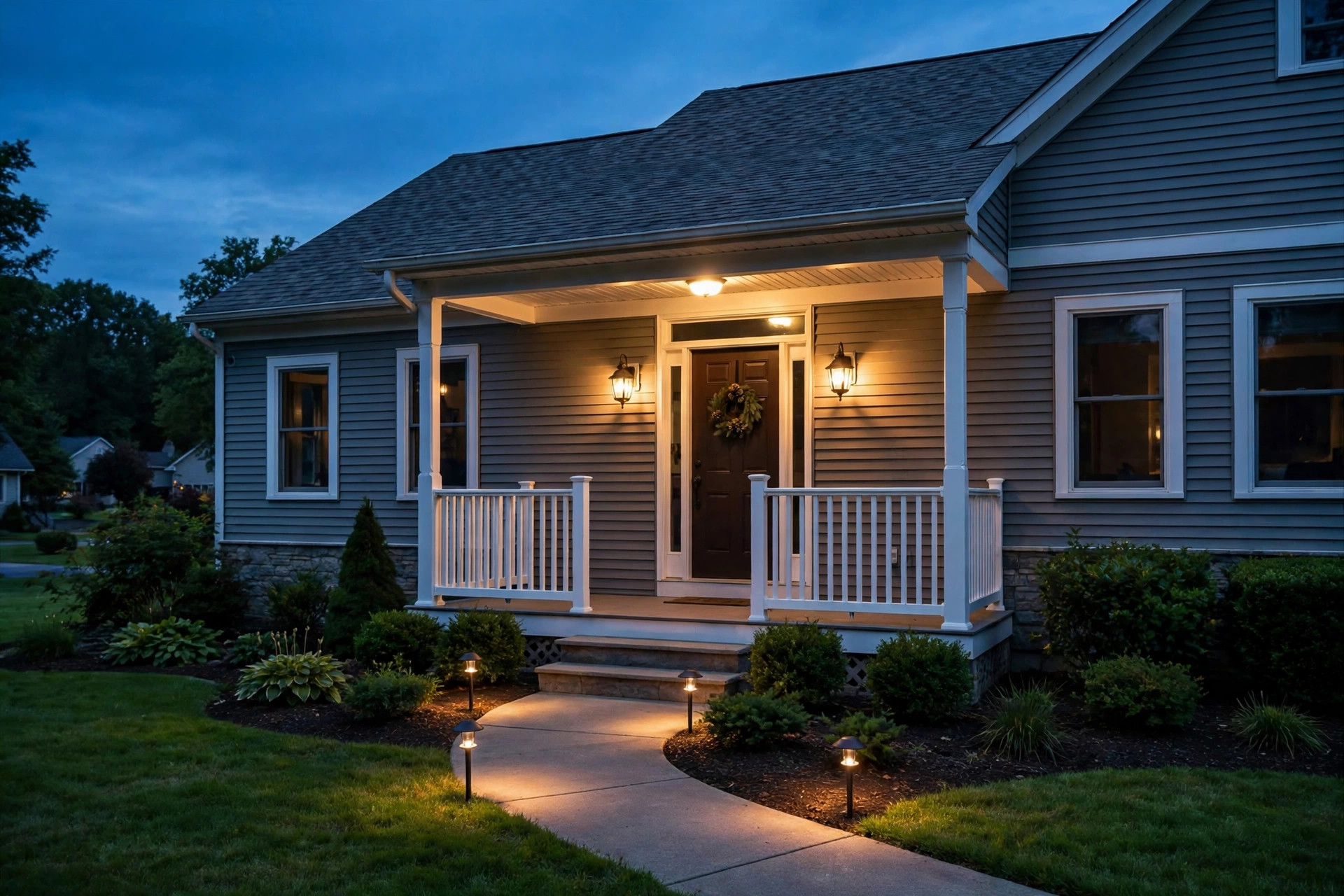

Good outdoor light changes a home. It makes the front door easy to find. It keeps steps and walks safe after dark. It makes the house look warm and cared for. Every house in America needs light outside. But not all fixtures are the same. This guide shows you how to pick the best exterior lighting fixtures for USA homes.
The right fixtures last for years. They stand up to rain, snow, heat, and cold. They save energy and money. The wrong ones rust, break, or burn out fast. A little care at the start saves a lot of trouble later.
Why Exterior Lighting Matters
Light outside your home does three jobs. It keeps your family safe. It makes your home look fine. And it keeps bad visitors away. A dark porch is hard to use. You may miss a step or trip on a loose stone. A well lit porch lets you see where you walk.
Good light also adds beauty. A lit walkway leads the eye to the front door. Soft light on a tree or a wall makes the home look fine at night. Many home sellers say good outdoor light helps sell a house. Buyers see a bright home and feel safe.
Light can also stop crime. A bright yard gives a thief no dark place to hide. Motion lights are best for this. They turn on when something moves. This startles an intruder and wakes you up. Many police guides say motion lights are a simple way to protect a home.
What to Look for When You Choose: Best Exterior Lighting Fixtures for Usa Homes
Start with the weather rating. Outdoor fixtures must take rain and snow. Look for a wet location rating. This means the fixture can sit in direct rain. A damp location rating is only for covered porches. For most homes, wet rated fixtures are the safer pick.
Check the material. Brass and copper last the longest. They turn a soft green over time, but they do not rust through. Aluminum with a powder coat finish is light and resists rust well. Steel is strong but can rust if the coat chips. In coastal areas, salt air eats cheap metal fast. Pick marine grade fixtures if you live near the sea.
Look at the light source. LED bulbs are now the clear best choice. They use far less power than old bulbs. They last for many years. They turn on at once, even in cold weather. Most new fixtures come with built in LED lamps. Pick a warm white color, near 2700K to 3000K. This gives a soft, welcoming glow like the old bulbs.
Think about brightness. Outdoor light is measured in lumens. For a porch or wall lantern, 400 to 800 lumens is enough. For a flood light over the driveway, 1500 to 3000 lumens works well. Too much light blinds people and annoys neighbors. Pick the smallest light that does the job.
Check the controls. A simple on and off switch is fine for a porch. A dusk to dawn sensor turns the light on at night and off at dawn. This is easy and saves power. A motion sensor adds security. Some fixtures have both. Timers work well for landscape lights.
Types of Exterior Lighting Fixtures
Wall lanterns are the most common outdoor light. They mount beside the front door or the garage. They give a warm, wide glow. Pick a size that fits your door. A lantern that is too small looks lost. A good rule is to pick a lantern that is about one third the height of the door.
Porch ceiling lights hang from the porch roof. They give down light over the whole porch. A single fixture can light a small porch well. Large porches may need two. Flush mount fixtures sit close to the ceiling. Hanging pendants add style.
Flood lights mount high on the house or garage. They throw a wide, bright beam over the yard or driveway. Motion sensor flood lights are a top pick for security. You can read more in our guide to affordable motion sensor flood lights for sale. Pick LED flood lights with a wide beam for even cover.
Path and walkway lights are short posts that line a walk or garden bed. They mark the way at night. Solar path lights are easy to install. You push them into the ground. But they are dim and die fast in poor sun. Low voltage wired lights are brighter and more lasting. They need a transformer and some wire work.
Spot lights aim a tight beam at one thing. People use them to light a tree, a flag, or the house front. Well lights sit in the ground and aim up. They are almost unseen by day. Deck lights sit in stair risers or rail posts. They mark steps and edges at night.
Post lights top a lamp post at the end of the driveway. They give old style charm. They light a wide area. String lights add a party feel to a patio or porch. Pick outdoor rated strings with shatterproof bulbs for safety.
Cost and Price
Prices run wide. A simple wall lantern costs from 30 to 80 dollars. A good brass lantern costs 100 to 250 dollars. Motion flood lights run from 40 to 150 dollars. A full low voltage path light kit costs 100 to 300 dollars. Post lights and posts together cost 150 to 500 dollars.
Installation adds cost. If you swap an old fixture for a new one, you can often do it yourself. The wire is already there. This takes under an hour. New wire runs need an electrician. Expect to pay 150 to 400 dollars per fixture for pro install. Low voltage landscape lights are a common do it yourself job. No permit is needed in most towns for low voltage work.
Running cost is low with LED. A 10 watt LED porch light used six hours a night costs only a few dollars a year. Old 60 watt bulbs cost many times more. Solar lights cost nothing to run. But they need new batteries every year or two.
Do not pick on price alone. A 20 dollar fixture may last two years. A 100 dollar brass fixture may last twenty. Over time, the dear fixture is the cheap one. You can see how climate changes the pick in our guide to top rated exterior lighting fixtures for cold climates.
Care and Upkeep
Outdoor fixtures need little care. Wipe them down once or twice a year. Dust and bugs cut the light. Use a soft cloth and mild soap. Do not use harsh cleaners. They can strip the finish.
Check the seals. Gaskets keep water out of the fixture. If a gasket cracks, replace it or the fixture. Water inside a fixture kills the lamp and can trip the breaker. Tighten any loose screws. Wind and heat loosen mounts over time.
Trim plants near the lights. Bushes block the beam. Leaves hold wet air against the metal. This speeds rust. Keep a clear space of a foot or more around each fixture.
For LED fixtures, there is no bulb to change. The lamp should last 15 to 25 years. If a sealed LED dies early, the whole fixture may need to go. This is why a good brand with a long warranty matters. Save your receipts.
For solar lights, clean the small panel often. Dust blocks the sun. Replace the rechargeable batteries when the light fades fast. Use the same size and type the maker calls for.
Safety Tips
Turn off the power before you touch any wired fixture. Flip the breaker, not just the switch. Test with a non contact tester. Wires can be live even when the switch is off.
Use a firm ladder on level ground. Have someone hold it. Do not lean past the rails. Falls are the top cause of home repair injury.
Keep lights clear of dry leaves and mulch. Hot bulbs can start fires. LED lamps run cool, which is safer. But the fixture driver can still get warm. Follow the maker rules on clearance.
Do not overload a circuit. Outdoor outlets on a GFCI are required by code in most areas. If your porch outlet lacks GFCI, have an electrician add one. It cuts power fast if water reaches the wires.
Aim flood lights down and at your own yard. Bright light in a neighbor window is rude. Many towns have rules about light trespass. Shielded fixtures point light down and cut glare.
If you rent, check the rules first. Apartment homes have shared rules about exterior fixtures. Our guide to professional grade exterior lighting fixtures for california apartments covers what renters can use.
Frequently Asked Questions
How many lumens do I need for outdoor lighting?
For a porch or wall lantern, 400 to 800 lumens is right. For a driveway flood light, 1500 to 3000 lumens works. For path lights, 100 to 200 lumens each is enough. More light is not always better. Too much light causes glare.
Are solar outdoor lights any good?
Solar lights are fine for accent light along a path. They are easy to place. But they are dim. They fade on cloudy days. They need sun each day to charge. For main light at doors and drives, wired lights are better. Pick solar only where you cannot run wire.
What color temperature is best for exterior lights?
Warm white, 2700K to 3000K, is best for most homes. It looks soft and warm. It matches old bulb light. Cool white, 4000K and up, looks harsh and blue. It is fine for security floods but not for porches.
Do outdoor lights use a lot of electricity?
No. LED outdoor lights use very little power. A porch light may cost only two or three dollars a year to run. Old style bulbs cost much more. Pick LED and use a dusk to dawn sensor to keep costs low.
Can I install outdoor lights myself?
Yes, for simple swaps and low voltage lights. Turn off the power first. Follow the maker steps. For new high voltage wire runs, hire a licensed electrician. Local code may require a permit for new circuits.
How long do exterior lighting fixtures last?
A good fixture lasts 10 to 20 years. Brass and copper last longest. Cheap steel may last only two to five years in wet or salty air. LED lamps last 15 to 25 years. Pick quality and keep up with care for the longest life.
A Final Word
The best exterior lighting fixtures for USA homes are not the dearest or the fanciest. They are the ones that fit your house, stand up to your weather, and use little power. Start with the front door. Add a path light or two. Put a motion flood over the driveway. Keep it simple and warm.
Take time to read maker guides before you buy. The Lowe’s outdoor lighting section has clear buying help. The ENERGY STAR site lists certified efficient fixtures. Consumer Reports tests outdoor lights for lasting power. This Old House shows pro install tips. The Spruce has plain guides for each fixture type. Family Handyman gives do it yourself wiring steps. Lumens and Lamps Plus carry wide lines of wet rated fixtures. For siding and trim work around new fixtures, James Hardie and CertainTeed have care guides.
Pick well once, and your home will shine for years.
References
CertainTeed. (n.d.). Building materials and exterior products. https://www.certainteed.com Consumer Reports. (n.d.). Product reviews and ratings. https://www.consumerreports.org ENERGY STAR. (n.d.). Energy efficient products. https://www.energystar.gov Family Handyman. (n.d.). DIY home repair and maintenance. https://www.familyhandyman.com James Hardie. (n.d.). Fiber cement siding and exterior products. https://www.jameshardie.com Lamps Plus. (n.d.). Lighting and home decor. https://www.lampsplus.com Lowe’s. (n.d.). Home improvement products. https://www.lowes.com Lumens. (n.d.). Lighting and ceiling fans. https://www.lumens.com The Spruce. (n.d.). Home and garden advice. https://www.thespruce.com This Old House. (n.d.). Home renovation guidance. https://www.thisoldhouse.com
Was this guide helpful?

About James Carter
The My Garden US editorial team writes practical, in-depth home and garden guides for American homeowners — tested advice, no fluff.
You May Also Like
Top Rated Front Porch Railings for Cold Climates
March 7, 2026 0 views
Top Rated Fiber Cement Siding Panels Buying Guide
April 26, 2026 0 views
Low Maintenance Seamless Gutter Guards Buying Guide
January 26, 2026 0 views