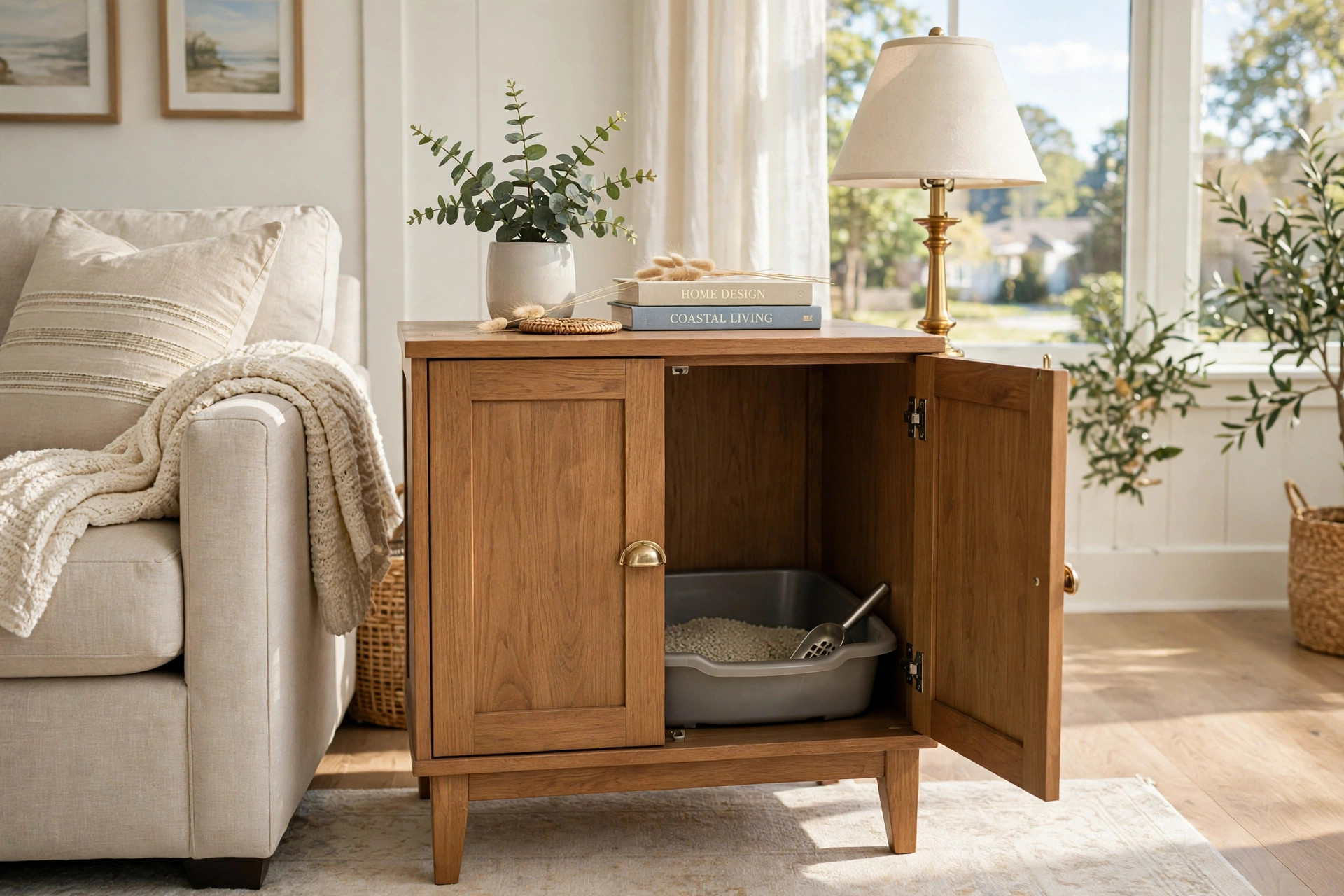

A cat brings joy to a home. A litter box does not. Most cat owners keep the box in a laundry room or a bathroom. Some hide it behind a plant or a curtain. But the best cat litter box cabinet for hiding litter goes one step further. It turns the box into furniture. It looks like a cabinet, a bench, or a side table. No guest ever guesses what is inside.
This guide walks you through every point that matters. You will learn why a cabinet helps, what to look for when you shop, the main types on the market, what they cost, how to keep one clean, and how to keep your cat safe and happy. By the end you can pick the right cabinet for your home with full peace of mind.
Why It Matters
A litter box is a daily sight in many American homes. About one in four households owns a cat. The box sits on the floor and collects odor. It shows dust and tracked litter. It is not pleasant for guests, and it is not pleasant for you.
A cabinet hides all of that. It gives the box a home of its own. The room looks tidy again. The cabinet also cuts down on odor. Walls slow the spread of smells. Many models add vents or charcoal filters for extra control. The result is a fresher living space.
Privacy matters for cats too. Some cats dislike a box that sits out in the open. They feel watched. They may hold back or go elsewhere. A cabinet gives them a quiet, closed space. Many cats prefer that. They feel calm, and they use the box as they should.
A cabinet also stops litter from spreading. Cats kick litter out of the pan. They carry grains on their paws. Without a cabinet, the litter lands on your floor and rugs. A cabinet catches much of it. The walls block the kicked litter. A mat inside the door catches the rest. Your floors stay cleaner with less work.
What to Look For When You Choose: Best Cat Litter Box Cabinet for Hiding Litter
Size and Fit
Measure before you buy. Measure the litter pan first. Then add room around it. Your cat needs space to turn and dig. A pan that fills the whole cabinet will not work. The cabinet should be wider and deeper than the pan by at least a few inches on each side.
Measure the space in your home too. Cabinets range from small side tables to large bench units. Check the door swing. Check that the door can open fully in your room. A cabinet that blocks a walkway will annoy you every day.
Entry Design
Most cabinets have a cat door cut in one side. Some have the hole on the front. Some have it on the side or the end. Think about where the cabinet will sit. Place the entry where your cat can walk in with ease. Do not press the entry against a wall or furniture.
Some models have no pre-cut hole at all. They expect you to cut one yourself. That gives freedom, but it takes tools and care. Most buyers prefer a ready-made entry. It is clean, smooth, and safe for paws.
Ventilation and Odor Control
A closed box can hold in smells. That is good for you, but bad for your cat. Look for vent holes or a vent panel. Air must move through the cabinet. Some cabinets include a spot for a carbon filter. The filter absorbs odor. You replace it every month or two. Good air flow keeps the cabinet fresh and keeps your cat willing to enter.
Material and Build
Wood cabinets look best. They match real furniture. Solid wood lasts longest. Engineered wood costs less and still looks fine. Particleboard is the cheapest, but it can swell if it gets wet. If your cat ever misses the pan, a damp cabinet is a risk. Look for sealed or laminated surfaces. They wipe clean.
Check the joints. Doors should hang straight. Hinges should feel firm. A wobbly cabinet will not last. Read the weight rating. Large cats need strong shelves and sturdy frames.
Easy Cleaning
You will clean this cabinet often. Make it easy on yourself. Look for a front door that opens wide or lifts off. A removable top is even better. You should reach the pan without a fight. The inside floor should be smooth. Smooth floors wipe down in seconds. Avoid rough wood or carpet inside. They hold smell and germs.
Noise
Some cats dislike noise. Doors that slam will scare a shy cat. Look for soft-close hinges or doors that lift off quietly. A cabinet that rattles when the cat jumps on it is a poor pick.
Types of Cabinets You Can Buy
Side Table Cabinets
The most common type looks like a small side table or nightstand. It has one or two doors. The cat enters through a side hole. Guests see a plain table. You can set a lamp or a book on top. These fit small rooms and apartments well. They suit one cat and a standard pan.
Bench and Chest Cabinets
A bench cabinet is wider and lower. It can seat a person or hold a cushion on top. It gives more room inside. Large cats and jumbo pans fit with ease. Some bench models hold two pans for two-cat homes. They cost more, but they offer more space and more style.
Tower and Armoire Cabinets
Tall cabinets use height instead of floor space. The box sits at the bottom. Upper shelves hold litter bags, scoops, and liners. This type works well in tight corners. It keeps all your cat supplies in one place. Check that the tall unit is stable. It should not tip if a cat jumps against it.
Two-Purpose Furniture
Some pieces serve two jobs at once. A cabinet may hide the box on one side and store linens on the other. A cat tree and litter cabinet in one unit can be a smart buy for small homes. These units solve two needs in one footprint. They often cost more, but they save space.
If you also want climbing space for a big cat, a sturdy tall cat tree is worth a look alongside the cabinet. You can place both in the same corner and make a full cat zone.
Cost and Price Ranges
Prices for a good cabinet run from about sixty dollars to over four hundred. The range depends on material, size, and brand.
Budget cabinets cost sixty to one hundred twenty dollars. They use engineered wood or particleboard. They work fine, but they may not last many years. Check the finish. Make sure it is sealed against moisture.
Mid-range cabinets cost one hundred twenty to two hundred fifty dollars. This is the sweet spot for most buyers. You get solid joinery, better finishes, and features like vents and soft-close doors. Many of the best-rated models sit in this range.
Premium cabinets cost two hundred fifty to four hundred fifty dollars or more. These use solid wood or high-grade plywood. They look like fine furniture. They last for years. Some include built-in filters and removable trays. If the cabinet will sit in your living room, the extra cost may be worth it.
Do not forget the running cost. You will buy filters, liners, and fresh litter. A covered pan inside a cabinet may need a self-cleaning litter box to cut daily scooping, though those cost more up front. Budget a few dollars a month for upkeep.
Care and Upkeep
A cabinet only works if you clean it. Plan a daily scoop. Open the door, scoop the pan, and close it again. The whole job takes two minutes. If you skip days, odor builds fast inside a closed space.
Once a week, wipe the inside floor and walls. Use warm water and mild soap. Rinse well. Strong cleaners leave a smell that cats dislike. Let the cabinet dry fully before you close it.
Once a month, pull the pan out and wash it fully. Wash the cabinet floor at the same time. Check the filter if your model has one. Replace it when it stops working. Check the hinges and screws too. Tighten anything loose.
Watch for damage. If the floor swells or stains, sand it lightly and seal it again. Small repairs keep the cabinet in service for years. A damp cloth under the pan can catch spills and save the wood.
Pair your routine with the right litter. A good covered litter box for small apartments uses the same care steps, and the cabinet adds one more layer of odor control on top.
Safety for Your Cat
Your cat must like the cabinet. If it does not, the cabinet is useless. Start slow. Leave the doors open for a few days. Let your cat explore. Place a treat inside. Do not force the cat through the hole.
The entry hole must be large enough. A small hole will trouble a large or older cat. The hole should be wide and set low to the floor. Older cats with stiff joints need an easy step in.
Never lock a cat inside. The cabinet is a shelter, not a cage. The door you use for cleaning must stay shut on its own, but the cat entry must always stay open. Check this each day.
Keep an eye on air flow. If the cabinet smells strong to you, it smells worse to your cat. Cats have a sharp sense of smell. Add a vent or change the filter. If your cat starts to avoid the cabinet, that is a warning sign. Clean it fully or move the box out until the cat feels safe again.
Kittens, sick cats, and senior cats need extra care. Watch them use the cabinet the first few times. Make sure they can get in and out with ease. If they struggle, pick a cabinet with a lower entry or a ramp.
Place the cabinet in a calm spot. Avoid loud rooms, heavy foot traffic, and the path of dogs or small children. A quiet corner of a living room or bedroom works well for most cats.
Frequently Asked Questions
Will my cat actually use a cabinet?
Most cats adjust within a week or two. A few need more time. Keep the box in the same room as before. Move the old open box next to the cabinet at first. Let the cat see the cabinet is safe. Use treats and praise. Most owners report full use within ten days.
Do cabinets really cut odor?
Yes, but they do not erase it. Walls block much of the smell. Vents and carbon filters help more. Daily scooping matters most. A dirty pan inside a cabinet will still smell. Keep up the routine and the room will stay fresh.
Can two cats share one cabinet?
Yes, if the cabinet is large enough. You need room for a jumbo pan or two standard pans. Bench-style cabinets work best for two cats. Some experts suggest one box per cat plus one extra. Two boxes in one large cabinet can meet that rule.
How do I hide the cabinet in a small apartment?
Pick a side table style. Place it next to your sofa or in a corner. Add a lamp or a plant on top. No one will look twice. Keep the cat entry facing a wall gap or a quiet side. Many renters use this trick with great success.
What if my cat is large?
Measure your cat and your pan. Large breeds need bench or tower cabinets with wide doors and low entries. Check the hole size in the product details. If it is under eight inches wide, it may be too small. Some owners cut a larger hole themselves, but that voids the warranty on some models.
Is a cabinet better than a plain covered box?
A cabinet looks better and holds odor in more fully. A plain covered box costs less and is easier to move. For looks and style, the cabinet wins. For low cost and simple care, the covered box wins. Your home and your budget will guide the choice.
A Final Word
The best cat litter box cabinet for hiding litter is the one your cat will use and you will clean. Style matters, but comfort matters more. Pick a cabinet that fits your pan, fits your room, and vents well. Keep the routine simple: scoop daily, wipe weekly, wash monthly. Your home will look better, smell better, and your cat will have a quiet private spot of its own.
Take your time when you shop. Compare three or four models. Read real buyer reviews. Check return terms in case your cat says no. A little care now saves trouble later. Your cat and your living room will both thank you.
For more background, see PetMD, American Kennel Club, and The Spruce Pets. For more background, see The Home Depot, Chewy, and ASPCA. See also Petco and PetSmart for further detail.
References
American Kennel Club. (n.d.). Dog care and training resources. https://www.akc.org ASPCA. (n.d.). Pet care and animal welfare resources. https://www.aspca.org Chewy. (n.d.). Pet supplies. https://www.chewy.com Petco. (n.d.). Pet supplies and services. https://www.petco.com PetMD. (n.d.). Pet health information. https://www.petmd.com PetSmart. (n.d.). Pet supplies and services. https://www.petsmart.com The Home Depot. (n.d.). Home improvement products. https://www.homedepot.com The Spruce Pets. (n.d.). Pet care guides and product reviews. https://www.thesprucepets.com
Was this guide helpful?

About Jennifer Lee
The My Garden US editorial team writes practical, in-depth home and garden guides for American homeowners — tested advice, no fluff.
You May Also Like

Heated Pet Mat for Outdoor Shelter Warmth: A Complete Guide
March 19, 2026 0 views
Dog Crate Mat Waterproof for Messy Puppies: A Complete Guide
February 10, 2026 0 views
Best Calming Bed for Anxious Rescue Dogs: A Complete Guide
September 23, 2026 0 views