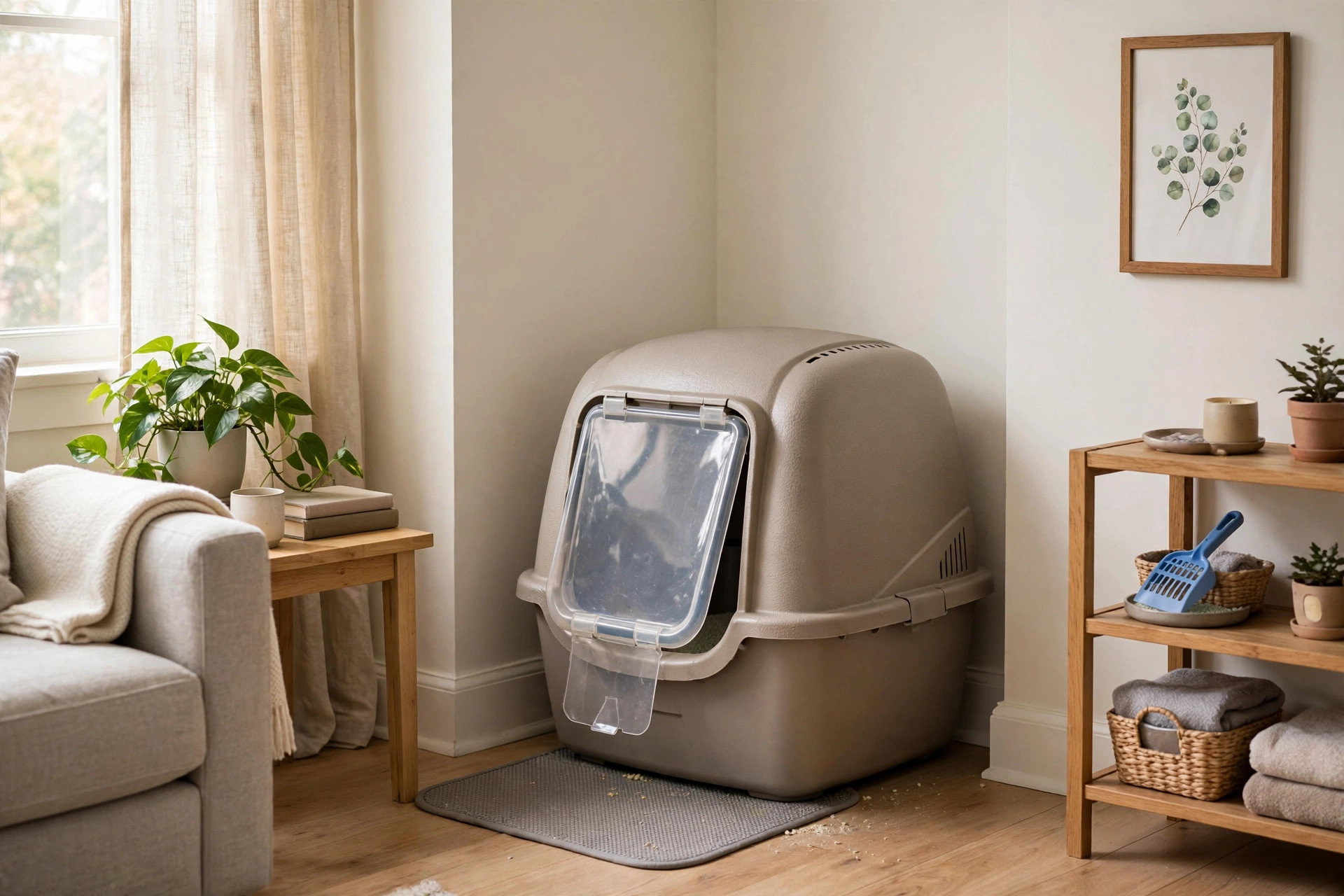

Living with a cat in a small apartment is a happy thing, but space is tight and the litter box sits close to where you eat, sleep, and work. For that reason, the best covered litter box for small apartments is more than a nice extra. It keeps odors inside, hides the mess from guests, and fits into a small room without taking over. This guide explains what to look for, which types suit small spaces, what they cost, and how to keep them clean and safe for your cat.
Why a Covered Box Matters in a Small Apartment
In a large house, the litter box can live in a laundry room or a basement, far from the family. In a small apartment, that distance does not exist. The box may sit in a bathroom corner, a hallway, or even the edge of a bedroom. Every smell reaches you within seconds, and visitors notice it right away. A covered box puts a lid on the problem, quite literally.
A hood or cover traps much of the odor at the source. Many models hold a small carbon filter in the lid, which absorbs smells as air passes through. The result is a room that smells normal even a few hours after the cat has used the box. In a studio apartment, where the kitchen, living room, and bedroom share one space, this single change can make daily life much more pleasant.
Privacy is another real benefit. Most cats prefer a quiet, sheltered spot for their business. An open pan in the middle of a busy room can make a nervous cat hold it in or choose a corner of the carpet instead. A covered box gives the cat a sense of shelter. It also keeps digging litter inside the box. Cats kick litter with force, and in a small space the scatter lands on floors, rugs, and bed covers. High walls and a lid cut down the cleanup.
There is also the simple matter of looks. An open pan of litter is not something most people want in their living space. A covered box, especially one with clean lines, blends into a corner like a small piece of furniture. Some models are even built to look like side tables or planters. When square footage is precious, a box that doubles as a surface is a smart use of space, and pet care guides such as The Spruce Pets often point new cat owners toward covered designs for exactly these reasons.
What to Look for When You Choose: Best Covered Litter Box for Small Apartments
Not every covered box suits a small apartment. A model made for a big house may be too wide, too tall, or too hard to clean in a tight corner. Keep the points below in mind before you buy.
Size and Shape
Measure the spot where the box will go before you shop. Write down the width, depth, and height of that space, and take the tape measure to the store or check the dimensions online. A common rule is that the box should be at least one and a half times the length of your cat from nose to tail, so the animal can turn around and dig in comfort. A cramped box leads to missed aims and litter on the floor.
At the same time, the box must fit your room. Tall boxes with high walls work well in corners but may not slide under a sink or a low shelf. Some covered boxes are made for corners, with a triangle shape that tucks neatly into a bathroom or closet corner. Rectangular models sit flat against a wall. If the box will stand near a door, check that the swinging cat flap clears the door when it opens.
Doors, Filters, and Air Flow
Most covered boxes have a swinging door that the cat pushes through. This keeps odors in and curious dogs or small children out. Some cats take to the door at once; others need it removed for a few days while they learn. A good model lets you take the door off and on with ease.
The carbon filter is the part that fights smells. It sits in a vent or slot in the lid and needs changing every month or so. Check that replacement filters are easy to find and not too costly. Also think about air flow. A box that seals too tightly keeps smells in but can hold in damp air as well, which some cats dislike. Models with several small vents give a better balance: odors stay low, but fresh air moves through.
Materials and Build
Look for smooth, thick plastic that resists stains and does not hold odor in its pores. Cheap, thin plastic can crack at the corners after a few months and absorb smells that no amount of washing removes. A well built box has a tight fitting lid, strong latches, and no sharp edges inside. The lid should come off with one hand, because you will remove it daily for scooping. Rounded corners make wiping and washing faster. Pet supply retailers such as Chewy list material details in product descriptions, so read them before you decide.
Types and Options
Covered boxes come in three main styles. Each has strengths for small homes.
Standard Covered Pans
This is the classic style: a litter pan with a hooded lid and a swinging door. It is simple, cheap, and easy to clean. It fits almost any corner and works for most cats. The main limits are odor control, which depends on how often you scoop, and size, since very large cats may feel tight inside. For one cat in a small apartment, this style is often the best value.
Top-Entry Boxes
In a top-entry box, the cat jumps in through a hole in the lid. There is no side door, so litter kicked up during digging falls back through the lid instead of onto your floor. Many lids have a rough top surface that brushes litter off the cat’s paws as it leaves. This style suits small apartments because it nearly ends litter scatter. The trade off is access: older cats, kittens, and cats with stiff joints may find the jump hard. If your cat is senior, test whether it can hop in and out with ease before you commit.
Self-Cleaning Covered Models
Self-cleaning boxes rake or rotate the litter after each use and push waste into a sealed bin. Some covered versions of this design exist, and they are the strongest choice for odor control in a tiny home. The waste sits in a closed compartment, often with a carbon filter, until you empty it every few days. They cost far more than basic boxes, and they need power and replacement waste bags or trays. Busy owners who want the self-cleaning litter box for busy cat owners route can read more about these models in a separate guide, and self-cleaning models such as Litter-Robot show how the covered automatic style works.
Cost and Price
Prices vary widely, so set your budget before you shop. A standard covered pan costs between fifteen and thirty dollars. Mid-range models with better filters, nicer plastic, and corner shapes run thirty five to sixty dollars. Top-entry boxes fall in a similar range, often thirty to fifty dollars. Self-cleaning covered models are the big step up, usually three hundred to six hundred dollars for a full size unit.
Remember the running costs. Carbon filters for the lid usually cost a few dollars each and last about a month. Liners, if you use them, add a small yearly cost. Clumping litter made for odor control, covered in our guide to the best cat litter for odor control multi cat homes, costs more than plain clay but lasts longer and smells better. Over a year, a basic covered box with good litter and fresh filters can cost less than a cheap box that needs replacing. Home improvement retailers such as Home Depot and pet stores such as PetSmart carry the full range, so compare prices in both places before you buy.
Care and Upkeep
A covered box only works well if you keep it clean. Scoop waste at least once a day, and twice a day is better in a small apartment where the box sits near your living space. Top up the litter so it stays two to three inches deep. This depth lets clumps form well and keeps the bottom of the pan cleaner.
Once a week, dump the litter, wash the pan and lid with warm water and a mild soap, and dry them fully before you refill. Avoid strong cleaners with heavy perfume, since the smell can drive the cat away from the box. Once a month, change the carbon filter and check the door flap and latches for wear. A loose latch or a cracked lid lets odors escape, which defeats the purpose of the cover.
Watch the litter level near the door. Some cats dig a low spot by the entrance and send litter over the edge of the pan. A small mat under and around the box catches what escapes and protects your floor. Wash the mat with the weekly cleaning.
Safety
Safety matters most in a tight home, where the box may sit near a kitchen or a childs play area. Keep the box away from food preparation areas and from the cats food and water bowls. Cats do not like to eat near their toilet, and keeping the stations apart is better hygiene for the whole home. If you want advice on water placement, our guide to the best pet water fountain for multiple cats covers how far to set water from food and litter.
Ventilation is the main safety point with covered boxes. The lid should never make the inside air stale. Choose a model with vents, change filters on time, and if the box smells sharp or damp when you open it, clean it more often. Kittens under about six months and very small cats can feel trapped in a deep covered box, so watch young animals until you are sure they can enter and leave with ease.
For self-cleaning models, follow the maker instructions on power cords and keep the cord out of reach of chewing pets. Never place an electric box where water can splash it. Animal welfare guidance from the ASPCA and veterinary-reviewed articles on PetMD both stress that any litter box, covered or not, must stay clean and easy to reach, since a dirty or hard to enter box is the top reason cats stop using it.
Frequently Asked Questions
Will a covered box make my apartment smell worse?
No, as long as you scoop daily and change the filter on time. The cover traps odors at the source instead of letting them drift into the room. A covered box only smells bad when it is neglected, and the same is true of an open pan. In fact, most owners of small homes find the air fresher after switching to a covered box.
Do all cats accept a covered box?
Most do, but some need time. Start with the door flap removed so the cat sees it as an open shelter. After a few days, put the flap back on. If the cat refuses to enter at all, try a different style, such as a top-entry box, or keep the lid off for a week and add it later. Never force the cat inside.
How many boxes do I need in a small apartment?
The old rule is one box per cat plus one extra. In a small apartment with one cat, one well kept box is often enough if you scoop it daily. With two cats in a tight space, try to fit two boxes in different spots, even small ones. Two boxes used well beat one box that gets dirty fast.
Are covered boxes harder to clean?
A little, but not much. The lid adds one step: lift it off before you scoop. Models with latches that open with one hand make this quick. The weekly wash takes the same time as an open pan, since you wash the lid along with the base. The time you save not sweeping scattered litter often makes up for it.
Can I put a covered box in a closet?
You can, if the closet door stays open enough for the cat to come and go and for air to move. A closed closet traps heat and smell, which is bad for the cat and for the room. Many apartment dwellers cut a small cat door into a closet or cabinet door, which gives the cat free access while keeping the box out of sight. Make sure the space has some air flow.
A Short Final Word
The best covered litter box for small apartments is the one that fits your space, controls odor, and suits your cat. Measure your corner, pick a style your cat will use, and keep up the simple habit of daily scooping. A small home does not have to smell like a litter box. With the right covered model, good litter, and regular care, your apartment can stay fresh and your cat can stay happy. Take your time choosing, read product details on trusted pet sites such as Petco and cat care coverage on Catster, and pick the box that matches your home and your routine.
References
ASPCA. (n.d.). Pet care and animal welfare resources. https://www.aspca.org Catster. (n.d.). Cat care news and advice. https://www.catster.com Chewy. (n.d.). Pet supplies. https://www.chewy.com Litter-Robot. (n.d.). Self-cleaning litter boxes. https://www.litter-robot.com Petco. (n.d.). Pet supplies and services. https://www.petco.com PetMD. (n.d.). Pet health information. https://www.petmd.com PetSmart. (n.d.). Pet supplies and services. https://www.petsmart.com The Home Depot. (n.d.). Home improvement products. https://www.homedepot.com The Spruce Pets. (n.d.). Pet care guides and product reviews. https://www.thesprucepets.com
Was this guide helpful?

About David Wilson
The My Garden US editorial team writes practical, in-depth home and garden guides for American homeowners — tested advice, no fluff.
You May Also Like

A Practical Guide to a Pet Ramp for Couch for Small Senior Dogs
May 18, 2026 0 views
Choosing a Pet Carrier Backpack for Small Dogs Hiking
March 20, 2026 0 views
Best Outdoor Dog Kennel for Large Breeds USA: A Plain Guide to Choosing Well
July 16, 2026 0 views