
Why a Pet Hair Dryer for Dogs Low Noise Grooming Matters
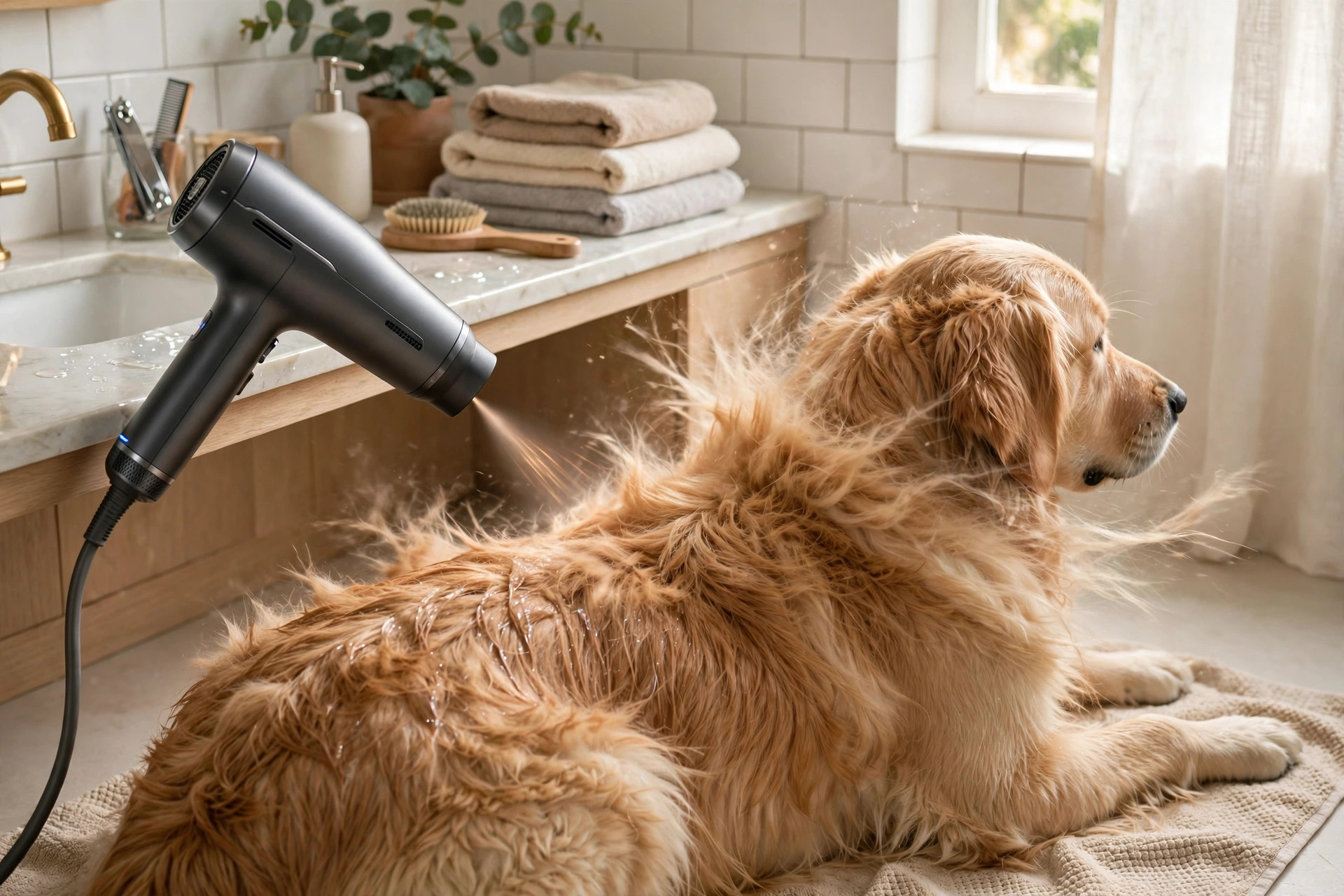
A pet hair dryer for dogs low noise grooming is one of the best tools a dog owner can keep at home. A bath is only half the job. The drying is where many dogs become afraid, cold, or stressed. A loud human hair dryer can hurt their ears and send them running. A dryer built for pets, made to run quiet, turns a hard task into a calm routine. The right dryer saves time, keeps the coat healthy, and keeps the dog relaxed from start to finish.
Most dogs need a full bath every four to eight weeks, and some breeds need one more often. In between, rain, mud, and play leave coats wet and dirty. Air drying sounds easy, but it takes a long time. A wet coat can chill a small dog, and damp fur near the skin can lead to hot spots and smell. A dryer moves the job along. When the dryer runs quiet, the dog learns that drying time is safe time.
This guide covers why low noise matters, what to look for, the main types, what they cost, how to care for the tool, and how to keep every session safe.
Why Low Noise Makes Such a Big Difference: Pet Hair Dryer for Dogs Low Noise Grooming
Dogs Hear Far More Than We Do
Dogs hear sounds at much higher pitches than people. A dryer that sounds mild to you can sound sharp to them. Many standard dryers also send out high whines that grow worse as the motor warms up. A dryer made for low noise grooming uses a quieter motor, a smoother fan, and a housing that blocks sound. The result is a steady, low hum instead of a sharp roar.
Fear is the most common reason dogs hate the dryer. A scared dog may shake, bark, hide, or snap. Once fear sets in, future baths get harder. The ASPCA notes that gentle, step-by-step training works better than force for most grooming tasks, and a quiet dryer fits that idea well (https://www.aspca.org).
Calm Drying Builds Trust
A quiet dryer lets the owner talk to the dog in a normal voice during the session. The dog can hear praise and soft commands. Short sessions, treats, and a calm voice build a habit the dog will accept. Many owners find that after three or four calm sessions with a low noise dryer, the dog walks to the grooming spot on its own.
Better Coats and Cleaner Homes
A dryer does more than remove water. The warm air lifts loose hair from the undercoat, so less of it ends up on the couch and the floor. For double-coated breeds, a dryer used with a brush can pull out loose tufts that a brush alone misses. The coat dries straight and full instead of matted. Skin stays dry, which lowers the chance of musty smell.
What to Look for When You Choose a Dryer
Noise Level
Noise is measured in decibels, often marked as dB. Most quiet pet dryers list levels between 50 and 70 dB. As a rough guide, a quiet room sits near 40 dB, and a loud human dryer can reach 80 dB or more. Look for a dryer that lists its dB rating and reads 60 dB or less. Some brands list noise levels measured a few feet away, so check how the test was done before you compare two models.
Keep in mind that pitch matters as much as volume. A low hum at 60 dB feels calmer than a high whine at the same level. Reviews from other dog owners are useful here. The team at Chewy gathers large numbers of owner reviews for grooming tools, and the reviews often describe real noise levels (https://www.chewy.com).
Heat Settings and Airflow Control
Good dryers let you change both heat and airflow. Warm air dries the coat; hot air can burn skin. A dryer with at least two heat settings, plus a cool setting, gives you room to work. Strong airflow dries thick coats fast, but full force can scare a small dog. Variable speed is the key feature. Start low and slow, then raise the airflow as the dog relaxes.
Motor Type
Two motor types show up most often. Brushed motors cost less and dry well, but they run louder and wear out sooner. Brushless motors run quieter, last longer, and cost more. If low noise is your main goal, a brushless motor is worth the price.
Nozzles and Attachments
Flat nozzles aim air under the top coat to reach the undercoat. Round nozzles give a soft, wide stream for short hair. Comb nozzles smooth long hair while they dry. A set of three or four attachments makes one dryer fit many coat types.
Weight, Cord Length, and Filters
A heavy dryer tires the arm during a long session. Look for a unit under five pounds if you will hold it. A long power cord, ten feet or more, lets you work around the dog without dragging the unit. Washable filters keep hair out of the motor and make the dryer last longer.
Types of Pet Hair Dryers
Handheld Quiet Dryers
Handheld dryers look like large human dryers but run cooler and quieter. They are easy to aim and easy to store. They suit small dogs and quick touch-ups. Their airflow is mild, so they take longer on thick coats. Most cost less than other types.
Stand Dryers and Hands-Free Stands
Some owners pair a handheld dryer with a stand that holds it at the right height. The stand frees both hands for brushing, which cuts drying time. The dog also hears the same steady sound instead of a dryer moving near its face.
High-Velocity Dryers with Quiet Design
High-velocity dryers blow water off the coat with strong air rather than heat. They dry heavy coats very fast. The catch is noise: the strongest models are loud. Newer quiet designs add sound insulation and brushless motors to cut the roar. These models cost more, but they serve owners of thick-coated breeds well.
Cage and Kennel Dryers
These box-shaped units sit near the dog and blow warm air while the dog rests. Hands stay free, and the dog never faces a nozzle. They suit nervous dogs that dislike aimed air. They take up space and cost more, and they need close watch so the dog does not get too warm.
For owners who want to compare full product lines, the grooming section at Petco gives a broad view of current designs (https://www.petco.com). PetSmart also lists a wide range with owner ratings (https://www.petsmart.com).
Cost and Price: What to Expect
Prices vary by type and motor. Handheld quiet dryers often sell between 40 and 90 dollars. Mid-range high-velocity models with sound insulation run from 90 to 180 dollars. Top brushless models with full speed control can reach 200 to 300 dollars. Cage dryers usually start near 150 dollars and rise from there.
Price often tracks noise. The cheapest dryers tend to run loudest. A mid-price brushless unit is the sweet spot for most homes: quiet enough to keep the dog calm, strong enough to dry a thick coat, and built to last years. Set a budget that fits your dog’s coat and your bath schedule. A dog bathed monthly justifies a better dryer than one bathed twice a year.
Watch for deals during spring and fall, when grooming tools sell well. The Humane Society offers general guidance on home pet care costs that can help with budget plans (https://www.humanesociety.org).
Step-by-Step: A Calm Drying Session
1. Towel first. Squeeze, do not rub, the coat with an absorbent towel. Rubbing tangles long hair. A good towel pass cuts drying time by a third. 2. Start on low. Set the dryer to its lowest heat and speed. Aim it at the back, not the face. Let the dog feel the air on its body for a minute. 3. Work in sections. Move from the neck to the tail in small areas. Hold the nozzle a few inches from the coat. Brush each section as you dry it. 4. Reward calm behavior. Give small treats when the dog stands still. Speak in a soft, even voice. If the dog panics, stop and try again later. 5. Finish with cool air. A cool pass settles the coat and adds shine. It also tells the dog the session is over.
PetMD offers vet-reviewed advice on home grooming routines that pair well with these steps (https://www.petmd.com).
Care and Upkeep of Your Dryer
A dryer lasts longer with simple care. Clean the filter after every few uses. Hair clogs the intake and makes the motor run hot. Wipe the housing with a damp cloth when dust builds up. Check the cord for nicks and cracks once a month. A damaged cord is a shock risk and should be replaced.
Store the dryer in a dry place, away from the tub. Hang nozzles where they will not crack. Once a year, run the dryer for a minute and listen for changes in sound. A new rattle or whine can mean worn parts. Many owners buy from large home stores that stock spare filters and parts; Home Depot carries a range of pet care tools alongside its home goods (https://www.homedepot.com).
If the dryer blows weak air, the filter is the first thing to check. If it runs hot but weak, the intake may be blocked. Simple fixes solve most problems. For faults you cannot see, take the unit to a repair shop rather than opening it yourself.
Safety Rules Every Owner Should Follow
– Never leave a dryer running near an unattended dog. A dog can chew the cord or knock the unit over. – Keep heat low around the face, ears, and belly. Skin is thin there. Test the air on your own wrist first. – Watch for signs of stress. Panting, yawning, lip licking, and tucked tails mean the dog needs a break. – Keep water away from the plug. Dry your hands before you touch the switch. Plug the dryer into a grounded outlet. – Do not dry a dog that is shaking hard from cold. Wrap the dog in towels first and warm the room. Then start the dryer on low. – Puppies and old dogs need extra care. Use the lowest settings and the shortest sessions. Their skin is thin and their patience is short.
The American Kennel Club publishes grooming safety tips that cover bath and dry routines for many breeds (https://www.akc.org). Their breed pages also note coat types that need extra drying care.
How Low Noise Dryers Help Common Grooming Problems
Shedding Season
Twice a year, many breeds blow their undercoat. Loose hair fills the house. A dryer with a flat nozzle lifts dead hair out fast. Pair drying with a slicker brush and you can fill a bag of loose fur in one session. The Spruce Pets gives seasonal shedding guides that explain when to expect the worst of it (https://www.thesprucepets.com).
Matted Coats
Mats hold water and dry slowly. Never aim hot air at a tight mat. It tightens the knot and heats the skin under it. Work mats out with a detangling spray and a wide comb before the bath. If the mat will not yield, clip it out. Then dry the area on low heat.
Nervous Rescue Dogs
Dogs new to a home may fear every tool. Start with the dryer off. Let the dog sniff it. Give treats near it. Then run it in the next room so the dog hears the sound from far away. Move closer over several days. A low noise dryer shortens this process because the sound is mild from the start. VetStreet offers behavior advice for fearful dogs that fits well with slow dryer training (https://www.vetstreet.com).
FAQ
How long should a drying session last?
A small short-haired dog may dry in ten minutes. A large double-coated dog can take thirty to forty minutes. Work in short blocks with breaks. Stop if the dog shows stress. A half-dry calm dog is better than a dry scared one.
Can I use my own hair dryer on my dog?
It is better not to. Human dryers run hotter and louder than pet dryers. The heat can burn thin dog skin, and the noise can cause fear. A pet dryer costs more up front but is safer and calmer for regular use.
What noise level is safe for dogs?
Stay under 70 dB if you can, and aim for 60 dB or less. Watch the dog, not just the label. If the dog flinches at the sound, the dryer is too loud for that dog, no matter what the box says.
Do I need different nozzles for different coats?
One dryer can serve the whole house if it ships with several nozzles. Use a flat nozzle for thick undercoats, a round nozzle for short coats, and a comb nozzle for long silky hair. Switch nozzles as you move across the body.
How often should I clean the filter?
Check it after every two or three uses. Homes with heavy shedders may need a check after each use. A clean filter keeps airflow strong and the motor cool.
Is a low noise dryer worth the higher price?
For most owners, yes. The dryer gets used for years. A quiet model means less fear, faster sessions, and fewer half-dried coats. The extra cost pays for itself in calm baths.
Internal Reading
For more home grooming help, see these related guides:
– Best pet camera for watching dogs at work – Best dog toothpaste enzymatic for bad breath – Outdoor dog kennel with welded wire panels
A Short Final Word
A pet hair dryer for dogs low noise grooming turns bath day from a battle into a routine. Pick a dryer with low decibels, changeable heat and speed, and the right nozzles for your dog’s coat. Towel first, start low, reward calm, and keep every session safe. The coat will dry faster, the house will hold less loose hair, and the dog will learn that the dryer is nothing to fear.
For more background, see Petco and PetSmart.
References
American Kennel Club. (n.d.). Dog care and training resources. https://www.akc.org ASPCA. (n.d.). Pet care and animal welfare resources. https://www.aspca.org Chewy. (n.d.). Pet supplies. https://www.chewy.com Petco. (n.d.). Pet supplies and services. https://www.petco.com PetMD. (n.d.). Pet health information. https://www.petmd.com PetSmart. (n.d.). Pet supplies and services. https://www.petsmart.com The Home Depot. (n.d.). Home improvement products. https://www.homedepot.com The Spruce Pets. (n.d.). Pet care guides and product reviews. https://www.thesprucepets.com
Was this guide helpful?

About Lisa Anderson
The My Garden US editorial team writes practical, in-depth home and garden guides for American homeowners — tested advice, no fluff.
You May Also Like
Best Pet Odor Eliminator for Yard and Grass: A Practical Guide
September 1, 2026 0 views
The Best Dog Shampoo for Sensitive Itchy Skin
April 18, 2026 1 views
Pet Water Dispenser Gravity Fed for Dogs: A Simple Guide for Owners
March 18, 2026 0 views