
Introduction
A gardener who knows the names of the plants in the ground works with more confidence. Seeds that look alike in spring can become very different plants by July. That is why finding the best plant markers waterproof for garden beds is worth the small effort. A marker that survives rain, sun, and watering saves the gardener from guessing at planting time and from trouble at harvest.
Most markers fail for one of three reasons. The writing washes off in the first heavy rain. The sun bleaches the ink by midsummer. Or the stake snaps when the soil is hard. Good markers avoid all three. This guide explains which materials and inks hold up, what shapes suit different gardens, what they cost, and how to keep them working year after year.
Why Waterproof Markers Matter: Best Plant Markers Waterproof for Garden
A Name Is a Tool
Every planting decision rests on knowing what is in the ground. A bed of young seedlings may hold tomatoes, peppers, and eggplants, all with the same plain green leaves at first. Without a marker, the gardener must wait until fruit forms to know which is which. By then, the plants may need different feeding, different support, or different spacing. A small stake with a clear name removes the guesswork.
Rain Is the Hardest Test
Garden beds are wet places. Sprinklers run daily in dry months. Storms soak the soil for days. Markers that are not waterproof lose their writing in the first weeks. Felt-tip writing on a wooden stake turns into a gray smear after two rains. Plastic labels marked with the wrong pen go blank in a month. A marker built to resist water keeps its name readable from planting to harvest, which is exactly the period when the name is needed most.
Sun Fades Weak Ink
Ultraviolet light breaks down most ordinary ink. A marker may survive the rain but still turn blank under strong sun. This happens most in southern gardens where the summer sun is fierce. The best plant markers waterproof for garden use pair a water-resistant surface with a UV-stable ink or pencil. Either element alone is not enough. The surface and the writing must both be chosen for the weather.
What to Look For
The Writing Surface
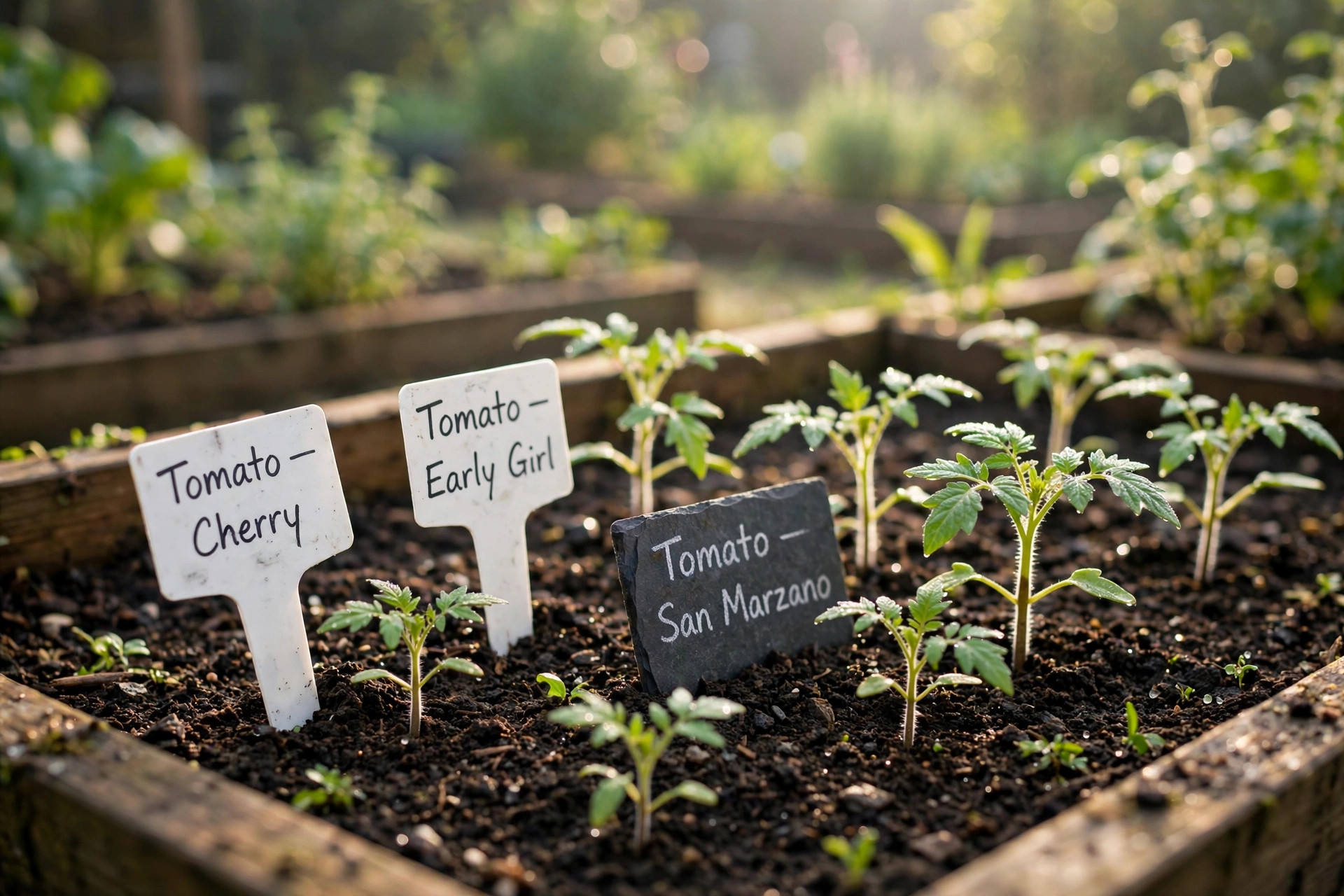
A waterproof marker is only as good as its writing surface. Smooth plastic takes ink well but can shed it when wet. Textured surfaces grip pencil lead and keep it through rain. Metal markers need the right pen or they wipe clean. Before buying, decide how you will write on the marker. Oil-based paint pens work on most plastics and metals. Graphite pencil works best on rough or matte plastic. Test one marker in a bucket of water before marking a whole set.
The Stake
The stake must go into the soil without bending and stay there through wind. Short labels vanish under mulch. Tall thin stakes lean and fall. For raised beds, a stake of four to six inches stands well above the soil line. For in-ground rows, six to eight inches holds firm. Look for a tapered end that pushes in without a tool. Copper and galvanized stakes resist rust. Thick plastic resists cracking in winter.
Size of the Writing Area
Small labels force cramped writing that is hard to read from standing height. A writing area of about three inches by one inch takes a full plant name and a date in clear letters. Two-sided markers double the space and let the gardener record the variety on one side and the planting date on the other. This detail matters when comparing varieties across seasons.
How Many You Need
Gardeners often buy too few. Count every variety, then add a quarter more for replacements and for splits. A vegetable bed with twelve crops may need fifteen markers. A flower garden with mixed plantings may need thirty. Buying one larger set usually costs less per marker than buying small packs.
Types of Waterproof Plant Markers
Plastic T-Stakes
The common T-shaped plastic stake is the workhorse of the garden. It is cheap, light, and easy to write on. Good ones use UV-stabilized polypropylene that does not turn brittle in the sun. The writing face holds pencil well when it has a matte finish. Weak points are thin stems that snap in hard soil and ink that washes off smooth glossy types. Choose stakes with a wide head and a thick stem.
Slate and Stone Labels
Slate markers give the garden a settled, old-fashioned look. They are heavy enough to stay put in wind. Writing with a special oil pen or a china marker resists rain for a full season. The cost is higher and the writing area is small. Slate suits herb gardens and small borders where beauty matters as much as function.
Metal Stakes
Copper and zinc metal markers last for many years. Copper develops a patina that many gardeners find attractive. Zinc plates take pencil writing that survives years of weather. The stakes rarely rust through. Prices run higher than plastic, but one set may serve for a decade. Metal markers are the standard in botanical gardens and serious vegetable plots.
Chalkboard Stakes
Chalkboard markers let the gardener change the writing each season. A coat of chalk paint on a wood or metal stake makes the surface. Chalk pens write clearly and resist light rain. Heavy rain washes them off, so they suit covered beds or dry climates better than open beds in wet regions. They are a fair choice for gardeners who rotate crops every year.
Wooden Stakes with Coating
Plain wood rots in one season. Wooden stakes dipped in a weatherproof seal can last two or three. Paint pens write well on sealed wood. The cost is low and the look is natural. The weakness is the seal, which wears at the soil line where moisture is constant. Re-coat each spring or accept that the set needs regular replacement.
Clay and Ceramic Markers
Clay markers suit small pots and window boxes. They take writing with paint pens and dry quickly. Frost can crack thin clay, so they belong in pots that come indoors for winter. For patio gardens, they are a charming and practical choice.
Cost and Price
Waterproof plant markers span a wide price range. Basic plastic T-stakes sell in packs of twenty to one hundred for a few dollars to about fifteen dollars. That puts the cost per marker well under a dollar. Slate labels cost from fifty cents to two dollars each. Metal markers range from one to four dollars each, depending on size and metal. Chalkboard and clay markers fall in the middle.
Price follows durability. A plastic stake that lasts one season costs less than a metal stake that lasts ten. For a gardener who grows the same herbs each year, the metal marker is the cheaper choice over time. For a trial bed of new varieties, cheap plastic is sensible. Set a budget after deciding how many seasons the markers should serve.
How to Write on Them So It Lasts
Choose the Right Tool
The pen matters as much as the marker. Standard ballpoint ink fades fast. Water-based felt tips wash away. Oil-based paint pens, laundry markers, and china markers resist water. Plain graphite pencil survives rain on matte plastic and zinc better than many inks, because it sits in the texture rather than on it. Avoid gel pens and washable markers entirely.
Write Large and Deep
Small neat letters fade first. Write the plant name in letters at least half an inch tall. Press firmly so the mark has depth. Add the date of planting in smaller letters below. If space allows, note the seed source or variety number. A marker that carries variety and date becomes a record of the season, not just a name.
Let Ink Cure
Paint pens need time to set. Write the markers indoors and let them dry for a full day before placing them in the bed. A pen that is rushed into wet soil may smear on first watering. This small habit doubles the life of the writing.
Care and Upkeep
Clean Them at Season End
When the bed is cleared in autumn, pull the markers and wash them in soapy water. A soft brush removes algae and soil stains. Check each one. Snapped stems, cracked faces, and unreadable names go to the bin. The survivors go back into a labeled bag for spring.
Store Out of Sun
Winter storage matters. A box of markers left in the sun fades even before spring. Store cleaned markers in a dark, dry place. A drawer in the shed or a shelf in the garage serves well. Metal markers can stay in the ground, but lifting them makes spring layout easier.
Refresh Writing in Spring
Old pencil writing may look gray in March. A fresh pass with the same pencil takes seconds per marker and restores full readability. Paint pen writing that has faded can be traced over or sanded off and redone. Spending an hour on this task before planting saves confusion all season.
Safety
Plant markers are low-risk tools, but a few cautions apply. Thin metal stakes have sharp ends. Wear gloves when pushing them into hard soil, and keep the points away from children and pets. Small markers can become a choking hazard for toddlers who like to pull things from garden beds. Place markers deep enough that they do not come loose in heavy wind and become litter in the street.
Some old markers were painted with lead-based paint. If you inherit a set of painted markers of unknown age, replace them rather than scraping them. New markers from established makers meet current safety standards. When choosing markers for a garden edging project near vegetable beds, favor plain, unpainted materials that cannot flake into the soil.
Fitting Markers Into Your Garden Plan
Markers work best as part of a plan, not as an afterthought. Draw the bed on paper before planting. Assign each variety a number and write that number on the marker along with the name. When setting up a watering system for raised beds, place the markers first so the drip lines do not cover them. In herb gardens, group the markers for plants with similar needs so feeding and pruning stay simple. For gardeners building a full identification system, pairing markers with garden labels for plant identification gives both in-bed tags and a reference list indoors.
Supplies for marking and planting are easy to find. Garden centers carry the basic plastic and slate types. Wider choices, including metal and specialty markers, appear at retailers such as Gardener’s Supply and Lowe’s. Comparative reviews of outdoor gear appear at Consumer Reports. Tool reviews and buying guides from Fiskars help match the marker to the garden tools you already own. For hands-on advice, Family Handyman covers garden projects step by step, while The Spruce offers clear guides to bed layout and plant care. Seed and plant experts at Burpee often suggest marker types suited to the varieties they sell, and Corona Tools lists stakes and markers alongside pruning gear. General garden how-to writing at Bob Vila rounds out the shelf of sources worth a look.
Frequently Asked Questions
How long do waterproof plant markers last?
It depends on the material. Cheap plastic stakes last one season. UV-stabilized plastic lasts two to three. Slate and wood last several seasons with care. Metal markers can last ten years or more. The writing usually fades before the stake fails, and refreshing the writing each spring extends the useful life of any marker.
What pen should I use on plastic plant markers?
Use an oil-based paint pen, a laundry marker, or a plain graphite pencil on matte plastic. Avoid water-based felt tips and gel pens. Let paint pens dry for a day before the marker goes outdoors. Pencil works best on rough or matte surfaces, where it settles into the texture and resists rain.
Can I reuse plant markers each year?
Yes, if the surface allows it. Metal and slate markers take new writing each season. Plastic stakes marked with pencil can be erased with an eraser and reused. Paint pen writing can be sanded off smooth plastic. Chalkboard stakes are designed for reuse. Replace any marker that has cracked or faded beyond reading.
Do wooden plant markers rot?
Untreated wood rots in one season in wet soil. Wood sealed with a weatherproof coating lasts two to three seasons. The seal wears fastest at the soil line, so re-coat each spring. In dry climates, sealed wood lasts longer. For wet regions, plastic or metal is the safer choice.
Are metal plant markers worth the extra cost?
For permanent plantings, yes. A metal marker that lasts ten years costs less per year than replacing plastic stakes every season. Copper and zinc resist rust and keep writing well. For trial beds or annual vegetables that change each year, cheaper plastic markers are the practical choice.
How do I keep markers from blowing away?
Push the stake deep enough that the writing head sits just above the soil. In loose mulch, use longer stakes. Heavy slate and stone markers resist wind on their own. Avoid tall thin stakes in open beds, since they catch the wind and lean. Group markers near plant stems so the plants themselves offer shelter.
A Final Word
The best plant markers waterproof for garden beds are not the prettiest or the cheapest. They are the ones that still carry a clear name in September, after months of rain and sun. Choose a sturdy stake, a weather-proof writing surface, and an ink or pencil made for the outdoors. Mark every variety, add the date, and refresh the writing each spring. A few dollars and one careful hour will repay the gardener with a season of certain, confident work.
References
Bob Vila. (n.d.). Home improvement advice. https://www.bobvila.com Burpee. (n.d.). Seeds, plants, and gardening supplies. https://www.burpee.com Consumer Reports. (n.d.). Product reviews and ratings. https://www.consumerreports.org Corona Tools. (n.d.). Garden and landscape tools. https://www.corona-tools.com Family Handyman. (n.d.). DIY home repair and maintenance. https://www.familyhandyman.com Fiskars. (n.d.). Garden and cutting tools. https://www.fiskars.com Gardener’s Supply Company. (n.d.). Gardening tools and supplies. https://www.gardeners.com Lowe’s. (n.d.). Home improvement products. https://www.lowes.com The Spruce. (n.d.). Home and garden advice. https://www.thespruce.com
Was this guide helpful?

About Lisa Anderson
The My Garden US editorial team writes practical, in-depth home and garden guides for American homeowners — tested advice, no fluff.
You May Also Like
Cold Frame Plans for DIY Builders: A Practical Guide to Designing and Building Your Own
October 4, 2026 1 views
How to Grow Lettuce Indoors Winter: A Complete Home Guide
August 31, 2026 0 views
How to Grow Herbs Indoors Year Round: A Complete Guide
June 21, 2026 0 views