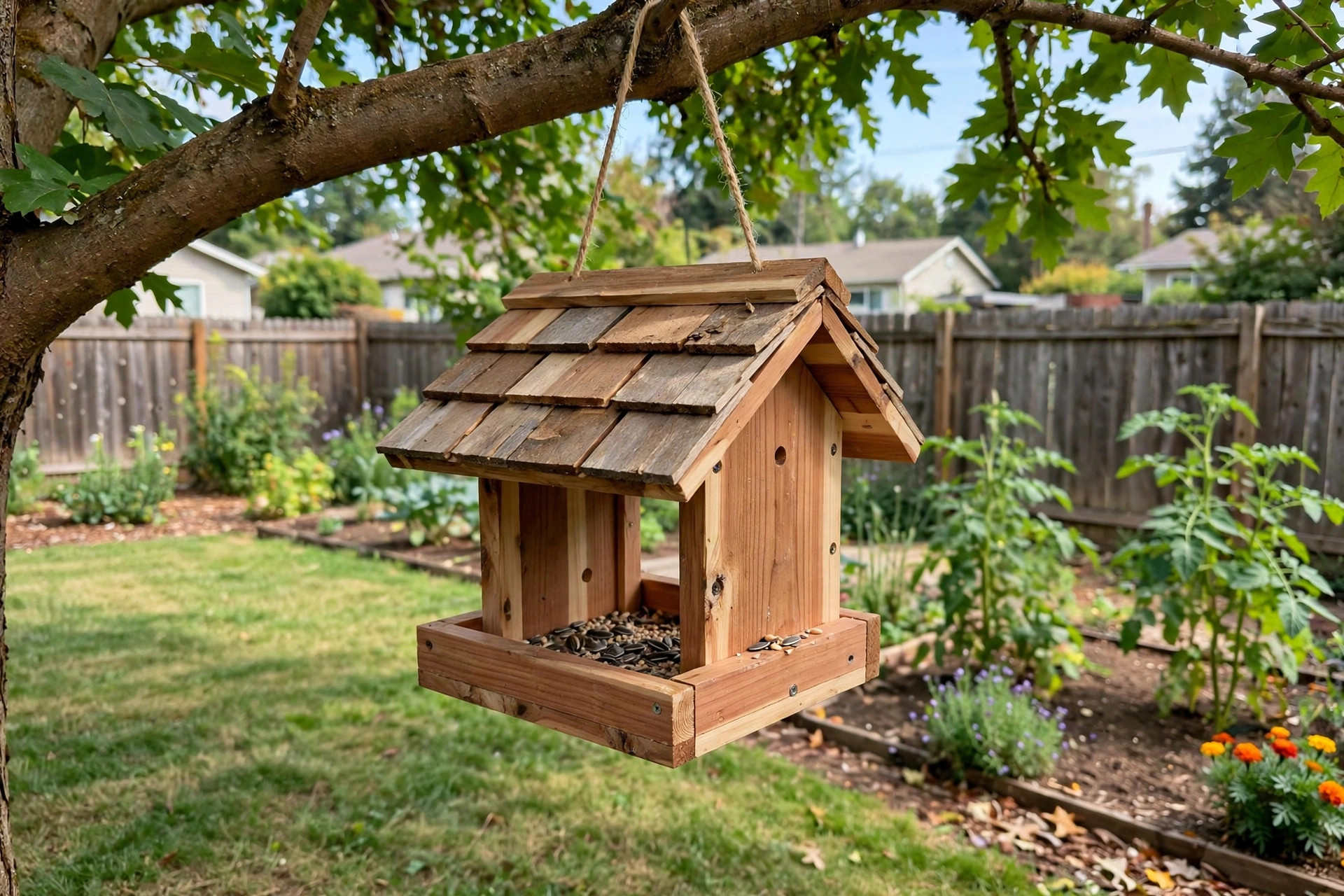

A diy bird feeder kit for backyard crafts usa brings together two of the oldest American pastimes: working with wood and watching birds. On a Saturday morning, a family can sit at the kitchen table, open a box of cut wood pieces, and by lunch have a small feeder hanging in the yard. The birds arrive within days. Few home crafts give such fast and plain reward.
Across the country, from the pine woods of Oregon to the suburbs of Ohio, these kits have become a staple of craft stores and mail-order catalogs. They are cheap, they are simple, and they suit every age. A child of six can sand and paint a feeder with a parent close by. A retired man can spend a quiet week on a cedar model with a roof of small shingles. The feeder that hangs in the yard at the end is more than a craft. It feeds wild birds through hard weather and gives the maker a small daily pleasure.
Why a Bird Feeder Kit Matters for the Backyard
A bird feeder does plain good for the birds that live near a house. In winter, when insects are gone and the ground is frozen, a steady supply of seed can carry small birds through the coldest weeks. Cardinals, chickadees, titmice, and nuthatches learn the spot where food can be found. They return again and again, and the yard becomes a living place with motion and song all day.
A kit matters because it removes the hard part of the work. Many people would like to build a feeder but lack a saw, a drill, or a plan they trust. The kit arrives with the wood cut to size, the holes drilled, and a paper plan that shows each step in order. The maker needs only glue, a screwdriver, and a little care. As craft writers at Michaels often note, kits of this kind turn a project that felt hard into an afternoon anyone can finish.
There is also the value of the making itself. A feeder built by hand carries marks of the maker. A crooked nail or a brush of bright paint shows who did the work. Families that build together keep the feeder for years and remember the day they made it. In that sense the diy bird feeder kit for backyard crafts usa is not only a box of wood. It is a small lesson in craft and in care for living things.
What to Look for When You Choose a Kit: Diy Bird Feeder Kit for Backyard Crafts Usa
Not every kit is worth the money. The cheap ones sometimes arrive with thin wood that splits, or with screws so small they pull out in the first wind. A careful buyer looks at four things before ordering.
Wood and Materials
The wood is the body of the feeder and it must stand up to rain. Cedar and redwood are the best common choices because they resist rot on their own, without paint. Pine is cheaper and common in low-price kits; it works well if it is painted or sealed on every side. Some kits use pressed board or thin plywood, which swells and falls apart in wet weather. Such kits are best avoided for outdoor use.
A few kits are made from recycled plastic lumber. These last a long time and need no paint, but they lack the warmth of real wood. For a craft project with children, wood is the better pick because it takes paint well and gives the real feel of woodworking.
Tools Included in the Box
Read the list on the box before you buy. A good kit lists every tool you will need. Some include a small bottle of glue and a packet of nails, so you can start at once. Others need the buyer to own a hammer, a screwdriver, or sandpaper. If the kit calls for a drill, check that the holes are already drilled; a kit for young children should need no power tools at all. The people at Family Handyman have long advised that a kit matched to the skill of the maker is the difference between a proud finish and a spoiled afternoon.
Clear Plans and Pictures
The plan is the heart of the kit. It should show the finished feeder, then show the steps in numbered order, each with a picture. Words alone are not enough for a beginner. Good plans label each wood piece with a letter or number, so there is no guessing which piece goes where. Some makers add plans for extra touches, like a perch or a suet cage, which gives the builder a choice.
Paint and Finish
Many kits sold for backyard crafts include a set of small paints or wood stain. Check that the finish is safe for outdoor use. Ordinary craft paint washes off in rain unless a clear sealer goes over it. The safest plan is to paint with the included colors, then add two coats of outdoor polyurethane or a child-safe outdoor sealant. This takes one more day of drying but doubles the life of the feeder.
For makers who want to branch out after the feeder is done, a candle making kit for beginners or a wood burning kit for diy crafts can carry the same hands-on habit into the next season. Craft supplies for every kind of project are easy to find at Joann.
Types of Kits You Can Buy
Kits come in several common styles, and each suits a different maker.
Pre-cut wood kits are the standard choice. Every board is cut, sanded, and drilled. The builder fits the pieces together with glue and nails. Most take one to three hours. These are the best choice for children and for first-time builders.
Paint-your-own kits put the craft first. The wood shape is simple, often a house or a barn, and the box carries bright paints and brushes. The building takes twenty minutes and the painting takes the rest of the afternoon. Schools and camps buy these by the case.
Log cabin kits use small rounded slats stacked like a cabin wall. They look handsome and take more time, usually a full weekend. They suit adults who want a feeder that looks like a small building in the yard.
Tube and hopper kits copy the store-bought feeders. A clear plastic tube holds the seed, and wood or plastic caps hold it together. These feeders hold more seed and need filling less often, but they are less of a craft and more of an assembly job.
Build-from-scratch plans are for the maker who owns tools. These are only printed plans, no wood. The buyer cuts lumber at home. This is the cheapest route per feeder and the most true to woodworking, but it is a project for an experienced hand. Step-by-step guidance from This Old House can help a beginner learn the basic cuts and joints such plans require.
Cost and Price
A diy bird feeder kit for backyard crafts usa costs less than most home crafts. Paint-your-own kits for children sell for five to ten dollars. Standard pre-cut wood kits run from twelve to twenty-five dollars. Larger cedar kits with shingles or metal roofs run thirty to sixty dollars. Log cabin styles sit near the top of that range.
The price usually matches the wood. Under ten dollars buys thin pine and small paint pots. Twenty dollars buys thicker boards, stainless screws, and a real plan. For a feeder that will hang outdoors for years, the twenty-dollar kit is the better bargain.
There are costs beyond the box. Seed is the running cost. A twenty-pound bag of mixed seed sells for about fifteen dollars at The Home Depot and lasts a small feeder two to three months in winter. Suet cakes cost about two dollars each. A hanger or pole may add five to ten dollars if the kit has no rope. Even with these, the first year of feeding costs less than a single trip to a garden center.
Shoppers who watch prices across stores can compare craft kits at Walmart and hardware supplies at Lowe’s, where seasonal craft lines often carry bird feeder kits at fair prices.
Care and Upkeep
A wooden feeder needs a little care each season. Clean it every two weeks in warm weather and once a month in winter. Take out old seed, scrub the tray with a brush, and wash with one part bleach to nine parts water. Rinse well and let it dry in the sun before refilling. Clean feeders stop the spread of disease among birds, which is the duty of every feeder keeper.
Check the wood in spring. Look for soft spots, loose nails, and cracked perches. A coat of outdoor sealant every two or three years keeps the wood sound. Tighten screws that have worked loose in winter wind. Replace the rope or chain if it is frayed; a feeder that falls can hurt a child or a pet below.
Seed storage matters too. Keep seed in a metal can with a tight lid, in a cool dry place. Mice and moths find open bags fast. Wet seed grows mold that can sicken birds, so throw out any seed that smells sour or looks clumped. The feeder care advice from Bob Vila follows the same plain rule: clean often, seal the wood, and feed only fresh seed.
Safety
Safety starts with the workbench. Children under ten should work with an adult at all times. Keep small nails and screws away from toddlers, who put everything in their mouths. When sanding, wear a simple dust mask; even pine dust irritates the lungs. Work outside or in a garage when using wood glue and sealant, and keep the caps on paint pots when not in use.
Once the feeder hangs, think of placement. Hang it at least five feet off the ground and away from thick bushes where cats can hide. A clear space of ten feet around the feeder gives birds room to see danger coming. Do not hang a feeder over a deck rail or a walk where droppings will land; a spot over mulch or grass is best.
Use only seed meant for wild birds. Bread, crackers, and salty snacks harm birds and draw pests. If bears live in the area, take the feeder in at night during the warm months, or do not feed in summer at all. A hardware store such as Ace Hardware can advise on pole baffles that stop squirrels and raccoons from climbing to the feeder.
Frequently Asked Questions
How long does it take to build a bird feeder from a kit? A simple paint-your-own kit takes under an hour. A standard pre-cut wood kit takes one to three hours, plus drying time for glue and paint. A log cabin style can take a full weekend. Add a day for sealant to dry before hanging.
What seed should I put in a homemade feeder? Black oil sunflower seed draws the widest range of birds and is the best single choice. Mixed seed with millet suits ground feeders. Nyjer seed in a tube feeder draws finches. Suet cakes feed woodpeckers in winter. Change seed with the season and watch which birds come.
Can children build a bird feeder kit alone? Children of ten or older can often build a pre-cut kit with little help, but an adult should stay nearby for the gluing and nailing. Younger children should work hand in hand with a parent. Paint-your-own kits are the safest choice for small children because no nails are needed.
How do I keep squirrels out of my feeder? Hang the feeder on a smooth metal pole with a baffle, a cone or dome that squirrels cannot climb past. Keep the feeder at least ten feet from trees, roofs, and fences that squirrels can jump from. Some makers switch to safflower seed, which squirrels dislike but cardinals enjoy.
Will the paint hurt the birds? Paint on the outside of the feeder is safe once it is fully dry. Never paint the inside surfaces where seed sits or where birds perch with their feet. Use non-toxic craft paint and cover the outside with an outdoor sealant after the paint dries. Plain unfinished cedar needs no paint at all.
How long will a kit-built feeder last outdoors? A pine feeder with paint and sealant lasts two to four years. A cedar feeder lasts five years or more with a fresh coat of sealant every few years. Clean it on schedule and store it under cover in the worst storms, and it will serve longer.
Crafters who enjoy this kind of project often try a wreath making kit for the front door next, or pick up fine art supplies at Blick for painting the feeder in finer detail.
A Short Final Word
A diy bird feeder kit for backyard crafts usa asks little and gives much. A box of wood, an afternoon of work, and a bag of seed turn an empty yard into a place where birds gather. The feeder will weather, and the paint will fade, but the habit it starts often lasts. Many makers who start with a ten-dollar kit find themselves building birdhouses, then planters, then a workbench of their own. The feeder is the first step on a long and pleasant road. Buy a sound kit, build it with care, hang it where you can see it from the kitchen window, and enjoy the birds that come.
References
Ace Hardware. (n.d.). Hardware and home supplies. https://www.acehardware.com Blick Art Materials. (n.d.). Art and craft supplies. https://www.dickblick.com Bob Vila. (n.d.). Home improvement advice. https://www.bobvila.com Family Handyman. (n.d.). DIY home repair and maintenance. https://www.familyhandyman.com JOANN. (n.d.). Fabric and craft supplies. https://www.joann.com Lowe’s. (n.d.). Home improvement products. https://www.lowes.com Michaels. (n.d.). Arts and crafts supplies. https://www.michaels.com The Home Depot. (n.d.). Home improvement products. https://www.homedepot.com This Old House. (n.d.). Home renovation guidance. https://www.thisoldhouse.com Walmart. (n.d.). Everyday low prices. https://www.walmart.com
Was this guide helpful?

About James Carter
The My Garden US editorial team writes practical, in-depth home and garden guides for American homeowners — tested advice, no fluff.
You May Also Like
The Best Sewing Basket for Supplies Organization at Home
February 24, 2026 0 views
The Best Fabric Glue for Patches and Repairs
May 1, 2026 0 views
Punch Needle Kit for Beginners Rug Making: A Complete Start-Up Guide
August 30, 2026 0 views