Many homeowners in Colorado now choose to buy zebra dual layer shades online in colorado instead of driving to a local store. The reasons are plain. Online shops carry more fabric choices, the prices are easy to compare, and the shades arrive at the door ready to mount. For a state with bright mountain sun, long snowy winters, and homes that range from Denver lofts to Colorado Springs ranch houses, zebra shades solve a real problem. They let the light in when it is wanted and block it when it is not, all on the same window, with one smooth pull.
This guide walks through the whole job. It explains what zebra dual layer shades are, why they suit Colorado homes, how to measure and order them on the internet, what they cost, how to care for them, and how to keep children and pets safe around cords. It closes with short answers to the questions shoppers ask most.
Why Zebra Dual Layer Shades Suit Colorado Homes
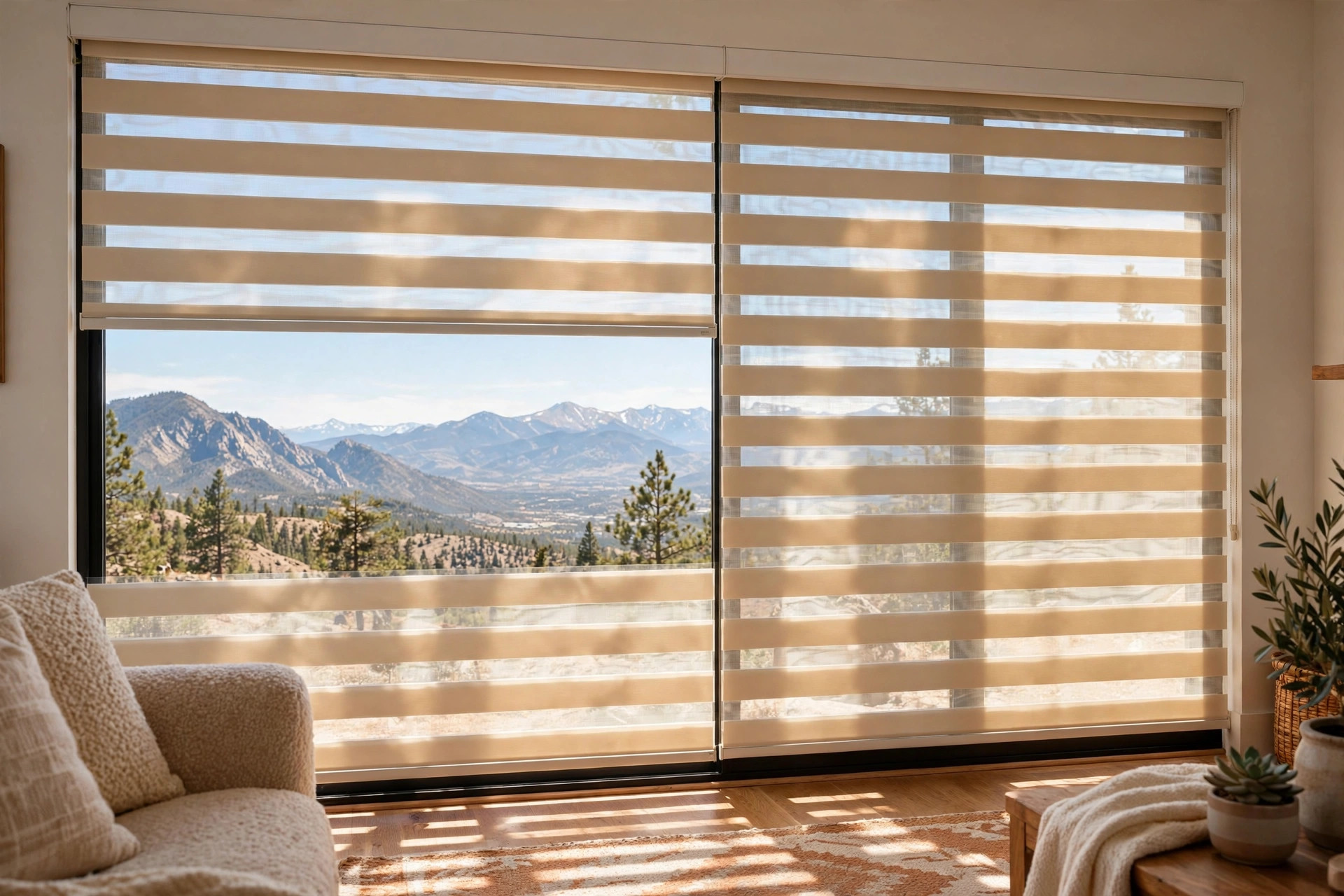
Colorado gets about 300 days of sunshine a year. That is a blessing for the spirit and a hard fact for the furniture. Direct sun fades wood floors, rugs, and couch fabric. A zebra blind with two layers of fabric lets a homeowner change the light level in seconds. Line up the sheer bands and the room fills with soft, filtered daylight. Slide the solid bands together and the window closes into a private screen.
Privacy matters in Colorado’s growing suburbs. New builds sit close together in towns like Aurora, Fort Collins, and Parker. Neighbors can see straight across a street or into a side yard. Zebra shades give daytime privacy while still showing the sky and the mountains. At night, with the room lit, the closed position hides the interior from view.
The cold months add another reason. In winter, Colorado homes lose heat through glass. A closed dual layer shade creates a small pocket of still air against the window. It is not a replacement for a storm window, but it does cut the chill at the sill. Many Colorado buyers pair the shades with a thick window treatment at night, such as the drapes covered in our notes on best navy blue velvet curtains for american homes.
What to Look For When You Buy Zebra Dual Layer Shades Online in Colorado
Shopping on the internet means no salesman is there to steer you. That is good, but it puts the homework on the buyer. These points help.
Fabric weight and opacity
Zebra shades come in light-filtering and room-darkening grades. Light-filtering fabric softens the glare but keeps the view bright. Room-darkening fabric blocks far more sun, which helps in a bedroom that faces east. In Colorado, an east window catches strong morning sun off the mountains. Buyers in that case often pick the darker grade for sleeping rooms and the lighter grade for living rooms.
Color and the Colorado light
White and warm gray are the top sellers, and for good reason. They match the pale wood and white trim found in most Colorado homes. Dark bronze and charcoal look sharp in mountain cabins with timber beams. One caution: the thin Colorado air makes colors look brighter than they do on a screen. The Spruce offers clear guidance on matching shade color to wall paint, and it is worth a read before the order goes in.
Cassette and bottom rail finish
The fabric rolls into a headrail, often called a cassette. Some cassettes are rounded, some square. The finish usually comes in white, black, or bronze. Pick the finish that matches the door handles and light switches in the room. Small details keep the window looking finished rather than patched together.
Control type
Zebra shades ship with one of three controls. A cord loop is the classic choice and costs the least. A cordless lift uses a bottom rail handle and is safer for homes with small children. A motorized lift runs on a battery or a plug and opens with a remote or a phone app. Motorized units cost more, but they suit tall windows over a stairwell where a cord would hang out of reach. Shoppers with pets may also want to compare ideas in our notes on best pet friendly curtains for texas homes.
Types and Options
Zebra dual layer shades are not all the same. The options below cover what most Colorado online stores carry.
– Standard cord-loop zebra shade. The everyday model. One continuous cord loop raises the shade and shifts the bands. Reliable and budget friendly. – Cordless zebra shade. Push up or pull down from the bottom rail. No hanging cords. A good pick for a nursery or a playroom. – Motorized zebra shade. A small motor in the headrail drives the fabric. Some models work with home assistants sold at places like IKEA, which carries a growing line of smart home gear. – Top-down bottom-up zebra shade. The shade lowers from the top as well as rising from the bottom. It gives privacy at the lower half while the top half stays open to the sky. Mountain views stay in frame. – Day-night zebra shade. Uses a room-darkening band instead of a standard solid band. Closes the room down further at night. – Wide-panel zebra shade for sliding doors. Built in wide widths for patio doors. Many Colorado homes open onto decks and patios, and these panels keep the glass doors looking clean.
Buyers who want fully made-to-measure drapes instead of shades can read our notes on best custom made curtains online for american homes for a comparison of ordering methods.
Cost and Price
Prices in 2026 run in a clear range. A standard cord-loop zebra shade for a small window, about 27 inches wide, starts near 60 dollars. A mid-size window shade, 36 to 48 inches wide, runs from 90 to 160 dollars. Wide shades over 60 inches, or any motorized model, can reach 250 to 450 dollars per window.
A whole house order adds up fast. Ten windows at 120 dollars each is 1,200 dollars before shipping. Many online sellers cut the unit price when five or more shades ship in one order. Watch for that discount and order every room at once rather than in two batches.
Shipping to Colorado is usually free on orders above a set dollar mark, often 99 dollars. Delivery takes 7 to 14 business days because most shades are cut to order. Rush production, which cuts the wait to about 5 days, adds roughly 15 percent to the bill. Sales tax applies for Colorado delivery, and the rate follows the buyer’s zip code, from about 2.9 percent in some areas to over 8 percent in parts of Denver.
Three costs catch buyers by surprise. First, hold-down brackets for doors and for windows near a vent add a few dollars each. Second, a valance or a fabric-wrapped cassette costs more than a plain aluminum one. Third, professional measuring and mounting, which runs about 50 to 100 dollars a window, is extra. Most buyers in Colorado skip that charge and mount the shades themselves with a drill and a level.
Measuring the Window
Bad measurements are the number one reason an online shade order goes wrong. The job takes ten minutes per window and needs only a steel tape.
1. Measure the width inside the window frame at the top, the middle, and the bottom. Write down the smallest of the three. Order that width. 2. Measure the height inside the frame at the left, the center, and the right. Write down the largest of the three. Order that height. 3. Check the depth of the frame. Most zebra cassettes need about 2.5 inches of depth for a full inside mount. A shallow frame means the shade must mount outside the frame, on the wall or the trim.
Order inside mount when the frame is deep enough. The shade sits flush and looks built in. Order outside mount when the frame is shallow, when the window is out of square, or when the buyer wants the window to look larger. For an outside mount, add 2 to 3 inches of width on each side so the fabric covers the whole glass.
Re-check every number before the checkout click. Online stores cut the fabric to the exact size entered. Most will not accept a return on a custom-cut shade, a policy that HGTV and other home outlets have flagged as the biggest trap in online window shopping.
Care and Upkeep
Zebra shades ask little of their owners. Dust the fabric once a month with a dry microfiber cloth or a soft brush attachment on a vacuum set to low. Work from top to bottom so dust does not settle on the part already cleaned.
Spot clean with a damp cloth and a drop of mild dish soap. Blot, never rub, or the weave can stretch. Let the shade dry fully open before rolling it up, because damp fabric rolled tight can take on a musty smell. Never put the fabric in a washing machine. The bands are heat-set, and machine washing ruins the fold.
Colorado dust is fine and gritty, blown in from dry plains and construction zones. In homes near new subdivisions, dusting twice a month keeps the fabric bright. Every year or two, check the cord loop for wear and the bottom rail end caps for cracks. Spare parts cost little and most sellers ship them free under warranty.
Safety
Window cords harm children and pets every year in the United States. The Consumer Product Safety Commission has warned for years that looped cords are a strangulation risk for small children. Any household with a child under six, or with a cat that climbs cords, should choose cordless or motorized zebra shades.
If a cord-loop model is already on the window, fit a cord cleat to the wall and wrap the loop high out of reach. Move cribs, beds, and playpens away from windows with cords. When ordering online, read the product page for the cord safety certification. Reputable sellers list it plainly.
Zebra shades also change how a room heats up. A closed shade on a south window in July traps hot air between the glass and the fabric. On the hottest afternoons, tilt the bands to the open position and let air move, or the heat can stress the fabric and the window seal. Bob Vila keeps a helpful page on window treatments and heat buildup worth a look before summer.
FAQ
How long does shipping to Colorado take?
Most online sellers cut zebra shades to order, so expect 7 to 14 business days from order to doorstep in Denver, Boulder, Colorado Springs, or Fort Collins. Rural mountain towns can add 2 to 3 days. Rush production shortens the wait for a fee.
Can I return a custom-cut zebra shade?
Usually not. Custom sizes are cut for one window and cannot be resold, so most sellers treat them as final sale. Some offer a remake if their own measurement is wrong or the shade arrives damaged. Read the return policy before paying, and keep the box until the shade is mounted and working.
Do zebra dual layer shades block UV rays?
Yes, in large part. The solid bands block most ultraviolet light when closed, and even the sheer bands filter some. They slow fading of floors and furniture, though they do not stop it entirely. For a prized rug under a big south window, a closed shade plus a UV film on the glass is the safer pairing.
Will zebra shades work on a sliding glass door?
Yes, with the wide-panel version made for doors. Measure the full door frame, not just the glass. Add hold-down brackets at the bottom so the panels do not swing when the door slides. Many Colorado buyers order these for walk-out basement doors that face the backyard.
Are motorized zebra shades hard to install?
No harder than a cord model. The headrail mounts the same way with brackets and screws. The extra step is pairing the remote or the phone app, which takes about five minutes. Battery models need new batteries every year or two, depending on daily use.
What is the difference between zebra shades and roller shades?
A roller shade is one sheet of fabric that goes up or down. A zebra shade is two sheets with alternating sheer and solid bands that slide past each other. That sliding action lets a zebra shade change from open to private without moving the shade up or down at all.
A Short Final Word
To buy zebra dual layer shades online in colorado is a straightforward job when the measurements are right and the grade fits the room. Pick light-filtering fabric for living spaces, room-darkening for bedrooms, cordless or motorized lifts where children or pets roam, and a finish that matches the home’s hardware. Order all the windows at once for the bulk discount, keep the boxes until every shade is mounted, and dust the fabric on a monthly rhythm. The mountain sun will still pour in. The shades simply let the homeowner decide how much of it comes through the glass. This Old House and Wayfair both keep deep libraries of shade-buying guides for readers who want a second opinion, and Home Depot and Lowe’s list ready-made sizes for buyers who would rather not wait on custom cutting.
References
Blinds.com. (n.d.). Window blinds, shades, and shutters. https://www.blinds.com Bob Vila. (n.d.). Home improvement advice. https://www.bobvila.com HGTV. (n.d.). Home and garden ideas. https://www.hgtv.com IKEA. (n.d.). Home furnishings. https://www.ikea.com Lowe’s. (n.d.). Home improvement products. https://www.lowes.com The Home Depot. (n.d.). Home improvement products. https://www.homedepot.com The Spruce. (n.d.). Home and garden advice. https://www.thespruce.com This Old House. (n.d.). Home renovation guidance. https://www.thisoldhouse.com U.S. Consumer Product Safety Commission. (n.d.). Product safety information. https://www.cpsc.gov Wayfair. (n.d.). Furniture and home goods. https://www.wayfair.com
Was this guide helpful?

About James Carter
The My Garden US editorial team writes practical, in-depth home and garden guides for American homeowners — tested advice, no fluff.