Introduction
The search for the best kids room blackout curtains for southern states starts with a simple problem. The sun in the South is strong. It rises early and stays bright late. Children need dark rooms for naps and for full nights of sleep. Light slips around thin curtains and wakes a baby too soon. It heats the room and makes afternoons restless. Good blackout curtains solve both problems at once. They shut out the light and cut the heat that comes through the glass. This guide walks through what matters when you shop: fabric, lining, size, mounting, price, care, and safety. With the right pair, a child can nap at noon in July as well as at dusk in January.
Why Southern Families Need Blackout Curtains in the Kids Room: Best Kids Room Blackout Curtains for Southern States
Southern states see more hours of direct sun than most parts of the country. In Texas, Florida, Georgia, Alabama, Mississippi, Louisiana, and the Carolinas, a west-facing window can pour heat into a room from two in the afternoon until sunset. A kids room with bare glass can run several degrees warmer than the rest of the house. That matters because children sleep best in rooms that are cool and dark. Warm air makes babies wake. Light tells the brain it is morning.
Blackout curtains are not the same as room-darkening shades. True blackout fabric blocks nearly all light. Room-darkening fabric only dims it. For a kids room in the South, you want the real thing. The difference shows up at nap time. A child in a truly dark room falls asleep faster and sleeps longer. Many parents also find that the room feels cooler. The thick lining works like insulation against the glass. It slows the heat that passes through the window pane. Over a long summer, that can ease the load on the air conditioner too.
There is another reason families in the South buy these curtains. Storms. Heavy curtains add a small layer of protection against flying bits of glass in high winds, and they keep the room dark during long power outages when street lights fail. They will not stop a hurricane, but they do make a scary night calmer for a small child.
What to Look For When You Choose Blackout Curtains
Fabric and Lining
The heart of a blackout curtain is its lining. Most curtains earn the blackout name with one of three builds. Triple-weave fabric has three layers of yarn woven tight. The middle layer is usually black. It blocks light without a separate coating. Foam-backed curtains have a layer of white or gray foam on the back. The foam blocks light well but can crack with age and heat. Thermal curtains add an insulating layer that fights heat gain in summer and heat loss in winter. In southern states, a thermal layer is worth the extra cost. You can read more about how these fabrics compare at The Spruce, which keeps clear guides on curtain materials.
Hold the fabric up to a bright lamp before you buy. A true blackout curtain lets almost no light through. If you see a glow, it is only room-darkening. For the back side, pick white or cream. Many southern neighborhoods and HOAs require white linings so the street sees one neat color. A white back also reflects heat instead of soaking it up.
Size and Fit
Measure the window, then buy wider and longer than you think. The curtain panel should reach at least four to six inches past each side of the frame. Light leaks at the edges more than through the cloth. A wide panel lets you wrap the curtain around the corner so no gap remains. Length matters too. Panels that reach the floor or just brush the sill block the light that creeps under a short curtain. For full blackout, mount the rod four to six inches above the frame and let the panel pool slightly on the floor or end right at it.
One panel per window is fine for narrow glass. Wide windows do better with a pair. Two panels meet in the middle and overlap a little. Check your numbers against a measuring guide before you order; Blinds.com posts simple worksheets for width and drop that parents find easy to follow.
Rod, Track, and Mounting
A sturdy rod matters more than it looks. Blackout panels are heavy. A flimsy rod sags in the middle and leaves a gap where light pours in. Use a rod rated for the weight, and add a center bracket on wide spans. Wrap-around rods are a good pick for kids rooms. The ends bend back to the wall, which closes the side gaps where morning sun sneaks through.
Ceiling-mounted tracks are another strong option. A track lets the curtain slide fully across and sit close to the wall. It is also out of reach, which matters when toddlers start to pull on things. Whatever you choose, mount it into studs or use good anchors. A child will hang on the curtain sooner or later.
Types of Blackout Curtains for Kids Rooms
Thermal blackout curtains are the top pick for southern homes. They block light and slow heat. Look for a tight weave with an acrylic or foam thermal coat. These panels run a little stiffer than plain cloth, but they hold their shape well.
Cordless blackout curtains suit rooms with small children. They slide by hand or pull down from the bottom rail. There are no long cords to tangle. If you prefer corded styles for high windows, keep every cord short, tied up, and out of reach. The U.S. Consumer Product Safety Commission warns that window cords are a known hazard for young children and urges cordless products in homes with kids.
Blackout roller shades with side channels give the darkest seal of all. The shade runs inside tracks on both sides of the window. Almost no light gets past. They cost more and take more work to install, but parents of light sleepers swear by them.
If your windows are odd shapes or very wide, custom made curtains compared online can be cheaper than you expect. Custom shops cut panels to your exact width and drop, which ends edge gaps for good. Machine-washable blackout panels are also worth a look for kids rooms; sticky hands and juice spills happen, and a panel you can toss in the washer saves money over time. See our machine washable curtains buying guide for fabrics that hold up in the laundry.
Cost and Price: What You Should Expect to Pay
Prices for kids room blackout curtains run wide. Ready-made panels from big retailers start near fifteen dollars a panel for simple polyester sets. Mid-range thermal panels with good linings run thirty to sixty dollars a panel. Premium brands and wide custom panels can reach one hundred dollars or more per window.
For a typical kids room with one window, most southern families spend between forty and one hundred twenty dollars for panels plus a rod. A room with two windows doubles that. Blackout roller shades with side tracks start near eighty dollars per window and climb from there. Installation is simple enough for most parents with a drill, so labor cost is often zero.
Do not judge by price alone. A cheap panel that lets light leak at the seams costs more in the end, because you buy twice. Check reviews for notes about true blackout performance and how the lining holds up in heat. Independent test notes at Consumer Reports and project guides at Bob Vila can help you sort honest claims from marketing words. Big home stores like Home Depot, IKEA, and Wayfair carry wide ranges, and seeing panels in person helps you judge the weave.
Care and Upkeep
Blackout curtains last longer with a little care. Dust them with a vacuum brush each month. Southern dust and pollen settle fast on heavy fabric. Spot-clean small marks with a damp cloth and mild soap. Check the care tag before any wash. Triple-weave panels often wash well in cold water. Foam-backed panels do not. Heat and agitation crack the foam coat, and once it cracks the blackout effect fades.
Dry panels on low or hang them to dry. High heat can warp thermal coatings. Rehang while slightly damp to smooth wrinkles. Once a year, check the rod brackets and anchors. Heat and humidity work screws loose over time, and a falling rod is a hazard in a kids room.
If a panel fades, shrinks, or loses its dark lining, replace it. A tired curtain leaks light at the folds first. When stains set in beyond spot cleaning, a curtain cleaning service near you can often save heavy panels that are hard to wash at home.
Safety: A Word on Cords, Rods, and Heat
Safety comes first in any kids room. Choose cordless curtains or shades where you can. If cords are present, cut looped cords and add tension cleats high on the frame. Mount rods and tracks into studs so a climbing toddler cannot pull them down. Keep curtain bottoms off the floor in rooms where babies crawl, or make sure the panels cannot wrap around a child.
Fire safety matters too. Keep curtains clear of heaters, radiators, and lamps. Southern homes often run space heaters on cold snaps, and fabric should never touch a hot surface. Health and safety guidance for children’s rooms, including sleep environment tips, is kept current by HealthyChildren.org, a trusted source many pediatricians point parents toward.
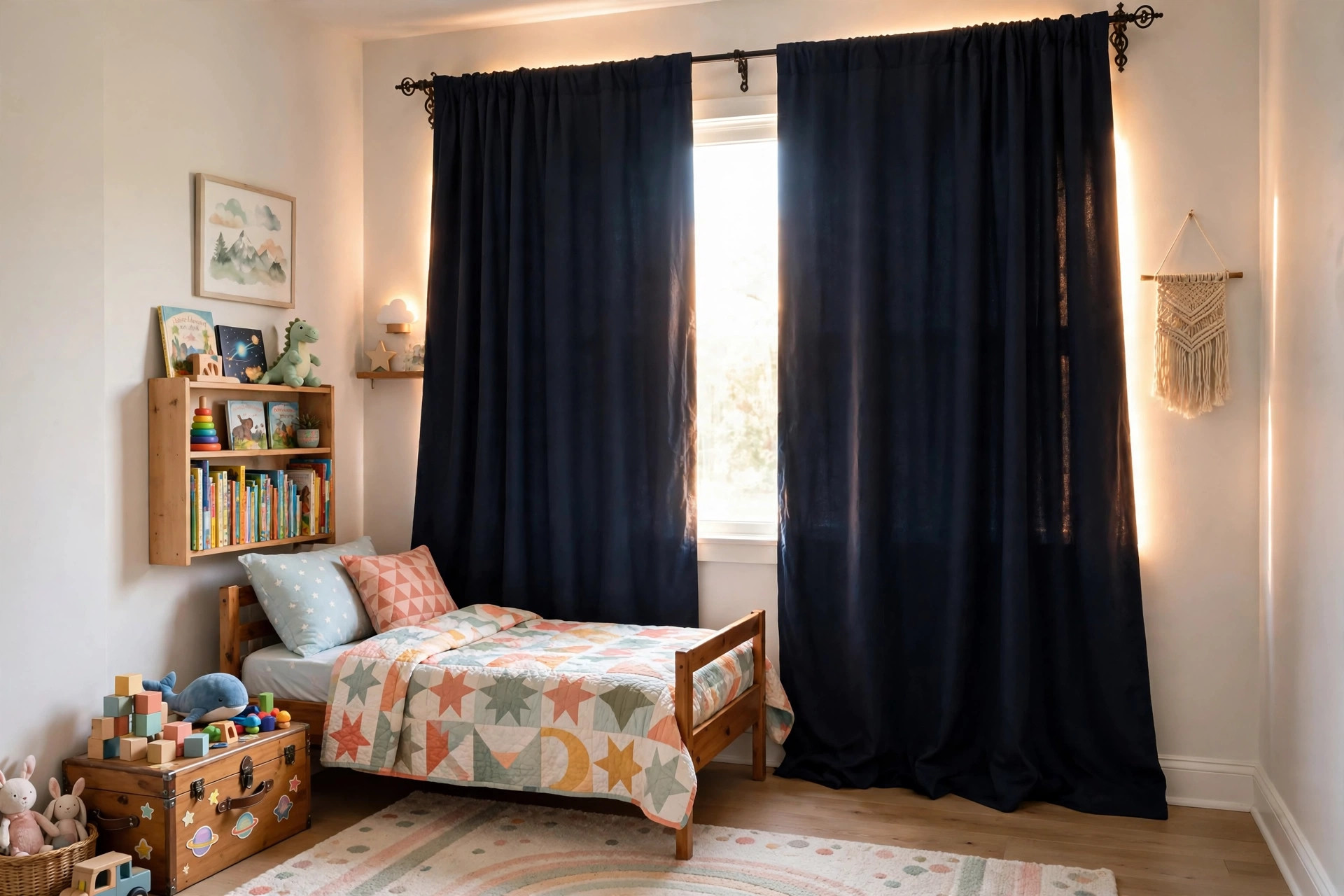
For room style ideas that keep safety in view, HGTV publishes kids room tours that show how dark panels fit into bright, cheerful designs. Dark does not have to mean gloomy. Pick panels in soft colors for the room side and let the white lining face the street.
Frequently Asked Questions
Do blackout curtains really keep a kids room cooler in the South? Yes, to a point. The lining blocks solar heat at the glass. A room with good blackout panels can stay a few degrees cooler on a hot afternoon. They do not replace air conditioning, but they cut the worst of the heat gain.
What is the difference between blackout and room-darkening curtains? Blackout fabric blocks nearly all light. Room-darkening fabric dims light but lets a soft glow through. For naps and early bedtimes in bright southern summers, blackout is the better pick.
Should I buy one wide panel or a pair? For windows under forty inches wide, one panel works. Wider windows do better with a pair that overlaps in the middle. Pairs also open from the center, which suits tall windows.
Are cordless blackout curtains worth the higher price? In a kids room, yes. The safety gain is real. Cordless panels also tend to look cleaner, with no cords to tangle or collect dust.
How do I stop light leaking around the edges? Mount the rod wider than the frame, use wrap-around rods or side channels, and let panels overlap the wall by several inches. Edge leaks cause more wake-ups than thin fabric does.
Can I wash blackout curtains in a washing machine? Many triple-weave panels wash fine in cold water on gentle. Foam-backed panels usually do not. Always read the care tag, and hang to dry when in doubt.
Final Word
The best kids room blackout curtains for southern states do three jobs at once. They shut out harsh light. They slow the heat that pours through southern glass. And they do it safely, with cordless designs and solid mounting. Measure twice, buy wider than the frame, and pick a true blackout lining with a white back. A dark, cool room gives your child better naps and longer nights, and it gives you back your evenings. That is a small price for a quiet house.
References
American Academy of Pediatrics. (n.d.). HealthyChildren.org. https://www.healthychildren.org Blinds.com. (n.d.). Window blinds, shades, and shutters. https://www.blinds.com Bob Vila. (n.d.). Home improvement advice. https://www.bobvila.com Consumer Reports. (n.d.). Product reviews and ratings. https://www.consumerreports.org HGTV. (n.d.). Home and garden ideas. https://www.hgtv.com IKEA. (n.d.). Home furnishings. https://www.ikea.com The Home Depot. (n.d.). Home improvement products. https://www.homedepot.com The Spruce. (n.d.). Home and garden advice. https://www.thespruce.com U.S. Consumer Product Safety Commission. (n.d.). Product safety information. https://www.cpsc.gov Wayfair. (n.d.). Furniture and home goods. https://www.wayfair.com
Was this guide helpful?

About Jennifer Lee
The My Garden US editorial team writes practical, in-depth home and garden guides for American homeowners — tested advice, no fluff.